
Executive Overview
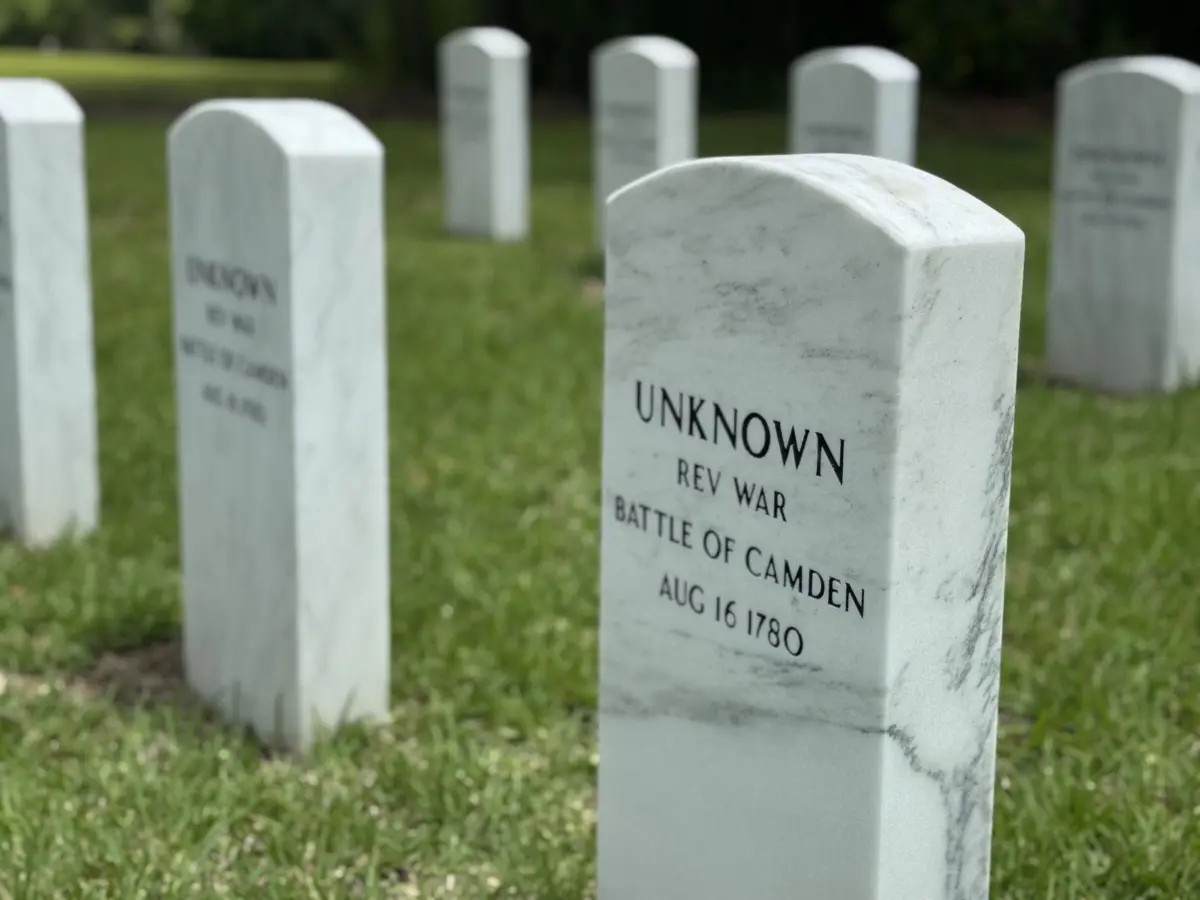
For nearly two and a half centuries, the resting place of a young Continental Army soldier remained anonymous—a forgotten casualty of the American Revolutionary War. Enlisting at roughly 14 years of age, this boy signed his recruitment papers with a simple "X," marking a life cut short before he ever learned to write his own name. After marching more than 1,000 miles across the eastern seaboard, he met his end at the catastrophic Battle of Camden in South Carolina in 1780, where he was hastily buried in a shallow, unmarked grave.
That anonymity finally shattered following an extraordinary interdisciplinary investigation combining archaeological excavation, ancient DNA extraction, and genetic genealogy. Researchers have officially identified the remains, formerly designated as "Camden 9B," as those of Private John Pumphrey of the Seventh Maryland Regiment.
This breakthrough represents a watershed moment in forensic science. According to genealogical experts, it is believed to be the first time an individual who died in the 1700s has been successfully identified using a comprehensive genetic genealogy profile. The discovery not only closes one of America’s oldest "John Doe" cases but also bridges a 250-year chasm, connecting the young soldier to some 20,000 living relatives and transforming a static historical abstraction into a deeply human tragedy.
Read Also
Detailed Chronology: From the Battlefield to the Laboratory
The Fateful Enlistment and Campaign (1777–1780)
John Pumphrey’s journey into the pages of history began during some of the darkest days of the American Revolution. Born into a seemingly prosperous family with roots tracing back to a New Jersey carpenter who migrated to the Baltimore area in 1713, Pumphrey’s life upended abruptly during his childhood. Following the deaths of both parents, the young boy was orphaned around the age of ten. Subsequent misfortune struck when a cousin allegedly seized control of his estate, stripping Pumphrey and his siblings of their inheritance and leaving them with meager prospects.
/https://tf-cmsv2-smithsonianmag-media.s3.amazonaws.com/filer_public/f2/1f/f21fd14f-3eff-49e4-abcf-8bf3ccdc8115/img_3924_1.jpeg)
Faced with a vanishing future, Pumphrey enlisted in the Continental Army in 1777 at roughly 14 years of age, joining the Seventh Maryland Regiment. Historical records indicate he survived over three years of grueling military life, even accepting a $100 re-enlistment bonus in 1779.
His military career abruptly terminated on August 16, 1780, at the Battle of Camden. In this pivotal engagement, roughly 2,000 British troops routed a force of some 4,000 American soldiers, many of whom were suffering from dysentery and physical exhaustion. Pumphrey was officially listed as "missing" in the aftermath, his body left behind in the South Carolina soil.
Archaeological Recovery (2020–2022)
The modern chapter of Pumphrey’s story commenced in 2020, when archaeologists from the South Carolina Battleground Preservation Trust began systematically surveying the Camden battlefield using metal detectors. Amid recovering artifacts like musket balls and uniform buttons, field researchers made a startling discovery: human remains protruding from the earth.
Subsequent excavations revealed 14 Revolutionary War soldiers resting in shallow, hurried graves. The skeletal remains were transferred to the Richland County Coroner’s Office for forensic examination and anthropological profiling. Recognizing the historical significance and complexity of the remains, local officials contacted FHD Forensics, a Texas-based private firm specializing in forensic genetic genealogy.
/https://tf-cmsv2-smithsonianmag-media.s3.amazonaws.com/accounts/headshot/Ellen_Wexler.png)
Genetic Sequencing and Archival Breakthroughs (2022–2026)
Collaborating with Astrea Forensics—a California-based laboratory specializing in the recovery and sequencing of ancient DNA—researchers extracted genetic material from two of the recovered soldiers, including the set labeled Camden 9B. Because of the extreme degradation associated with 18th-century remains, this represented the oldest genetic genealogy profile the lab had ever successfully generated.
The genetic data was subsequently uploaded to consumer genetic databases featuring users who had opted into forensic comparisons, such as FamilyTreeDNA and GEDmatch. To the astonishment of the research team, Camden 9B yielded immediate matches to prominent families originating from Maryland’s Anne Arundel County.
Employing a multi-pronged genealogical approach that utilized autosomal, X-chromosome, and Y-chromosome DNA data, combined with exhaustive archival investigation of military muster rolls and local property deeds, the team zeroed in on Pumphrey. The physical anthropology corroborated the historical profile: growth plates around the soldier’s knees had not fully closed, confirming his adolescent age at the time of death. Furthermore, skeletal analysis revealed no visible trauma to his bones, suggesting he succumbed to a soft-tissue injury, such as a bayonet wound, during the chaotic rout at Camden.
Supporting Context & Metrics
The identification of Private John Pumphrey underscores both the immense human cost of the Revolutionary War and the cutting-edge capabilities of modern forensic science applied to historical preservation.
:focal(2016x1517:2017x1518)/https://tf-cmsv2-smithsonianmag-media.s3.amazonaws.com/filer_public/f2/1f/f21fd14f-3eff-49e4-abcf-8bf3ccdc8115/img_3924_1.jpeg)
- The Scale of the Battle of Camden: The 1780 engagement was a tactical disaster for the Patriot cause. Approximately 4,000 American troops faced off against 2,000 disciplined British regulars under Lord Cornwallis. Plagued by illness, poor nutrition, and inferior positioning, the American line collapsed, resulting in hundreds of casualties and prisoners.
- The Genetic Sweep: Despite dying centuries before the advent of modern reproduction, Pumphrey’s collateral lineage—traced through his siblings and first cousins, as he likely died too young to have children—yielded approximately 20,000 DNA matches among living Americans today.
- Cost and Complexity: Each historical identification requires months of archival cross-referencing, specialized ancient DNA extraction techniques, and database analysis. These specialized investigations cost tens of thousands of dollars per individual, relying heavily on private grants, philanthropic support, and specialized forensic partnerships.
Official Statements
The formal announcement of Pumphrey’s identification brought together historians, scientists, and descendants for a series of commemorative events in Baltimore and South Carolina.
Allison Peacock, president of FHD Forensics, reflected on the unprecedented nature of the case:
"As far as we knew, this was the first time somebody that died in the 1700s had been identified with their genetic genealogy profile… They said, ‘We just found a bunch of Revolutionary War soldiers. Do you think you could do what you just did for us on 200-year-old remains?’ And I said, ‘Well, maybe. Let’s try.’"
Rick Wise, executive director of the South Carolina Battleground Preservation Trust, spoke movingly to an audience of descendants during the announcement ceremony:
/https://tf-cmsv2-smithsonianmag-media.s3.amazonaws.com/filer_public/ea/d0/ead06dd3-b89f-4d26-91d4-8a657acb3dd0/card_grid_john_pumphrey.jpg)
"He has waited almost 246 years for his name to be said out loud again. The blood that ran through his veins is going through yours."
Julie Strickland, a living descendant of the Pumphrey family who was adopted at six weeks old, noted the profound personal symmetry of the discovery:
"I started out without a name. He wound up without a name. And now we both know our name."
James Legg, an archaeologist who led the battlefield excavation, emphasized the tangible impact such discoveries have on historical understanding:
/https://tf-cmsv2-smithsonianmag-media.s3.amazonaws.com/filer_public/4f/7d/4f7d7d3b-4244-47ef-bfb6-de5e63f0d51d/jpumph-re-enlist-s997-16-113.jpg)
"It’s almost like a mythology, the Revolution; like a story we all agree happened, but may not feel that it was real. These gravesites make it real."
Future Outlook
Following a solemn ceremony in 2023 that provided Pumphrey and his fallen comrades with full military honors and a proper reburial, the research collaborative faces a monumental path forward.
Buoyed by the success of the Pumphrey case, the team is actively fundraising to continue processing the remaining unidentifiable soldiers recovered from the Camden battlefield. Currently, geneticists and genealogists are working on sequencing and analyzing the second soldier extracted alongside Pumphrey—a project with added personal resonance, as genealogist Allison Peacock discovered she is directly related to him.
As the United States approaches milestones commemorating its founding, projects like the Camden 9B identification serve as a powerful reminder that history is composed of real, ordinary individuals who sacrificed their futures. By marrying 21st-century biotechnology with meticulous historical archives, researchers are successfully returning names, dignity, and lineage to those who walked onto the battlefield and were lost to time.



Comments
Facebook App ID not configured. Please add it in the Customizer.