
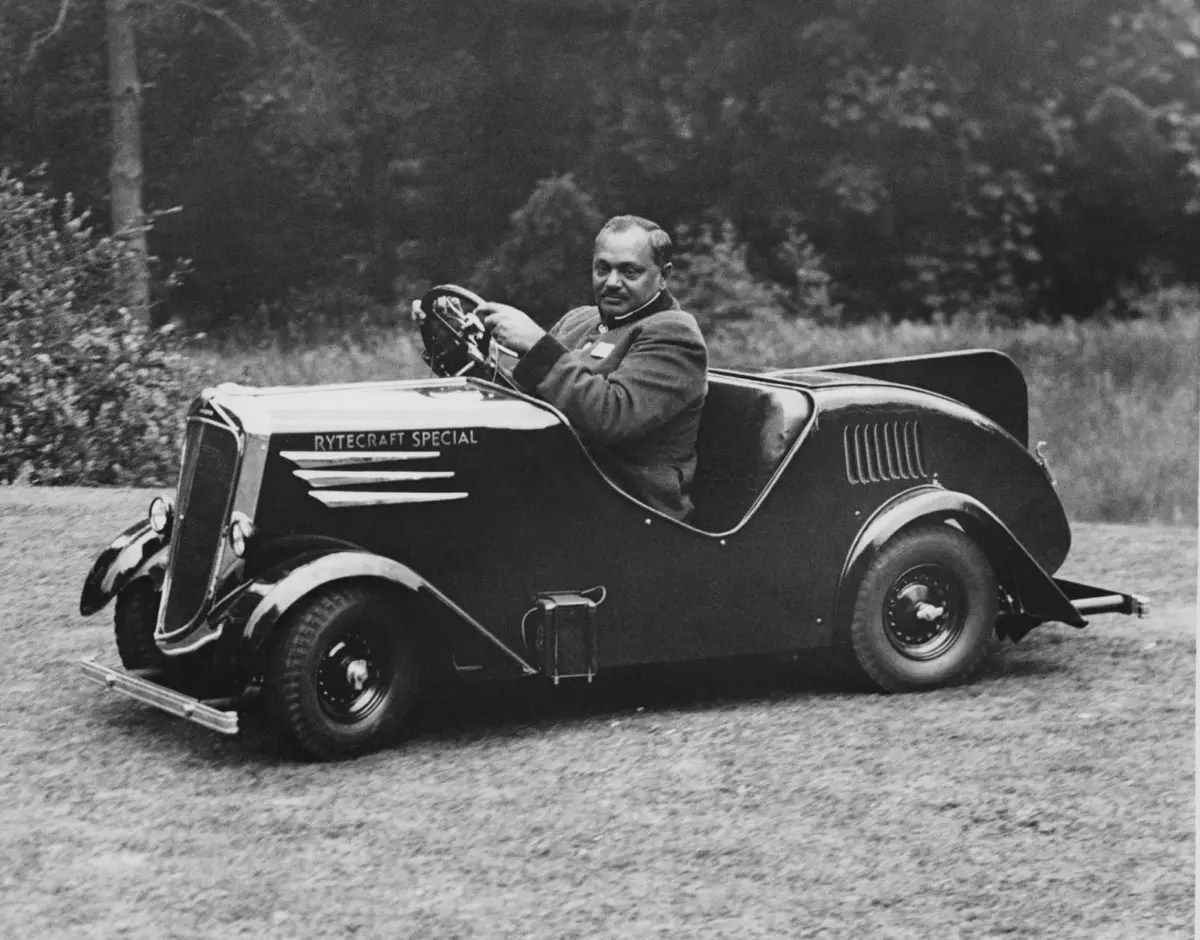
In the autumn of 1942, military trucks rolled through the gates of a coastal settlement in the princely state of Nawanagar, Gujarat, carrying a deeply traumatized cargo: hundreds of young Polish children. Emaciated, dressed in tattered rags, and bearing the heavy psychological and physical scars of Soviet labor camps in Siberia, these youths represented the remnants of Poland’s shattered intelligentsia. Fleeing the horrific devastation of World War II, they had endured an arduous exodus across Turkmenistan and Iran, arriving in India as the first state willing to offer them refuge.
Waiting to greet them was Maharaja Digvijaysinhji Ranjitsinhji Jadeja, the ruler of Nawanagar. In a booming, compassionate voice that would forever alter the course of their lives, the maharaja told the bewildered children: "Do not consider yourselves orphans. You are now Nawanagaris, and I am Bapu, the father of all the people of Nawanagar, so also yours."
Breaking with the geopolitical hesitation of British colonial authorities and acting independently of official international frameworks, Digvijaysinhji established a dedicated sanctuary in the village of Balachadi. Over the course of the war, this safe haven sheltered roughly 1,000 Polish children. Long obscured by the broader tragedies of mid-20th-century history, the "Good Maharaja’s" extraordinary act of humanitarian defiance stands as an enduring testament to radical empathy amidst global catastrophe. Today, his legacy is celebrated internationally, cementing a profound, historic bond between India and Poland.
Read Also
/https://tf-cmsv2-smithsonianmag-media.s3.amazonaws.com/filer_public/58/32/5832ce16-54a9-4a80-8f03-98ca18988ffb/gettyimages-961804192.jpg)
Detailed Chronology
The Descent into Horror: 1939–1940
The systematic destruction of Polish civil society began on September 1, 1939, when Nazi Germany launched a devastating blitzkrieg invasion from the west. Sixteen days later, the Soviet Union enacted the secret protocols of the Molotov-Ribbentrop Pact, invading Poland from the east and effectively partitioning the nation between two totalitarian regimes.
Targeting the pillars of Polish society—military officers, civil servants, landowners, teachers, and intellectuals—the Soviet regime initiated mass deportations in February 1940. An estimated 320,000 to 500,000 members of the Polish intelligentsia and their families were branded as "socially dangerous" elements. Packed tightly into unheated cattle cars during the dead of winter, these families were transported thousands of miles eastward to brutal labor camps (gulags) across Siberia and Kazakhstan. Countless deportees perished from freezing temperatures, malnutrition, overwork, and disease long before reaching their destinations; those who survived faced grueling forced labor under subhuman conditions.
The Shift in the Tide and the Exodus to Iran: 1941–1942
The geopolitical landscape of World War II shifted dramatically on June 22, 1941, when Adolf Hitler launched Operation Barbarossa, breaking the Molotov-Ribbentrop Pact and invading the Soviet Union. This betrayal forced Moscow into an uneasy alliance with the Western Allies.
/https://tf-cmsv2-smithsonianmag-media.s3.amazonaws.com/filer_public/58/32/5832ce16-54a9-4a80-8f03-98ca18988ffb/gettyimages-961804192.jpg)
Subsequent diplomatic breakthroughs, notably the Sikorski-Mayski Agreement of July 1941, granted amnesty to Polish prisoners detained in Soviet territory and permitted the formation of a Polish army. However, widespread famine and severe supply shortages across the USSR made sustaining the freed population impossible. Consequently, Soviet and Polish authorities arranged for the evacuation of tens of thousands of Polish refugees—predominantly women and children—across the Caspian Sea to Allied-occupied Iran.
While Tehran provided a temporary staging ground, the question of permanent resettlement remained critical. The Polish government-in-exile, operating out of London, looked to the United Kingdom for assistance. When the British Foreign Office proposed relocating the refugees to British India, local colonial officials raised immediate objections, citing severe financial burdens and concerns over the refugees’ deteriorating health. Many of the Polish children were suffering from advanced stages of tuberculosis, typhus, dysentery, and severe malnutrition. Furthermore, British India was buckling under its own catastrophic wartime food shortages, a crisis that would culminate in the devastating Bengal Famine of 1943–1944, which claimed the lives of an estimated three million people.
Sanctuary in Nawanagar: 1942
While British and Indian colonial administrators deliberated the security and logistical risks of accepting the refugees, Maharaja Digvijaysinhji—then serving as India’s representative in Britain’s Imperial War Cabinet—learned of the orphans’ plight. Operating independently of official bureaucratic channels, the maharaja made a unilateral decision to invite the Polish children to stay in Nawanagar as his personal guests.
/https://tf-cmsv2-smithsonianmag-media.s3.amazonaws.com/filer_public/ae/6d/ae6d6f67-eeb6-452b-976e-2726706eb5d6/service-pnp-fsa-8d29000-8d29600-8d29620v.jpg)
Nawanagar was not a direct province of the British Raj, but rather one of more than 500 nominally sovereign princely states governed by local monarchs. Though heavily subjugated by British imperial oversight, these territories retained a degree of internal self-rule. Digvijaysinhji bypassed colonial hesitation entirely, later declaring to questioning British officials: "It’s my money. Where I spend it is my affair, and I don’t have to ask anybody." Driven by a deep moral imperative—famously remarking, "If God has sent me these children, it is my duty to care for them"—the maharaja mobilized his own resources to build a specialized refugee settlement.
Located near his summer palace on the Kathiawar Peninsula, the Balachadi camp was designed to restore a sense of normalcy and dignity to the displaced youths. Engineered to foster community rather than simply function as a transit hub, the facility featured elongated residential barracks, a school, kitchens, a library, and a Catholic church.
Postwar Turmoil and the Legal Adoption: 1945–1946
As World War II drew to a close, a new geopolitical threat emerged for the refugees. Representatives of the newly installed, Soviet-backed Lublin government in Poland demanded the repatriation of the orphans under international laws designating the country of origin as responsible for unaccompanied minors. For the residents of Balachadi and the larger refugee settlement in Valivade, this meant forced return to a communist state controlled by the very regime that had orchestrated their initial deportation to Siberia.

Determined to shield the children from forced repatriation, Maharaja Digvijaysinhji, alongside camp commander Franciszek Pluta and British liaison officer Lt. Col. Geoffrey Clarke, took extraordinary legal action. In a unified proceeding confirmed by the Nawanagar state court, the leaders collectively adopted the children, effectively granting them legal protection under local jurisdiction while the International Red Cross coordinated safe international resettlement.
Between late 1945 and November 1946, the Balachadi camp emptied as its residents were resettled across the globe. Assisted by missionary organizations, dozens of children emigrated to the United States, while others found permanent homes in the United Kingdom, Australia, Canada, and, in a few cases, Poland.
Supporting Context & Metrics
To fully understand the magnitude of Maharaja Digvijaysinhji’s intervention, historians rely on demographic data, legal frameworks, and eyewitness accounts from archival research.
/https://tf-cmsv2-smithsonianmag-media.s3.amazonaws.com/filer_public/dc/03/dc033d6f-145f-45fb-b015-4b3e0de43a21/jam-shri-digvijaysinhji-ranjitsinhji-jadeja-maharaja-jam-saheb-of-nawanagar.jpg)
- Scale of Displacement: Between 1940 and 1941, the Soviet apparatus deported between 320,000 and 500,000 Polish citizens to remote labor camps.
- The Balachadi Population: Over the course of the war, approximately 1,000 Polish children (primarily aged 2 to 15) passed through the Balachadi settlement, with older teenagers subsequently transferred to the larger Valivade camp.
- Cultural Preservation: Despite the trauma of displacement, the camp maintained rigorous educational standards. Evacuee teachers utilized hand-copied textbooks to continue the Polish curriculum, while athletic programs incorporated traditional team sports like soccer, basketball, and field hockey—frequently playing against British and Indian military teams.
- Geopolitical Vulnerability: Nawanagar represented an island of traditional sovereignty within British-occupied India. Digvijaysinhji’s defiance risked alienating the British Crown, whose official recognition formed the bedrock of his royal authority.
Official Statements
The historical resonance of Nawanagar’s wartime sanctuary has been repeatedly affirmed by both survivors and high-ranking international officials:
- Maharaja Digvijaysinhji Ranjitsinhji Jadeja (1942):
"Do not consider yourselves orphans. You are now Nawanagaris, and I am Bapu, the father of all the people of Nawanagar, so also yours."
- Anu Radha, Documentary Filmmaker (A Little Poland in India):
"I could not believe that this one man, from an obscure land of Gujarat, had done this work… He insisted that every day, the Polish flag should be hoisted in the camp, and all children sing the Polish national anthem, in spite of the fatherland not being free."
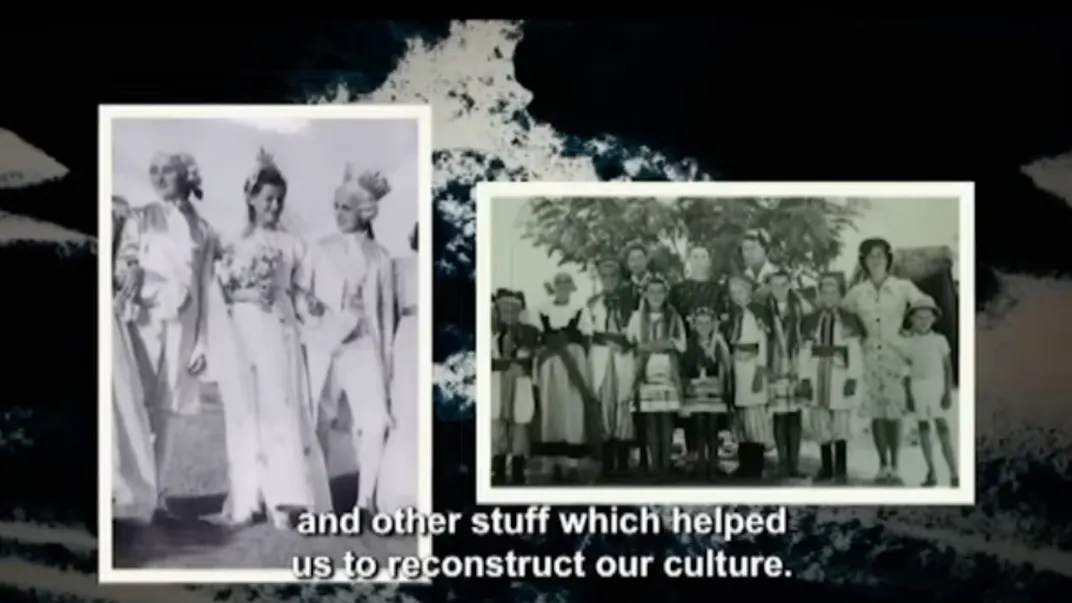
- Karolina Rybka, Balachadi Survivor (speaking to CBC News in 2019):
"Nobody wanted us. I have no idea what would have happened to us, a thousand kids. The war was everywhere… He saved our lives."
Future Outlook
Decades after his passing in 1966, the historical memory of Maharaja Digvijaysinhji’s humanitarian legacy has undergone a profound global revival, transitioning from a localized wartime anecdote to a cornerstone of modern Indo-Polish diplomatic relations.
In 2011, the Polish government posthumously honored the maharaja with the Commander’s Cross of the Order of Merit of the Republic of Poland. Five years later, in 2016, the Polish Parliament unanimously adopted a special resolution commemorating his extraordinary contributions to safeguarding Polish citizens during humanity’s darkest hour.
/https://tf-cmsv2-smithsonianmag-media.s3.amazonaws.com/filer_public/26/22/26224428-2728-4238-819f-15e0ca30a692/polish_child_refugees_and_war_orphans_in_india_1941.jpg)
Today, educational networks, public squares—such as Good Maharaja Square in Warsaw—and dedicated monuments serve as permanent reminders of his compassion. High-level diplomatic visits, including Indian Prime Minister Narendra Modi’s engagements honoring the maharaja’s memory, underscore how historical acts of empathy continue to bridge geographical and cultural divides. For the descendants of the Balachadi children and the global community, the legacy of the "Good Maharaja" remains a timeless reminder of moral leadership and shared humanity in the face of tyranny.



Comments
Facebook App ID not configured. Please add it in the Customizer.