

Executive Overview
Nearly three decades after the tragic and untimely death of Diana, Princess of Wales, the enduring fascination with her life, her marriage, and the chaotic twilight of her royal tenure has been thrown back into the global spotlight. Swan Song: Diana, My Sister, a highly anticipated and deeply controversial memoir penned by Diana’s younger brother, Charles Spencer, has arrived on bookshelves worldwide. Published by Penguin and translated into 12 languages, the book lays bare a series of sensational, highly charged claims concerning the late princess’s marriage to the then-Prince of Wales, the toxic mechanics of the British royal machinery, and the bitter fallout that followed her fatal car crash in Paris in August 1997.
The publication of the memoir, preceded by searing and explosive extracts serialised in the British tabloid The Daily Mail, has already triggered unprecedented shockwaves across the United Kingdom and beyond. Most notably, it provoked a rare, sharply worded public rebuttal from Buckingham Palace on behalf of King Charles III—an extraordinary intervention that underscores the high-stakes nature of the revelations.
Charles Spencer maintains that his primary motivation for writing the book is to "speak on Diana’s behalf" and to correct the historical record regarding "untruths that have become accepted over time." Yet, the text has deeply divided royal historians, biographers, and the public alike. While Spencer paints a vivid portrait of a sister isolated, distressed, and gaslit by the powerful institution she married into, critics have dismissed the volume as a vindictive, revisionist account that weaponises personal grief for commercial or emotional retribution. As the book hits global markets, it threatens to reignite deep-seated animosities within Britain’s royal family, casting a long shadow over the reign of King Charles III.
Read Also
Detailed Chronology: From Tumultuous Marriage to Posthumous Warfare
To fully understand the gravity of Charles Spencer’s revelations, it is necessary to examine the turbulent timeline of Diana’s life, the catastrophic events of 1997, and the immediate and long-term fallout that continues to plague the House of Windsor.
The Crucible of a Royal Marriage (1981–1996)
The marriage of Prince Charles and Lady Diana Spencer in July 1981 was heralded globally as a fairy tale. However, behind closed doors, the union was plagued by profound incompatibility, a significant age gap, and the lingering shadow of Charles’s long-standing relationship with Camilla Parker Bowles.
In Swan Song, Charles Spencer pulls back the curtain on the psychological toll this union took on his sister. He reveals that Diana frequently contemplated ending her own life during the darkest periods of the marriage. In one particularly harrowing passage, Spencer recounts how Diana would drive down to Beachy Head—a notorious chalk clifftop on the southern coast of England frequently chosen by individuals seeking to end their lives. According to the memoir, it was only her fierce, protective love for her young sons, Princes William and Harry, that ultimately "stopped her from going further."
Spencer also shares bizarre and intimate anecdotes told to him by Diana during their lives. He writes that Diana once informed him she believed her marriage was dissolving because Charles was "in love with his valet," a claim Spencer admits he found so improbable that he did not press her for further details. This union, which officially ended in a bitter and acrimonious divorce in 1996, set the stage for the intense public and media scrutiny that would define the rest of Diana’s life.
The Tragedy in Paris and the Phone Call of Contention (August 1997)
On August 31, 1997, Diana was killed alongside her companion, Dodi Fayed, and driver Henri Paul when their Mercedes crashed into a pillar in the Pont de l’Alma tunnel in Paris while fleeing paparazzi. The news sent shockwaves across the globe, sparking an unprecedented, collective outpouring of public grief in Britain for the woman who had come to be affectionately known as "the people’s princess."
However, it is the immediate aftermath of this tragedy that forms the core of Spencer’s most explosive allegations. According to the memoir, Charles Spencer received a phone call from the then-Prince Charles shortly after Diana’s death. Spencer claims that Charles did not sound devastated or grief-stricken, but rather "sounded giddily elated, like a lottery winner." Furthermore, Spencer alleges that Charles delivered the chilling declaration: "Rest assured, we’ll forget her soon enough."
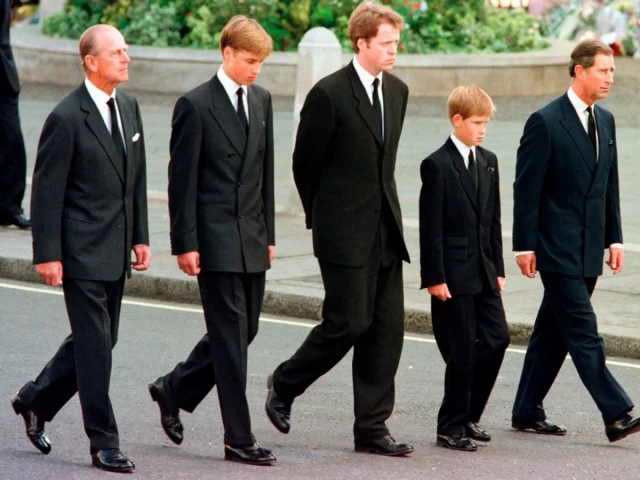
The friction continued into the planning of the state-style funeral. Spencer writes that Charles "went ballistic" when Spencer adamantly insisted that Diana would never have wanted her young sons—Princes William and Harry, then aged just 15 and 12—to walk behind her coffin in the televised funeral procession. Despite Spencer’s fierce objections, the boys ultimately walked the agonizing route, an image etched indelibly into modern British history.
The Funeral and the Fayed Encounters
In his memoir, Spencer also addresses the complex cast of characters surrounding Diana in her final months. While he omits much of the narrative regarding Dodi Fayed from the primary focus, he does acknowledge that the son of Harrods owner Mohamed Al-Fayed was genuinely "kind to Diana" during the summer of 1997.
However, Spencer introduces a deeply disturbing allegation regarding Mohamed Al-Fayed himself. He writes that Diana had felt profound "revulsion" toward the Egyptian billionaire after an incident in which Al-Fayed allegedly squeezed her buttocks and remarked in a leery, suggestive tone: "And in Egypt, father-in-law gets first go."
Supporting Context & Metrics: The Memoir’s Global Footprint
The release of Swan Song: Diana, My Sister is not merely a family memoir; it is a major publishing event with significant cultural, economic, and geopolitical ramifications.
- Global Reach and Scale: Published by Penguin, the memoir has been translated simultaneously into 12 languages, indicating massive anticipated international demand across Europe, the Americas, and the Commonwealth.
- Serialisation Impact: The intense bidding war and subsequent serialisation by The Daily Mail dominated British media headlines for days, proving that public appetite for Diana-related disclosures remains virtually insatiable nearly 30 years after her death.
- Authorial Background: Charles Spencer, the 9th Earl Spencer, is 62 years old and has built a career as an author, historian, and former US television journalist. As the custodian of the ancestral Spencer family estate, Althorp, he oversees the grounds where Diana is buried on a secluded island—a site that continues to draw thousands of pilgrims annually.
- Historical Echoes: Spencer’s intervention mirrors his famous, unsparing funeral eulogy in 1997, in which he publicly castigated the British press for having "blood on their hands" and made a solemn vow to protect William and Harry. Nearly three decades later, Spencer draws a direct parallel between the media’s "cancerous influence" on Diana and the relentless tabloid hounding that ultimately drove Prince Harry and his wife, Meghan Markle, to step back from royal duties and relocate to North America.
Official Statements and Institutional Reactions
The royal family has historically adhered to the unwritten mantra of the late Queen Elizabeth II: "Never complain, never explain." However, the sheer volatility of Charles Spencer’s claims prompted a historic and uncharacteristic breach of protocol from Buckingham Palace.
Buckingham Palace’s Rare Rebuttal
Speaking on behalf of King Charles III, a Buckingham Palace spokesperson issued a meticulously crafted yet devastatingly sharp statement addressing the claims made in the memoir:
"His Majesty is mindful that the pain of fraternal grief can cloud reason, affect judgement and colour memory in ways others do not recognise, even many years after such a loss."
The statement was immediately interpreted by constitutional experts and royal commentators as a direct challenge to Spencer’s mental clarity and emotional reliability.
Veteran BBC journalist Laura Kuenssberg captured the gravity of the palace’s intervention during a broadcast:

"The king is plainly furious, Buckingham Palace almost never issues any statement like that."
Charles Spencer Fights Back: Accusations of "Gaslighting"
Spencer did not take the palace’s rebuke lying down. In subsequent interviews with The Daily Mail and the BBC, he hit back with equal ferocity, accusing the monarch of psychological manipulation.
"It is not every day you wake up to find you’ve been gaslit by the king," Spencer remarked.
He further noted that the palace’s phrasing was a "rather poor imitation" of the famous formula used by the royal household five years prior in response to allegations of racism made by Prince Harry and Meghan Markle—namely, that "recollections may vary."
Challenging the palace to deny his exact quote about forgetting Diana, Spencer asserted: "Those are exactly the words he said. I don’t hear [King Charles] saying he didn’t say that."
Pushback from Historians and Biographers
The memoir has also faced fierce skepticism from established royal biographers and commentators who witnessed the events firsthand.
- Robert Hardman, a prominent royal biographer, took to social media platform X to dispute Spencer’s portrayal of a gleeful prince, stating that he personally witnessed Charles looking "distraught and in tears" at Diana’s funeral.
- Andrew Morton, author of the watershed 1992 biography Diana: Her True Story, wrote in The Times that Spencer’s claims regarding the phone call were "incendiary and disputed."
- Jennie Bond, a veteran royal commentator, went even further, labeling the memoir a "vindictive account" designed to settle old scores rather than offer an objective historical perspective.
Future Outlook: Implications for the Monarchy and the Spencer Family
As Swan Song: Diana, My Sister circulates globally, its long-term fallout for the British monarchy remains uncertain, yet fraught with peril.
- Widening the Royal Chasm: The already strained relationships within the Windsor family—particularly the profound estrangement between King Charles, Prince William, and Prince Harry—are unlikely to be mended by this publication. By dragging decades-old grievances back into the public eye, Spencer has forced the current monarch onto the defensive, deepening institutional paranoia regarding privacy and control over the family’s narrative.
- The Battle of Public Perception: While older generations of Britons may view Spencer’s book as a bitter and unnecessary excavation of past trauma, younger demographics and international readers may find resonance in its themes of institutional coldness, mental health struggles, and media intrusion—paralleling the modern narratives pushed by Prince Harry.
- The Final Word on Diana? Despite the volumes written about her, Diana remains a projection of collective public emotion. Swan Song attempts to reclaim her narrative through the eyes of her brother, but in doing so, it has ignited a historiographical war. Whether history judges Charles Spencer as a courageous truth-teller defending his sister’s memory or a vengeful chronicler distorting the past, one thing is certain: the ghost of Diana continues to wield immense power over the British crown, capable of rattling its foundations nearly thirty years after her passing.





Comments
Facebook App ID not configured. Please add it in the Customizer.