
Executive Overview
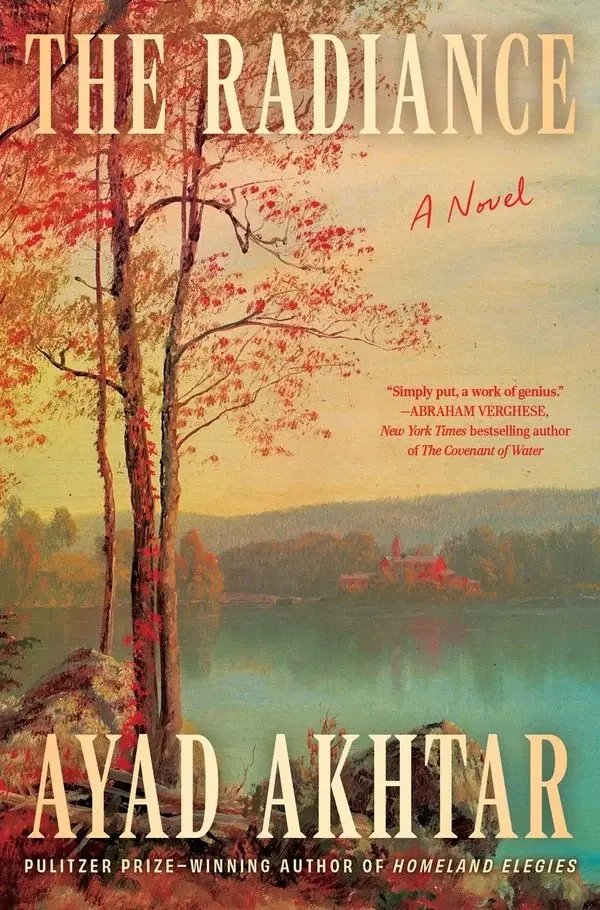
In an era dominated by collapsing attention spans and the rapid rise of generative artificial intelligence, Pulitzer Prize-winning playwright and novelist Ayad Akhtar is proposing a radically reconfigured architecture for contemporary fiction. Moving beyond the tight, plot-driven Aristotelian mechanics that defined his groundbreaking theater work—most notably his 2013 Pulitzer-winning play Disgraced—Akhtar’s novel The Radiance introduces a daring structural and philosophical model designed for an age of hyper-digital fragmentation.
In a comprehensive dialogue with writer Cherry Lou Sy, Akhtar unpacks what he terms "TikTok dramaturgy"—a narrative strategy that adapts to shorter attention spans not by simplifying content, but by accelerating the cycle of reader expectation and fulfillment. Rather than relying on the traditional three-act structure, The Radiance reframes its central narrative through varied, looping perspectives: legal filings, campus incident reports, psychological monologues, and therapy transcripts.
Yet beneath this modern formal experimentation lies a deeply classical project. Akhtar engages directly with the Western canon—from Shakespeare and Plato to Saul Bellow and Fyodor Dostoevsky—to confront a culture increasingly prone to reducing human consciousness to algorithmic computation. As automated cognition expands, Akhtar argues that literature must reclaim its interest in metaphysics, the soul, and the irreducible complexity of human interiority.
Read Also
       TRADITIONAL DRAMATURGY                   "TIKTOK DRAMATURGY"
  (Aristotelian / Linear 3-Act)             (Iterative / Reframing Arc)

      [Act I: Setup]                         [Expectation Triggered]
            │                                           │
      [Act II: Conflict]                     [Immediate Frustration/Fulfillment]
            │                                           │
      [Act III: Resolution]                  [New Angle Introduced]
                                             (Legal File / Monologue / Session)
                                                        │
                                             [Continuous Re-narration]
Detailed Chronology: From Stage Polemics to Prose Interiority
Akhtar’s rise to prominence as one of America’s most trenchant dramatists was marked by his ability to catalyze intense, immediate debate. The Broadway run of Disgraced at New York’s Lyceum Theater demonstrated the raw power of live theatrical rhetoric, frequently prompting heated arguments among audience members that spilled out of the auditorium and into the surrounding streets.
However, the transition from stage to prose demanded an entirely different artistic toolkit. While theater relies on externalized conflict and shared public space, prose fiction allows for an intimate, interior communion between writer and reader.
   POLITICAL THEATER                           PROSE FICTION
┌─────────────────────────┐               ┌─────────────────────────┐
│ • Immediate & Public    │               │ • Whispered Interiority │
│ • Dialogue & Action     │   VS. CRAFT   │ • Overt Context & Nuance│
│ • Audience Distance     │  TRANSITION   │ • Direct Consciousness  │
│ • Stage Rhetoric        │               │ • Recursive Reflection  │
└─────────────────────────┘               └─────────────────────────┘
The Dynamics of Stage vs. Page
- Immediate Rhetoric on Stage: Theater requires externalization. Ideas must be carried through physical action, vocal cadence, and direct dialogue. Political language often flourishes on stage because an audience sitting together experiences a built-in distance, enabling them to evaluate conflicting ideologies without feeling directly lectured to.
- Intimate Context in Prose: The novel allows the author to "whispering into a reader’s ear." Prose provides the space for granular context, nuance, and quiet internal shifts that cannot easily survive the visual and auditory scale of the theater.
- The Genesis of The Radiance: Centered on an academic protagonist named Ayad who survives a near-fatal automobile collision in rural New York, The Radiance explores the psychological disruption that follows trauma. The story’s reliance on deep interiority and fluctuating states of consciousness made it inherently suited for prose rather than the stage.
Supporting Context & Metrics: Structural Architecture and "TikTok Dramaturgy"
A central challenge facing contemporary writers is the evolution of consumer reading habits shaped by social media platforms. Akhtar addresses this shift not by capitulating to brevity, but by reframing how narrative momentum is built and sustained.
Deconstructing "TikTok Dramaturgy"
Traditional long-form narrative structure often relies on a slow, three-act build-up. In contrast, modern digital media conditions audiences to expect rapid narrative payoff. Akhtar’s concept of "TikTok dramaturgy" adapts to this environment by replacing the slow three-act ramp-up with a binary cycle of expectation and subversion.
+-------------------------------------------------------------------------+
|                    STRUCTURAL FORM COMPARISON                           |
+------------------------------------+------------------------------------+
| Traditional Three-Act Model        | Recursive "TikTok Dramaturgy"      |
+------------------------------------+------------------------------------+
| Linear progression (Begin/Mid/End) | Two-part cycle: Set & Frustrate    |
| Gradual build-up of stakes         | Immediate narrative "juice"        |
| Unitary point-of-view              | Recursive reframing across media   |
| Macro-question: "What happens next?"| Micro-question: "What is story now?"|
+------------------------------------+------------------------------------+
Rather than asking the reader to hold out for a distant climax, the novel continually reframes its central events through different stylistic lenses:
- Documentary Reframing: Legal filings, formal university reports, and administrative memos.
- Performative Monologues: Extended personal testimonies and theatrical-style monologues.
- Clinical Discourse: Therapy transcripts and psychological examinations.
This iterative approach draws inspiration from two distinct traditions: classical Indian music and Ovidian mythic nesting. In classical Indian music, the performance patiently unpacks the rasa (the emotional essence or "juice") of a melody through progressive variations. Similarly, The Radiance revisits core story events from new angles, constantly shifting the reader’s understanding of what the narrative actually represents.
The Philosophical Triad of Greek Love
Beneath its contemporary structural technique, The Radiance is organized around the classical Greek concepts of love, dividing the novel into three thematic sections that move toward emotional crescendos:
                  ┌──────────────────────────────┐
                  │      THE THREE CRESCE-NDOS   │
                  └──────────────┬───────────────┘
                                 │
         ┌───────────────────────┼───────────────────────┐
         ▼                       ▼                       ▼
   [ SECTION I ]           [ SECTION II ]          [ SECTION III ]
      STORGE                  AGAPE                    EROS
(Kinship & Family Love) (Universal Human Love) (Desire & Passion)- Storge (Familial Love): Explores familial ties, inherited identity, and relational duty.
- Agape (Universal Love): Examines empathy, social obligation, and shared humanity.
- Eros (Desire): Investigates passion, romantic obsession, and the volatile pursuit of connection.
Official Statements & Intellectual Dialogue
The discussion between Cherry Lou Sy and Ayad Akhtar explored key debates in contemporary literature, including the post-colonial identity, canonical influence, and the impact of technology on narrative art.
On Canonical Theft and Literary Evolution
Addressing how minority and post-colonial authors navigate the traditionally Western canon, Akhtar rejected the idea that literary history belongs exclusively to any single culture. Drawing on his early background in physical actor training under director Jerzy Grotowski, he emphasized that great literature must be actively engaged and embodied.

"Lesser artists borrow, great artists steal," Akhtar noted, referencing the adage attributed variously to Pablo Picasso, Igor Stravinsky, and T.S. Eliot. "70 percent of the words in King Lear are taken from another play with a similar title and much of the same plot—but a very, very terrible play. Shakespeare had acted in that play 20 years before he wrote his own version. That’s an interesting model of literary creation."
                 LITERARY TRANSMISSION & INFLUENCE

   [ Earlier Play: King Leir ] ──(20 Years of Embodiment)──► [ Shakespeare's King Lear ]
                                                                      │
   [ Classical Metaphysics ]   ──(Saul Bellow's Ravelstein)──► [ Modern Novelistic Form ]
Unifying the Mind and the Heart
Interviewer Cherry Lou Sy observed that the protagonist in The Radiance appears torn between a Western intellectual tradition and an Eastern spiritual framework, achieving synthesis only after surviving physical trauma.
Akhtar cited Carl Jung’s memoir, Memories, Dreams, Reflections, recalling an encounter between Jung and a Native American elder:
"We get confused sometimes when the white man talks about being here (pointing to the head), because we’re here (pointing to the heart)," the elder observed. "We don’t understand what it is to say that you’re in the head."
For Akhtar, classical texts—such as Plato’s Symposium and Phaedrus—offer ways to reconcile this split. In the Symposium, Aristophanes describes human beings as originally whole creatures who were divided in two, doomed to search for their missing halves. Modern literary fiction, Akhtar argues, can serve as a similar space for unifying intellect and emotion.
       WESTERN RATIONALISM                      EASTERN / INDIGENOUS TRADITION
   ┌──────────────────────────┐                    ┌──────────────────────────┐
   │ • Intellectual Head      │                    │ • Intuitive Heart        │
   │ • Analytical Division    │ ── TRAUMATIC ──►   │ • Experiential Unity     │
   │ • Categorical Thought    │    SYNTHESIS       │ • Metaphysical Grounding │
   └──────────────────────────┘                    └──────────────────────────┘
The Influence of Saul Bellow
Discussing how modern novelists engage with abstract philosophy without becoming dryly didactic, Akhtar pointed to Saul Bellow’s final novel, Ravelstein:
- The Mid-Century Taboo: Mid-20th-century literary culture often discouraged explicit metaphysical debate, preferring social realism or psychological naturalism.
- The Allan Bloom Model: Bellow circumvented this constraint in Ravelstein by basing his titular character on his friend, philosopher Allan Bloom. Because Bloom spoke naturally about classical philosophy, Bellow was able to explore Platonic metaphysics through a vivid character portrait.
- Elevating Reader Awareness: Following Bellow’s model, Akhtar uses classical references in The Radiance not for intellectual posturing, but to expand the reader’s baseline of awareness.
Future Outlook: AI, Automated Cognition, and the Revival of the Soul
As generative AI tools rapidly evolve, literary culture faces an unprecedented challenge. Akhtar contends that this technological shift will ultimately trigger a counter-reaction, sparking renewed interest in human consciousness and spiritual inquiry.
                   THE AI-HUMAN DIALECTIC

  [ Advanced AI Models ] ────► Automates Cognition & Pattern Matching
                                       │
                                       ▼
  [ Cultural Realization ] ───► Humans Are Not Computational Machines
                                       │
                                       ▼
  [ Literary Revival ]   ───► Resurgence of Metaphysical Inquiry &
                                The Human Soul (Dostoevsky/Emerson Models)
Moving Past the Computational View of Humanity
Akhtar argues that the current era of "automated cognition" will reveal the clear limits of viewing human beings as mere data-processing systems:
- The Fallacy of the Human Machine: Conceiving of human beings as computational machines has contributed to both environmental degradation and cultural alienation.
- The Return of Metaphysical Inquiry: As machine learning masters pattern recognition and language generation, human art will naturally pivot toward experiences that resist automation—such as spiritual contemplation, personal trauma, and existential wrestling.
- A New Space for Fiction: Akhtar points to the resurgence of interest in psychedelic research, holistic philosophy, and faith-based inquiries as evidence of this shift.
Ultimately, Akhtar calls on contemporary literature to reclaim the broad existential scope seen in 19th-century classics:
"The Russians talked about the soul all the time. I don’t know why we can’t. We should be able to."
By bridging modern narrative rhythms with classical philosophical traditions, works like The Radiance suggest that the novel remains a uniquely powerful space for exploring what it means to be human in an increasingly automated world.





Comments
Facebook App ID not configured. Please add it in the Customizer.