
Executive Overview
The legal battle concerning the immigration status of prominent Bollywood actor Imran Khan took a dramatic turn on Tuesday, October 27, 2026. The Bombay High Court intervened to pause a contentious government expulsion order, providing the 43-year-old American citizen and film personality with a temporary reprieve that allows him to remain in India until at least November 2, 2026.
The controversy erupted earlier in the month following Khan’s brief detention by security personnel in Mumbai on October 10. Indian authorities had accused Khan of violating the strict terms of his visa and immigration statutes by allegedly participating in a political demonstration organized by the Cockroach Janta Party (CJP). The rally—which called for the resignation of India’s Chief Election Commissioner, Gyanesh Kumar—triggered swift executive action, culminating in a government directive ordering Khan to exit the country by October 28.
In response, Khan’s legal counsel approached the Bombay High Court, petitioning against the deportation decree. The defense argued that the administrative order was fundamentally unconstitutional, arbitrary, and unsupported by factual evidence establishing that the actor actively participated in or mobilized the demonstration. During Tuesday’s proceedings, the High Court postponed the substantive hearing to November 2 due to technical reasons. Crucially, the bench assured the petitioner that no coercive measures or enforcement steps would be executed against Khan until the matter is revisited in court.
Read Also
This high-profile case highlights the intersection of immigration law, foreign nationals’ political rights in India, and the turbulent political climate surrounding the nation’s electoral administration. As legal and diplomatic observers monitor developments, the incident underscores the precarious legal realities foreign citizens face when interacting with civil unrest in host nations.
Detailed Chronology of Events
To fully understand the current legal standoff between Imran Khan and the Indian government, it is essential to trace the sequence of events from the initial protest to the courtroom intervention.
October 10, 2026: The Mumbai Protest and Detention
The controversy began on the afternoon of October 10, 2026, in Mumbai, during a demonstration organized by the Cockroach Janta Party (CJP). The protest was part of a broader national movement demanding the immediate resignation of Chief Election Commissioner Gyanesh Kumar.
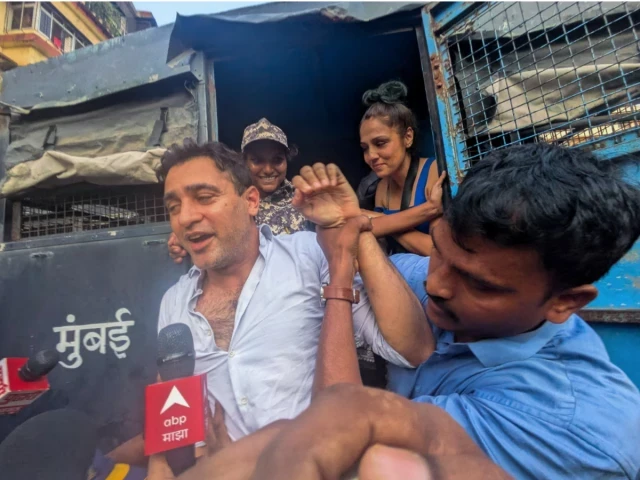
According to public statements released by Khan’s partner, actress and artist Lekha Washington, the actor’s involvement was entirely incidental. Washington stated that she, Khan, Khan’s mother, and a cousin had walked toward the designated protest site solely to inquire about the status of a friend who had been abruptly detained by local law enforcement. Upon arrival, the group was immediately swarmed by media representatives and surrounded by security forces.
Eyewitness accounts and media footage indicate that Khan was briefly detained alongside other demonstrators by security personnel. Despite the tense situation, images surfaced on social media—posted by both Khan and Washington—showing them smiling inside what appeared to be a police transport vehicle, seemingly unfazed by the sudden escalation. Washington later clarified that when pressed by reporters, Khan explicitly stated to the media, "We have no demands, we are not part of an organisation."
Nevertheless, police authorities logged the incident, marking Khan’s presence at a political gathering as a potential infraction of Indian administrative and immigration codes.
October 12–26, 2026: The Notice to Quit and Legal Mobilization
Following the October 10 incident, Indian immigration authorities reviewed the circumstances surrounding Khan’s presence at the CJP rally. Under Indian legal frameworks, foreign nationals visiting or residing in the country on non-immigrant visas are strictly prohibited from engaging in political activities, demonstrations, or campaigns. Participation in such events is construed as a direct breach of visa conditions, often carrying penalties that include visa revocation, financial fines, and immediate deportation.
By late October, the Ministry of Home Affairs—through regional immigration channels—issued a formal directive ordering Imran Khan to leave India by October 28, 2026.
Realizing the severity of the executive order, Khan’s legal team mobilized swiftly. They filed an urgent writ petition in the Bombay High Court, challenging the deportation directive on multiple constitutional grounds. Legal portal Live Law reported that Khan’s defense argued the government’s order lacked foundational evidence. Specifically, the appeal emphasized that authorities failed to produce documentation or witness testimony proving that Khan engaged in crowd mobilization, delivered speeches, or formally aligned himself with the CJP’s political objectives.
October 27, 2026: The Bombay High Court Hearing
On Tuesday, October 27, the Bombay High Court convened to hear the initial arguments regarding Khan’s petition. Due to technical reasons cited by the bench, the substantive hearing was rescheduled for November 2, 2026.
To prevent any prejudice to the petitioner while the court deliberated the technicalities, the bench ruled that the challenged deportation order must remain on hold. According to updates published by legal tracking platform Bar and Bench via social media, government representatives assured the court that no coercive steps—such as forced detention or physical expulsion—would be executed against Khan prior to the upcoming hearing.
This interim protection grants Khan a brief window of stability, shielding him from executive enforcement while his legal team prepares a comprehensive defense against the immigration charges.
Supporting Context and Metrics: The Political Landscape
The legal jeopardy faced by Imran Khan cannot be divorced from the volatile political climate currently gripping India regarding its electoral administration. The protest in Mumbai was merely one node in a vast, nationwide wave of demonstrations targeting the highest echelons of India’s electoral machinery.
The Controversy Surrounding Chief Election Commissioner Gyanesh Kumar
At the heart of the civil unrest is widespread discontent directed at Chief Election Commissioner Gyanesh Kumar. Opposition political parties, civil society organizations, and activist networks have mounted sustained pressure demanding Kumar’s resignation.
The grievances stem primarily from controversial revisions made to national voter lists. Critics and opposition leaders have alleged that recent administrative drives to verify India’s massive electorate—surpassing one billion voters—contain systematic flaws designed to disenfranchise specific demographics. Opponents argue that these electoral modifications disproportionately benefit Prime Minister Narendra Modi and the ruling Bharatiya Janata Party (BJP).
The Election Commission of India (ECI) has repeatedly defended its voter verification initiatives, maintaining that the processes are transparent, lawful, and necessary to maintain the integrity of the electoral rolls. However, the intensity of the pushback has transformed routine administrative procedures into flashpoints for national protest, drawing participants from diverse backgrounds—including, inadvertently or otherwise, prominent cultural figures.
Immigration Law and Foreign Nationals in India
India’s Foreigners Act, alongside specific provisions governing visa issuance and tourist or business stays, establishes strict boundaries for non-citizens. While foreign nationals enjoy fundamental protections under Article 21 of the Indian Constitution (pertaining to right to life and personal liberty), the Supreme Court of India has consistently held that the fundamental freedom of speech and expression (Article 19) is primarily guaranteed to Indian citizens.
Furthermore, standard tourist, business, or employment visas explicitly prohibit engagement in:
- Political campaigns, rallies, or demonstrations.
- Public lectures or press conferences addressing contentious domestic political issues.
- Activism that interferes with public order or state administration.
When a foreign national is documented participating in a political gathering, the Ministry of Home Affairs possesses sweeping discretionary authority to cancel their visa, declare them a persona non grata, and enforce immediate expulsion. For Imran Khan, the legal battle hinges on whether his brief presence at the Mumbai site—which he and his representatives maintain was purely accidental and driven by personal concern for a detained friend—constitutes "participation" under the strict definitions of Indian immigration law.
Official Statements and Stakeholder Perspectives
As the case unfolds, statements from various stakeholders have shed light on the divergent narratives surrounding the incident.
The Defense: Imran Khan and Lekha Washington
Imran Khan has maintained a relatively low public profile regarding the ongoing legal proceedings, leaving communication largely to his legal representatives and partner, Lekha Washington.
In her comprehensive Instagram post published on October 12, Washington detailed the afternoon’s events to counter what she characterized as sensationalized media narratives. She emphasized that the family’s journey to the protest zone was motivated entirely by a personal emergency—specifically, locating a friend who had been detained by law enforcement.
Washington’s account stresses the absence of intent:
"He (Imran) responded to the questions of the media, saying we have no demands, we are not part of an organisation."
The legal team’s submission to the Bombay High Court builds upon this narrative, asserting that administrative overreach occurred when immigration authorities equated accidental proximity to a political crowd with active political subversion. The defense contends that penalizing a foreign national based on media optics rather than verified, overt acts of protest violates principles of natural justice and constitutional fairness.
Government and Law Enforcement Silence
Official commentary from executive authorities has been sparse. The Ministry of Home Affairs has relied on standard administrative protocols, issuing the initial deportation order based on police reports from Mumbai.
Significantly, local law enforcement agencies in Mumbai have avoided making public statements addressing the specifics of Khan’s detention or the subsequent legal challenges. When contacted by international media outlets, the Mumbai Police Commissioner’s office declined to provide immediate comments to Reuters inquiries, maintaining an official silence that has fueled intense speculation across both mainstream and social media platforms.
Future Outlook: What Lies Ahead for Imran Khan?
With the Bombay High Court postponing the substantive hearing to November 2, 2026, all eyes are now fixed on the upcoming judicial proceedings. The outcome of this case carries significant implications not only for Imran Khan personally but also for broader jurisprudence regarding the rights of foreign nationals during periods of civil unrest in India.
Potential Legal Scenarios
-
Judicial Relief and Visa Reinstatement:
If the Bombay High Court accepts the defense’s argument that Khan lacked political intent and that evidence of active participation is insufficient, the court may quash the deportation order entirely. Such a ruling would compel the Ministry of Home Affairs to rescind the expulsion notice, allowing Khan to complete his stay in India under his current legal status. -
Upholding the Executive Order:
Conversely, if the court rules that the executive branch acted within its statutory rights under the Foreigners Act—emphasizing that foreign nationals bear strict liability regarding proximity to political demonstrations—the deportation order will be reinstated. In this scenario, Khan would be legally mandated to depart India immediately, with potential long-term consequences for future visa applications. -
Compromise or Voluntary Departure:
Given the high-profile nature of the case and Khan’s familial ties to the Bollywood industry (as the nephew of renowned filmmaker and actor Aamir Khan), diplomatic or legal channels could yield a quiet resolution. Khan might be permitted to depart voluntarily without facing formal, punitive deportation markers that would permanently bar his return.
Cultural and Industrial Ramifications
Imran Khan’s temporary legal crisis has also reignited interest in his career. Having established himself as a prominent romantic and comedic lead in Bollywood hits between 2008 and 2015—such as Jaane Tu… Ya Jaane Na, I Hate Luv Storys, and Delhi Belly—Khan had stepped away from the cinematic spotlight before this unexpected return to public prominence.
Regardless of whether the Bombay High Court rules in his favor or upholds the government’s directive, the case serves as a high-profile reminder of the rigid boundaries governing foreign nationals in contemporary India. As November 2 approaches, legal analysts, Bollywood enthusiasts, and political observers alike await a judicial decision that will set a crucial precedent for administrative authority and civil liberties.


Comments
Facebook App ID not configured. Please add it in the Customizer.