
Executive Overview
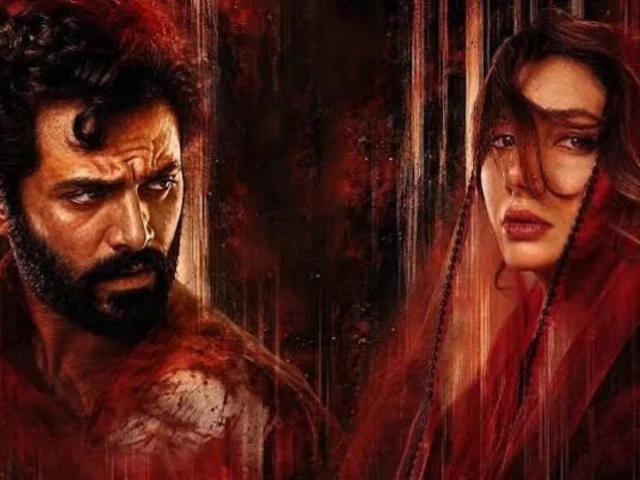
Television audiences across South Asia and the global diaspora are holding their collective breath as the promotional campaign for the upcoming drama serial Mitti De Baway intensifies. Featuring a dream pairing of two of Pakistan’s most bankable and critically acclaimed superstars—Mahira Khan as Billo and Wahaj Ali as Baala—the project has swiftly ascended to become the most anticipated television event of the year.
The release of the latest, highly cryptic teaser has fundamentally shifted the narrative surrounding the series. While initial promotional materials established the project’s rustic, atmospheric rural setting and the basic premise of a fractured connection, the third teaser has ripped open a Pandora’s box of past relationships, multiple marriages, deep-seated secrets, and institutional violence. Far from being a conventional, star-crossed romance, Mitti De Baway appears to be a multi-layered, psychologically complex exploration of how time, trauma, and unyielding choices warp human beings beyond recognition.
Spanning a timeline that moves deliberately from 1999 into the early 2000s, the drama charts an arduous, heartbreaking evolution. Mahira Khan’s character transforms from a vulnerable, lovestruck young woman into a commanding pir (spiritual guide) holding sway over a devout following. Meanwhile, Wahaj Ali’s Baala morphs from a youthful counterpart into a hardened, formidable figure entangled in violent encounters and prison walls.
Read Also
As fans and television critics dissect every frame of the recent footage, the core question haunting the narrative is no longer whether Billo and Baala will find their way back to one another. Instead, the central mystery has become far darker: What catastrophic events tore them apart, what lives did they lead in the interim, and do the shadows of their past leave any room for redemption in the present?
Detailed Chronology: Unpacking the Plot and Character Arcs
To truly comprehend the intricate web woven by the creators of Mitti De Baway, one must examine the chronological breadcrumbs dropped through the project’s trailers and teasers. The storytelling methodology employed by the makers relies heavily on non-linear reveals, juxtaposing nostalgic innocence against gritty, unvarnished modern realities.
The Turn of the Millennium: 1999 and the Roots of Innocence
The narrative foundational blocks are laid in the year 1999. In these early flashbacks, Billo and Baala are presented through a lens of raw, unfiltered youth. Their connection is depicted as deep and visceral, anchored in the rich, earthy aesthetics of Pakistan’s rural heartland. However, even within these glimpses of the past, the seeds of separation are sown.
Unlike typical romantic dramas where external socio-economic pressures or parental disapproval serve as the primary antagonists, Mitti De Baway hints at internal fractures. The early bond between Billo and Baala was not immune to the complexities of human desire and volatile tempers. The year 1999 serves as the baseline—a golden era of what might have been, sharply contrasted by the brutal realities of the years that followed.
The Leap to 2002: Transformation and Metamorphosis
The narrative timeline significantly shifts forward to the year 2002, marking a profound rupture in the lives of the protagonists. This temporal leap is not merely a passage of time; it represents a psychological and spiritual transformation.
Mahira Khan’s Billo is no longer the girl tied to memories of young love. Instead, she has emerged as a pir—a spiritual figure of authority, commanding respect, fear, and devotion from those around her. Her eyes carry the weight of experiences that remain hidden from the audience, and her physical transformation is underscored by striking, enigmatic bridal imagery. Glimpses of Billo adorned in various wedding attire suggest that marriage, or multiple marriages, formed a crucial, perhaps inescapable, part of her journey away from Baala. Yet, these unions appear shrouded in ambiguity, leaving viewers to question whether they were born of duty, survival, or strategic necessity.
Baala’s Descent: Prisons, Pains, and Parallels
Equally fractured is the trajectory of Wahaj Ali’s Baala. The modern-day iteration of Baala bears little resemblance to the youth of the 1999 flashbacks. He is portrayed as a dangerous, battle-scarred man, navigating a world defined by violence, incarceration, and intimidation.
The teaser footage places Baala behind prison bars and in the midst of violent confrontations, signaling that his life took a distinctly criminal or rebellious turn. Yet, beneath this hardened exterior lies a persistent emotional anchor. Dialogue exchanges within the promotional material strongly suggest that despite the passage of time and the entanglement of other women in his life, Baala’s emotional core remained chained to Billo.
The complexity of Baala’s current life is further highlighted by the presence of multiple women, each seemingly holding a claim to his attention or affection. A striking exchange in the teaser—where one woman questions another regarding what she possesses that the former lacks—indicates that Baala leaves a trail of emotional collateral damage wherever he goes. Despite these complex entanglements, his psychological fixation on Billo persists, driving the conflict of their inevitable reunion.
Supporting Context & Metrics: The Cultural and Industrial Impact
Mitti De Baway arrives at a fascinating juncture in Pakistani television history. As domestic dramas increasingly lean into formulaic urban romances, family politics, or predictable love triangles, this project represents a bold return to high-concept, atmospheric storytelling rooted in rural realism and complex character studies.
Star Power and Creative Collaboration
The pairing of Mahira Khan and Wahaj Ali is nothing short of a casting coup for the industry. Mahira Khan, internationally recognized for her cinematic poise and ability to carry emotionally heavy, nuanced roles (Humsafar, Sadqay Tumhare, The Legend of Maula Jatt), brings an undeniable gravitas to the character of Billo. Her transition from a romantic lead to a commanding spiritual figure requires a delicate balance of vulnerability and authority, a range Khan has consistently mastered.
On the other side of the screen, Wahaj Ali has cemented his status as a powerhouse performer capable of extraordinary emotional depth. Following his meteoric rise in projects like Tere Bin and Ishq Murshid, Ali’s portrayal of Baala—shifting seamlessly from a soft-spoken youth to an incarcerated, hardened figure—demonstrates his versatility as an actor willing to embrace morally grey, complex characters.
Digital Engagement and Audience Reception
The marketing strategy for Mitti De Baway has broken conventional molds by relying on cryptic, puzzle-piece teasers rather than linear exposition. This approach has triggered unprecedented engagement across digital platforms:
- Teaser Performance: Each successive teaser released on YouTube and official social media handles has accumulated millions of views within hours of publication.
- Critical Acclaim: Industry peers, directors, and veteran critics have lauded the cinematic framing, color grading, and costume design, which evoke the aesthetic of parallel cinema rather than daily soap operas.
- Social Media Discourse: Hashtags related to the drama, Mahira Khan’s pir look, and Wahaj Ali’s dual avatars have consistently trended on X (formerly Twitter) and Instagram, with fan theories dissecting every second of footage.
Official Statements and Industry Insights
While the creators of Mitti De Baway have maintained a tightly guarded perimeter around the plot details to preserve the mystery, promotional disclosures and behind-the-scenes glimpses have offered valuable insights into the artistic vision steering the project.
Insiders close to the production note that the script was developed over an extended period to ensure historical and cultural authenticity, particularly regarding the socio-spiritual dynamics of rural communities during the late 1990s and early 2000s. The depiction of Billo’s ascension to the status of a pir was reportedly researched extensively to avoid superficial tropes and instead present a compelling, respectful portrayal of spiritual authority intertwined with personal grief.
Furthermore, the directorial vision emphasizes visual storytelling. Rather than relying solely on expositional dialogue, the narrative utilizes costume changes, lighting shifts—moving from the sun-drenched, warm tones of 1999 flashbacks to the cold, stark blues and greys of prison cells and spiritual abodes in 2002—to communicate the internal decay and evolution of the characters.
Mahira Khan and Wahaj Ali have both expressed immense excitement regarding their collaboration, noting in brief promotional interviews that the psychological demands of their respective roles pushed them out of their comfort zones. The intense physical transformations, ranging from period-accurate styling to demanding action and emotional sequences, underscore the actors’ commitment to delivering a definitive television experience.
Future Outlook: What to Expect When Mitti De Baway Premieres
As the promotional cycle nears its climax, anticipation has reached a fever pitch. The central question facing the audience is no longer whether Mitti De Baway will be a commercial success—that metric has already been secured by the staggering digital metrics and celebrity endorsements. The true test will lie in the execution of its ambitious, non-linear narrative.
Narrative Trajectories and Unresolved Questions
When the drama finally premieres on television screens and streaming platforms, viewers will be tasked with navigating several critical narrative threads:
- The Nature of Billo’s Marriages: The lingering shots of Billo in various bridal looks demand a thorough explanation. Were these marriages forced upon her by family or societal pressures following her separation from Baala, or did she weaponize marriage as a tool for survival and social elevation on her path to becoming a pir?
- Baala’s Fall from Grace: What specific events transformed a passionate young man into an inmate navigating the brutal realities of prison life? The bridge between the 1999 flashbacks and Baala’s modern-day criminality represents the emotional core of his redemption arc.
- The Power Dynamic of the Reunion: When Billo and Baala finally stand face-to-face in the present timeline, the power dynamic has completely inverted. Billo, once the vulnerable lover, now commands spiritual and social authority, while Baala stands marginalized by violence and incarceration. How Billo chooses to exercise her power over the man who once shaped her world will dictate the emotional climax of the series.
Conclusion
Mitti De Baway positions itself not merely as a high-budget television serial, but as a cinematic examination of human frailty, regret, and transformation. By refusing to offer easy answers in its promotional campaign, the creative team has successfully cultivated an environment of intense intellectual and emotional engagement among viewers.
As the release date approaches, Mahira Khan and Wahaj Ali stand at the precipice of delivering what could be defining performances of their respective careers. For audiences, the journey back to 1999 and forward into the unforgiving landscapes of the 2000s promises to be a haunting, unforgettable television experience—one where the soil of the past refuses to let go of those who try to escape it.





Comments
Facebook App ID not configured. Please add it in the Customizer.