
Executive Overview
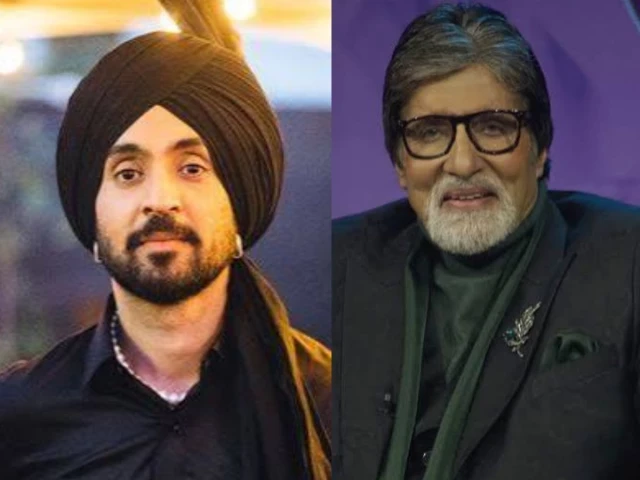
The security apparatus in India’s commercial and political capitals has been placed on high alert following a wave of alarming security developments involving Bollywood icon Amitabh Bachchan and Punjabi music megastar Diljit Dosanjh. Mumbai Police have launched a comprehensive, high-priority investigation into a threatening email that explicitly names high-profile locations across the metropolis, including Bachchan’s famed Juhu residence, Jalsa, and Dosanjh’s upcoming, highly anticipated live performance at the Mahalaxmi Racecourse.
The ominous message, which has triggered heightened vigilance among law enforcement agencies and intelligence units, also reportedly targets civic institutions, including the Mumbai Mayor’s office and several prominent educational facilities, while outlining specific dates and times for purported acts of violence. The emergence of these threats underscores the persistent vulnerabilities faced by high-net-worth public figures and major mass-gathering events in contemporary urban environments.
Concurrently, the regulatory landscape surrounding Diljit Dosanjh’s ongoing Aura India Tour has faced severe friction in the national capital. Following days of intense administrative negotiations, security assessments, and public speculation, the New Delhi leg of the tour—scheduled for October 30 at the Jawaharlal Nehru Stadium—has officially received clearance from the Delhi Police. This clearance was secured only after event promoters submitted exhaustive crowd-management frameworks and traffic-mitigation blueprints to appease law enforcement concerns driven by festive-season policing commitments and prior threat intelligence inputs.
Read Also
This comprehensive report examines the multi-city security crisis, detailing the nature of the threats received in Mumbai, the administrative hurdles overcome in New Delhi, the broader implications for the entertainment industry, and the evolving protocols governing public safety at India’s largest cultural events.
Detailed Chronology: From Digital Threat to Law Enforcement Mobilization
The Origin and Content of the Mumbai Threat Email
The sequence of events leading to the ongoing Mumbai Police investigation began with the receipt of an unsolicited electronic mail message sent to multiple civic and security-related inboxes. According to preliminary findings cited by Gulf News, the communication was deliberately designed to maximize psychological impact and public disruption by citing a cascade of high-profile targets across India’s financial capital.
Among the specific sites named in the digital missive are:
- ‘Jalsa’: The iconic Juhu bungalow of legendary actor Amitabh Bachchan, a frequent gathering point for fans and a heavily monitored residential zone.
- The Mahalaxmi Racecourse: The sprawling historic venue designated to host Diljit Dosanjh’s upcoming Mumbai concert, an open-air site notorious for presenting complex perimeter-security challenges.
- The Mumbai Mayor’s Office: A core civic institution representing municipal governance and public administration.
- Selected Educational Institutions: Various schools across the city, introducing a deeply concerning dimension to the threats by targeting minor-dense environments.
Chronological Markers and Specific Dates
Law enforcement analysts are currently focusing heavily on the chronological timestamps embedded within the threatening correspondence. The email specifically isolates two critical calendar dates:
- October 31: Designated in the text as the purported temporal window for an attack targeting Amitabh Bachchan’s residence. This date carries distinct symbolic and administrative weight, coinciding with heightened security postures nationwide due to historical anniversaries and pre-Diwali festivities.
- November 27: Linked directly to Diljit Dosanjh’s scheduled live concert in Mumbai. This date sits squarely in the middle of the singer’s tour cycle, threatening to disrupt one of the most commercially lucrative and heavily attended live music events of the year.
Upon receiving the alert, the Cyber Crime Cell and the Crime Branch of the Mumbai Police initiated technical traces to unmask the IP addresses, routing servers, and origin points of the communication. Simultaneously, threat-assessment teams were dispatched to evaluate the physical security posture around Jalsa and the Mahalaxmi Racecourse, coordinating closely with private security details and local police stations.
Supporting Context & Metrics: The Mechanics of the Aura India Tour and Delhi Clearance
While Mumbai law enforcement contends with digital threats, the logistical machinery behind Diljit Dosanjh’s Aura India Tour has been forced to navigate a labyrinth of bureaucratic and security hurdles in New Delhi. The tour, which has shattered ticketing records and established new benchmarks for live entertainment revenue in South Asia, relies on massive logistical coordination between international booking agencies, local promoters, and municipal authorities.
The New Delhi Administrative Standoff
The crisis surrounding the New Delhi leg began when initial permissions for the October 30 concert at the Jawaharlal Nehru Stadium were withheld by local authorities. The administrative pushback was not arbitrary; it stemmed from a confluence of systemic pressures:
- Festive Season Policing Commitments: The concert fell during the peak of the Diwali and festive shopping season, a period when local police forces are stretched to their absolute limits managing market crowds, traffic congestion, and general law and order across the capital territory.
- Intelligence Inputs: Security agencies flagged potential vulnerabilities regarding crowd density, perimeter breaches, and specific threat inputs that had surfaced in the weeks leading up to the event.
Rumors of a total cancellation quickly swept across social media platforms, fueled by fans’ anxiety and speculative journalism. However, primary event organizers, including BookMyShow Live, pushed back against the narrative of cancellation, initiating high-level crisis management protocols.
The Security Plan Submission and Resolution
To salvage the capital city stop of the tour, event promoters engaged in direct, intensive negotiations with senior officials of the Delhi Police. The turning point in the administrative standoff came with the formal submission of a comprehensive, multi-layered security document.
Key pillars of the approved security framework included:
- Advanced Crowd Management: Deployment of professional marshals, modular barricading systems, queue-flow analytics, and designated holding areas to prevent stampedes and crush scenarios.
- Traffic Infrastructure Integration: Collaboration with the Delhi Traffic Police to establish dedicated diversion routes, temporary parking zones, and public transit integration plans to minimize urban gridlock around the Jawaharlal Nehru Stadium.
- Surveillance and Emergency Response: Installation of high-definition CCTV arrays with facial recognition capabilities, dedicated medical triage stations staffed by emergency physicians, and direct communication links with local law enforcement command centers.
Satisfied with these rigorous provisions, the Delhi Police officially rescinded the administrative hold, granting full clearance for the concert to proceed as originally planned on October 30.
Official Statements and Institutional Responses
As the dual crises in Mumbai and New Delhi unfolded, representatives from law enforcement, municipal bodies, and the entertainment industry issued statements aimed at balancing public safety with transparency.
Mumbai Police Perspective
Senior officials within the Mumbai Police have adopted a cautious yet uncompromising stance. While standard operating procedures dictate that digital threats of this nature must be thoroughly vetted before conclusions are drawn regarding their credibility, authorities have emphasized that no risk—however improbable—will be ignored.
A senior police spokesperson noted:
"We have taken cognizance of the email received by multiple authorities. The Cyber Cell is actively tracking the digital footprint of the sender. Concurrently, local police divisions have been instructed to maintain heightened vigilance around all named properties and event venues. We urge citizens not to panic, as appropriate preventive measures are fully operational."
Promoter and Management Responses
BookMyShow Live, alongside management teams representing Amitabh Bachchan and Diljit Dosanjh, maintained a united front throughout the ordeal. Representatives for Dosanjh reiterated that the artist’s safety, as well as the safety of his legions of fans (affectionately known as "Dosanjhalawals"), remains the paramount priority.
In an official statement released following the Delhi clearance, promoters clarified:
"The reports circulating regarding the cancellation of the New Delhi concert are entirely baseless. Following constructive dialogues with the Delhi Police and the successful submission of our comprehensive security and crowd-management blueprints, the show is officially locked in. We thank the authorities for their cooperation and look forward to delivering a world-class, secure musical experience."
Representatives for Amitabh Bachchan have thus far refrained from issuing public statements, allowing the Mumbai Police security apparatus and private security details to manage the situation around Jalsa without public distraction.
Future Outlook: Implications for Live Entertainment and Urban Security in India
The convergence of digital terror threats and logistical bottlenecks in the span of a single tour cycle highlights critical vulnerabilities and emerging trends within India’s rapidly expanding entertainment and live events sector.
1. The Professionalization of Event Security
The hurdles faced by the Aura India Tour in Delhi signal a permanent shift in how municipal authorities view mega-concerts. Moving forward, the days of securing last-minute permits based on casual assurances are effectively over. Promoters must now treat security planning as an academic and engineering discipline, integrating predictive crowd analytics, private intelligence gathering, and military-grade perimeter controls into their core budgets.
2. The Weaponization of Digital Threats
The ease with which anonymous actors can disrupt national supply chains, public morale, and major economic events via threatening emails points to a growing legal and technological challenge for Indian cyber-investigators. The Mumbai Police investigation into the October 31 and November 27 threats will likely serve as a test case for how quickly and effectively state apparatuses can unmask digital bad actors who exploit public-facing municipal email infrastructure.
3. Economic Resilience of the Live Performance Market
Despite the turbulence, the unyielding demand for live music—exemplified by Diljit Dosanjh’s record-breaking ticket sales and eventual administrative clearance in Delhi—demonstrates that India’s live entertainment economy possesses robust structural resilience. Fans and investors alike have shown that they will adapt to heightened security protocols rather than retreat from public cultural spaces.
As October 31 and November 27 approach, law enforcement agencies in both Mumbai and New Delhi remain on high alert. The coming weeks will test the efficacy of the newly implemented security architectures, setting a vital precedent for how the world’s largest democracy protects its cultural icons and public gatherings in an increasingly complex security landscape.




Comments
Facebook App ID not configured. Please add it in the Customizer.