
Executive Overview
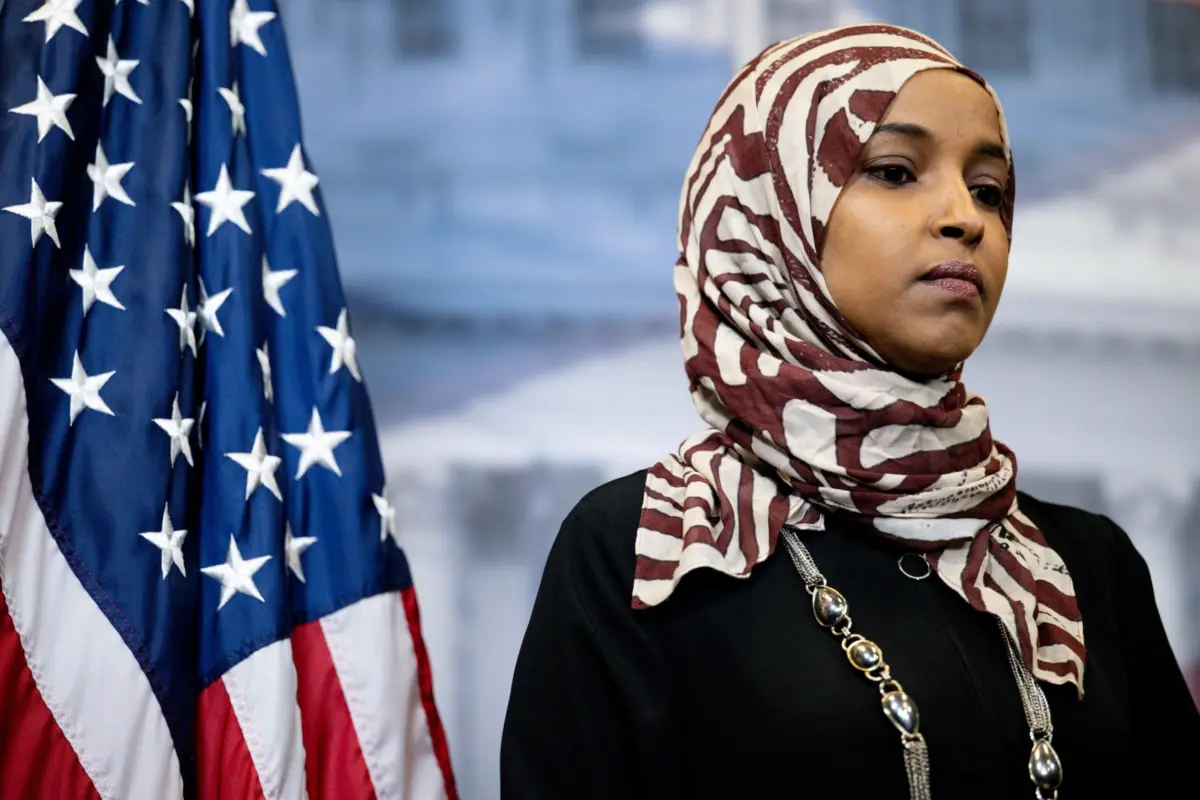
In a stunning and unprecedented escalation of executive power targeting a sitting member of the United States Congress, Homeland Security officers executed a high-profile raid on the Washington, D.C., residence of Representative Ilhan Omar (D-MN). The raid, initially shrouded in the routine opacity of bureaucratic immigration inquiries, has since been revealed through investigative reporting by The Wall Street Journal to be part of a coordinated, explicit strategy by the Trump administration: to strip the Somali-American lawmaker of her United States citizenship and ultimately deport her.
This aggressive move marks a chilling paradigm shift in American governance. For decades, the Department of Justice (DOJ) has adhered to strict, nonpartisan norms designed to insulate law enforcement from political interference—most notably the longstanding internal guideline prohibiting visible investigative actions in politically sensitive cases within 60 days of an election. By bypassing these guardrails, the administration has signaled a willingness to deploy the vast machinery of the federal state against its most vocal political opponents.
While denaturalization—the legal process of revoking citizenship from a naturalized American—has historically been reserved for egregious cases involving war criminals, terrorists, or major immigration fraudsters, the second Trump administration has quietly transformed it into an ambitious policy priority. Reports indicate that the DOJ has been targeting hundreds of foreign-born Americans for denaturalization per month. However, applying this mechanism to a sitting federal legislator represents a dangerous threshold, transforming citizenship from an unalienable constitutional guarantee into a precarious status contingent upon the political goodwill of the executive branch.
Read Also
Detailed Chronology of Events
The Monday Raid
The sequence of events began unfolding on a Monday morning when federal Homeland Security officers descended upon Representative Omar’s Washington, D.C., home. The sudden execution of a search warrant sent immediate shockwaves through Capitol Hill and legal circles alike. Initial briefings suggested that the raid was tied to a narrow administrative inquiry regarding immigration paperwork submitted by Omar’s father decades prior, when the congresswoman was still a minor.
Given Donald Trump’s well-documented, long-running animosity toward Omar—a prominent progressive lawmaker, refugee, and frequent target of the president’s xenophobic rhetoric—observers immediately viewed the action with profound skepticism. Legal experts and ethics watchdogs flagged the timing and nature of the raid as an extraordinary violation of DOJ norms, casting serious doubt on the investigation’s independence and integrity.
The Wall Street Journal Revelation
The true scope of the federal inquiry came to light late Wednesday evening, when The Wall Street Journal published a report detailing the administration’s ultimate objective. Far from a routine or minor paperwork check, the investigation into Omar is explicitly tailored to build a legal case for denaturalization.
According to sources familiar with the matter, federal investigators are scrutinizing the circumstances of Omar’s arrival in the United States and her subsequent naturalization. Omar arrived in the U.S. as a refugee fleeing the civil war in Somalia when she was 12 years old, eventually obtaining U.S. citizenship at age 17. The administration’s case reportedly centers on allegations that Omar or her family members misrecorded her age or background information on historical immigration documents to facilitate a smoother path to resettlement and eventual citizenship.
The Legal Mechanics of Denaturalization
While the revelation of the raid and its underlying intent has sparked national alarm, legal scholars emphasize that the executive branch cannot unilaterally strip an American citizen of their citizenship. Unlike executive orders or administrative rulemakings, denaturalization requires formal judicial intervention.
To strip Omar of her citizenship, the Justice Department must file a civil denaturalization lawsuit in a federal district court, where the government bears a heavy burden of proof. Prosecutors must demonstrate by "clear, unequivocal, and convincing" evidence that citizenship was illegally procured or obtained through willful misrepresentation of a material fact. Nevertheless, initiating the process through high-profile raids and protracted litigation serves an immediate political purpose: casting a cloud of illegitimacy over the target, draining their resources, and weaponizing the judicial system for political intimidation.
Supporting Context & Metrics: The Scale of Denaturalization
To fully grasp the gravity of the investigation into Representative Omar, it must be viewed within the broader context of the Trump administration’s systematic overhaul of U.S. immigration and citizenship policies. While the administration’s mass deportation initiatives targeting undocumented immigrants have received extensive media coverage, a parallel, highly bureaucratized campaign targeting naturalized citizens has expanded quietly behind the scenes.
Scaling Up the DOJ Denaturalization Unit
Historically, federal denaturalization cases were exceedingly rare. For decades, the DOJ’s Civil Division pursued only a handful of cases annually, primarily focusing on Nazi war criminals, individuals who concealed human rights abuses abroad, or high-profile financial fraudsters who lied on naturalization applications.
However, during Donald Trump’s second term, this mandate has undergone a radical transformation. Investigative reporting by NBC News and The New York Times earlier this year revealed that the DOJ has quietly repurposed and expanded its denaturalization infrastructure.
- Targeting Hundreds: Internal memos and whistleblower accounts indicate that the DOJ has targeted hundreds of foreign-born U.S. citizens for possible denaturalization proceedings.
- Aggressive Monthly Quotas: The administration has reportedly established internal benchmarks aiming to advance hundreds of new denaturalization cases per month.
- The Legal Bottleneck: Despite the administration’s ambitious targets, successfully stripping naturalized citizens of their legal status remains legally arduous. Federal courts have historically guarded the sanctity of citizenship, requiring airtight evidence that a past misrepresentation was both willful and material to the naturalization decision.
A Threat to Naturalized Americans
The expansion of these powers has profound implications for the tens of millions of naturalized citizens living in the United States. When citizenship can be retroactively unraveled based on decades-old paperwork discrepancies—particularly under an administration openly hostile to specific immigrant communities—the legal security of naturalized Americans is fundamentally undermined.
By applying these aggressive tactics to a high-profile political figure like Representative Omar, the administration is normalizing the weaponization of denaturalization, setting a dangerous precedent that could eventually affect ordinary citizens whose political beliefs or backgrounds draw the ire of those in power.
Official Statements and Institutional Reactions
The raid on Representative Omar’s home and the subsequent revelation of the administration’s denaturalization strategy have elicited sharp condemnation from lawmakers, civil rights organizations, and legal experts across the political spectrum.
Congressional Response
Democratic leadership and progressive caucus members rallied swiftly around Omar, denouncing the raid as an authoritarian abuse of power. In a joint statement, congressional leaders characterized the action as a direct assault on the separation of powers and an alarming escalation of political persecution.
"The weaponization of the Department of Justice and Homeland Security to target a sitting member of Congress because of her political views, her heritage, and her refugee background is a dark stain on our democracy," the statement read. "This administration is signaling that no naturalized citizen is safe from arbitrary state persecution if they dare to speak truth to power."
While many congressional Republicans remained publicly silent or offered muted defenses of the administration’s mandate to enforce immigration laws, private unease has reportedly rippled through Republican ranks regarding the long-term institutional fallout of using federal law enforcement agencies against political rivals.
Civil Rights and Legal Advocacy Groups
Major civil rights organizations, including the American Civil Liberties Union (ACLU) and the Brennan Center for Justice, issued urgent warnings regarding the erosion of constitutional norms.
"Citizenship is the foundation upon which all other constitutional rights rest," said a senior legal analyst at a prominent civil liberties organization. "If the executive branch can selectively audit, investigate, and strip citizenship from naturalized Americans through aggressive retroactive enforcement of paperwork errors, then citizenship ceases to be a permanent right. It becomes a conditional privilege granted at the whim of the president."
Legal scholars have likewise underscored that targeting a legislator for deportation strikes at the heart of representative democracy, subverting the will of the voters in Minnesota’s 5th Congressional District who elected Omar to represent them in Washington.
Future Outlook: A Precarious Crossroads for American Democracy
As the legal and political fallout from the raid on Representative Omar’s home continues to unfold, the nation finds itself at a precarious historical crossroads. The campaign to bend the traditionally nonpartisan apparatus of the Justice Department into an instrument of political retribution has evolved from a subtle erosion of norms into an open confrontation with constitutional principles.
The Legal Battle Ahead
Should the Department of Justice officially file a civil denaturalization suit against Representative Omar, the case is destined to become one of the most consequential constitutional showdowns in modern American history. It will test the limits of executive authority, the statutory interpretations of historical immigration law, and the judiciary’s willingness to check executive overreach in politically charged environments.
Even if the administration’s legal case ultimately falters under judicial scrutiny, the chilling effect of the investigation has already been achieved. By subjecting a sitting lawmaker to the trauma of a federal raid and the existential threat of banishment from the country she represents, the administration has sent an unmistakable message to dissidents, critics, and naturalized citizens alike.
Redefining the American Contract
Ultimately, the push to denaturalize and deport a member of Congress forces a fundamental reckoning with what it means to be an American citizen. If the protections guaranteed by the 14th Amendment can be systematically dismantled through retroactive bureaucratic inquiries and politically motivated prosecutions, the core promise of the American republic—that all citizens stand equal before the law—is profoundly compromised.
As this story develops, it serves as a stark reminder of the fragility of democratic institutions and the urgent necessity of defending the constitutional safeguards that protect every citizen, regardless of their origins, against the unchecked exercise of state power.





Comments
Facebook App ID not configured. Please add it in the Customizer.