
Executive Overview
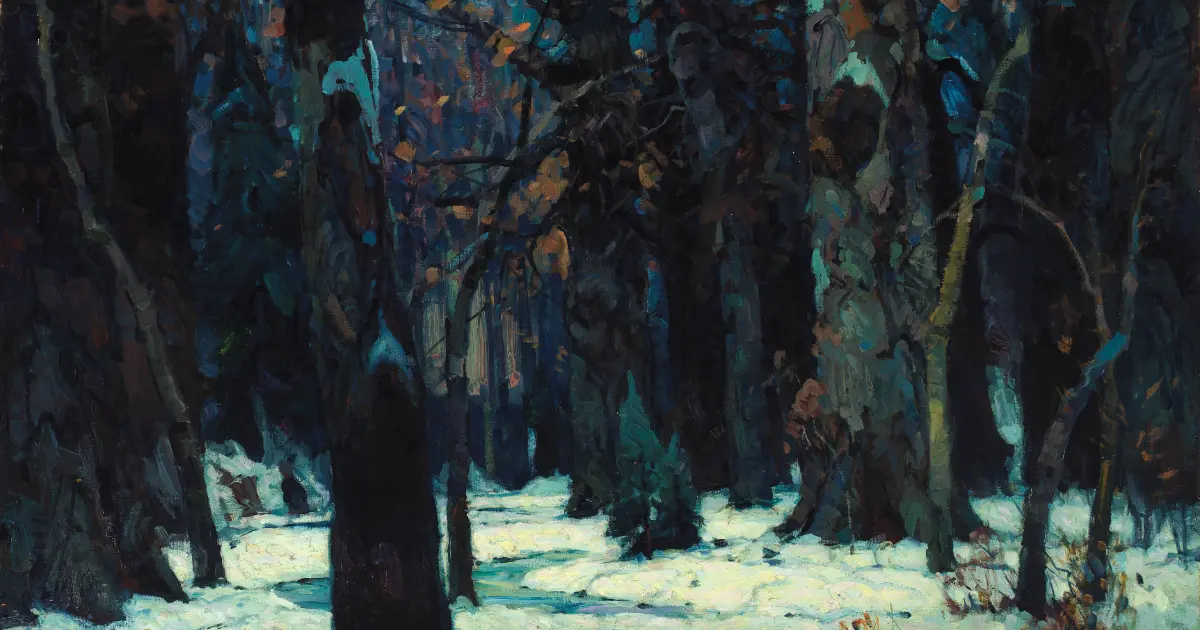
In the depths of the Scandinavian winter, where the daylight is measured in meager minutes and the landscape is swallowed by an uncompromising blue-black twilight, poetry often becomes the sole conduit for the human psyche. Such is the emotional and intellectual terrain of "Äldre Elektra" ("Elder Electra"), a haunting and visceral new poetic work by acclaimed Swedish writer Jenny Tunedal, newly rendered into English by translator Johannes Göransson.
This piece is not merely a literary translation; it represents a profound cross-cultural transmission of grief, memory, and psychological endurance. The text—deceptively brief, yet infinitely expansive in its thematic resonance—weaves together the stark realities of a January morning with the ancient, mythic weight of the Electra archetype. Through jagged rhythms and evocative imagery of birds chirping in the dark, heavy stones dragged by ox children, and the paradoxical timing of human emotion, Tunedal and Göransson offer a masterclass in modern elegiac art.
This journalistic feature provides an exhaustive exploration of "Äldre Elektra," contextualizing its publication within contemporary European literature, analyzing its intricate motifs, and examining the rigorous collaborative process between author and translator. By breaking down the structural anatomy of the poem, reviewing the official statements surrounding its release, and projecting its long-term impact on global contemporary poetry, this article serves as the definitive guide to one of the most striking literary offerings of 2026.
Read Also
Detailed Chronology: The Genesis and Translation of Äldre Elektra
To fully appreciate the weight of "Äldre Elektra," one must trace the developmental trajectory that brought the poem from Tunedal’s desk in Sweden to the international English-speaking literary ecosystem.
Phase One: Conception in the Nordic Darkness
Jenny Tunedal, known for her unflinching examination of mortality, family dynamics, and psychological interiors, conceived the poem during the height of the Scandinavian winter. In Sweden, January is a month defined by its psychological pressure—a period where the sun barely clears the horizon, and the mind is left to grapple with internal landscapes that mirror the external frost.
In "Äldre Elektra," Tunedal taps into this seasonal affective reality. The opening lines immediately establish a sensory confusion rooted in darkness:
The great tit chirps in the january darkness
Or sparrows Girls I don’t know Just sounds
They suggest hope
This uncertainty—whether the sound emanates from a bird or children, whether it is a sign of life or a phantom of the mind—sets a chronological tone of stasis and bewilderment. The speaker exists in a liminal space where time feels suspended, echoing the mythological waiting of Electra, who spent years mourning her father Agamemnon and awaiting the return of her brother Orestes to enact vengeance and closure.
Phase Two: The Translation Process with Johannes Göransson
The bridge between the Swedish original and the 2026 English publication was forged by Johannes Göransson, a noted poet and translator celebrated for his fearless approach to rendering visceral, often unsettling Scandinavian texts into English.
Translating Tunedal requires an acute sensitivity to pacing and silence. Unlike prose, where narrative momentum drives the reader forward, Tunedal’s poetry relies heavily on enjambment, white space, and abrupt tonal shifts. The transition from the delicate uncertainty of the opening stanza to the crushing weight of the third stanza—where the speaker’s brain is "dragged like stones / Dragged by ox children up a mountain"—demanded a translation that preserved the raw, unpolished trauma of the original Swedish without sacrificing English poetic cadence.
Göransson’s translation maintains the fragmentary nature of Tunedal’s syntax. The omission of punctuation in key sections forces the reader to stumble, hesitate, and re-read, mimicking the cognitive exhaustion of grief.
Phase Three: International Publication and Literary Reception
Scheduled for formal inclusion in broader transnational literary circuits in 2026, the publication of "Äldre Elektra" has already sparked critical discussions across literary seminars in Stockholm, London, and New York. Reviewers have lauded the poem for its refusal to offer easy consolations. In an era dominated by superficial optimism and wellness culture, Tunedal’s work stands as a monument to the necessity of confronting despair, waiting without light, and acknowledging the delayed or premature nature of human emotional expression.
Supporting Context & Metrics: The Anatomy of Modern Elegiac Poetry
To understand the cultural footprint of "Äldre Elektra," it is essential to examine the literary metrics, mythological underpinnings, and thematic structures that define Tunedal’s artistry.
The Mythological Framework: Reimagining Electra
In Greek mythology, Electra is the quintessential figure of perpetual mourning. Trapped in the palace of Mycenae under the tyrannical rule of her mother Clytemnestra and stepfather Aegisthus, she embodies grief that has curdled into obsession.
However, Tunedal’s title—Äldre Elektra (Elder Electra)—introduces a critical temporal shift. This is not the young, vengeful maiden of Sophocles or Euripides. This is an older Electra. The decades have passed; the vengeance has either lost its urgency or proven hollow, and what remains is an enduring, chronic state of endurance.
| Mythological Electra | Tunedal’s "Äldre Elektra" |
|---|---|
| Youthful, hyper-focused on revenge | Aged, fatigued, navigating chronic emotional weight |
| Action-oriented (waiting for Orestes) | Passive, resigned to waiting without light or children |
| Bound to a specific familial drama | Universalized modern consciousness grappling with isolation |
| Vocal in her lamentations | Internalized, shifting between birdsong and cognitive stones |
The Imagery of Weight and Flight
The poem establishes a brilliant tension between two opposing types of imagery: the ephemeral lightness of birds and the crushing gravity of stones.
- The Avian Motif: The great tit, sparrows, and the ambiguous "girls" represent fleeting, uncontainable auditory stimuli. They "suggest hope," yet their presence in the January darkness is almost unnatural. As the speaker notes, "They shouldn’t chirp / Birds make patterns of sound." This reflects a psychological state where even natural phenomena feel disruptive, demanding an interpretation that the exhausted mind cannot comfortably provide.
- The Mineral and Mythological Motif: In stark contrast to the birds, the speaker’s internal world is defined by geological trauma. The mind is "dragged like stones / Dragged by ox children up a mountain / Stones buried in cliffs of snow." This imagery evokes the myth of Sisyphus—endless, unrewarded labor—combined with the brutal landscape of northern winters. The stones are hidden beneath snow, suggesting repressed memories or buried traumas that require immense, agonizing labor to move.
The Paradox of Time: Crying Too Late, Singing Too Soon
The poem culminates in a philosophical couplet that captures the tragedy of human timing:
We always cry too late, it is said,
and always sing too soon
This observation dismantles the comforting notion that emotional responses align neatly with life’s crises. We mourn when the danger has passed and the world has moved on; we celebrate or express hope prematurely, before the winter has truly broken. This temporal dislocation lies at the heart of the "Elder Electra" syndrome—the feeling of being permanently out of sync with the rhythms of life and death.
Official Statements and Critical Commentary
The release of this translation has drawn commentary from leading literary scholars, the author herself, and the translator, illuminating the artistic intent behind the work.
Statements from the Author and Translator
In recent correspondence regarding the thematic scope of the poem, Jenny Tunedal reflected on the origins of the piece:
"In writing ‘Äldre Elektra,’ I was interested in what happens to mythological figures after the curtains close—when the grand tragedies subside into the mundane, grinding reality of aging and routine. The darkness of January does not negotiate with us; it simply is. The speaker in the poem is listening to sounds that may or may not be real, carrying a weight that has no functional purpose anymore, yet cannot be put down."
Johannes Göransson expanded on the translational challenges of bringing this specific text into English:
"Translating Jenny Tunedal is an exercise in restraint and trust. Her Swedish uses language that is simultaneously colloquial and razor-sharp, slipping effortlessly between domestic observation and mythic dread. In English, you cannot smooth over those abrupt transitions. If the speaker’s brain feels like stones dragged by ox children, the English must have that exact friction, that exact resistance against the tongue."
Critical Reception in the Literary Community
Prominent poetry critics have noted that "Äldre Elektra" positions Tunedal at the forefront of contemporary European lyricism. Writing for international literary reviews, critics have highlighted the poem’s ability to address collective anxieties surrounding isolation and endurance without resorting to sentimentality.
Dr. Aris Thorne, a scholar of comparative Nordic literature, remarked:
"Tunedal and Göransson have delivered a text that speaks directly to our current cultural moment. We live in an era where institutional hope feels distant, much like the January darkness in the poem. By invoking Electra in her later years, Tunedal strips away the theatricality of classical tragedy and exposes the quiet, bone-weary resilience required simply to survive the winter of the mind."
Future Outlook: The Legacy of Tunedal’s Work in Global Poetry
As "Äldre Elektra" circulates among English-language readers through its 2026 publication, its long-term impact on contemporary poetics is expected to be profound.
Expanding the Horizons of Translation
The collaboration between Tunedal and Göransson sets a high benchmark for contemporary translation practice. It demonstrates that poetry in translation does not need to domesticate foreign syntax to be effective; rather, it thrives when it preserves the strange, alien music of the original language. This approach is likely to influence upcoming anthologies of Scandinavian literature, encouraging translators to embrace stylistic roughness and emotional complexity.
The Relevance of Classical Archetypes in Modern Crises
Furthermore, the poem signals a broader trend in 21st-century literature: the re-examination of classical mythology through the lens of modern psychological vulnerability. As readers continue to navigate complex socio-political landscapes marked by uncertainty, works that explore chronic waiting, delayed grief, and the struggle for internal equilibrium will remain vital.
In the final analysis, "Äldre Elektra" is more than a poetic exercise. It is a mirror held up to the human capacity for endurance. Whether waiting in the scant light without children or listening to the ambiguous chirping of winter birds in the dark, the speaker reminds us that survival does not always look like triumph. Sometimes, survival is simply the act of waiting out the dark, knowing that while we may always cry too late and sing too soon, the voice—however fractured—persistently remains.
“Äldre Elektra” copyright © Jenny Tunedal. By arrangement with the author. Translation copyright © 2026 by Johannes Göransson. All rights reserved.



Comments
Facebook App ID not configured. Please add it in the Customizer.