

The Greater Caribbean—a sprawling, culturally kaleidoscopic region encompassing the islands of the Caribbean Sea, the eastern seaboard of Central America, the southern shores of North America, and the northern coast of South America—has long defied simple geopolitical categorization. Bound by artificial political borders and distinct linguistic legacies inherited from competing European empires, the region is nevertheless unified by what theorist Paul Gilroy famously conceptualized as "shared experiences." These foundational historical trajectories—spanning the forced displacement of African populations, the brutal middle passage, chattel slavery, and subsequent abolitionist movements—have created what cultural critic Antonio Benítez Rojo aptly termed "the repeating island."
In response to this deep historical matrix, a landmark literary and cultural initiative has emerged to spotlight the rich tapestry of Creole literature originating from the Caribbean Basin. Moving far beyond traditional nationalist boundaries and the linguistic confines of imperialism, this comprehensive collection presents an expansive showcase of stories, poems, novel excerpts, and critical essays translated from English-, French-, and Spanish-based Creoles. By elevating these vernacular languages through their own foundational texts, the project not only illuminates the profound structural similarities and localized differences across the basin, but also provides bilingual readers with side-by-side access to original compositions and their English translations.
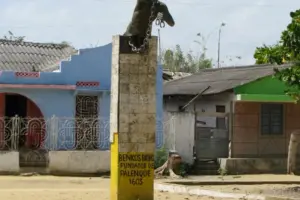
Beyond literary translation, the initiative features critical scholarship examining the complex interplay between historical memory, state monumentality, and grassroots community agency. A prime example is the analysis of the monument dedicated to the legendary maroon leader Benkos Biohó in San Basilio de Palenque, Colombia. This critical engagement underscores how postcolonial communities actively negotiate the tensions of liberty, indigenous resistance, and the persistent ghosts of colonial oppression.
Read Also
As global academic and literary discourses undergo a profound reckoning with Eurocentric universalism, the postcolonial Caribbean text stands as a vital paradigm of transcultural synthesis. By continuously interrogating tired concepts of cultural purity, essentialism, and artistic authenticity, these Creole expressions celebrate the brilliant, syncretic dynamism born from the collision of African, European, and Asian heritages.
Detailed Chronology: The Evolution of Creole Literature and Postcolonial Recognition
To fully grasp the contemporary significance of Caribbean Creole literatures, one must examine the historical continuum of resistance, linguistic survival, and institutional validation that has shaped the region over the past four centuries.
1. The Era of Plantation Slavery and Linguistic Genesis (16th–19th Centuries)
- Forced Displacements and Contact Zones: The transatlantic slave trade deposited millions of enslaved Africans from diverse ethnolinguistic groups into the crucible of the Caribbean plantation complex. To communicate across vast linguistic divides and resist overseers, enslaved populations rapidly forged contact languages that evolved into robust Creole tongues.
- Underground Oral Traditions: Lacking official sanction, Creole languages flourished underground through oral histories, music, rituals, and chants—such as the lumbalú (dance of death) traditions preserved in communities like San Basilio de Palenque, Colombia. Named after ancestral hubs like Loango in the Congo, these oral artifacts encoded covert dreams of freedom and utopian returns to Africa.
2. The Dawn of Written Creole and Literary Pioneers (19th–20th Centuries)
- Emergence of Vernacular Print: For generations, European administrative languages dominated the written sphere. However, the mid-to-late 20th century marked a revolutionary turning point as authors began demanding literary legitimacy for their mother tongues.
- 1985: Martinican writer Raphaël Confiant shatters linguistic taboos by publishing Bitako-a, widely recognized as the first novel written entirely in Martinican Creole, establishing a vital precedent for anti-colonial literary expression.
- 1989: The publication of Éloge de la créolité (In Praise of Creoleness) by Martinican intellectuals Jean Bernabé, Patrick Chamoiseau, and Raphaël Confiant provides a definitive theoretical manifesto defending Creole identity, language, and culture against the homogenizing pressures of assimilation.
- 1991: The Colombian Constitution marks a monumental constitutional shift by granting official recognition to ethnic and linguistic diversity, formally acknowledging regional vernaculars such as San Andrés-Providencia Creole alongside Spanish.
3. Institutional Validation and Contemporary Renaissance (21st Century)
- 2005: UNESCO formally recognizes San Basilio de Palenque—the first free town of runaway slaves in the Americas—as a Masterpiece of the Oral and Intangible Heritage of Humanity, signaling a dramatic global about-face regarding the cultural prestige of Creole-speaking enclaves.
- 2011: Cultural specialist Bernardino Pérez Miranda publishes Chitieno lengua ku ma kuendo: hablemos Palenquero a través del cuento, a landmark illustrated compilation preserving oral histories and Spanish-Palenquero bilingualism.
- Present Day: Contemporary literary platforms actively curate and translate works by visionary figures such as Haitian poet Jean D’Amérique, Martinican novelist Raphaël Confiant, Colombian diplomat and writer Emiliana Bernard-Stephenson, and visual theorist Ludmila Ferrari, solidifying a global network of postcolonial solidarity.
Supporting Context & Metrics: Linguistic Dynamics and Cultural Geography
The Greater Caribbean functions as an immense linguistic laboratory where European administrative standards intersect with vibrant Afro-descendant and indigenous vernaculars. The table below outlines the primary linguistic divisions, key cultural touchstones, and geographic domains featured in contemporary Creole studies:
| Linguistic Basis | Primary Geographic Focus | Representative Authors / Figures | Key Cultural & Historical Artifacts |
|---|---|---|---|
| Hispanophone Creoles | San Basilio de Palenque (Colombia), Caribbean Basin | Bernardino Pérez Miranda, Graciela Maglia | Chitieno lengua ku ma kuendo (2011), Lumbalú chants, Benkos Biohó Monument |
| English-Based Creoles | San Andrés, Providencia, and Santa Catalina Islands (Colombia) | Emiliana Bernard-Stephenson | "Kriol Soldier," 1991 Colombian Constitution (Diglossic recognition) |
| Francophone Creoles | Martinique, Haiti | Raphaël Confiant, Jean D’Amérique, Jean Bernabé, Patrick Chamoiseau | Éloge de la créolité (1989), Bitako-a (1985), "Poem for Children with Trouble Sleeping" |
| Visual & Spatial Culture | Latin America & the Caribbean Basin | Ludmila Ferrari | "A Maroon Monument," spatial economies of violence, architectural decay |
The Postcolonial Theoretical Framework
The intellectual momentum behind the revitalization of Creole literature is deeply indebted to postmodern critiques of Western epistemic hegemony. As European discourse experienced a profound "crisis of authority" in the late 20th century, universalist paradigms and monocultural ideologies faced intense skepticism.
This shifting intellectual landscape opened doors for alternative frameworks—such as transculturation, hybridization, and syncretism—that illuminated the realities of the postcolonial Caribbean. In these spaces, texts actively negotiate between multiple worlds, dismantling notions of cultural purity, linguistic essentialism, and artistic authenticity. The resulting Creole languages and literatures stand as living testaments to an ongoing dialogue between African, European, and Asian traditions.
Official Statements & Critical Perspectives
Scholars, literary figures, and cultural ambassadors have long articulated the urgent need to protect and elevate Caribbean Creole languages. Their insights illuminate the profound stakes involved in linguistic preservation:
On the Linguistic Tension in the Insular Caribbean:
"The poem ‘Kriol Soldier’ demonstrates a steadfast commitment to and defense of our mother tongue, San Andrés–Providencia Creole, which remains intimately tied to our collective Raizal identity. It reveals the persistent linguistic tension between the English-based creole spoken by our community and the Spanish language imposed since the islands came under centralized control in the twentieth century—a testament to historical patterns of linguistic and racial marginalization."
— Emiliana Bernard-Stephenson, Raizal community leader, writer, and Colombian Ambassador to JamaicaOn the Living Nature of Maroon Monumentality:
"The representation of freedom encapsulated in the statue of Benkos Biohó in San Basilio de Palenque is initially mired in the visual language of traditional slavery and Western sculptural standards. However, over time, the local inhabitants have collectively altered the monument, transforming it into a living space of symbolic dispute. The maroon monument cannot be monolithic or stable; it is multiple, open, and in constant motion, tied to an experience of liberty rooted in the quotidian, the community, and shared memory."
— Ludmila Ferrari, Researcher and Author of A Maroon MonumentOn the Political Subversion of Poetry:
"Through the deployment of biting irony and the deceptive rhythm of a lullaby, texts such as ‘Poem for Children with Trouble Sleeping’ generate a vital gap between literal sense and true meaning. This approach draws a harsh, uncompromising contrast between the innocent vulnerability of a child’s world and the devastating aggression of state machinery that treats human beings as disposable capital."
— Critical Analysis of Jean D’Amérique’s Work
Future Outlook: The Horizon of Creole Studies and Global Visibility
As we look toward the future of Caribbean literary studies, the trajectory of Creole languages points toward unprecedented global visibility and academic integration. For decades, these idioms were unfairly stigmatized as corrupted dialects or relegated to oral domains without institutional support. Today, however, a coalition of international linguists, postcolonial researchers, global cultural organizations, and indigenous writers is successfully reversing this historical marginalization.
Key priorities shaping the road ahead include:
- Educational Integration: Expanding bilingual education programs in regions such as San Basilio de Palenque and the Raizal islands to ensure younger generations grow up literate in both their ancestral Creole and national administrative languages.
- Digital Archiving and Translation: Leveraging digital publishing platforms to distribute parallel texts (original Creole compositions alongside English, French, and Spanish translations), thereby breaking down linguistic silos across the Greater Caribbean.
- Re-evaluating Public Art and Heritage: Expanding critical frameworks—inspired by spatial and historical analyses of maroon monuments—to ensure that public spaces authentically reflect grassroots community memories rather than inherited colonial aesthetic standards.
Ultimately, the powerful creative energies pulsing through contemporary Creole literature ensure that the "repeating island" will continue to reinvent itself. By embracing the brilliant syncretic dialogue born from historical adversity, the literary voices of the Greater Caribbean offer a vibrant, resilient blueprint for cultural survival and artistic renewal in the twenty-first century.


Comments
Facebook App ID not configured. Please add it in the Customizer.