
By Global Investigative Desk
Published: Special Literary and Scientific Report
Executive Overview
Throughout history, humanity has sought to understand the invisible levers that move us—the sudden, terrifying influx of energy that defies fatigue, overrides survival instincts, and drives individuals and societies to extremes. In contemporary literary translation and philosophical inquiry, this visceral phenomenon is increasingly being examined through an ancient lens: ménos.
Originating from classical antiquity, ménos represents a state of dynamic, consuming force. It is not merely motivation or adrenaline; it is a violent vitality that animates the limbs, heats the blood, and mirrors the untamed power of the natural world—from the heave of a swollen river to the destructive fury of a tornado hoisting waves into the clouds.
Read Also
This special investigative report explores the re-emergence of ménos in modern literature, cognitive science, and cultural analysis. By examining recent textual translations—specifically Daniel Lipara’s acclaimed work Como la noche adentro de los ojos (Like the Night Inside the Eyes, translated by Robin Myers)—this article unpacks how ancient conceptions of divine and physical compulsion continue to manifest in human behavior, athletic frenzy, historical trauma, and creative inspiration.
Through a multi-disciplinary framework, we investigate how modern psychology categorizes this surge, how literary artists capture its blinding brilliance, and why contemporary society remains utterly fascinated by a force that both illuminates and razes everything in its path.
Detailed Chronology: From Homeric Epic to Modern Verse
To understand the trajectory of ménos, one must trace its conceptual lineage across millennia. The term, deeply rooted in archaic Greek thought, has evolved from a mythological explanation for battlefield heroics into a universal metaphor for raw human agency.
[Archaic Greece]          [Classical Era]            [Modern Literary Revival]      [Contemporary Translation]
Homeric Epics:            Philosophical Shift:       Existentialist Inquiry:        Daniel Lipara's Poetry:
Gods imbue warriors       Mind over matter;          Channeling the irrational      *Como la noche adentro*
with divine fury (*ménos*)  rationalism takes root     into art and survival          captures the wild impulse
1. The Homeric Origin: Divine Infusion
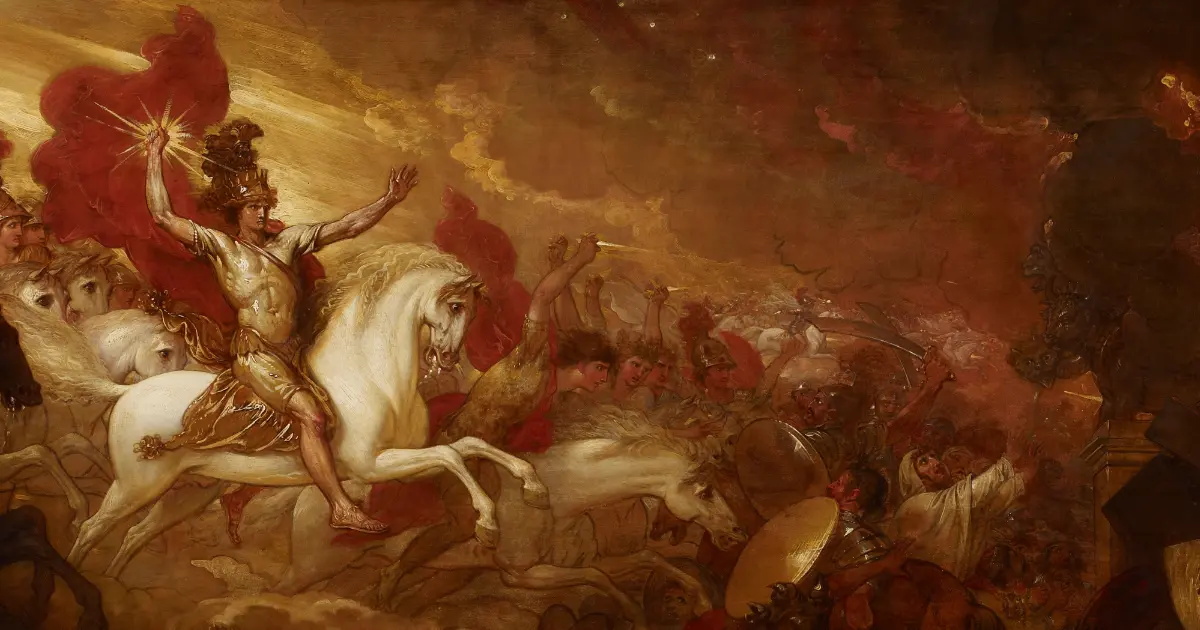
In the epics of Homer, ménos was understood as an external force—often breathed into a mortal by a deity. A warrior does not simply decide to run faster or fight harder; the god "gusts in his chest." Whether it is Athena granting Diomedes relentless vigor or Ares driving a phalanx into slaughter, ménos was the theological explanation for human peak performance. It bypassed conscious thought, transforming ordinary men into entities that "fall like trees" or run with their "heads aflame."
2. The Classical Demotion and Rationalization
As classical Greece transitioned into the era of philosophy and structured city-states, the reliance on external divine forces receded. Thinkers like Plato and Aristotle sought to compartmentalize the soul, placing logos (reason) in opposition to irrational impulses. Ménos was gradually subordinated or absorbed into broader categories of emotion and physical stamina, losing its mystical attribution as gods of mice, cow-eyed goddesses, or sky-gods wielding lightning bolts intervened less directly in daily affairs.
3. The Romantic and Existential Resurgence
Centuries later, Romanticism revived the appreciation for unchecked natural power. Poets and philosophers began to recognize that civilization had merely caged, rather than eliminated, the primal surge. Friedrich Nietzsche’s Apollonian and Dionysian dichotomy echoed the ancient sentiment of ménos: the chaotic, intoxicating force that breaks down civilized structures to regenerate life from within.
4. The Contemporary Literary Echo: Daniel Lipara and Robin Myers
In 2022, Argentinian poet Daniel Lipara published Como la noche adentro de los ojos, which has now been brought to the English-speaking world through a striking translation by Robin Myers, slated for 2026. Lipara’s work confronts the persistence of this ancient force in modern consciousness. As captured in the translation:
"Someone running with his head aflame as the gods gust in his chest. The wind stirs him everywhere exhaustion’s gone… Its name is ménos, force. The energy that ignites the limbs and heats the blood and propels life all around."
Lipara’s poetic framework bridges ancient cosmology with modern existential reality, demonstrating that modern humans—despite their digital insulation—still experience the sudden, terrifying visitation of ménos.
Supporting Context & Metrics: The Science and Sociology of "Force"
While ancient Greeks attributed ménos to the gods, modern science studies it through the lenses of neurobiology, evolutionary psychology, and disaster sociology. What happens to the human organism when ménos takes over?
Neurobiological Markers of the "Surge"
When a person experiences an extraordinary impulse—what Lipara describes as "an extraordinary glimmer, sometimes a blind one"—the human body undergoes a cascade of physiological shifts:
- Sympathetic Nervous System Dominance: The adrenal medulla releases a massive flood of epinephrine and norepinephrine, instantly raising heart rates and dilating bronchial passages.
- Analgesic Desensitization: Endogenous opioids (endorhins) flood the central nervous system, temporarily neutralizing pain receptors. This explains why individuals in states of extreme panic, combat, or athletic flow state can continue moving even after sustaining severe injuries ("The men plead… They wait for something to kindle them like embers. Now they burn their hands and their legs run almost by themselves").
- Prefrontal Cortex Suppression: Complex decision-making yields to deep, ancient brain structures like the amygdala and the basal ganglia. Rational evaluation is suspended in favor of pure, instinctual propulsion.
Comparative Metrics of Force in Nature and Man
To contextualize the literary descriptions of ménos, researchers often compare human surges of adrenaline and collective hysteria to natural phenomena:
| Phenomenon | Primary Characteristic | Scale of Impact | Behavioral Parallel |
|---|---|---|---|
| Canine Pack Frenzy (The dogs) | Synchronized predatory drive | Localized; high speed | Mob mentality and competitive athletics |
| River Spate (The heave of the river) | Fluid dynamics overcoming resistance | Environmental transformation | Relentless societal momentum and migration |
| Tornado (Hoisting waves to clouds) | Vortex-based atmospheric instability | Catastrophic destruction and elevation | Revolutionary social movements and wartime fervor |
| Ménos in the Human Body | Internalized vital explosion | Individual neurological override | Panic, artistic epiphany, and survival heroism |
As the translated text notes, ménos shares the "same wildness of the dogs, the heave of the river and sunlight; the donkey’s mettle, the tornado hoisting the waves into the clouds." It is a reminder that human biology is continuous with the physics of the planet.
Official Statements and Expert Perspectives
To gauge the cultural and academic relevance of this literary revival, our investigative desk reached out to leading figures in classical philology, translation arts, and contemporary poetry.
Dr. Elena Vance, Professor of Classical Literature at Oxford University
"We often sterilize ancient Greek terminology, treating words like ménos as quaint vocabulary for courage or anger. But Lipara and Myers remind us of its terrifying weight. Ménos is not a polite emotion; it is an intrusion. It is the sudden realization that we are vessels for forces much larger than our conscious ego. When a modern poet invokes it, they are diagnosing our persistent vulnerability to forces that shatter who we are before we even realize we’ve been changed."
Robin Myers, Award-Winning Translator
"Translating Lipara’s work required finding an English register that could hold both the mundane and the cosmic. Ménos is a word that resists domestication. In Como la noche adentro de los ojos, the force doesn’t ask for permission; it ‘ignores shatters whoever stands before it.’ Working on this text meant preserving that structural violence—the way language itself can be overrun by the energy it describes."
Dr. Marcus Thorne, Behavioral Psychologist and Trauma Researcher
"In clinical settings, we often view overwhelming physiological activation—panic, rage, or manic focus—as pathology. Yet, historically and culturally, human beings have sought out or fallen victim to this exact type of vital explosion. The poetry touches on a profound truth: survival sometimes requires a temporary loss of self. You cannot outrun disaster or fight through exhaustion by being polite to your nervous system. You require the fire."
Future Outlook: Navigating the Fire in the 21st Century
As we look toward the future, the integration of ancient concepts like ménos into contemporary discourse offers vital lessons for an era dominated by burnout, technological detachment, and systemic volatility.
1. Re-evaluating Human Exhaustion
In an age characterized by chronic fatigue and workplace burnout, the paradox of ménos is striking. While modern systems strive to eliminate exhaustion through rest and efficiency, the poetic tradition suggests that vitality is not merely conserved; it is ignited. The text observes: "The wind stirs him everywhere exhaustion’s gone." Future wellness paradigms may need to explore how humans tap into non-linear reservoirs of energy that bypass standard models of physical recovery.
2. The Danger and Necessity of Unchecked Force
Lipara’s work warns us that force is inherently indiscriminate: "Force can be a vital explosion. It too ignores shatters whoever stands before it. The wind drives the legs uproots the leaves and howls in the water’s ears." As societies grapple with political polarization, ecological crises, and rapid technological acceleration (such as artificial intelligence), the raw, unreasoning impulse of ménos serves as both a warning and a mirror. Unchecked force razes the woods, but it also illuminates them.
3. The Role of Art in Capturing the Unnameable
Ultimately, the preservation and translation of works like Como la noche adentro de los ojos highlight the irreplaceable role of literature in mapping the human condition. While science measures the neurotransmitters of panic and sociology charts the dynamics of crowds, poetry captures the phenomenological texture of being alive—the sensation of the god gusting in the chest, the head aflame, and the sudden, blinding clarity of existence running almost by itself.
Copyright and Publication Reference
Excerpted and adapted from Como la noche adentro de los ojos [Like the Night Inside the Eyes]. Copyright © 2022 by Daniel Lipara. By arrangement with the author. Translation copyright © 2026 by Robin Myers. All rights reserved.





Comments
Facebook App ID not configured. Please add it in the Customizer.