
Executive Overview
With less than four weeks remaining before Americans head to the polls for the 2026 midterm elections, the political landscape is being reshaped by an unlikely antagonist: the massive, electricity-hungry data centers powering the artificial intelligence boom. Once viewed as neutral, quiet enclaves of technical infrastructure, these cavernous facilities have rapidly transformed into ground zero for a fierce, bipartisan voter backlash. Across the United States—from the fiercely contested gubernatorial race in Wisconsin to key battlegrounds in Ohio and Florida—politicians from both sides of the aisle are finding themselves scrambling to distance themselves from the technology sector.
In campaign ads, political strategy sessions, and legislative chambers alike, a new lexicon of political combat has emerged. Opponents are now tagged as "Data Center Daves," accused of selling out local neighborhoods, straining municipal water supplies, and driving up household energy bills to line the pockets of big-tech conglomerates. This wave of grassroots resistance has fundamentally altered how candidates communicate with voters, turning the physical footprint of artificial intelligence into a proxy war over economic inequality, corporate influence, and the future of American communities.
Yet, beneath the hyper-fixation of campaign messaging lies a complex political paradox. While pollsters and political analysts note that public animus toward data centers and AI has "upended politics as we know it," translating that visceral anger into actual ballot-box momentum remains complicated. Data indicates that while nearly universal disdain exists for the unregulated expansion of tech infrastructure, very few voters cite data centers as their single most important ballot issue. As candidates fall over themselves to prove their anti-tech credentials, the 2026 midterms are serving as a national referendum on how a digitally dependent nation grapples with the physical and economic costs of the AI revolution.
Read Also
Detailed Chronology: From Silicon Valley Dreams to Main Street Backlash
To understand how data centers became the most toxic brand in American politics, one must trace the rapid escalation of public sentiment from quiet curiosity to outright hostility.
Phase 1: The Invisible Boom (2022–2024)
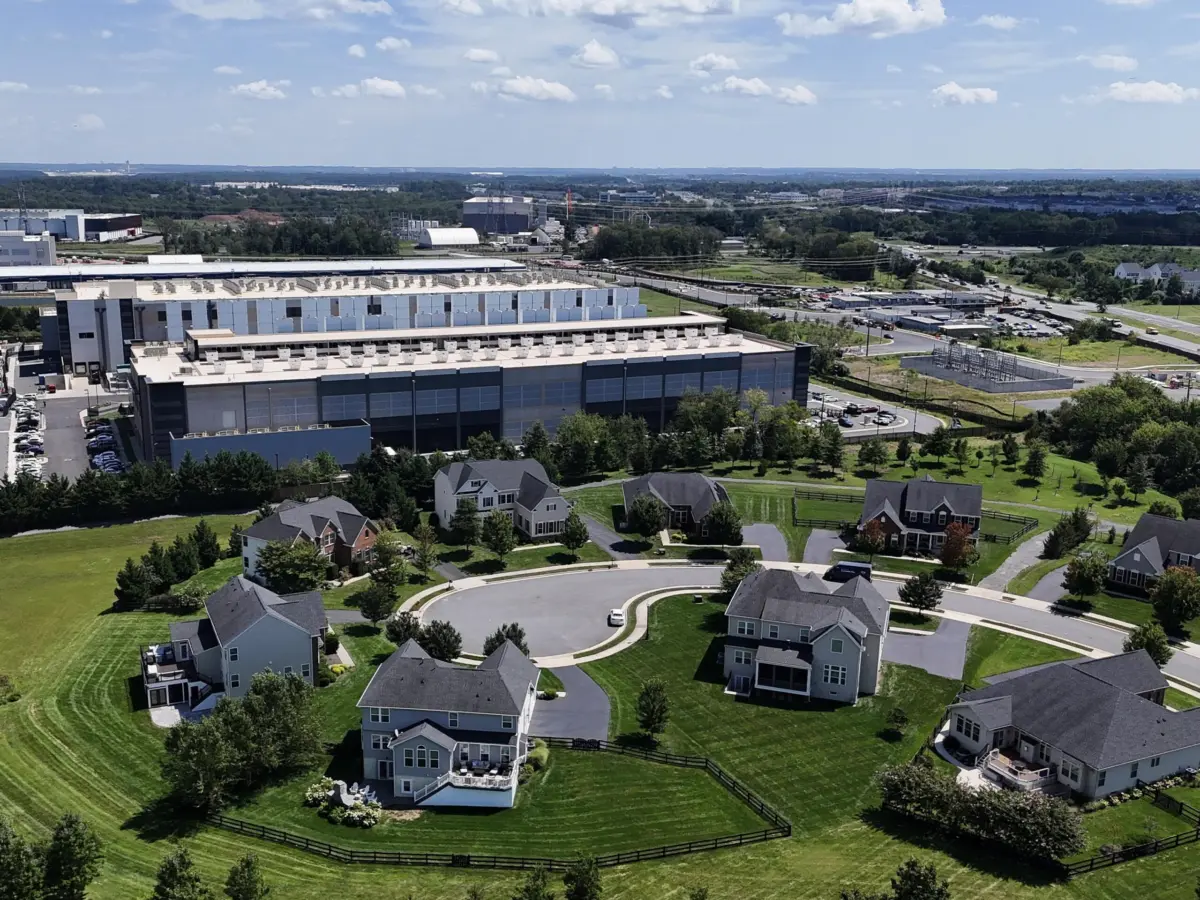
In the immediate wake of the generative AI boom sparked by consumer-facing applications, the construction of hyper-scale data centers accelerated at an unprecedented rate. Technology giants scrambled to secure real estate, water rights, and massive energy allocations to train increasingly complex large language models. During this initial phase, local governments often welcomed these projects with open arms. Billed as high-tech economic engines that would bring temporary construction jobs, tax revenues, and modern prestige, projects were frequently approved through fast-tracked zoning boards with minimal public awareness or debate. To the average citizen, a data center was simply an opaque, windowless warehouse humming quietly on the outskirts of town—an invisible backbone of the digital age.
Phase 2: Quality-of-Life Friction and Resource Strain (2025)
As hundreds of these facilities broke ground across rural and suburban communities, the reality of their operations set in. Residents living near the proposed sites quickly discovered the hidden costs of hosting the cloud. Colossal cooling systems generated relentless, low-frequency hums that disrupted quiet neighborhoods. Municipalities faced alarming spikes in local electricity consumption, with power grids straining to keep up with facilities that often consumed as much electricity as small cities. Furthermore, public scrutiny intensified over the millions of gallons of water required daily to cool densely packed server racks, raising severe environmental alarms in drought-prone regions. What had been marketed as a clean, quiet industry was suddenly perceived as an intrusive industrial neighbor operating without sufficient local oversight.
Phase 3: The Metamorphosis into Ideological Symbolism (Early to Mid-2026)
By 2026, the grievances of local residents transcended localized zoning disputes and merged with broader, systemic anxieties regarding artificial intelligence. Grassroots organizers and policy advocates successfully framed the unregulated construction boom as a physical manifestation of corporate overreach. The data center became a lightning rod for deeper societal fears: Would AI automate away the American workforce? Would the vast wealth generated by tech monopolies exacerbate the gap between rich and poor? Did elected officials care more about Silicon Valley balance sheets than the well-being of everyday taxpayers? Without reassuring policy frameworks or credible plans to manage the socioeconomic fallout of rapid automation, public unease coalesced into a unified, cross-partisan demand to halt or severely restrict new development.
Phase 4: The Political Pivot and the 2026 Midterm Crucible (Present)
Sensing a powerful shift in the electorate, politicians of every political stripe executed a rapid about-face. By the summer and fall of 2026, being associated with tech infrastructure became a political liability. Campaigns across the political spectrum weaponized the issue, introducing terms like "Data Center Dave" to tar opponents as out-of-touch facilitators of corporate excess. From statehouse primary battles to marquee gubernatorial showdowns, candidates began aggressively championing moratoria, local veto powers, and penalty taxes on major tech developers, setting the stage for a dramatic electoral showdown in November.
Supporting Context & Metrics: Analyzing the Bipartisan Revolt
The political vulnerability surrounding data centers is not confined to a single geographic region or political party. Data compiled by political researchers and media analysts illustrates a profound, national pivot away from pro-tech orthodoxies.
The Shift in Political Discourse
An extensive analysis of thousands of political social media posts, campaign newsletters, and legislative filings conducted by data reporters revealed a striking transformation within the Republican Party. Historically aligned with corporate deregulation and free-market expansion, a vast majority of conservative politicians now speak about data centers in predominantly negative terms. Democrats, traditionally more attuned to environmental and consumer protection concerns, have echoed and amplified these attacks, weaponizing the issue against any candidate who previously voted for tax subsidies or enterprise zone designations for tech firms.
Quantifying Voter Sentiment vs. Ballot Priority
Despite the omnipresence of anti-data center rhetoric in campaign advertisements, polling data reveals a fascinating disconnect between public anger and voting behavior.
- The Ohio Case Study: Ohio has served as a central hub for both aggressive data-scale investments by tech titans and fierce grassroots opposition movements. Yet, polling conducted by the Times/Siena poll revealed that only 3 percent of Ohio voters identified data centers as the single most important issue driving their vote in the upcoming election.
- The National Baseline: While 3 percent may sound negligible, it represents the highest concentration of single-issue data-center voters in the entire United States. In virtually every other state, the percentage of voters listing data centers as their top priority registers near zero.
This metric highlights the unique nature of the issue. Data center opposition functions less as a standalone voting catalyst and more as a powerful multiplier of broader discontent. It serves as a tangible, local symbol of a rigged economy and unresponsive governance, allowing voters to channel generalized economic anxiety into a specific, local demand.
Official Statements & Expert Insights
Political scientists and media commentators have offered varying perspectives on how this unprecedented backlash will impact the November outcomes.
Andrew Prokop, national politics correspondent, notes that while data centers have dominated the debate in high-profile gubernatorial races—particularly where candidates carry a historical voting record friendly to tech development—their overall electoral weight must be kept in perspective:
"Data centers have been a major theme in several races, particularly governor’s races where one of the candidates has taken past pro-data center positions," Prokop observed. However, he cautions against overestimating the issue’s dominance, pointing to primary contests where candidates with established pro-development stances managed to prevail over vocal anti-data center critics. "That just goes to show that data centers don’t necessarily crowd out everything else."
Jeremy Merrill, data reporter for The Washington Post, highlighted the universal nature of the political retreat during a recent media briefing:
"Candidates are falling over themselves to sound tough on data centers," Merrill explained, pointing out that political survival in the current climate requires an explicit, vocal rejection of unvetted industrial tech expansion, regardless of historical party platforms.
Future Outlook: The Post-Midterm Policy Landscape
As the nation looks beyond the immediate horizon of the November midterms, the fallout from the "Data Center Dave" phenomenon promises to permanently alter the relationship between state governments and the tech industry.
Regardless of which party secures majorities in Congress or takes control of critical statehouses, the political immunity that technology companies once enjoyed has evaporated. Lawmakers entering office in 2027 will face immense pressure to translate campaign rhetoric into binding legislative action. This likely portends a wave of new regulatory frameworks, including:
- Grid Protection Mandates: Legislation designed to protect residential ratepayers from absorbing the massive infrastructure costs and energy spikes associated with powering AI server farms.
- Water Resource Protections: Strict municipal and state-level caps on industrial water usage, forcing tech companies to invest heavily in closed-loop cooling systems or alternative resource management.
- Mandatory Community Benefit Agreements: Legal requirements ensuring that local municipalities have binding authority, public notice periods, and direct financial compensation before any industrial tech campus is approved.
- Comprehensive AI Governance: Moving past the physical proxy of the data center to address the root anxieties of the electorate—namely, job displacement, economic inequality, and ethical oversight of automated systems.
The 2026 midterms may ultimately show that while data centers do not always dictate the winner of an individual election, they have successfully served as the crucible where American politics confronted the physical and economic reality of the artificial intelligence age. The era of frictionless, unquestioned tech expansion is officially over.




Comments
Facebook App ID not configured. Please add it in the Customizer.