
Executive Overview
Throughout human history, artificial waterways have served as the silent, flowing arteries of civilization. Far more than mere shortcuts for water management or conduits for commerce, iconic canals represent monumental feats of engineering, catalysts for profound economic development, and cultural landscapes steeped in historical significance. They are testaments to human ingenuity, born from the ambition to reshape the natural world to serve collective needs.
Today, our appreciation for these masterpieces of hydro-engineering is experiencing a sweeping renaissance. Propelled in part by the 2014 designation of China’s Grand Canal as a UNESCO World Heritage site, a profound global curiosity has been ignited regarding the history, technology, and evolving utilities of inland navigation. People are increasingly drawn not only to the rich heritage preserved within these historic channels, but also to the recreational sanctuary they provide. In an era dominated by the hyper-accelerated pace of modern life, urban populations increasingly value well-maintained aquatic spaces as vital refuges for respite and leisure.
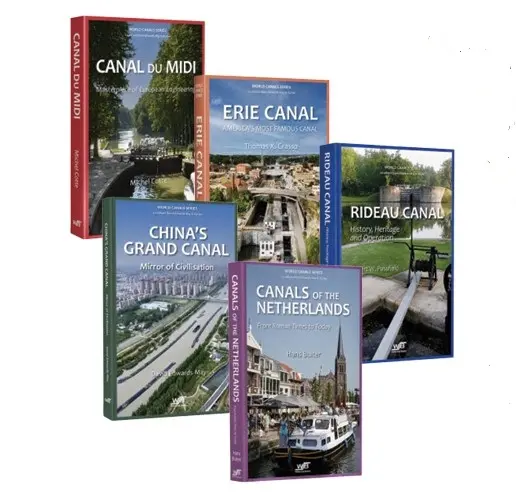
Meeting this rising global appetite is a newly launched, comprehensive collection of seven books dedicated to the world’s most famous canals. Published simultaneously in English and Chinese through a pioneering collaboration between Phoenix Science Press and Waterway Books, this series offers fresh, authoritative insights into some of the most critical infrastructure projects in human history. Featuring titles penned by leading international subject experts, the series spans the Canal du Midi, the Rideau Canal, the Erie Canal, the Canals of the Netherlands, China’s Grand Canal, the Grand Union Canal, and the Canal du Centre. Available in both print and e-book formats, this ambitious publishing undertaking bridges East and West, offering a comparative lens through which to examine how controlled water has shaped the modern world.
Read Also
Beyond historical retrospection, this literary initiative arrives at a critical juncture for contemporary infrastructure planning. Modern policymakers, environmentalists, and urban planners are increasingly turning their attention back to inland waterways as a sustainable alternative to overcrowded roads and rail networks. Shifting freight and passengers from land to water is widely recognized as one of the most environmentally friendly transport paradigms available today. Consequently, the discourse surrounding canals has shifted from nostalgic preservation to active, forward-looking policy, with new canals designed to meet multifaceted ecological, economic, and social goals.
Detailed Chronology: From Ancient Digging to Modern Masterpieces
To understand the scope of the new Phoenix Science Press and Waterway Books series is to travel across centuries and continents, tracing the evolution of civil engineering from rudimentary drainage ditches to sprawling, continent-spanning networks. The seven featured waterways encapsulate distinct eras of political ambition, technological breakthrough, and socioeconomic transformation.
1. China’s Grand Canal: The Mirror of Civilization
Spanning an astonishing 3,200 kilometers and boasting a history that stretches back 2,500 years, China’s Grand Canal is the longest and oldest artificial waterway in the world. In China’s Grand Canal: Mirror of Civilisation, author David Edwards-May weaves an intricate narrative centered around two intertwined threads: military strategy and the monumental logistical challenge of feeding China’s vast populations. The book explores how successive dynasties labored to connect major river basins—principally the Yellow and the Yangtze—shifting the economic and political gravity of an empire. As Edwards-May illustrates, this is not merely a static monument of the past; the Grand Canal remains a living, evolving network, with new channels currently being designed and constructed to extend its reach southward.
2. The Canal du Midi: Masterpiece of European Engineering
In the late 17th century, visionary entrepreneur Pierre-Paul Riquet, backed by the absolute authority of King Louis XIV, undertook a project previously thought impossible: connecting the Atlantic Ocean to the Mediterranean Sea across southern France. In Canal Du Midi: Masterpiece of European Engineering, author Michel Cotte delivers a vivid, granular account of the political hurdles, financial strains, and ingenious technical solutions required to carve the 240-kilometer canal through rugged terrain. Inscribed as a UNESCO World Heritage Site in 1996, the Canal du Midi stands today as a triumph of Enlightenment-era science and a flourishing hub for international tourism.
3. The Erie Canal: America’s Most Famous Waterway
Celebrating the bicentennial of its completion, the Erie Canal transformed the geography and economy of the United States. In Erie Canal: America’s Most Famous Canal, author Thomas X. Grasso explores the enduring legacy of the waterway that bridged the Atlantic seaboard with the Great Lakes interior. Grasso focuses heavily on the natural topography of the land and the ingenious ways generations of self-taught American engineers navigated formidable geographic challenges. The canal did not merely move goods; it catalyzed the rise of New York City as the nation’s premier commercial capital and fueled westward expansion.
4. The Canals of the Netherlands: A Hydro-Engineering Heritage
Few nations are as inextricably linked to water management as the Netherlands. In Canals of the Netherlands, author Hans Buiter presents a sweeping chronicle of inland navigation canals built across the centuries, stretching from Roman antiquity to the modern era. Buiter’s meticulously researched accounts provide readers with a comprehensive look at the planning, design, and construction of a dozen defining Dutch canals. These waterways served not only as transport corridors but as the very foundation of national survival, water control, and economic ascendancy in a low-lying delta.
5. Expanding the Scope: The Grand Union, Rideau, and Canal du Centre
Rounding out the seven-part collection are deep dives into other geopolitical and industrial powerhouses:
- The Grand Union Canal and Canal du Centre highlight how industrialization reshaped the landscapes of England and Belgium, respectively. These books explore the delicate interplay between raw industrial necessity, private profit, and public infrastructure.
- The Rideau Canal, cutting through the Canadian wilderness, underscores the heavy weight of geopolitical friction. Built in the aftermath of the War of 1812 as a secure military supply route between Montreal and Lake Ontario, the Rideau showcases how strategic defense imperatives can yield breathtaking engineering achievements that later transition into recreational gems.
Supporting Context & Metrics: The Global Resurgence of Inland Waterways
The release of this seven-volume series coincides with a broader structural shift in global transportation logistics and urban planning. For decades, the rise of the automobile, expansive highway networks, and high-speed rail marginalized inland waterways in many parts of the industrialized world. However, mounting ecological pressures and urban congestion are forcing a dramatic re-evaluation of water transport.
The Environmental Imperative
From a policy perspective, transferring freight and passenger transport from road and rail to inland waterways is increasingly viewed as the most environmentally friendly logistical approach available. Water transport boasts significantly lower carbon emissions per ton-kilometer than trucking, alongside minimal land-use footprints compared to widening multi-lane highways. As nations worldwide race to meet aggressive carbon-reduction targets under international climate agreements, policymakers are looking back to historical canal systems—and designing new ones—to absorb rising freight demands.
Multi-Purpose Infrastructure
Modern canal design has evolved far beyond simple point-A-to-point-B shipping. Today’s engineers conceptualize canals as multi-purpose assets capable of addressing several contemporary crises simultaneously:
- Water Resource Management: In an era of intensifying climate volatility, prolonged droughts, and erratic rainfall patterns, canals serve as vital conduits for redistributing freshwater supplies for agriculture, municipal use, and ecological restoration.
- Urban Heat Island Mitigation: Urban populations are placing an unprecedented premium on well-maintained blue spaces. Canals provide crucial cooling corridors in densely built cities, improving local microclimates while offering mental health benefits and recreational outlets for stressed urbanites.
- Cultural Tourism and Heritage Conservation: UNESCO designations have transformed industrial canals into lucrative tourism assets. Visitors are drawn to the tranquil pacing of canal boating, cycling along historic towpaths, and exploring preserved lock systems, breathing new economic life into post-industrial rural and urban corridors.
Official Statements and Editorial Vision
The sheer scale of this publishing initiative—producing simultaneous, high-quality editions in both English and Chinese—reflects a unique cross-cultural commitment to industrial heritage and global education.
Xu Hai, editor-in-chief of Phoenix Publishing and Media Inc., emphasized the nuanced historical lessons embedded within the new series during a recent statement on the project’s motivations:
"How canals served the Industrial Revolution is a significant part of the story of the canals in England and Belgium, while geopolitical factors weighed heavily in the emergence of projects such as the Canal du Midi and the Rideau Canal," Xu noted.
"This series provides new insights that show the many nuances of motivation in human enterprises, and between private profit and public good. This is perhaps the first time such a huge undertaking in compiling, writing, and production has been done in tandem for both Chinese and English editions. The plan is to expand the collection to include other famous canals that have played a role in shaping a country or region."
This bilingual editorial strategy reflects a growing recognition that the history of infrastructure is universal, yet locally adapted. By making these comprehensive studies equally accessible to readers in the Anglophone world and China—two regions boasting some of history’s most ambitious waterworks—the publishers have created a shared intellectual framework for scholars, engineers, and enthusiasts alike.
Future Outlook: The Next Wave of Canal Development
As we look toward the future, the lessons contained within this seven-book collection offer invaluable guidance for modern civil engineers and urban planners. The challenges faced by historical figures like Pierre-Paul Riquet and the builders of the Erie Canal—balancing geological hazards, financial constraints, and political opposition—mirror the hurdles confronting megaproject developers today.
Looking ahead, the Phoenix Publishing and Media Inc. partnership does not intend to stop at seven titles. With a clear roadmap to expand the collection, future volumes will explore additional iconic canals that have fundamentally shaped national and regional identities across the globe. Whether examining proposed modern shipping corridors, retrofitting century-old locks for autonomous vessels, or restoring degraded urban waterways into vibrant public spaces, the enduring appeal of canals remains undiminished.
Ultimately, these artificial rivers are more than relics of industrial might; they are enduring symbols of humanity’s capacity to connect, adapt, and harmonize with the natural world. Through the pages of this landmark series, the vibrant, flowing stories of the world’s most famous canals are preserved, analyzed, and made accessible for generations of thinkers, builders, and dreamers yet to come.
The new canal book series is currently available for acquisition via waterwaybooks.com, inlandwaterwayinternational.org, and edwardsmay.eu.





Comments
Facebook App ID not configured. Please add it in the Customizer.