
Executive Overview
While the dog days of late summer traditionally spell a sleepy, dormant period for the mainstream publishing industry, this past August proved to be an unexpected hotbed of cultural activity, community organizing, and cross-media collaboration. Far from shutting down for vacations, the literary world experienced a vibrant surge driven by unconventional marketing strategies, digitally native debut authors, and avant-garde film partnerships.
This unexpected late-summer renaissance was anchored by three distinct events: the high-society yet downtown-cool poetry debut of a Bravo reality television star; a high-energy, community-centric coming-of-age novel launch that mirrored the vibrance of a wedding reception; and a cerebral, cinephile-focused book fair at Film at Lincoln Center celebrating the intersection of archival research, conspiracy theories, and academic thrillers. Together, these happenings paint a picture of an evolving literary landscape—one where traditional gatekeeping is bypassed in favor of direct community engagement, multi-platform identities, and immersive, experiential event curation.
This report provides a comprehensive, investigative breakdown of August’s most compelling literary happenings, tracing the operational mechanics behind these events, the philosophy of the indie presses that fuel them, and what these milestones signal for the future of modern publishing.
Read Also
Detailed Chronology: August’s Defining Literary Moments
August 12: Poetry, Pedigree, and Pastel Volumes at Blue Afternoon’s Debut
The publishing calendar for the month kicked off in Midtown Manhattan on August 12, when The Moss NYC—a newly minted social club dedicated to the concept of “intelligent leisure”—opened its doors for a launch party celebrating Blue Afternoon. The slim, pocket-sized, pastel-hued volume of verse is the debut poetry collection of Georgia McCann, widely recognized as a breakout cast member on season two of Bravo’s reality series Next Gen NYC.
Published by Dream Boy Book Club, a boutique, Los Angeles-based small press celebrated for its hyper-online aesthetic and avant-garde catalog, Blue Afternoon functions as a constellation of glamorous, high-society vignettes tethered together by threads of heartbreak, longing, and modern alienation.
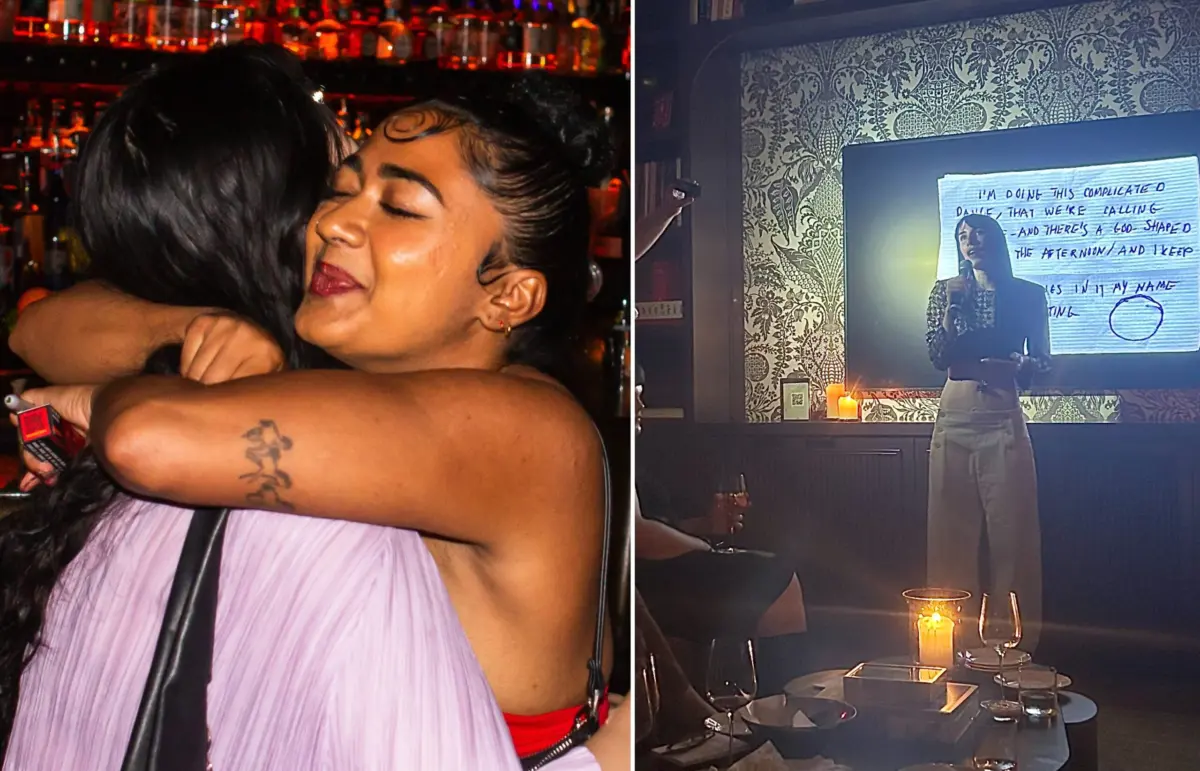
The launch event itself was an exercise in curated atmosphere. Occupying the fourth floor of The Moss, McCann’s inner circle—comprising old friends, her former social media assistant, and a steady stream of downtown Dimes Square mainstays—hand-sold physical copies of the book. The venue was bathed in a moody mix of candlelight and a glowing digital screen that projected lines of McCann’s poetry, frantically scrawled on loose scraps of paper. The exclusivity and raw charm of the setup proved wildly successful: within a single hour, the entire stock of books brought to the venue was completely sold out.
Behind the venue choice was a deliberate networking strategy. McCann revealed that she secured the space through her friendship with Alexander Kellogg, the director of The Moss. Kellogg, whose impressive resume includes luxury event production stints at China Chalet and High Snobiety, expressed a clear mandate to position The Moss as a premier cultural and literary hub in New York City. Guests roaming the venue drifted past a magazine-stocked barroom and a pool table, peering out into the building’s expansive, multi-level art deco-style lounges.
Despite the glamorous setting and her burgeoning television fame, McCann was candid about her desire to maintain a strict boundary between her on-screen persona and her identity as a poet. Addressing the packed room of supporters, she made light of her public profile:
"I swear to god guys, I can do Bravo TV for cameras in my face, but giving a speech in front of friends is an issue."
Turning 27, McCann reflected on the long genesis of the project, noting that she began penning these specific verses when she was just 19 years old. Visibly hesitant to claim complete ownership of the narrator’s emotional baggage on the page, she opted out of a traditional reading. "I want to distance my voice from the narrator’s voice, so I’m not gonna be reading," she told the audience, "but the book is there if you wanna flip through it."
August 22: Unprecedented Times and the Gen-Z Book Party Revolution
Ten days later, the literary spotlight shifted to Brooklyn, where 25-year-old author Malavika Kannan celebrated the release of her adult debut, Unprecedented Times. Published by Holt on August 18, the sprawling 400-page Gen-Z coming-of-age novel has already accumulated significant critical momentum, anchored by a coveted Publishers Weekly starred review and high-profile write-ups in Vogue and Cultured.
However, while traditional critical acclaim is often enough to secure a book’s baseline success, Kannan proved that grass-roots, in-real-life (IRL) community organizing remains an unbeatable force for contemporary fiction. Dubbed "Funprecedented Times," her August 22 launch party at the Brooklyn queer bar Oberon felt less like a stiff literary reading and more like an underground warehouse dance party infused with intellectual discourse.
The evening commenced with Kannan taking the stage to read an excerpt from her novel, focusing sharply on the chaotic, emotionally exhausting perils of modern queer “situationships.” True to the event’s eclectic, community-first ethos, the reading was immediately followed by a performance from Stanford classmate and professional drag artist Zz Chic. Strutting and dancing between tightly packed tables, the performer commanded the center of the room to execute a gravity-defying split, sending the crowd into raptures.
Kannan utilized the platform to elevate her peers as well, inviting a rotating roster of literary and creative talent onto the stage. Featured guest speakers and performers included novelists Bobuq Sayed and Leah Abrams, journalist bittnia, and comedian Myesha Choudhury. While the event was organized independently of her publisher, Holt, Kannan secured corporate and indie backing from rideshare giant Lyft and queer media institution Autostraddle, the latter of which provided complimentary zines for attendees.
As the night progressed, the literary event transitioned into a full-scale club night. DJs urkanmani and srizzybeats—billed on promotional materials as the “tamil dreamgirl lineup”—commanded the turntables, spinning a seamless blend of heavy electronic beats and recognizable pop motifs. Beneath a rotating disco ball, guests danced for hours while Kannan, resplendent in a bright red dress with a signature swirl of hair framing her forehead, flitted effortlessly between groups of friends, publishing peers, and fans.
Reflecting on the unique celebration, Kannan articulated a conscious rebellion against traditional, inaccessible book promotion:
"I joked to my friends that this is the age that historically a lot of women would have had weddings, and instead I get to celebrate something different. A lot of book launches can feel stuffy and inaccessible and I wanted this, above all, to feel fun and like an extension of the ethos of the book!"
August 25: Film at Lincoln Center’s Bibliomania Book Fair
Closing out the month’s major literary events on August 25, Film at Lincoln Center (FLC) offered a masterclass in cross-medium curation with the announcement of the Bibliomania film series, running from August 28 through September 3. Curated by directors Jack Auen and Kevin Walker, the series explores a deeply specific, intellectual cinematic niche: films that grapple with the silent, intensely internal world of archival research.
To contextualize the series—which acts as a thematic preface to Auen and Walker’s forthcoming academic thriller Chronovisor (set for release on September 4)—FLC senior programmer Tyler Wilson joined the directors in organizing a special one-day book fair in the lobby of the Walter Reade Theater.
The Bibliomania lineup establishes a surprising thematic bridge between disparate cinematic artifacts: experimental filmmaker David Gatten, Nicholas Cage’s frantic cryptographer in National Treasure, a Benedictine Vatican conspiracy theory, Howard Hawks’s 1941 screwball comedy Ball of Fire, and Indiana Jones and the Last Crusade. According to Auen, the unifying question across all these works is a fundamental cinematic hurdle: How do you translate the silent, sedentary process of poring over old documents into a visually compelling medium, whether you are working with a $100 million blockbuster or a classic comedy?
As viewers streamed out of a rare 70mm screening of Indiana Jones, they were greeted by a consortium of heavyweight independent presses—including NYRB, Deep Vellum, and Archipelago—tabling in the theater lobby. Staffers from Deep Vellum reported brisk sales, noting that William H. Glass’s massive 1995 metafictional epic The Tunnel (recently reissued this spring via Dalkey Archive) emerged as a surprise favorite among the post-screening cinephile crowd. Demonstrating his own literary bona fides, co-curator Auen stopped by the tables to pick up copies of Octavia Butler’s Parable of the Talents and Kurt Vonnegut’s God Bless You, Doctor Kevorkian.
Notably absent from the physical book tables were the arcane, highly specialized parapsychology texts featured in Chronovisor. In the film, protagonist Béatrice Courte—a fictional Columbia professor portrayed by real-life academic Anne-Laure Sellier—spends hours combing through buried articles and rare monographs in search of the "chronovisor," a mythical machine allegedly invented in the 20th century by Benedictine monk Pellegrino Ernetti to visually project any moment from human history.
Auen emphasized that the meticulous research materials referenced by Professor Courte are entirely real texts. To keep audiences engaged in her archival hunts, the filmmakers made the editorial choice to highlight and translate specific lines on screen, allowing viewers to read along in real-time.
"We spent the first few months just being fans of the conspiracy theory," Auen remarked, "and it was sort of through that process that we were like, maybe we could share the feeling that gave us with the audience."
Supporting Context & Metrics: The Mechanics of Late-Summer Engagement
To fully understand the weight of these August events, one must analyze the shifting metrics of modern book promotion. For decades, the publishing industry relied on a rigid, top-down promotional pipeline: galley mailings, traditional bookstore readings in carpeted conference rooms, and reviews in legacy print publications. However, the events of August demonstrate a decisive pivot toward experiential publishing economics.
| Event / Launch | Primary Medium / Genre | Venue & Location | Key Collaborators / Sponsors | Distinctive Marketing Angle |
|---|---|---|---|---|
| Blue Afternoon | Poetry Debut | The Moss NYC (Midtown Manhattan) | Dream Boy Book Club, Alex Kellogg | High-society social club pop-up; hand-sold by Dimes Square insiders; rapid sell-out. |
| Unprecedented Times | Gen-Z Coming-of-Age Novel | Oberon (Brooklyn, NY) | Holt, Lyft, Autostraddle | Hybrid book reading and warehouse dance party featuring drag performers and indie DJs. |
| Bibliomania Fair | Academic Thriller / Film Series | Walter Reade Theater (Film at Lincoln Center) | NYRB, Deep Vellum, Archipelago | Cinephile-focused indie press pop-up tethered to archival research and Vatican conspiracy theories. |
The Power of the Micro-Press and Hyper-Niche Aesthetics
The success of Dream Boy Book Club with Georgia McCann’s Blue Afternoon highlights the operational agility of small, independent presses. Unlike major publishing conglomerates that must project quarterly sales figures across thousands of titles, indie presses often thrive on scarcity, distinct design sensibilities (such as the pastel, pocket-sized aesthetic of McCann’s book), and localized hype. By utilizing non-traditional venues like a private Midtown social club instead of a standard bookstore, these presses tap into adjacent cultural pipelines—fashion, reality television, and contemporary art scenes—thereby expanding the total addressable market for poetry.
Experiential Retail and Post-Literary Community
Malavika Kannan’s "Funprecedented Times" launch redefines what a book release can achieve in terms of community retention. By framing the event around a shared night out—complete with drag performances, political zines courtesy of Autostraddle, and electronic music—Kannan successfully mitigated the "stuffy" atmosphere that often alienates younger readers. This strategy recognizes a vital truth about Gen-Z reading habits: books are not consumed in isolation; they exist as part of a broader lifestyle ecosystem that includes fashion, digital media, queer spaces, and nightlife.
Official Statements & Industry Perspectives
The convergence of these distinct events elicited notable commentary from creators, curators, and industry insiders who view these hybrid models as essential to the future health of books and cinema:
- On Separating Personal Brand from Literary Art:
Reality TV star and debut poet Georgia McCann addressed the delicate tightrope of cross-media visibility, noting the anxiety of stepping behind a microphone to present work crafted in her youth: "I want to distance my voice from the narrator’s voice, so I’m not gonna be reading, but the book is there if you wanna flip through it." - On Reinventing the Ritual of the Book Launch:
Novelist Malavika Kannan emphasized the importance of emotional resonance over traditional publishing formalities: "A lot of book launches can feel stuffy and inaccessible and I wanted this, above all, to feel fun and like an extension of the ethos of the book!" - On Bridging Cinematic Narration and Archival Research:
Filmmaker Jack Auen discussed the conceptual genesis of translating obscure historical conspiracies and academic labor to the silver screen: "We spent the first few months just being fans of the conspiracy theory, and it was sort of through that process that we were like, maybe we could share the feeling that gave us with the audience." - On Cultivating Cultural Hubs in New York:
Alexander Kellogg, director of The Moss NYC, outlined his institutional vision for merging hospitality with literary arts: "We’re interested in making the Moss a literary and cultural hub."
Future Outlook: What August’s Experiments Mean for Publishing
As the publishing industry moves past the summer season and into the bustling fall catalog window, the lessons learned from August 2026’s unconventional happenings offer a clear roadmap for authors, presses, and cultural institutions alike.
- The Death of the Stuffy Reading: The traditional, quiet bookstore reading—while maintaining a sacred space for certain literary purists—is no longer the default standard for commercial engagement. Authors like Malavika Kannan have proven that merging literary readings with nightlife, performance art, and queer community spaces generates vastly superior organic social media reach and enthusiastic crowd retention.
- Cross-Media Collaborations Are Essential: The partnership between Film at Lincoln Center and independent powerhouses like NYRB, Deep Vellum, and Archipelago demonstrates that literary fiction and poetry do not need to exist in a vacuum. By aligning books with film retrospectives, academic thrillers, and niche historical rabbit holes (such as the Vatican’s rumored chronovisor), cultural institutions can successfully cross-pollinate audiences who might not otherwise step foot in a traditional bookstore.
- The Rise of the Multi-Hyphenate Creator: Platforms like Bravo, Substack, and Instagram have irrevocably altered how authors build audiences. Georgia McCann’s ability to pivot from reality television drama to a sold-out boutique poetry collection proves that contemporary readers are drawn to authentic, multifaceted creators who refuse to be boxed into a single genre or medium.
Ultimately, August 2026 proved that the publishing world’s "sleepy season" is a myth. When creative minds combine rigorous artistic ambition with dynamic community organizing, even the hottest days of summer can yield some of the most vibrant cultural moments of the year.



Comments
Facebook App ID not configured. Please add it in the Customizer.