
Executive Overview
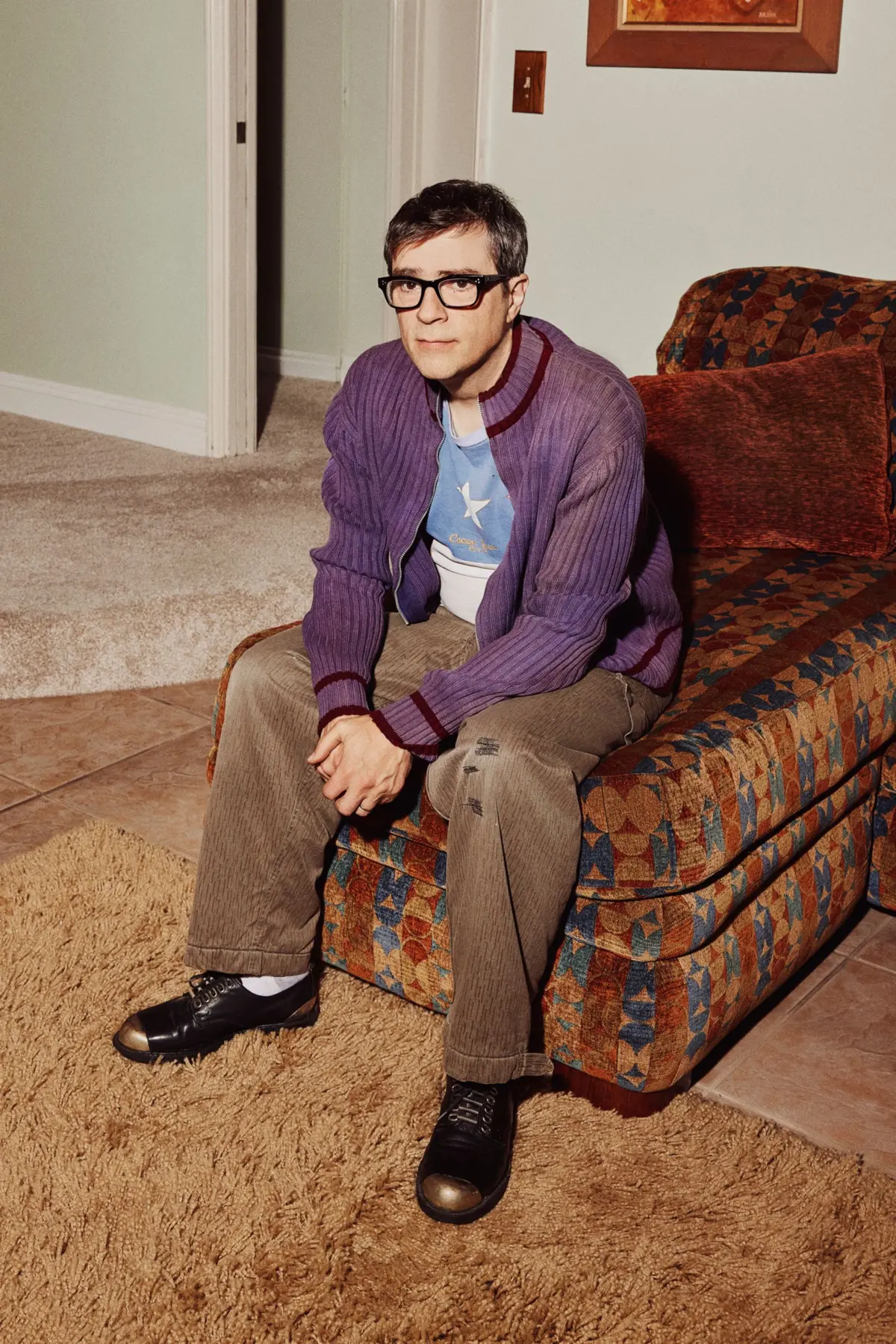
Three decades after defining the contours of nineties alternative rock with their self-titled 1994 debut (widely known as the Blue Album), Weezer remains one of American pop culture’s most idiosyncratic and enduring musical forces. Led by frontman, chief songwriter, and guitarist Rivers Cuomo, the band’s melodic DNA—characterized by yearning vocals, punchy distorted riffs, and mathematically precise pop structures—continues to echo across modern radio, surfacing in the works of contemporary superstars like Olivia Rodrigo and Taylor Swift.
With the release of their landmark twentieth studio LP, The Gold Album, Weezer encounters a pivotal juncture in their multi-decade career. Rather than relying on legacy nostalgia or algorithmic trends, the band has delivered an urgent, live-tracked rock record that purposefully discards the rigid digital constraints of modern production. The record reflects a broader philosophical turn for the 56-year-old Cuomo, who has increasingly applied a forensic, archival lens to his own life story, creative process, and artistic legacy.
This analysis examines the making of The Gold Album, exploring Cuomo’s personal history, the operational dynamics within Weezer, the band’s unconventional production strategy under dual producers Kenneth Blume and Klas Åhlund, and Cuomo’s unique perspective on artificial intelligence, memory, and fatherhood in an evolving music industry landscape.
Read Also
Detailed Chronology: From Ashrams to Alt-Rock Royalty
+-----------------------------------------------------------------------------------+
| CHRONOLOGICAL MILESTONES                                                          |
+-----------------------------------------------------------------------------------+
| 1970      | Born in NYC; raised in spiritual communities (Yogaville, CT).         |
| 1975      | Paternal separation; begins decades of structured estrangement.       |
| 1994      | Releases debut 'Blue Album'; rejects indie ethos for major label push.|
| 1996      | Releases 'Pinkerton'; commercial failure initially, later cult classic|
| 1995-2006 | Attends Harvard University; majors in English, studies Shakespeare.    |
| 2021      | Releases 'OK Human', featuring a 38-piece classical orchestra.        |
| Jan 2024  | Father passes away; prompts archival rediscovery of personal history. |
| Mid 2024  | Launches "Lore" project; records 'The Gold Album' without digital grid.  |
+-----------------------------------------------------------------------------------+
Early Life and Ashram Roots (1970–1993)
Rivers Cuomo was born in New York City in 1970 and raised primarily within spiritual ashrams throughout the Northeast, notably Yogaville in Pomfret, Connecticut. His childhood was defined by countercultural surroundings and an early paternal departure when he was four years old. Raised predominantly by his mother, Cuomo harbored a deep fascination with music and technical craftsmanship, eventually forming a heavy metal band in his late teens before shifting his focus toward pop-rock songwriting.
Major-Label Ambition and the Dual Edge of Success (1994–2001)
Unlike their underground peers in the early nineties, Weezer eschewed the dominant indie-rock ethos of underground 7-inch singles and club-wall sticker campaigns. Emerging straight onto Geffen Records, the band actively sought major-label distribution and MTV rotation.
The immediate multi-platinum success of the Blue Album was abruptly followed by 1996’s raw, self-produced Pinkerton. Initially panned by critics and deemed a commercial failure, Pinkerton achieved legendary cult status over the subsequent decades—a phenomenon label executive David Geffen famously characterized to Cuomo as a "euphemism for failure," though the record ultimately redefined emotional transparency for a new generation of musicians.
Harvard, Shakespeare, and Evolving Formats (2002–Present)
Intermittently attending Harvard University over more than a decade, Cuomo graduated with a degree in English, developing an enduring passion for classical literature and dramatic structure. This academic rigor began to cross-pollinate with Weezer’s output, leading to decades of restless stylistic experimentation—ranging from heavy metal and arena pop to the lush orchestral arrangements of 2021’s OK Human.
The death of Cuomo’s father in January served as a major catalyst for his latest creative era, driving him to systematically organize decades of personal correspondence, home recordings, and family artifacts into a master historical archive.
Supporting Context & Metrics: Sound Architecture and Attention Engineering
The Dual-Producer Paradox: Violence vs. Precision
The creation of The Gold Album was marked by an intentional collision of contrasting production philosophies. The band engaged two distinctly different producers to guide the sessions:
- Kenneth Blume (Kenny Beats): Known for his raw, punchy work with acts such as Geese and Show Me the Body. Blume was brought in at the request of drummer Patrick Wilson and bassist Scott Shriner, who sought to inject "danger, violence, and unpolished grit" into the record.
- Klas Åhlund: A veteran Swedish producer aligned with the pop tradition of "melodic math"—a term coined by Max Martin to describe hyper-calibrated vocal melodies, structural balance, and acoustic precision.
                  THE GOLD ALBUM PRODUCTION VENN DIAGRAM

        +-----------------------+-----------------------+
        |     KENNETH BLUME     |      KLAS ÅHLUND      |
        |     (Kenny Beats)     |                       |
        |                       |                       |
        |  * Raw Violence       |  * Melodic Math       |
        |  * High Vocal Energy  +  * Pop Balance        |
        |  * Organic Dissonance |  * Architectural Rigor|
        |  * Push for Loudness  |  * Structural Polish  |
        |                       |                       |
        +-----------------------+-----------------------+
                                |
                                v
                      [ WEEZER: THE GOLD ALBUM ]
                     * Live performance tracking
                     * Rejection of digital grids
This deliberate balance forced Cuomo to navigate between structural control and performance friction, producing urgent, aggressive tracks like "Nowhere" and the lead single "We Might as Well Be Strangers" (featuring guest vocals from Wednesday’s Karly Hartzman).
Abandoning the Digital Grid: The Veracity of Performance
In a significant departure from contemporary music industry norms, Weezer opted to record The Gold Album without aligning tracks to a digital Pro Tools click grid.
+-----------------------------------------------------------------------------------+
| RECORDING METHODOLOGY: DIGITAL GRID VS. ORGANIC VERACITY                          |
+-----------------------------------------------------------------------------------+
| Metric / Feature      | Standard Pop-Rock Industry | 'The Gold Album' Process     |
+-----------------------+----------------------------+------------------------------+
| Tempo Alignment       | Strict Pro Tools Grid      | Dynamic Human Performance    |
| Quantization          | Micro-adjusted drum hits   | Zero tempo correction        |
| Vocal Delivery        | Soft-to-loud dynamic shifts| Maximum vocal loudness       |
| Tracking Environment  | Layered overdubs           | Core live ensemble tracking  |
| Primary Objective     | Flawless consistency       | Vibe, energy, & performance  |
+-----------------------+----------------------------+------------------------------+
As Cuomo noted, modern music production routinely quantizes instrument strikes to ensure uniform tempo across every bar. Driven by drummer Patrick Wilson’s stylistic vision, Weezer chose instead to embrace dynamic temporal shifts, prioritizing performance veracity and raw energy over mechanical perfection.
The Lore Engine and Attention Budgeting
Parallel to his musical career, Cuomo has instituted a rigorous quantitative system to manage his intellectual output and personal history:
- The "Lore" Project: An extensive, digital database hosted on Cuomo’s website containing chronological recollections, oral history interviews, journal entries, and family correspondence dating back to his parents’ pre-1970 lives. Designed as a raw biographical repository, the project prioritizes forensic detail over narrative smoothing.
- Attention Budgeting: Modeled after financial accounting software, Cuomo maintains a daily time-tracking ledger to strictly regulate his focus. Attention hours are budgeted across categories such as classic literature reading, software programming, biographical archival work, and songwriting, ensuring his daily activities remain strictly aligned with long-term intellectual goals.
Official Statements: Reframing Memory, Lyrics, and Technological Friction
On Paternal Memory and Reconciliation
Reflecting on the discovery of decades of preserved correspondence following his father’s death, Cuomo highlighted the fallibility of personal memory and the cultural narratives that shaped his early work:
"I only ever heard my mom’s side of the story. Now I’m going back and seeing all these letters he wrote to us… I feel like I picked up some stories through the ether, through the cultural narrative, in the eighties, of abusive fathers, alcoholic fathers, fathers that abandon their kids. Somehow, that became my story. I don’t know how true that was."
Cuomo expressed that reconstructing this archival record has fundamentally altered his perspective as a parent, driving his efforts to bridge communication gaps with his own son:
"It’s very pertinent to me now, because I’m trying so hard to connect to my son, and I’m mostly failing, and it’s not for lack of trying. I think: What if for some reason he ended up growing up thinking I didn’t care about him?"
                       CULTURAL NARRATIVE VS. ARCHIVAL FACT

  +-----------------------------------+     +-----------------------------------+
  |      1980s POP CULTURE MEDIA      |     |     POST-2024 ARCHIVAL DISCOVERY     |
  |  * Trope of paternal abandonment  |     |  * Dozens of preserved letters    |
  |  * Channelled into "Say It Ain't So"| vs  |  * Expressed love & pride         |
  |  * Perceived complete estrangement|     |  * Reconstructed relationship     |
  +-----------------------------------+     +-----------------------------------+
On Creative Vetoes and Collaborative Friction
Addressing the lyric-writing process for The Gold Album, Cuomo acknowledged a shift from his historically solitary decision-making process toward a more collaborative band dynamic:
"The lyrics were a real struggle for me on this record because, on records past, I just wrote what I wrote… Now people speak up if something’s bothering them. It’s, like, ‘I really don’t like how that line makes me feel. Can you come up with something else?’ It never feels good, but I’ve been doing this now for so long that I know that we’ve gotta find that intersection on the Venn diagram, where everybody’s excited about the song."
On Generative AI and the Value of Imperfection
When asked about the role of artificial intelligence in artistic creation, Cuomo noted that his initial technical curiosity had yielded to a preference for human eccentricity:
"When ChatGPT first came out, it seemed like, wow, this is pretty great… But I don’t feel like it’s progressed beyond that… If anything, maybe it’s had the opposite effect, where we want more imperfections: we want proof that an A.I. didn’t polish it. A.I. will give you the most average answer, the most average song… It just makes me more hungry for something eccentric, something oddball."
Future Outlook: Legacy in an Era Without Gatekeepers
As Weezer navigates its fourth decade, the structural realities of the music industry have fundamentally transformed. Traditional institutional gatekeepers—A&R executives, commercial radio programmers, and major label heads—have largely been replaced by decentralized, algorithmic platforms like TikTok, where both legacy catalog tracks and new releases circulate organically.
For Cuomo, this shift presents a welcome liberation from industry expectations. With The Gold Album, Weezer demonstrates that sustained relevance relies neither on chasing youth-culture trends nor on repeating historical formulas. By pairing unquantized, aggressive rock production with meticulous personal archiving, Cuomo continues to balance his twin impulses: the pursuit of emotional immediacy on stage and the precise construction of his own enduring narrative behind the scenes.




Comments
Facebook App ID not configured. Please add it in the Customizer.