In an era dominated by algorithmic feeds, glowing tablets, and high-tech educational apps that frequently blur the line between learning and digital distraction, parents are increasingly exhausted by the nightly battle for screen-time boundaries. Modern households are saturated with quick-fix solutions: activity kits that lose their novelty by mid-week, board games that inevitably end up missing pieces at the bottom of a closet, and software promises that rarely deliver meaningful cognitive engagement.
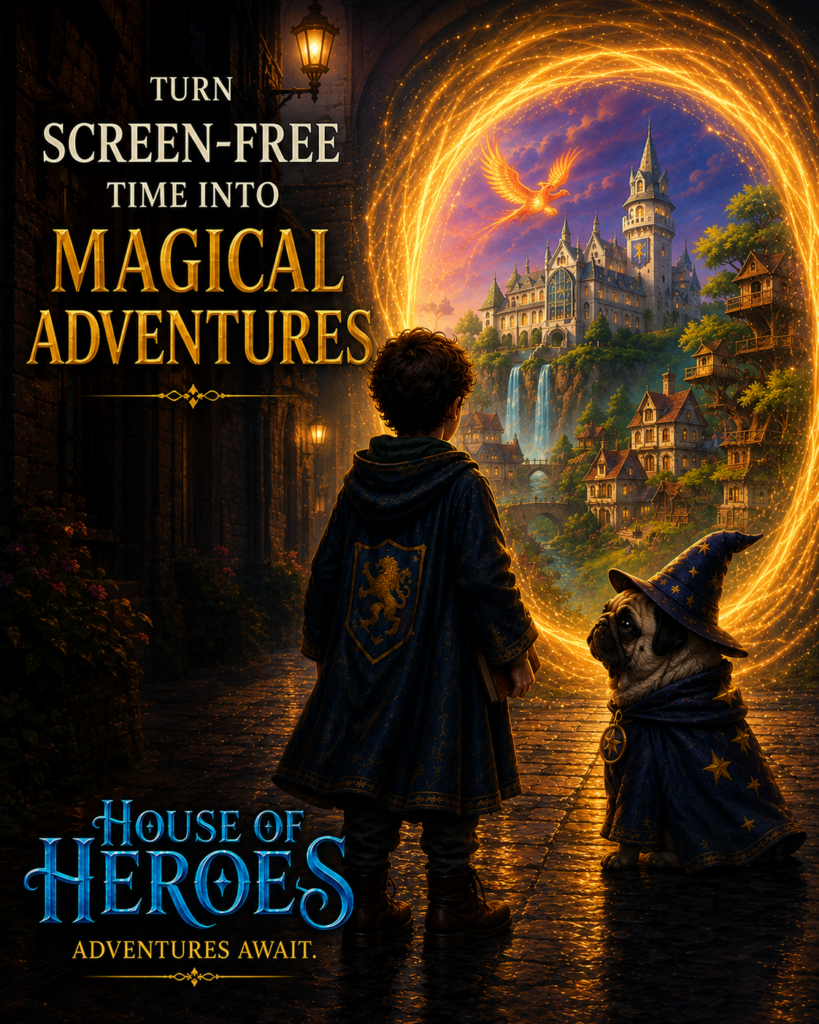
Enter a counter-intuitive yet surprisingly radical solution: stripping away the screens entirely and returning to a format as old as human civilization itself—oral storytelling. However, this is not your grandparents’ bedtime routine. A new guided family adventure platform known as House of Heroes is breathing new life into the traditional read-aloud dynamic by transforming children from passive listeners into absolute decision-makers. Designed for children ages 4 to 11, the platform operates on a deceptively simple premise: parents read a word-for-word narrative aloud, while children dictate every plot twist, ethical dilemma, and character action that follows.
Far from a mere gimmick, this interactive storytelling model has begun attracting the attention of educators, child development advocates, and weary parents alike. By eliminating screens, removing preparation burdens for adults, and seamlessly embedding lessons on resilience and empathy, House of Heroes is redefining what meaningful family connection looks like in the twenty-first century. This report investigates the mechanics, developmental impacts, and broader industry implications of this emerging screen-free movement.
Detailed Chronology: The Evolution of Modern Family Entertainment and the Birth of Guided Storytelling
To understand the cultural significance of platforms like House of Heroes, one must examine the trajectory of children’s entertainment over the past several decades.
The Shift Toward Digital Saturation
For generations, the evening wind-down routine relied heavily on traditional literature—picture books, fairy tales, and chapter books read chapter-by-chapter before sleep. By the late 1990s and early 2000s, this dynamic began shifting. Educational television programming expanded into digital streaming, and by the 2010s, tablet-based learning apps became ubiquitous in households worldwide.
While these tools offered temporary relief for busy parents, they inadvertently created a dependency on digital dopamine loops. Studies consistently show that evening screen time interferes with melatonin production, disrupts circadian rhythms, and makes the bedtime transition a nightly battleground characterized by intense negotiations over device removal.
The Search for Analog Innovation
In response to digital fatigue, a wave of "analog innovations" emerged. Subscription-based physical craft boxes and educational board games attempted to reclaim the kitchen table. Yet, these initiatives often presented structural hurdles:
They required significant setup time from exhausted parents.
They generated household clutter.
Their novelty quickly wore off.
The Inception of House of Heroes
Recognizing the limitations of both pure passive screen consumption and high-friction physical kits, developers conceptualized a hybrid model that required zero screens, zero preparation, and maximum psychological engagement. By adapting the classic "Choose Your Own Adventure" framework into a guided, parent-led format set within a rich fantasy ecosystem, House of Heroes was developed as a monthly subscription service delivering structured weekly adventures.
The platform’s narrative foundation was built around Eternia, a magical world anchored by a specialized school called the House of Heroes. By placing the child squarely in the role of the protagonist—always playing as themselves within an imaginative universe—the creators bypassed the developmental detachment often found in standard video games or traditional storybooks where characters make choices on behalf of the reader.
Supporting Context & Metrics: The Science of Screen-Free Engagement and Parent-Child Bonding
The growing traction of analog, interactive storytelling platforms is backed by mounting psychological and pedagogical data regarding screen time and relational health.
Cognitive and Emotional Metrics
The Cost of Evening Screen Time: According to recent pediatric sleep research, more than 70% of children aged 4 to 11 use a screen within one hour of bedtime. This habit correlates with an average loss of 30 to 45 minutes of sleep per night, directly impacting emotional regulation, mood stability, and school performance.
The Power of Shared Reading: Longitudinal studies on early childhood literacy demonstrate that interactive read-alouds—where adults pause to ask questions and children predict outcomes—significantly accelerate vocabulary acquisition and emotional intelligence compared to solitary reading or media consumption.
The Frictionless Parent Engagement Paradox: While parents overwhelmingly report wanting to spend more quality time with their children, the logistical friction of planning activities often leads to inertia. Platforms that reduce setup friction to zero—such as opening a document and reading the first line—dramatically increase the frequency of meaningful family interactions.
The Mechanics of Skill-Building Without Instruction
Traditional educational media often announces its intentions, featuring characters who explicitly turn to the camera to teach a moral lesson. Children frequently tune these didactic moments out as "preaching."
House of Heroes takes a radically different approach. By embedding social-emotional learning directly into the consequences of the child’s choices, the platform fosters:
Courage: Facing unknown magical creatures without a guaranteed safety net.
Empathy: Deciding whether to share resources or help struggling peers within the narrative.
Persistence: Overcoming narrative roadblocks through creative problem-solving rather than brute force.
Furthermore, recurring narrative figures—such as Master Tolm, a wise dwarf who periodically visits between adventures—frame values like grit and kindness through organic storytelling rather than formal instruction, mirroring the conversational style of trusted mentors.
Official Statements and Industry Insights
Child development experts and participating families have weighed in on the psychological shift represented by guided, screen-free storytelling platforms.
Dr. Elena Vance, a child psychologist specializing in media consumption habits, notes the psychological necessity of imaginative agency:
"When children consume media on a screen, they are consumers of someone else’s visual imagination. The pacing is dictated for them; the imagery is fixed. When a parent reads a story and the child makes the choices, the child’s brain is doing the heavy lifting of visualization and moral calculation. It shifts them from being passive spectators of a digital world to active architects of their own universe."
Parents utilizing the platform have similarly highlighted the transformation of the evening routine. A representative user review captures the core appeal:
"What surprised me wasn’t just that my child enjoyed it; it was that it completely bypassed the nightly screen-time negotiation. Instead of asking for a tablet before bed, my child now asks unprompted if we can continue our adventure in Eternia. It turns twenty minutes of the evening into an event we both genuinely look forward to."
Publishing and education advocates have also pointed out the clever design of the format. By removing the burden of creative writing or rule memorization from the parent—who simply needs to read the pre-written script and listen—the platform bridges the gap between high-effort storytelling and low-effort passive entertainment.
Future Outlook: Where Analog Storytelling Goes From Here
As digital saturation continues to provoke cultural pushback, the market for frictionless, screen-free family engagement tools is poised for significant expansion.
Scalability and Ecosystem Growth
Platforms like House of Heroes indicate a broader trend toward "micro-subscriptions" that enrich physical or verbal routines rather than adding to digital bloat. Future developments in this sector are expected to include:
Expanded Narrative Universes: Deeper world-building that introduces complex story arcs spanning months or years, growing alongside the target demographic of 4-to-11-year-olds.
Multigenerational Adaptation: Adapting guided storytelling frameworks for grandparents and caregivers to foster remote or in-person connection without relying on video calls.
Inclusive Character Customization: Enhancing narrative frameworks to ensure diverse representation, allowing every child to see themselves authentically reflected as the hero of their own story.
The Ultimate Takeaway for Modern Households
Ultimately, the success of platforms that champion analog, interactive narratives points to a fundamental human truth: technology can entertain, but connection heals. By transforming the simple act of reading together into an exercise in agency and shared imagination, families are discovering that the most powerful tool for childhood development is not the newest app on the market, but the sound of a parent’s voice and the boundless creativity of a child’s mind.











Comments
Facebook App ID not configured. Please add it in the Customizer.