
Executive Overview
For many writers, the mere mention of their creative shortcomings is enough to trigger an immediate existential crisis. The pursuit of narrative fiction is a uniquely humbling endeavor; as the art form grows more complex, the landscape of potential missteps expands exponentially. However, contemporary literary analysis and seasoned publishing insights suggest a radical reframing of this professional anxiety.
Recognizing your writing weaknesses is not evidence of failure. Rather, it serves as empirical proof of your evolving artistic awareness. As renowned radio personality Ira Glass famously noted, the creative process is often haunted by a persistent gap: writers enter the field driven by refined taste, yet their early output inevitably falls short of that standard.
This comprehensive report explores the psychology of authorial self-assessment, the crucial distinction between habitual craft weaknesses and idiosyncratic stylistic choices, and a systematic framework for identifying and overcoming recurring narrative flaws. By moving away from vague anxieties and adopting objective diagnostic strategies, storytellers can transform their greatest blind spots into signature literary strengths.
Read Also
Detailed Chronology of the Authorial Learning Curve
Understanding how writing weaknesses manifest requires tracing the typical evolution of a novelist’s career. From the initial spark of inspiration to the publication of multiple manuscripts, the relationship between a writer and their shortcomings undergoes distinct phases.

Phase 1: The Honeymoon of Naïve Enthusiasm
In the earliest stages of creative expression, writers are often insulated by ignorance. Armed with unbridled passion and high literary taste, they produce prose without the burden of technical self-consciousness. Because they lack the diagnostic vocabulary to evaluate pacing, character arc cohesion, or subtext, they experience a temporary sense of creative invincibility.
Phase 2: The Awakening of the Critical Gap
As authors read widely, study narrative theory, and complete their first full-length manuscripts, the gap identified by Ira Glass widens into conscious view. This is the chronological tipping point where self-doubt peaks. The writer realizes that the story on the page does not match the cinematic vision in their head. Historically, many promising voices abandon the craft during this phase, misinterpreting their newfound awareness of flaws as a lack of innate talent.
Phase 3: Diagnostic Maturity and Skill Acquisition
Writers who persist eventually cross a crucial psychological threshold. They cease viewing red ink, negative reviews, or nagging structural doubts as personal indictments. Instead, they catalog these recurring issues as specific data points. By isolating craft deficits—such as sluggish second acts, flat dialogue, or passive protagonist motivations—they begin targeted studies to bridge the gap between execution and intent.
Supporting Context & Metrics: Defining Habitual Flaws vs. Stylistic Choices
Not every deviation from conventional writing rules constitutes a weakness. To successfully refine a manuscript, an author must accurately differentiate between a structural flaw and a deliberate stylistic signature.

What Constitutes a Habitual Writing Weakness?
A writing weakness is defined as a recurring craft problem that surfaces across multiple stories and drafts, rather than a one-off error in a single manuscript. These persistent hurdles typically stem from two sources:
- Gaps in Craft Knowledge: Unfamiliarity with the mechanics of pacing, tension curves, or thematic integration.
- Avoidance Behaviors: Neglecting specific elements of storytelling (such as scene descriptions or emotional introspection) simply because they require uncomfortable cognitive exertion.
The Litmus Test of Intentionality
Literary history is replete with master storytellers who intentionally broke established rules to achieve unique artistic effects. Consider the following canonical examples:
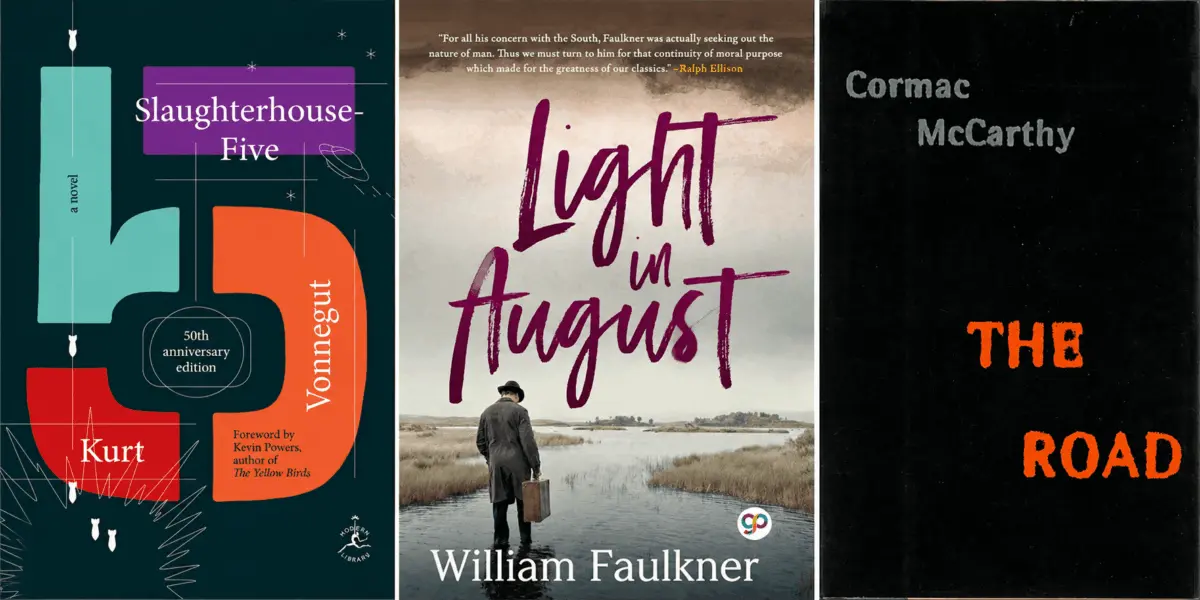
- Kurt Vonnegut (Slaughterhouse-Five): Employed a fragmented, non-linear, and intentionally disjointed timeline to mirror the fractured psyche of trauma.
- William Faulkner: Utilized dense, challenging stream-of-consciousness narration to convey the turbulent interiority of his characters.
- Cormac McCarthy (The Road): famously discarded traditional dialogue tags and punctuation conventions to create a stark, breathless reading experience.
These techniques are not weaknesses because they are executed with absolute control. The ultimate litmus test for any unusual stylistic choice is communication: Does the technique effectively convey the author’s intent to the reader? If an unorthodox approach alienates the audience not by design, but through poor execution, it remains a true weakness that demands correction.
Official Strategies: 5 Ways to Identify Your Writing Weaknesses
Isolating your structural vulnerabilities requires moving beyond vague feelings of dissatisfaction. Industry experts recommend a five-pronged diagnostic approach combining internal instinct with external data.

+-----------------------------------------------------------------+
            5 WAYS TO IDENTIFY YOUR WRITING WEAKNESSES
+-----------------------------------------------------------------+
  1. Pay Attention to Your Gut Feelings (Diagnostic Diagnostics)
  2. Notice What You Avoid Writing (Unaltered Muscle Gaps)
  3. Look for Patterns Across Multiple Stories (Macro-Level Flaws)
  4. Consult Beta Readers, Critique Partners, and Editors
  5. Analyze Patterns in Reader Reviews and Public Feedback
+-----------------------------------------------------------------+
1. Pay Attention to Your Gut Feelings
An author’s innate story sense is remarkably accurate. When a narrative feels hollow or sluggish, the subconscious mind usually registers the malfunction long before the analytical brain can name it. Writers must learn to separate constructive diagnostic nudges ("The pacing drags after chapter three because the stakes are low") from destructive inner-critic whining ("This entire book is garbage").
2. Notice What You Avoid Writing
Writing weaknesses often correlate directly with underdeveloped creative muscles. If an author dreads writing opening chapters, avoids crafting romantic subplots, or skips deep emotional internalization, those neglected areas are almost certainly chronic weaknesses. Acknowledging what you actively dislike writing provides a direct map to your professional blind spots.
3. Look for Patterns Across Multiple Stories
A single flawed manuscript proves nothing about an author’s lifelong trajectory. However, if structural issues—such as rushed climaxes or passive protagonists—reappear across three or four distinct books, the writer has isolated a systemic craft flaw rather than an isolated narrative accident.
4. Consult Beta Readers, Critique Partners, and Editors
Objective self-assessment is notoriously difficult. Engaging trusted critique partners and professional editors introduces necessary external perspective. By providing beta readers with targeted questionnaires focusing on character motivation, pacing, and emotional resonance, authors can aggregate qualitative data to reveal blind spots they could never uncover alone.

5. Analyze Patterns in Reader Reviews
For published authors, the broader reading public offers an unvarnished diagnostic mirror. While individual reviews can be wildly subjective, recurring patterns in reader feedback—such as multiple reviewers noting confusion over the magic system or a lack of character chemistry—signal a legitimate execution gap that warrants serious editorial attention.
Future Outlook: Transforming Weakness into Mastery
The identification of writing weaknesses marks the beginning, not the end, of the artistic journey. As storytellers systematically study craft manuals, engage in targeted writing exercises, and refine their execution, today’s liabilities become tomorrow’s strengths.
Furthermore, as the literary marketplace evolves to increasingly value authentic, singular voices, the goal of the modern author should never be sterile perfection. Perfectionism breeds homogeneity. Instead, the ultimate objective is clear, resonant communication—ensuring that technical shortcomings never stand between a writer’s inner vision and the reader’s imagination.
By reframing ignorance and error as valuable data, writers can step out of the dark of creative anxiety and take total control of their professional growth. Conquer one layer of weaknesses, and your refined artistic taste will inevitably reveal the next frontier of storytelling to conquer.




Comments
Facebook App ID not configured. Please add it in the Customizer.