
Executive Overview
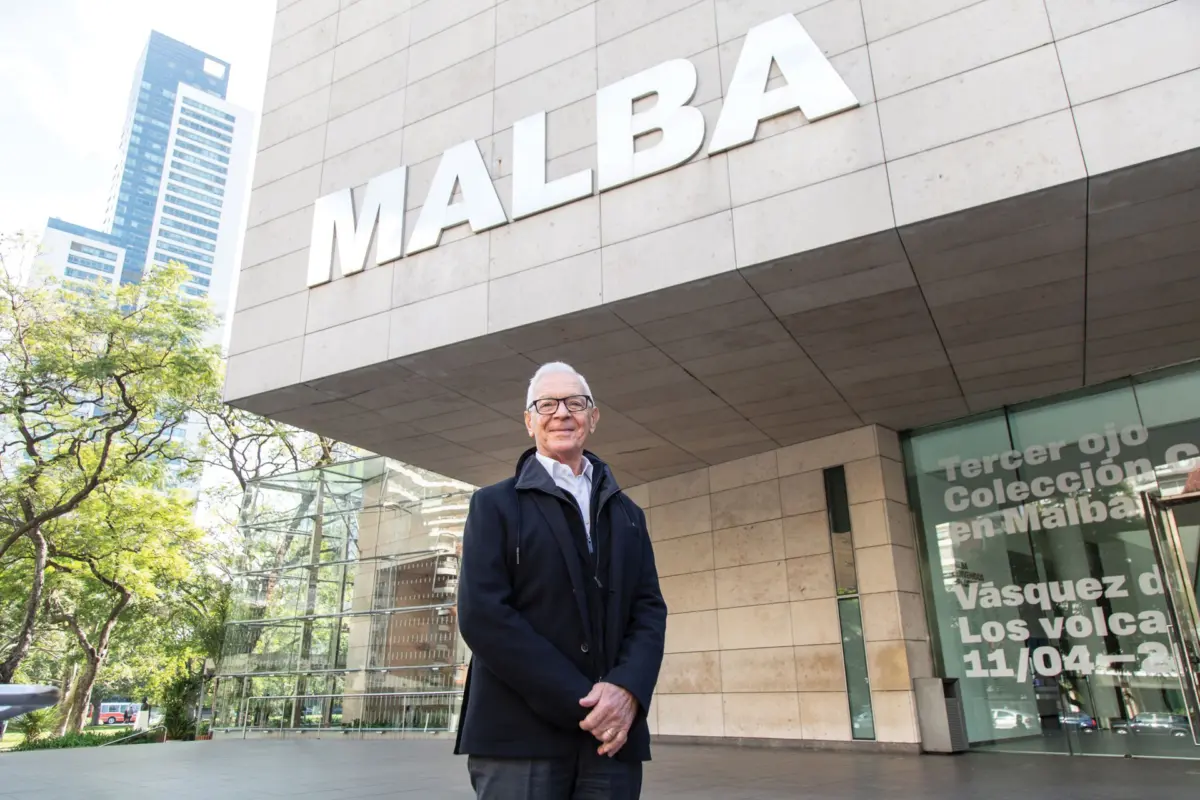
As the Museo de Arte Latinoamericano de Buenos Aires (MALBA) approaches its momentous 25th anniversary, it stands not merely as a regional cultural institution, but as a global powerhouse that permanently altered how the world perceives, values, and contextualizes Latin American art. Founded in 2001 by Argentine real estate developer, philanthropist, and collector Eduardo F. Costantini, the museum was born out of a perceived injustice: the glaring oversight of Latin American artists within the broader canon of global art history.
Today, MALBA is entering a period of profound institutional metamorphosis. Marking its silver jubilee, the museum has engineered a transformative expansion, highlighted by the acquisition of the prestigious Zurich-based Daros Latinamerica Collection. This landmark purchase injects 1,233 works by 117 artists—predominantly produced between the 1950s and the 2010s—into MALBA’s holdings, effectively doubling its architectural footprint and pushing its total collection to nearly 3,000 works.
This strategic evolution shifts MALBA from a revered sanctuary of early 20th-century modernist masterpieces—such as Frida Kahlo’s Autorretrato con chango y loro (1942) and Tarsila do Amaral’s Abaporu (1928)—into an expansive, cross-generational chronicle of Latin American creativity. Through aggressive auction acquisitions, strategic public bidding, and visionary real estate expansion, Costantini has orchestrated a cultural renaissance in the upscale Palermo Chico neighborhood of Buenos Aires. This comprehensive report explores the quarter-century journey of MALBA, examining its economic strategies, its architectural growth, its curatorial milestones, and its lasting geopolitical impact on the global art market.
Read Also
Detailed Chronology: From a Founder’s Vision to a Continental Institution
The Inception (2001): A Deliberate Act of Cultural Defiance
When Eduardo F. Costantini established MALBA in September 2001, the global perception of Latin American art suffered from systemic underrepresentation. Major international museums rarely dedicated permanent gallery space to the region’s avant-garde movements, and the commercial market routinely undervalued its primary makers. Costantini sought to change this narrative by opening a dedicated public platform.
Rather than building his collection quietly or anonymously—a common tactic among private collectors seeking discretion—Costantini adopted a deliberately public strategy. He frequented international auction houses, openly raising his paddle to secure marquee pieces. By turning high-stakes acquisitions into public news, he artificially and effectively forced international art media to pay attention.
The foundational donation consisted of roughly 200 carefully curated pieces from Costantini’s personal collection. While modest in numerical terms, the quality of the initial endowment was peerless. It featured seminal works that would quickly become global icons, including Tarsila do Amaral’s revolutionary 1928 painting Abaporu and Frida Kahlo’s 1942 Autorretrato con chango y loro. These works established MALBA’s early identity as a bastion of 20th-century modernism, surrealism, and indigenism.
The Growth Years and Auction House Dominance (2020–2024)
While the museum’s first two decades cemented its regional prestige, the last six years have witnessed an unprecedented acceleration in acquisitions, driven by Costantini’s willingness to shatter global auction records. This aggressive buying spree transformed MALBA from a passive gallery into an active market-maker.
- June 2020 (Sotheby’s Live-Streamed Auction): Amid the uncertainty of the global pandemic, Costantini made historic waves during Sotheby’s inaugural live-streamed auction. He acquired Wifredo Lam’s hypnotic 1943 masterpiece Omi Obini for $9.6 million and Remedios Varo’s surreal 1956 painting Armonía (Autorretrato sugerente) for $6.2 million. Both purchases set all-time auction records for the respective artists.
- November 2021: Costantini dominated headlines once more by purchasing Frida Kahlo’s deeply personal 1949 painting Diego y yo for $34.9 million at Sotheby’s. This transaction shattered the all-time auction record for any Latin American artwork, cementing the region’s economic viability on the world stage.
- May 2024: Continuing his momentum, Costantini acquired Leonora Carrington’s complex 1945 surrealist canvas Las distracciones de Dagoberto for $28.5 million, setting yet another benchmark artist record.
Costantini has consistently maintained that these astronomical figures are secondary to the ultimate goal: elevating the art-historical integrity of the collection. Every record-breaking bid served to validate the museum’s core mission, ensuring that Latin American masters command the same financial and critical respect as their European and North American counterparts.
Supporting Context & Metrics: The Daros Acquisition and the Modern Shift
The Daros Latinamerica Collection
The crown jewel of MALBA’s 25th-anniversary era is the acquisition of the Zurich-based Daros Latinamerica Collection. Assembled over decades by Swiss patrons Ruth and Stephan Schmidheiny, the collection is widely regarded as one of the most comprehensive and intellectually rigorous assemblages of post-war and contemporary Latin American art in existence.
While the financial terms of the purchase agreement remain confidential—marking the first time Costantini has withheld the price tag of an acquisition—the sheer scale of the addition is staggering. The acquisition incorporates 1,233 works by 117 artists, spanning primarily from the 1950s through the 2010s.
Key Additions to MALBA’s Holdings
The integration of the Daros collection bridges the historical gap between MALBA’s early 20th-century modernism and contemporary artistic practices. Notable masterworks joining the museum include:
- Relevo espacial (1959) by Hélio Oiticica
- Untitled (Glass on Body Imprints) (1972) photo series by Ana Mendieta
- La cena (1993), a powerful collograph by Belkis Ayón
- Analogía I (1971) by Víctor Grippo, an iconic conceptual sculpture featuring 40 live potatoes wired to electrical electrodes
- A substantial holding of 42 works by kinetic art pioneer Julio Le Parc
- Pivotal bodies of work by Lygia Clark, Gego, Antonio Dias, Maria Freire, Liliana Porter, Mira Schendel, Luis Camnitzer, and Doris Salcedo
Curing the Blind Spots
Historically, MALBA’s narrative strengths lay in the first half of the 20th century, dominated by Mexican muralism, Brazilian modernism, and Andean indigenism. The inclusion of the Daros collection rectifies historical blind spots, providing deep representation of conceptual art, minimalism, concrete and neo-concrete art, political performance, and photography from the second half of the century onward. Consequently, MALBA’s total collection has ballooned to approximately 2,800 objects, allowing curators to weave a continuous, unbroken narrative of Latin American visual culture over the past century.

Official Statements and Critical Perspectives
The institutional weight and global footprint of MALBA have earned it the profound respect of international museum directors, curators, and art historians.
Iné Katzenstein, a prominent Latin American art curator at the Museum of Modern Art (MoMA) in New York who previously served as a curator at MALBA from 2004 to 2008, emphasizes the museum’s transformative impact:
"MALBA has established itself as one of the leading platforms for Latin American art. Its exceptional collection creates a dialogue across generations, geographies, and artistic traditions in a way that few museums in the region, if any, have been able to achieve. More broadly, MALBA has been a crucial part of a larger institutional, professional, and geopolitical transformation that has profoundly reshaped the global perception of Latin American art over the past decades."
International validation is further demonstrated by the constant stream of loan requests MALBA receives. Masterworks from its permanent collection are routinely dispatched to global powerhouses, including MoMA in New York, Tate Modern in London, the Museo Reina Sofía in Madrid, and the Museum of Fine Arts, Houston.
Eduardo Costantini reflects on this global appetite with a sense of quiet vindication:
"They are constantly asking us for works because we have major pieces by major artists. We are experiencing a kind of renaissance at MALBA. A museum that began with 200 works now has nearly 3,000. We are celebrating these 25 years not only by looking in the rearview mirror and acknowledging the museum’s history, but also by looking ahead, with a great deal of work and financial commitment."
Future Outlook: Architecture, Expansion, and the Next 25 Years
To house its rapidly expanding holdings—most notably the Daros collection—MALBA is embarking on an ambitious physical and infrastructural expansion program. The initiative represents a conceptual and spatial "refounding" of the institution.
The Palermo Chico Expansion
The centerpiece of the architectural growth involves extending MALBA’s primary building in the Palermo Chico neighborhood beneath the adjacent Plaza Perú. This ambitious subterranean and surface-level expansion will double the museum’s footprint to roughly 90,000 square feet.
MALBA has partnered with two architectural firms to conceptualize exhibition spaces that can accommodate large-scale contemporary installations, multimedia works, and immersive environments characteristic of the post-war and contemporary holdings. Construction on the Palermo Chico site is scheduled to commence immediately following the conclusion of the museum’s 25th-anniversary celebrations in September, with the newly minted galleries slated to open to the public in 2029.
Malba Puertos and Regional Outreach
Recognizing the need for state-of-the-art conservation and decentralized cultural engagement, MALBA is simultaneously developing a 13,500-square-foot technical reserve at Malba Puertos, its suburban satellite campus located in Escobar, approximately 31 miles northwest of downtown Buenos Aires. This facility will ensure the long-term preservation, restoration, and study of the museum’s swelling inventory under optimal climatic and technical conditions.
Conclusion: A Legacy Carved in Public View
As MALBA marks its silver jubilee, it stands as a testament to the power of singular vision backed by relentless financial and civic commitment. What began as a lonely crusade by a passionate collector to elevate his homeland’s cultural output has matured into an indispensable global institution. By refusing to collect anonymously, by staking fortunes on overlooked masterpieces, and by continuously expanding its physical boundaries, MALBA has rewritten the art-historical ledger—ensuring that the vibrant, complex, and diverse voice of Latin American art resonates loudly at the very center of the global cultural conversation.




Comments
Facebook App ID not configured. Please add it in the Customizer.