

Executive Overview
The Museum of Fine Arts (MFA) in Boston has long stood as a premier custodian of world culture, housing vast collections that bridge millennia of human creativity. Among its crown jewels is its renowned Egyptian collection, which offers visitors an immersive portal into the daily life, religious devotion, and monumental architecture of one of history’s most enduring civilizations. In its latest cultural triumph, the museum has curated a specialized focal exploration: Maverick Kings: Ancient Egyptian Pharaohs.
This exhibition invites art historians, Egyptologists, and the general public alike to reconsider the conventional narratives surrounding dynastic rule in ancient Egypt. Rather than presenting the pharaohs as static, idealized demigods bound strictly by rigid artistic and political canons, Maverick Kings shines a brilliant spotlight on the rulers who broke the mold. These are the iconoclasts, the reformers, the outsiders, and the visionaries who challenged established traditions, redefined divine kingship, and left an indelible stamp on the historical record.
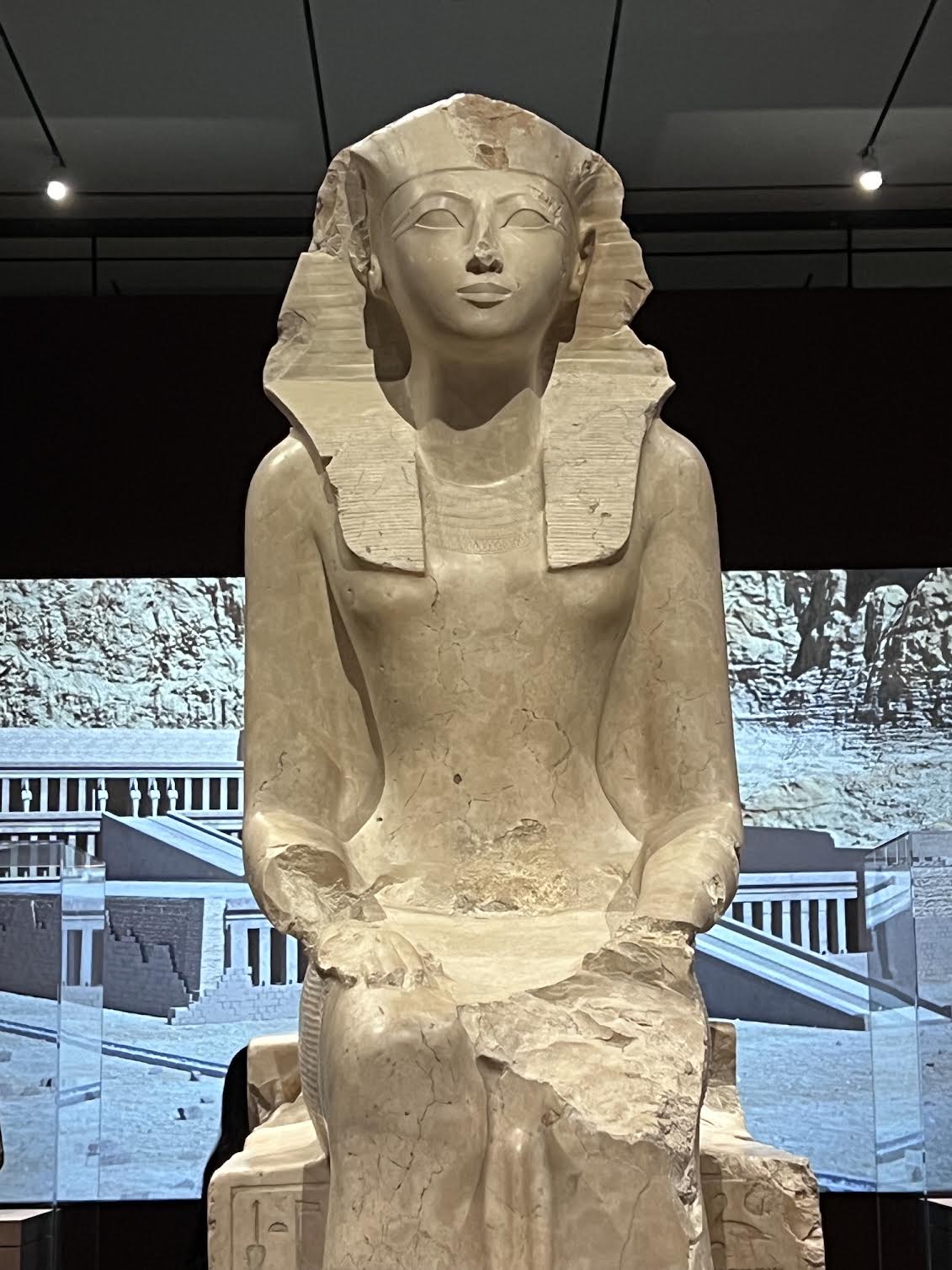
Complementing the physical artifacts is an expansive digital landscape of curated media, video walkthroughs, and extensive educational resources, including children’s literature recommendations and pedagogical guides. This article provides a comprehensive examination of the Maverick Kings exhibition, contextualizing its cultural significance, breaking down its thematic framework, exploring the broader educational ecosystem surrounding it, and outlining the enduring fascination with ancient Egyptian sovereignty in the modern cultural imagination.
Read Also
Detailed Chronology: The Evolution of Royal Iconoclasm
To understand the weight of the objects on display in Maverick Kings, one must trace the arc of Egyptian dynastic history—a timeline spanning roughly three millennia, characterized by distinct eras of consolidation, chaos, innovation, and foreign rule. The exhibition strategically curates pieces from eras when the traditional parameters of pharaonic power were tested, subverted, or radically reinvented.

1. The Old Kingdom and the Establishment of the Canon
In the early days of Egyptian statecraft, particularly during the Old Kingdom (c. 2686–2181 BCE), the visual and political vocabulary of kingship was established. Rulers like Djoser and Khufu commissioned monumental architecture—the pyramids—and statues designed to project timeless, unshakeable divine authority. Kings were depicted with youthful perfection, unblemished by the passage of time, serving as the eternal mediators between the gods and humanity.
2. The Middle Kingdom and Psychological Realism
The Middle Kingdom (c. 2055–1650 BCE) introduced a subtle yet profound shift. Following a period of political fragmentation known as the First Intermediate Period, pharaohs such as Senusret III faced a crisis of legitimacy. Portraiture from this era breaks away from purely idealized depictions, introducing deep-set eyes, lined foreheads, and expressions of heavy responsibility. Maverick Kings touches upon this early psychological realism, showcasing how rulers began to acknowledge the burdens of governance in their visual media long before the radical upheavals of later dynasties.

3. The New Kingdom: Amarna and Foreign Dynasties
The peak of pharaonic iconoclasm occurred during the New Kingdom (c. 1550–1069 BCE) and subsequent Late Periods, serving as the historical anchor for many of the objects featured in the MFA’s showcase:
- Akhenaten and the Amarna Revolution (c. 1353–1336 BCE): Perhaps the ultimate "maverick" king, Akhenaten dismantled centuries of polytheistic tradition by elevating the sun disk, the Aten, to supreme status. Artistically, he shattered the traditional canon in favor of an exaggerated, fluid, and strikingly intimate aesthetic that depicted his family in domestic settings.
- The Nubian Pharaohs (Twenty-Fifth Dynasty, c. 747–656 BCE): Extending the definition of "maverick," the Twenty-Fifth Dynasty saw rulers from Kush (modern-day Sudan) conquer and unify Egypt. Kings such as Piye and Taharqa assumed the mantle of pharaoh, reviving classical Egyptian art while proudly retaining distinct Kushite royal iconography—such as the double uraeus on their crowns. They viewed themselves not as conquerors, but as restorers of traditional Egyptian religion at a time of internal decay.
Supporting Context & Metrics: The MFA’s Egyptian Holdings
The Museum of Fine Arts, Boston, is uniquely positioned to host an exhibition of this caliber due to its century-long partnership with the Harvard University–Museum of Fine Arts Expedition (1902–1947). This collaboration yielded one of the most significant troves of Egyptian and Nubian artifacts outside of Cairo.

Collection Metrics and Scope
- Over 45,000 Objects: The MFA’s Egyptian collection spans from the Predynastic Period (c. 4500 BCE) to the Ptolemaic and Roman periods (ending in 30 CE).
- The Giza Archives: The museum houses the photographic plates, field records, and thousands of physical finds from George Reisner’s excavations at Giza, making it a global hub for academic research.
- Nubian Specialization: Through its excavations at El-Kurru, Nuri, and Meroë, the MFA holds the finest collection of ancient Nubian art in the Americas, providing the essential archaeological backbone for understanding the "Maverick Kings" of the Twenty-Fifth Dynasty.
This institutional depth allows the curators of Maverick Kings to move beyond generic representations of ancient Egypt. Instead of relying on borrowed items, the museum draws directly from its deep vaults, pairing iconic masterworks with lesser-seen archival fragments that reveal the personal and political struggles of unconventional monarchs.
Official Statements and Curatorial Vision
In framing the exhibition, museum leadership and curatorial staff emphasized the importance of humanizing historical figures who are often flattened by popular media into cinematic villains or mystical caricatures.

"When we look at ancient Egypt, it is easy to become mesmerized by the gold, the monumental scale, and the permanence of stone," notes a senior curator involved in the MFA’s ancient art programming. "Yet, the true engine of Egyptian history was its moments of crisis and reinvention. The rulers highlighted in ‘Maverick Kings’ were strategists navigating profound religious, geopolitical, and cultural shifts. By examining their art, we are looking at deliberate political messaging—propaganda, innovation, and survival tactics etched in basalt, granite, and gold."
Educational outreach coordinators have similarly stressed the importance of making these complex historical narratives accessible to younger generations. Through digital video components, museum walkthroughs, and coordinated curriculum tie-ins, the MFA aims to bridge the gap between rigorous academic research and public curiosity.

The Broader Educational Ecosystem: Connecting Past and Present
The fascination with ancient Egypt does not exist in a vacuum; it serves as a cornerstone for literacy, historical inquiry, and cross-cultural understanding. The reception of Maverick Kings has catalyzed a wider conversation about how history is taught, preserved, and represented in modern institutions.
Literature and Youth Engagement
Engaging young learners with ancient history requires a blend of rigorous scholarship and narrative accessibility. Educators and parents frequently draw upon specialized children’s literature to complement museum visits. Works exploring ancient civilizations—alongside contemporary historical non-fiction addressing civil rights, social justice, and global culture—help students draw parallels between ancient struggles for equity and modern sociopolitical movements.

For instance, educational frameworks surrounding museum exhibitions often link ancient governance models to modern explorations of civic action, free speech, and cultural heritage preservation. Whether examining how museum repatriation debates affect institutions like the British Museum or exploring the multicultural roots of everyday global phenomena, educators use historical exhibits as springboards for critical thinking.
Digital Integration and Virtual Accessibility
Recognizing that physical attendance is not always possible for international audiences, the MFA and associated cultural commentators have embraced a hybrid engagement model. High-definition video walkthroughs, digital exhibition catalogues, and interactive media modules allow students and history enthusiasts from around the globe to examine the craftsmanship of the Amarna period or the distinctive facial features of Kushite rulers from their own classrooms.

Future Outlook: The Ongoing Legacy of the Pharaohs
As Maverick Kings: Ancient Egyptian Pharaohs continues to draw critical acclaim at the Museum of Fine Arts, Boston, it establishes a new benchmark for how encyclopedic museums can refresh their permanent collections. By adopting thematic, character-driven approaches to ancient history, institutions can breathe new life into millennia-old artifacts.
Looking forward, the methodologies pioneered in exhibitions like Maverick Kings—combining deep archival holdings with transparent discussions of political propaganda, artistic subversion, and cross-cultural exchange—will likely shape future archaeological displays. As new excavation technologies, non-invasive material analyses, and digital reconstructions continue to unlock the secrets of the Nile Valley, the story of Egypt’s pharaohs will remain endlessly dynamic. They are no longer viewed merely as rulers of a lost world, but as complex human architects of a civilization that continues to challenge, inspire, and captivate the modern imagination.





Comments
Facebook App ID not configured. Please add it in the Customizer.