
Executive Overview
In the upcoming July 2026 issue of School Library Journal, Mia Wenjen’s acclaimed picture book biography, Postcards from Malcolm X: How Yuri Kochiyama Became a Civil Rights Activist (illustrated by Keith Henry Brown), has earned a stellar, recommendation-driven review from critic Jessica Fenster-Sparber. Hailed as a vital addition to middle-grade nonfiction collections, the book illuminates an essential yet frequently overlooked chapter of American history: the deep, cross-cultural alliance between the Japanese American activist Yuri Kochiyama and the African American civil rights icon Malcolm X.
Targeted toward readers in grades 3 through 7, the book navigates complex historical terrain with accessible storytelling, layered visual compositions, and rigorous back matter. Fenster-Sparber’s review encapsulates the core urgency of the publication, asserting: "School libraries need true stories of the enduring importance of cross-cultural alliances and community organizing."
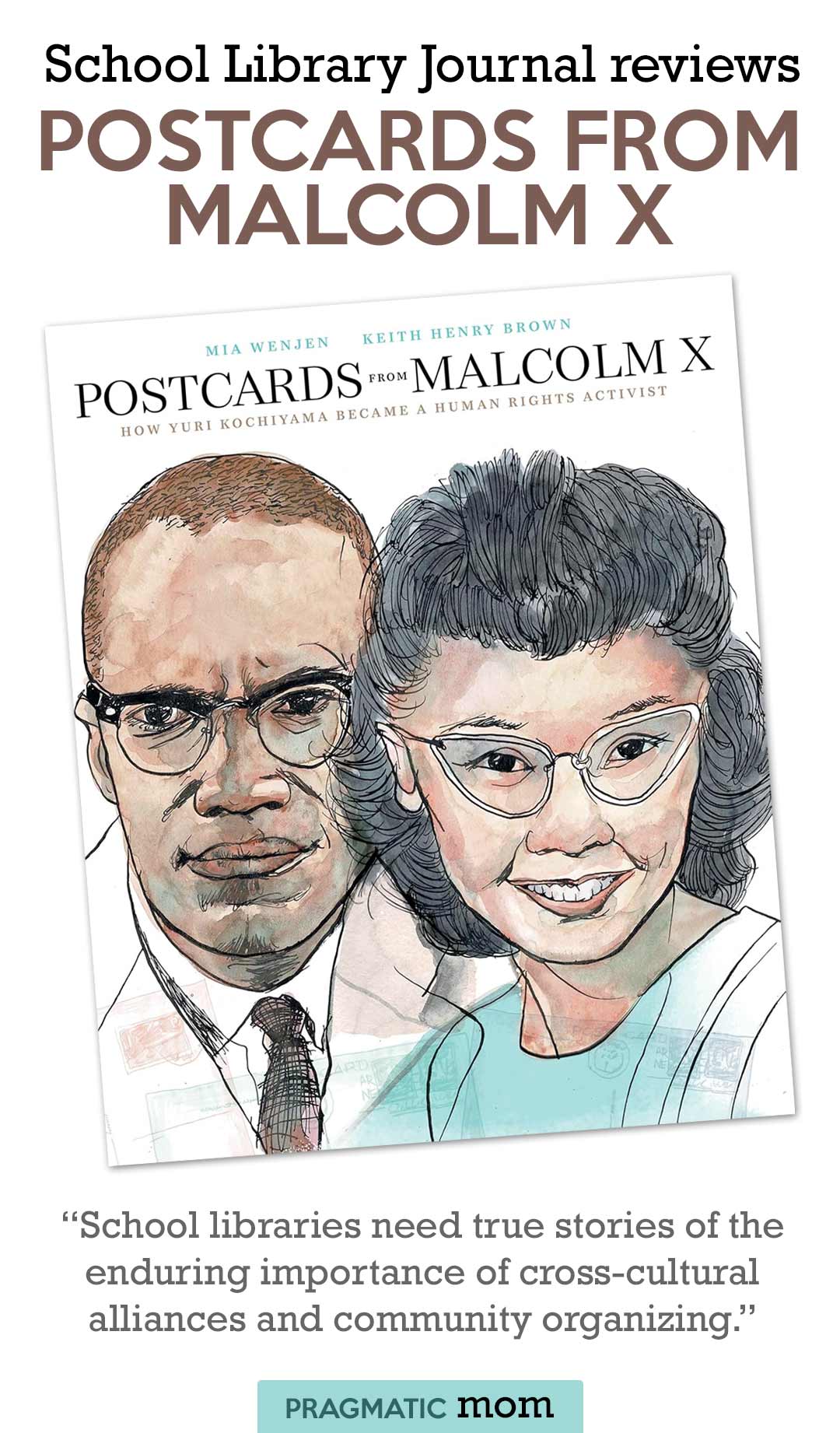
By chronicling Kochiyama’s radical transformation from a suburban homemaker into a fearless revolutionary—and preserving the human resonance of her correspondence and final moments by Malcolm X’s side—Postcards from Malcolm X emerges as a masterclass in biographical non-fiction for young readers. This comprehensive report explores the genesis of the book, its critical reception, the artistic vision behind its creation, and its broader implications for contemporary civic education.
Read Also
Detailed Chronology: The Lives and Intersecting Paths of Yuri Kochiyama and Malcolm X
To understand the weight of Mia Wenjen’s narrative, one must trace the parallel journeys of two towering figures of the 20th-century civil rights movement whose convergence reshaped the landscape of American activism.

Early Lives and the Crucible of War
Yuri Kochiyama was born Mary Yuriko Nakahara in 1921 in San Pedro, California, to middle-class Issei parents. Her early life was upended by the catastrophic events following the December 7, 1941, attack on Pearl Harbor. Under Executive Order 9066, signed by President Franklin D. Roosevelt, Kochiyama and her family—along with more than 120,000 Japanese Americans—were forcibly removed from their homes and incarcerated behind barbed wire in American concentration camps. Kochiyama spent nearly three years confined at the Jerome Relocation Center in Arkansas. This state-sponsored trauma catalyzed her early political consciousness, exposing her firsthand to the bitter realities of systemic racism and state oppression in the United States.
Concurrently, Malcolm X (born Malcolm Little in 1925 in Omaha, Nebraska) endured a childhood marked by white supremacist terror, the murder of his father, the institutionalization of his mother, and the fracturing of his family through the foster care system. His formative years in the urban centers of Midwest and East Coast America exposed him to the crushing weight of economic deprivation and police brutality.

The Harlem Renaissance of Activism and Their Fateful Meeting
Decades later, both activists found themselves anchored in Harlem, New York. Following her marriage to Bill Kochiyama (a veteran of the famed, all-Japanese American 442nd Regimental Combat Team) and a move to New York City, Yuri immersed herself in Harlem’s vibrant, multi-ethnic civil rights and anti-war movements. She organized community education programs, advocated for Puerto Rican independence, and supported school integration efforts.
Their paths finally crossed in October 1963 at the Brooklyn Supreme Court, where activists were protesting the arrests of civil rights demonstrators. Kochiyama, driven by a fierce desire to understand the Black freedom struggle from the perspective of its most dynamic leaders, approached Malcolm X. What began as a brief introduction blossomed into a profound, intellectually rigorous friendship characterized by deep mutual respect, extensive political collaboration, and rich correspondence.

The Audubon Ballroom and the Ultimate Tragedy
Kochiyama’s commitment to Malcolm X’s vision—particularly his pivot toward international human rights and global anti-colonial movements through the Organization of Afro-American Unity (OAAU)—brought her directly into the historical storm.
On February 21, 1965, Kochiyama was seated in the front rows of the Audubon Ballroom in Washington Heights when assassins gunned down Malcolm X. In iconic photographs captured in the immediate aftermath of the shooting, Kochiyama is seen cradling the dying leader’s head in her lap. Rather than retreat from the trauma, this harrowing moment cemented her lifelong dedication to radical social justice. She spent the remaining decades of her life fighting for political prisoners, protesting imperialist wars, and serving as a bridge between Asian American, Black, Latinx, and Indigenous activist networks until her passing in 2014 at the age of 93.

Supporting Context & Metrics: Crafting Non-Fiction for the Next Generation
Mia Wenjen’s Postcards from Malcolm X fills a critical vacuum in middle-grade literature. Historically, children’s biographies of the Civil Rights Movement have tended to focus heavily on siloed, single-identity narratives. Wenjen’s work challenges this convention by foregrounding solidarity movements.
Structural and Artistic Composition
According to the School Library Journal review, the book deliberately navigates the delicate balance between historical accuracy and age-appropriate delivery. The assassination scene at the Audubon Ballroom is rendered with high emotional resonance and sensitivity, entirely omitting gratuitous graphic imagery to protect younger readers while honoring the gravity of the event.

The visual storytelling is executed by acclaimed illustrator Keith Henry Brown, whose mixed-media compositions employ:
- Materials: Ink, watercolor, gouache, and pastels.
- Palette: A deliberate, historically evocative palette restricted to earthy browns, warm tans, striking reds, and muted blues.
- Effect: The layered application of textures draws readers directly into the mood of 1960s Harlem, evoking the urgency, warmth, and grit of the era’s grassroots organizing.
Comprehensive Back Matter
A hallmark of high-tier educational non-fiction, Postcards from Malcolm X features exhaustive back matter designed to aid educators, librarians, and independent readers. The volume includes:
- A detailed historical timeline connecting key milestones in both figures’ lives.
- Concise, informative paragraph-long biographies of Kochiyama and Malcolm X.
- A robust subject-specific glossary.
- Specialized notes from the author, illustrator, and editor detailing the rigorous historical research required to bring the project to life.
Official Statements & Critical Reception
The critical response from major review outlets has validated the book’s importance as an essential educational resource.
The School Library Journal Verdict
In her July 1, 2026 review, Jessica Fenster-Sparber emphasized the overarching philosophical imperative behind the book:
"School libraries need true stories of the enduring importance of cross-cultural alliances and community organizing. Recommended for middle grade nonfiction collections."
Fenster-Sparber noted that while the author occasionally condenses complex historical context for brevity—tailoring the narrative specifically for readers in grades 3 to 7—this minor compromise is vastly outweighed by the book’s monumental contribution to inclusive children’s biography. The review highlights that the slim, highly accessible volume serves as an ideal catalyst, designed to "whet independent readers’ curiosity to learn more."
Authorial Mission and Broader Bibliography
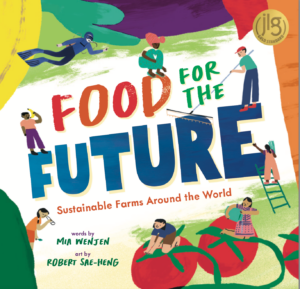
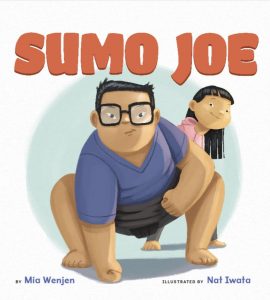
Mia Wenjen has established herself as a prolific champion of diverse histories, civil rights narratives, and multicultural education. Postcards from Malcolm X sits alongside her other celebrated works, which collectively interrogate American history, cultural heritage, and social justice:
- Barbed Wire Between Us (illustrated by Violeta Encarnación): Exploring WWII Japanese American incarceration.
- We Sing from the Heart: How the Slants® Took Their Fight for Free Speech to the Supreme Court: Chronicling the landmark First Amendment legal battle.
- Changing the Game: Asian Pacific American Female Athletes: Spotlighting trailblazing sports figures.
- Fortune Cookies for Everyone! (Smithsonian) and The Traveling Taco: Delving into the surprising multicultural roots of everyday foods.
Through multimedia components—including book trailers, downloadable teacher guides, and video resources—Wenjen ensures that her texts transcend the static page, integrating directly into modern school curricula.
Future Outlook: The Role of Cross-Cultural Non-Fiction in Modern Education
As educational landscapes across the globe increasingly recognize the pedagogical necessity of diverse representation, books like Postcards from Malcolm X occupy a vital vanguard.
Fostering Empathy and Coalition-Building
The relevance of Yuri Kochiyama’s life extends far beyond the mid-20th century. In an era marked by shifting political alliances, social fragmentation, and global struggles for equity, her legacy serves as a blueprint for contemporary intersectional activism. By introducing middle-grade students to the concept that justice is a collective, multiracial endeavor, Postcards from Malcolm X encourages young people to:

- Recognize shared struggles against oppression across different demographic lines.
- Value historical mentorship and the power of cross-generational and cross-cultural dialogue.
- Understand that historical change is driven by ordinary individuals who commit themselves to extraordinary community organizing.
Library and Classroom Integration
With its official recommendation from School Library Journal, Postcards from Malcolm X is positioned to become a staple in school media centers, public libraries, and upper-elementary/middle-school social studies classrooms. Educators seeking to fulfill multicultural education standards will find the book’s accessible narrative structure, paired with Keith Henry Brown’s evocative artwork and comprehensive back matter, an invaluable tool for sparking classroom discussions about civil rights, human rights, and the enduring power of friendship forged in the fires of justice.

Comments
Facebook App ID not configured. Please add it in the Customizer.