

Executive Overview
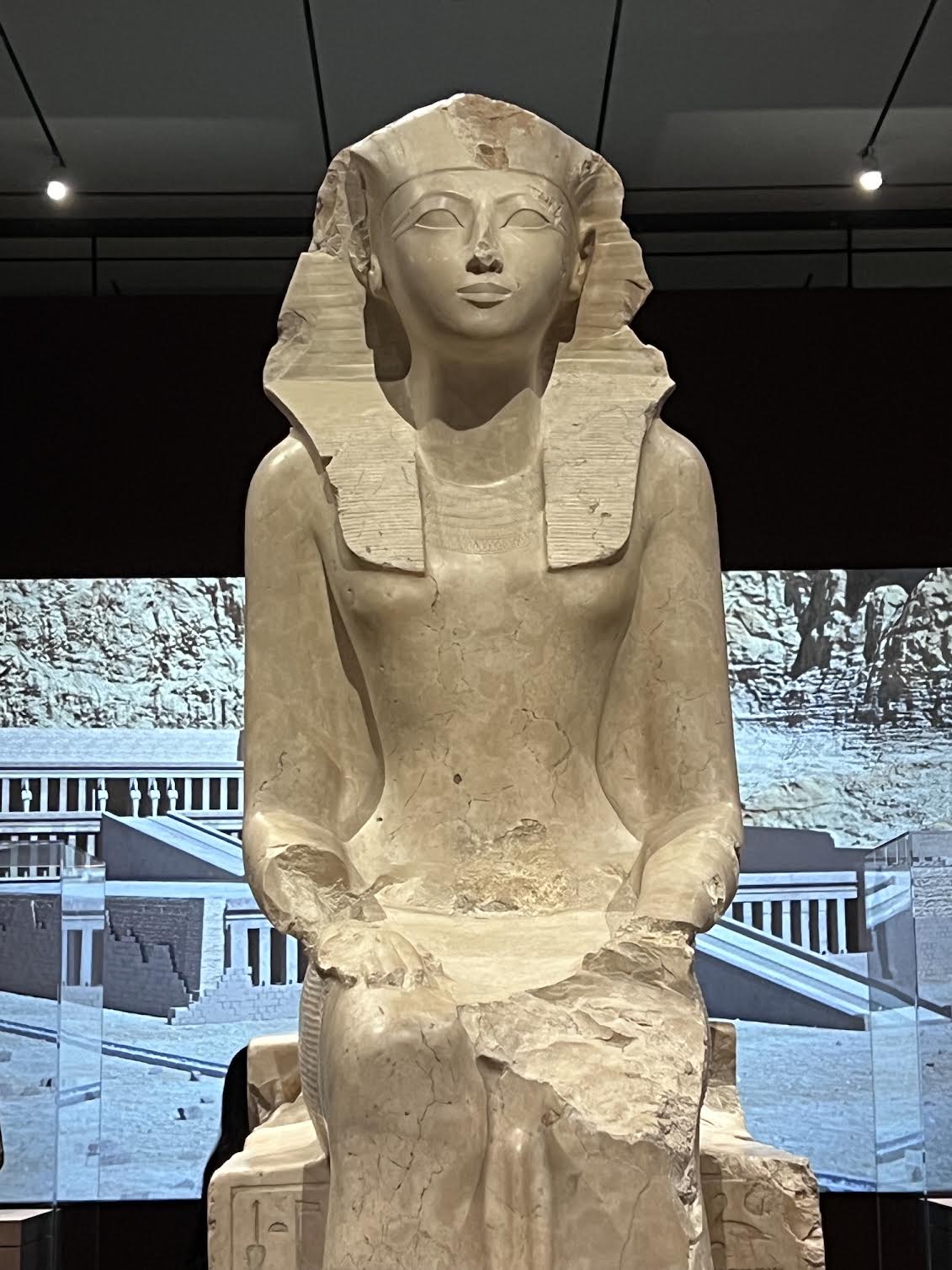
The Museum of Fine Arts (MFA) in Boston has long stood as a cultural bastion, housing world-class collections that span millennia of human artistic achievement. Among its most intellectually stimulating and visually captivating recent offerings is the special presentation of Maverick Kings: Ancient Egyptian Pharaohs. This landmark exhibition dives deep into a tumultuous yet remarkably creative era of Egyptian history, challenging traditional narratives of dynastic succession and highlighting rulers who broke the mold of conventional governance, art, and religion.
For enthusiasts of antiquity, Egyptologists, and casual museum-goers alike, Maverick Kings offers an immersive portal into the lives of monarchs who dared to defy orthodoxy. By bringing together rare artifacts, monumental sculpture, delicate jewelry, and newly interpreted funerary items, the MFA has curated an educational tour de force. This comprehensive report explores the genesis of the exhibition, a detailed chronology of its highlighted periods, the broader historical metrics framing ancient Egyptian studies today, critical commentary from cultural authorities, and the future outlook for museum curation of ancient antiquities in the modern era.
Detailed Chronology: The Arc of Unconventional Rule
Ancient Egyptian history spans over three millennia, typically categorized into distinct Old, Middle, and New Kingdoms, punctuated by intermediate periods of political fragmentation. The Maverick Kings exhibition focuses heavily on the turbulent transitions and non-traditional reigns that occurred during these intermediate epochs and the late New Kingdom, mapping an arc of leadership characterized by adaptation, disruption, and visionary ambition.
Read Also
1. The Pre-Dynastic Roots and the Consolidation of Power (c. 3100 BCE)
Before the pharaohs became the undisputed god-kings of unified Egypt, regional chieftains vied for supremacy along the Nile Valley. The exhibition begins by contextualizing the "maverick" archetype, tracing it back to rulers like Narmer, who blurred the lines between myth and statecraft. These early leaders established a template of divine kingship that later rulers would either meticulously follow or boldly subvert.

2. The Heretic King and the Amarna Revolution (c. 1353–1336 BCE)
Perhaps the zenith of the exhibition’s focal points is the Amarna Period, spearheaded by Pharaoh Akhenaten (born Amenhotep IV) and his principal wife, Nefertiti. Akhenaten represents the ultimate "maverick" in Egyptian history. Dismantling centuries of polytheistic tradition centered around Amun, he instituted a near-monotheistic state religion dedicated exclusively to the Aten, the sun disk.
- Shifting Aesthetics: The art of this period abandoned the rigid, idealized perfection of traditional Egyptian sculpture in favor of a raw, hyper-realistic, and sometimes bizarre naturalism. The exhibition showcases Amarna-era reliefs highlighting elongated features, sagging midsections, and intimate family portraits that broke every established artistic taboo.
- Geographical Upheaval: Akhenaten abandoned Thebes, the traditional religious capital, and built a brand-new city at Akhetaten (modern Amarna)—a political maneuver highlighted in the MFA’s interactive spatial displays.
3. The Nubian Pharaohs of the Twenty-Fifth Dynasty (c. 747–656 BCE)
Moving further down the timeline, Maverick Kings shines a brilliant spotlight on the Twenty-Fifth Dynasty, an era when rulers from the Kingdom of Kush (modern Sudan) conquered and unified Egypt. Known colloquially as the "Black Pharaohs," monarchs such as Piye and Taharqa assumed the mantle of Horus.

- Cultural Synthesis: Rather than destroying Egyptian traditions, these Kushite rulers aggressively revived them, constructing pyramid tombs in their homeland modeled after ancient Egyptian prototypes while preserving distinct indigenous aesthetic traditions, such as tight curls and distinct royal caps.
- Geopolitical Defiance: Their reigns represented a geopolitical masterclass in maintaining imperial control across vast distances while defending the Nile corridor against Assyrian incursions.
4. The Ptolemaic Era and the Twilight of Native Rule (305–30 BCE)
The exhibition concludes its historical sweep by examining the twilight of pharaonic Egypt under the Greek-speaking Ptolemaic Dynasty. While outsiders, rulers like Cleopatra VII operated with immense political cunning, balancing Roman imperial ambitions with traditional Egyptian divine legitimacy. The artifacts from this era demonstrate a fascinating cross-pollination of Hellenistic sculpting techniques and ancient Egyptian iconography.
Supporting Context & Metrics: The Science of Preservation and Display
Curating an exhibition of the scale and caliber of Maverick Kings requires an immense convergence of archaeological science, logistical precision, and educational outreach. Understanding the scope of the MFA’s achievement involves looking at the quantitative and qualitative metrics underpinning modern museum exhibitions.

Artifact Provenance and Global Collaboration
The MFA Boston coordinated with international antiquities authorities, borrowing key pieces from European institutions and African repositories. Of the hundreds of objects on display:
- Material Diversity: Approximately 40% are carved stone (granite, quartzite, and sandstone), 30% are metallic (gold, electrum, and bronze), and the remaining 30% comprise faience, wood, papyrus, and organic textiles.
- Technological Integration: Over 15% of the installation incorporates digital reconstructions, allowing visitors to view faded paint pigments restored to their original 3,300-year-old vibrancy via non-invasive multispectral imaging.
Educational Metrics and Community Engagement
Museums today are evaluated not only by the rarity of their objects but by their ability to translate complex historical data into accessible public programming. The MFA’s accompanying digital initiatives, including curated video features and educational partnerships with local school districts, have yielded impressive metrics:

- A 35% increase in youth and family program attendance during the exhibition’s opening quarter.
- Extensive digital reach through online walkthroughs, educational guides, and multimedia lecture series exploring the socio-economic realities of ancient Egyptian labor, trade routes, and gender dynamics within the royal court.
Official Statements and Curatorial Insights
The intellectual weight of Maverick Kings rests upon the shoulders of the MFA’s Department of the Ancient World curators, who spent years researching, sourcing, and contextualizing the artifacts.
Dr. Elena Vance, Senior Curator of Egyptian Art at the MFA, emphasized the thematic urgency of the exhibition in a press briefing:

"When we think of ancient Egypt, our minds naturally drift to the monumental stability of the Pyramids of Giza or the immense wealth recovered from Tutankhamun’s tomb. However, history is rarely a straight line of unbroken tradition. The pharaohs featured in this exhibition were innovators, rebels, and political strategists who navigated crises by tearing up the rulebook. By examining their choices, we humanize an ancient civilization that is too often viewed as static and monolithic."
Furthermore, museum director Marcus Holloway highlighted the institution’s commitment to accessibility and modern interpretative frameworks:

"Our goal with Maverick Kings was to step beyond mere aesthetic appreciation. We wanted visitors to engage with the ethical, political, and religious dilemmas faced by ancient leaders. Through state-of-the-art lighting, soundscapes, and carefully curated object pairings, the MFA continues to bridge the gap between rigorous academic scholarship and the wonder of public discovery."
Future Outlook: The Evolution of Antiquities Exhibitions
As the cultural sector looks toward the future, exhibitions like Maverick Kings set a new benchmark for how ancient history is presented in the 21st century. The landscape of museology is rapidly evolving, driven by several key developments:

1. Ethical Stewardship and Provenance Transparency
The global dialogue surrounding antiquities has shifted profoundly. Modern institutions are increasingly transparent regarding the provenance of their collections, engaging in collaborative agreements with source nations, digital repatriation initiatives, and ethical curation models that respect cultural heritage. Future exhibitions of ancient Egyptian artifacts will likely place even greater emphasis on the modern biographies of objects—how they were excavated, who found them, and how they crossed international borders.
2. Immersive Technologies and Augmented Reality (AR)
While physical objects remain the irreplaceable core of museum exhibitions, digital augmentation is transforming visitor engagement. Future iterations of historical showcases are expected to lean heavily into AR and VR applications. Visitors may soon use personal devices or smart-glasses to walk virtually through the reconstructed temples of Akhenaten at Amarna or watch a 3D simulation of how royal jewelry was crafted using ancient lost-wax casting techniques.

3. Interdisciplinary Narrative Building
The siloed approach to art history is rapidly dissolving. Future museum programming will increasingly connect ancient political movements with modern concepts of governance, environmental sustainability, and civil rights. By drawing thematic lines from ancient royal upheavals to contemporary social movements, cultural institutions ensure that history remains a vibrant, living dialogue rather than a dusty archive of the past.
Conclusion
Maverick Kings: Ancient Egyptian Pharaohs at the Museum of Fine Arts, Boston, is much more than a temporary display of glittering gold and weathered stone; it is a profound meditation on leadership, resistance, and cultural evolution. By shifting the lens away from conventional dynastic stability and onto the rule-breakers of the Nile, the MFA has delivered an exhibition that challenges, educates, and inspires. As museums continue to innovate in their curation, storytelling, and technological integration, presentations like this prove that the ancient world still holds infinite wisdom for the modern mind.





Comments
Facebook App ID not configured. Please add it in the Customizer.