
Executive Overview
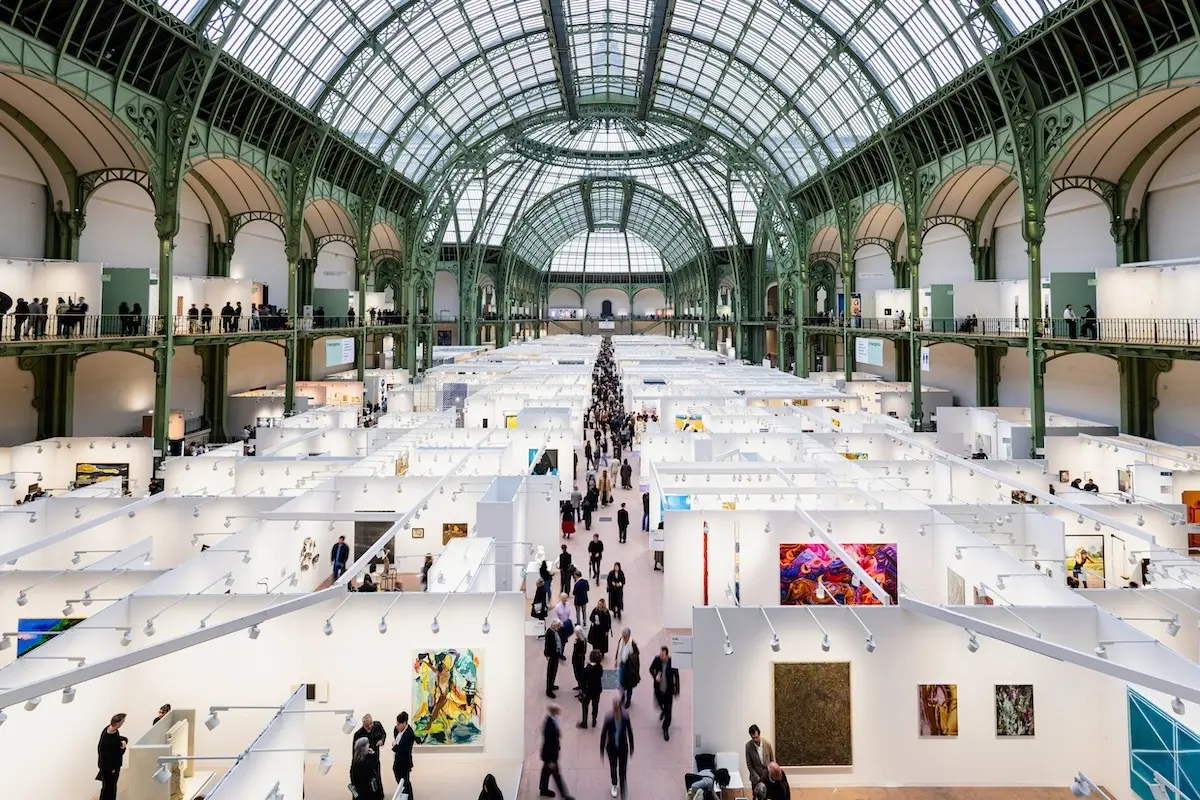
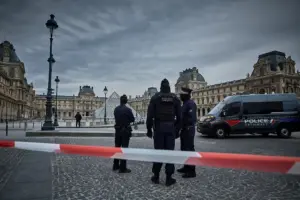
The intersection of contemporary art, civil society, and historical preservation has reached a fever pitch across multiple continents. In Paris, cultural authorities have taken the unprecedented step of shuttering the city’s premier museums—including the Louvre, Musée d’Orsay, Picasso Museum, and the Grand Palais exhibition spaces—in direct response to escalating civil unrest and projected violent protests.
Amid this climate of public tension, the contemporary art world continues to honor critical introspection. The prestigious Marcel Duchamp Prize has been awarded to the artist duo Brognon Rollin for a poignant installation addressing the collective geometry of addiction, sobriety, and human endurance. Meanwhile, international heritage and architectural circles are grappling with turbulent developments: historical preservationists are fiercely contesting an upcoming auction of former Spanish dictator Francisco Franco’s personal effects, while American authorities reel from a devastating act of vandalism against the iconic Iwo Jima memorial in Virginia.
Rounding out the global cultural landscape, new scientific research published in Scientific Reports has offered a groundbreaking window into Vincent van Gogh’s The Starry Night (1889), pinpointing the exact celestial alignment that inspired the masterwork from his asylum window in Saint-Rémy-de-Provence. This comprehensive dispatch examines the confluence of security crises, prize-winning conceptual art, heritage disputes, and art-historical revelations shaping the global discourse today.
Read Also
Detailed Chronology: Paris Museums Go Dark Amid Social Unrest
The Road to Closure
The decision by the French Ministry of Culture to close the capital’s most vital cultural institutions on Saturday marks a severe escalation in the state’s response to ongoing socioeconomic unrest. The crisis stems from a series of mostly peaceful demonstrations regarding the rising cost of living and widening economic inequality across France. However, these movements have increasingly been co-opted by fringe elements, resulting in property damage and looting reminiscent of previous waves of social agitation.
Following widespread looting last weekend, retail establishments across Paris have begun boarding up their storefronts. In an urgent directive, the Ministry of Culture mandated that all national and public museums implement rigorous security protocols to protect visitors, staff, and irreplaceable cultural artifacts.
Governmental Response and Partial Curfews
In an address aimed at stabilizing the capital, French President Emmanuel Macron announced strict limitations on public assembly for the weekend. Only demonstrations officially organized and sanctioned by recognized labor unions will be permitted to proceed. Furthermore, the government has instituted partial curfews across several major French cities.
President Macron did not mince words regarding the instigators of the violence, directly blaming "political and seditious acts by ultra-far-left groups who aimed to bring down the republic." As security forces brace for potential clashes, the temporary silencing of the Louvre, the Musée d’Orsay, the Picasso Museum, and the Grand Palais serves as a stark reminder of how deeply contemporary political strife can disrupt the sanctuary of cultural heritage.
The Duchamp Prize is (Al)Readymade: Brognon Rollin’s Triumph
Materializing the Invisible
While the streets of Paris face institutional closures, the city’s artistic vanguard celebrated a triumph of conceptual rigor at the Musée d’Orsay and the Musée d’Art Moderne de Paris (MAM). The coveted 2026 Marcel Duchamp Prize has been awarded to the artist duo Brognon Rollin—comprising David Brognon and Stéphanie Rollin—for their ambitious, time-based project titled 5,376 years, 1892 months, 1110 days, 1201 hours.
Living and working between Paris and Luxembourg, the duo centered their winning project on an exhaustive collection of sobriety tokens gathered from members of various abstinence support groups. These tokens—physical markers denoting specific durations of personal sobriety—were mathematically aggregated by the artists to represent a collective continuum of time-based resilience.
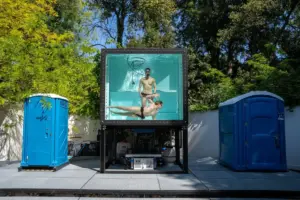
Installed in a format evocative of vintage arcade or fairground games, the installation transforms abstract personal victories into a tangible, immersive monument.
Jury Recognition and Critical Acclaim
Fabrice Hergott, director of the Musée d’Art Moderne de Paris, lauded the selection, emphasizing the conceptual weight of the duo’s practice.
"With Brognon Rollin, the Marcel Duchamp Prize recognizes a demanding body of work that is committed to materializing what usually escapes the eye: the time of waiting, of addiction, and of intimate resistance," Hergott stated during the announcement.
The victory underscores the Duchamp Prize’s enduring mission to champion artists who challenge traditional mediums, pushing the boundaries of what constitutes a sculptural or installation-based ready-made in the twenty-first century.
Supporting Context & Metrics: Global Heritage Under Fire
The Franco Estate Auction Controversy
In Spain, the commercial market for artifacts associated with the family of former dictator Francisco Franco has ignited fierce ethical and legal debates. Everyday items and personal mementos originating from the Franco family estate have seen their market values skyrocket ahead of an impending auction at Magna Art Auctions.
However, historic preservationist groups have mobilized to halt the sale, arguing that many of the designated lots constitute items of vital national heritage. Activists contend that monetizing and dispersing these objects risks sanitizing or commercializing the material history of a dictatorial regime, prompting calls for the Spanish government to intervene and suspend the proceedings.
Vandalism at the Iwo Jima Memorial
In the United States, cultural property crime has struck a severe blow to a historic monument. A man was arrested in Quantico, Virginia, after allegedly using a sledgehammer to systematically behead the figure of a United States Marine depicted in the regional Iwo Jima monument.
Law enforcement officials reported that the attack caused hundreds of thousands of dollars in structural damage to the bronze-and-stone tribute. The incident has reignited discussions regarding the vulnerability of public memorials and the imperative for enhanced security around national monuments.
Legislative Overreach in France?
Compounding the turbulence in France’s cultural sector, a legislative bill introduced earlier this March continues to send shockwaves through the art market. The proposed legislation would significantly expand the French government’s legal definition of art classified as a "national treasure."
Under the revised criteria, a far broader array of privately owned artworks would automatically fall under export certificate restrictions, giving the state unprecedented leverage to block the movement or sale of works abroad. Art dealers, collectors, and legal experts have raised alarms over potential state overreach and the chilling effect this could have on the French art market.
International Architectural Developments
Despite global headwinds, institutional growth persists. In the United States, Los Angeles-based architecture firm Johnston Marklee has unveiled its ambitious design plans for the expansion of the Bass Museum of Art in Miami Beach, promising a reimagined public footprint for the institution.
Meanwhile, in East Asia, the forthcoming Róng Museum of Art (RMoA) in Shenzhen has announced three high-profile additions to its curatorial team ahead of its anticipated 2027 grand opening: Freya Chou, Li Jia, and Susanna Zhu.
The Kicker: Unlocking the Real Sky of Van Gogh’s The Starry Night
Precision in the Swirls
For over a century, art historians, astronomers, and enthusiasts have debated the nature of the celestial canopy in Vincent van Gogh’s iconic 1889 masterpiece, The Starry Night. Was the swirling sky a product of psychological hallucination, symbolic abstraction, or acute astronomical observation?
According to groundbreaking research recently published in the journal Scientific Reports and highlighted by the Times of London, science has finally delivered a definitive verdict. Researchers have successfully cracked the astronomical code behind the painting, revealing that Van Gogh was painting a meticulously observed real sky.
The July 22, 1889 Alignment
Utilizing advanced digital techniques to superimpose historical astronomical charts over the topography of Saint-Rémy-de-Provence, researchers determined that the famous swirls in the painting accurately map out the Taurus constellation. Specifically, the composition captures a waning crescent moon, the planet Venus, and the Hyades star cluster.
Crucially, the celestial coordinates match the exact night sky visible from the east-facing window of Van Gogh’s room at the asylum in Saint-Rémy on July 22, 1889. This date places the execution of the painting roughly one month later than previously estimated by scholars.
Commenting on the significance of the discovery, a representative from the Springer Nature group emphasized:
"It has been debated whether the night sky in question was the painter’s fantasy, a symbolic representation, or a realistic astronomical observation."
This new data confirms that even at the height of his personal turmoil, Van Gogh remained deeply committed to empirical observation, anchoring his emotional expression in the tangible reality of the natural world.
Future Outlook
As the cultural sector navigates the immediate fallout of Paris’s museum closures, institutional leaders face a delicate balancing act between public safety and civic accessibility. The resilience demonstrated by artists like Brognon Rollin, alongside the enduring allure of historical masterpieces newly decoded by science, proves that the cultural sphere remains a vital arena for both human introspection and societal critique.
In the weeks ahead, stakeholders across the museum, heritage, and market sectors will be forced to adapt to increasingly stringent security paradigms while safeguarding the public’s fundamental right to engage with art and history free from disruption.

Comments
Facebook App ID not configured. Please add it in the Customizer.