
Executive Overview
Two decades after Kiyoshi Kurosawa’s seminal 2001 techno-horror film Kairo—better known to Western audiences as Pulse—sent shockwaves through international film festivals and domestic living rooms alike, the haunting blueprint of digital isolation is getting a contemporary overhaul. Industry reports confirm that Spyglass Media Group and Screen Gems have joined forces to develop a brand-new, modern-day reimagining of the classic.
At the helm of this ambitious project is filmmaker Dave Boyle, recognized for his nuanced storytelling set against Japanese backdrops, who has signed on to direct. The screenplay is being crafted by Luke Piotrowski, a writer whose pedigree in the horror and psychological thriller spaces suggests a keen understanding of atmospheric dread.
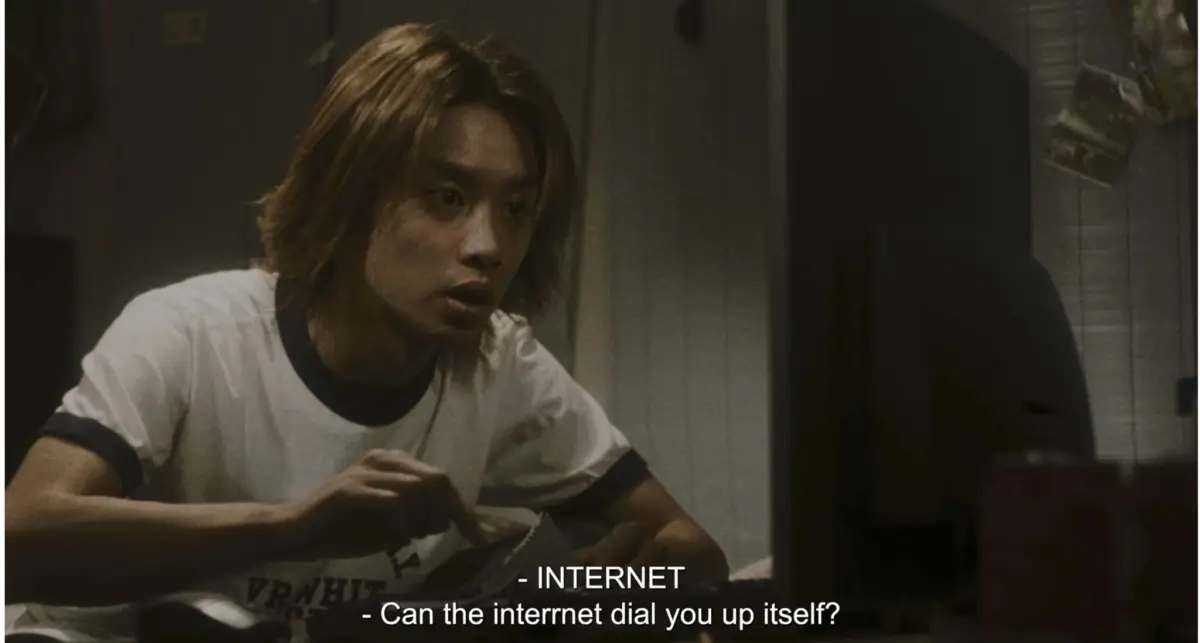
The original Pulse functioned as an eerie, prophetic look at the dawn of the consumer internet era. In Kurosawa’s vision, cyberspace was not an information superhighway, but rather a digital abyss. It was a conduit for the dead, manifesting through pixelated video feeds, flickering computer monitors, and a terrifying web address that asked a chilling question: "Would you like to meet a ghost?"
Read Also
When the film debuted, critics were quick to grasp its psychological toll. A reviewer for The Washington Post famously warned readers that Kurosawa’s film might inspire them to "go home and throw out your computer and lock the doors." Today, as society lives permanently tethered to smartphones, cloud networks, and algorithmic feeds, the themes of hyper-connectivity and profound loneliness feel less like speculative fiction and more like everyday reality. Consequently, the timing of a fresh cinematic adaptation is not merely opportunistic—it is culturally inevitable.
Detailed Chronology: From 2001 J-Horror Milestone to 2026 Reimagining
To understand the weight of Dave Boyle’s upcoming project, one must trace the evolutionary history of the Pulse property—a journey defined by shifting technological fears, geographic transitions, and artistic interpretations.
1. The 2001 Original: Kurosawa’s Existential Cyber-Void
Long before the term "doomscrolling" entered the cultural lexicon, Kiyoshi Kurosawa crafted a masterclass in atmospheric dread. Released in Japan in 2001, Pulse followed a disparate group of young adults in Tokyo investigating a series of bizarre suicides and vanishings tied to a mysterious computer protocol.
Rather than relying on fast-paced jump scares or hyper-aggressive monsters, Kurosawa utilized long, lingering static shots, washed-out color palettes, and oppressive sound design. The ghosts in Pulse were not physical slashers; they were spectral figures trapped in eternal, desolate isolation, slowly leaking out of the internet into the physical world. The film captured a profound cultural anxiety: that as technology brought us closer together globally, it was driving us further apart emotionally, eventually tearing down the metaphysical veil between the living and the dead.
2. The 2006 American Remake: The Wes Craven Touch
As was standard practice for successful Asian horror properties during the post-Ring and post-The Grudge boom, Hollywood quickly sought to domesticate Pulse for Western audiences. Released in 2006 by Dimension Films, the American remake was directed by Jim Sonzero and featured a screenplay co-written by horror legend Wes Craven alongside Ray Wright.
Starring an eclectic cast that included Kristen Bell, Ian Somerhalder, and Christina Milian, the 2006 Pulse pivoted away from Kurosawa’s patient, existential dread in favor of traditional Hollywood narrative structures. The spectral phenomena were given a more explicit, mechanistic explanation, and the film traded the original’s haunting melancholy for standard-issue Y2K-era panic involving a computer virus that opened literal portals to hell.
While critically panned and largely forgotten by mainstream audiences, the film enjoyed a surprisingly robust home-video afterlife. This commercial viability yielded two direct-to-video sequels in 2008: Pulse 3: Afterlife and Pulse 3 (released concurrently/consecutively), featuring recognizable genre actors such as Battlestar Galactica alum Jamie Bamber and Boy Meets World veteran Rider Strong. Despite these expansions, the American franchise faded into obscurity, leaving the original J-horror classic untouched on a pedestal.
3. The 2026 Modern Reimagining Announcement
Entering the mid-2020s, the landscape of consumer technology has shifted dramatically. Dial-up noises and bulky CRT monitors have been replaced by sleek smartphones, ubiquitous Wi-Fi, constant social media surveillance, artificial intelligence, and algorithmic echo chambers. Recognizing that modern isolation looks entirely different from its early-2000s counterpart, Spyglass Media Group and Screen Gems initiated development on a new reimagining.
Tasked with translating these contemporary terrors to the screen is director Dave Boyle. Known for navigating Japanese cultural settings and narratives in projects like House of Ninjas and Tokyo Cowboy, Boyle brings a cross-cultural authenticity to the table. Paired with screenwriter Luke Piotrowski, the creative team aims to craft a story that honors the DNA of Kurosawa’s original masterpiece while exploring the psychological weight of life in the hyper-connected twenty-first century.
Supporting Context & Metrics: The Evolution of Techno-Alarm
The decision by major studios to revisit Pulse is underscored by broader cultural and industrial metrics regarding the horror genre’s relationship with technology.
The Shift in Horror Demographics and Fears
Over the past decade, horror cinema has evolved away from supernatural tropes toward psychological and technological anxieties. Studies on media consumption reveal a direct correlation between rising screen-time statistics and reported feelings of loneliness, alienation, and existential dread among young adults—the exact demographic targeted by both the 2001 original and the upcoming remake.
| Era | Primary Tech Medium | Dominant Technological Fear | Cinematic Representation in Pulse |
|---|---|---|---|
| Early 2000s | Dial-up internet, desktop computers | Digital contamination, early isolation, unknown cyberspace | Slow-burning existential dread, ghostly pixels, static monitors |
| Mid-2000s | Broadband, early chat rooms, MP3 players | Computer viruses, loss of control, industrial tech collapse | Action-oriented survival horror, physical portals to the underworld |
| Present Day / 2026 | Smartphones, AI, cloud storage, constant social tracking | Hyper-surveillance, algorithmic alienation, permanent digital footprint | Anticipated: Loss of human agency, digital hauntings via personal devices, modern isolation |
The Critical Legacy of Pulse
According to aggregate metrics on platforms like Rotten Tomatoes, Kurosawa’s Pulse has undergone a significant critical reappraisal. While initial box office returns outside of arthouse circuits were modest, contemporary critics frequently rank Kairo among the most important horror films of the 21st century. Its Rotten Tomatoes Top Critics score reflects enduring praise for its prescient depiction of the internet as an isolating, grief-stricken space—cementing its status as a high-water mark for the techno-horror subgenre.
Official Statements & Industry Perspectives
While plot specifics for the upcoming reimagining remain heavily guarded, early statements from industry tracking and trade publications shed light on the creative rationale driving the production.
According to initial reports from Deadline, the new film is positioned as a direct descendent of the 2001 thematic tradition rather than a direct remake of the 2006 American adaptation. Insiders note that the narrative will focus on an entirely new set of characters navigating contemporary urban life in Tokyo, ensuring that the project benefits from modern visual effects while maintaining a grounded, human-scale approach to terror.
Industry analysts have also pointed out the strategic choice of director Dave Boyle. Deadline highlighted Boyle’s extensive background in storytelling rooted in Japanese settings and characters—such as his work on the hit streaming series House of Ninjas and the feature Tokyo Cowboy—as a vital asset. Rather than parachuting an outsider director into a culturally distinct setting, the production is leaning into Boyle’s demonstrated fluency with cross-cultural narratives.
Furthermore, Boyle’s rising stock in the horror community has been bolstered by high-profile endorsements. His upcoming psychological thriller/horror film Never After Dark recently garnered rave reviews from horror icon Stephen King, who publicly described the project as "amazing and haunting." This stamp of approval from the master of horror himself has elevated expectations for Boyle’s atmospheric sensibilities as he approaches the daunting task of reinterpreting Pulse.
Future Outlook: What to Expect from the New Pulse
As pre-production continues under the joint umbrella of Spyglass Media Group and Screen Gems, several key questions remain for horror aficionados and industry watchers alike:
-
How Will Modern Tech Be Weaponized?
While Kurosawa’s ghosts used dial-up connections and flickering computer screens to cross over, a modern setting opens up terrifying new avenues. Will the spirits manifest through algorithmic recommendations, smart-home devices, augmented reality, or deepfake video feeds? The potential to subvert everyday conveniences into instruments of dread is nearly limitless. -
Balancing Homage and Originality:
Reimaginings walk a fine line between satisfying nostalgic purists and engaging a new generation of viewers who may never have seen the 2001 original. By choosing to center on fresh characters and a contemporary Tokyo backdrop, the creative team has signaled an intention to tell a distinct story rather than relying on tired carbon-copy tropes. -
Release Timeline and Distribution:
As of writing, no official release date has been announced by the studios. Given the early stage of development, fans should anticipate additional casting announcements and conceptual teasers throughout the coming months.
Until more details emerge from the production, audiences are left with the lingering, ironic comfort that while Hollywood prepares to modernize the ultimate cautionary tale about internet isolation, millions of viewers worldwide will continue to scroll through their feeds late into the night—unwittingly keeping the spirit of Pulse alive in their own living rooms.





Comments
Facebook App ID not configured. Please add it in the Customizer.