

Executive Overview
Raising a bilingual child is one of the most rewarding yet challenging commitments a parent can undertake. In an increasingly interconnected global economy, the ability to speak a second language opens doors to cultural empathy, cognitive flexibility, and future professional opportunities. However, millions of families encounter a frustrating plateau: children who spend years in traditional classrooms, listening to vocabulary drills and absorbing grammatical structures, suddenly freeze when faced with a real-world conversational prompt.
This phenomenon is rarely the result of stage fright or an inherent lack of aptitude. Rather, it stems from a critical deficit in real-world application. Comprehension is a passive cognitive state; speaking is an active, neuromuscular, and social performance.
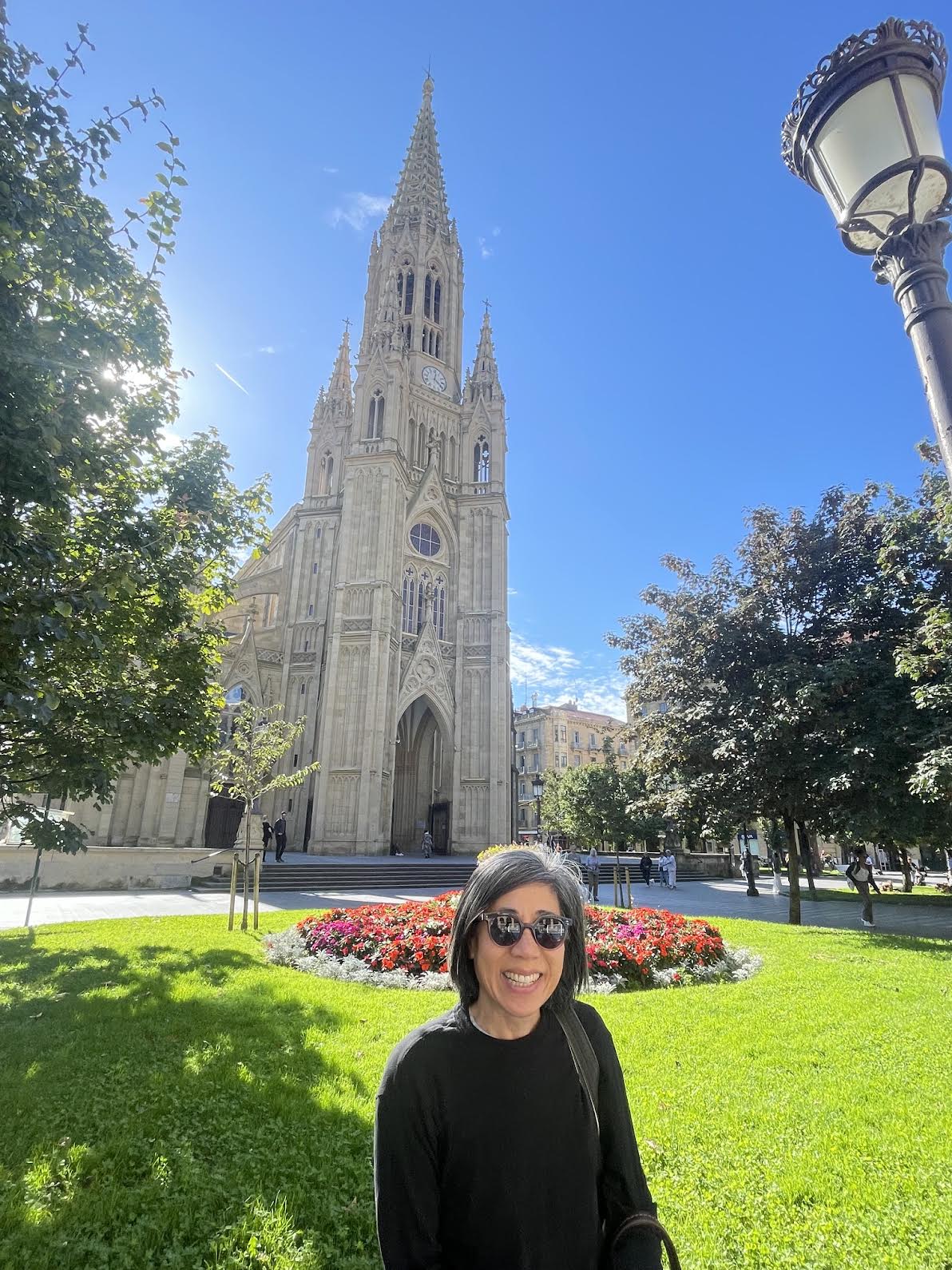
To bridge this gap, educators and linguistic experts increasingly advocate for experiential learning outside the traditional classroom. One of the most effective catalysts for language acquisition is family travel to a Spanish-speaking destination. By immersing children in environments where English is not the default fallback, parents can convert academic knowledge into living, breathing fluency. This report investigates the mechanics of conversational hesitation, examines three premier Spanish-immersion family destinations, and outlines actionable strategies—along with complementary resources like online immersion and bilingual literature—to ensure a successful linguistic journey.
Read Also
The Psychology of Conversational Hesitation: Moving Beyond the Classroom
The "Understanding vs. Speaking" Gap
Every parent who has invested time, money, and emotional energy into language classes knows the disheartening scenario: a child listens attentively to a native speaker, nods in understanding, and perhaps even writes out a flawless conjugation test later that evening. Yet, when the native speaker asks a direct, open-ended question, the child’s eyes widen, their vocal cords lock up, and an awkward silence fills the room.

Linguists refer to this as the gap between receptive bilingualism and productive bilingualism. Receptive bilingualism involves decoding language—interpreting auditory signals, recognizing syntax, and extracting meaning. Productive bilingualism requires formulating thoughts in real-time, retrieving vocabulary under pressure, and executing the physical motor patterns required for pronunciation.
When children spend all their time in structured, low-risk classroom settings, they practice processing language, not producing it under real-world social stakes. When thrust into a natural conversational setting, the brain experiences a cognitive bottleneck. They are not necessarily scared; they simply lack the neural pathways forged by spontaneous, unscripted repetition.

Breaking the Cycle Through Experiential Pressure
Overcoming this bottleneck requires shifting the context of communication. In an immersion environment, language ceases to be an academic subject and becomes a survival tool. Whether asking for a gelato flavor, negotiating the price of a souvenir at a local market, or asking a park ranger about local wildlife, the child realizes that communication yields an immediate, tangible reward.
This low-stakes, high-authenticity pressure forces the brain to bypass hesitation. The focus shifts away from "getting the grammar right" and toward "getting the message across." Travel provides this crucible naturally. When surrounded by a culture that operates in Spanish, children discover that stumbling over words is not a failure, but an essential step on the road to fluency.

Top 3 Family-Friendly Spanish-Immersion Destinations
Choosing the right destination can make the difference between a relaxing family vacation and a frustrating logistical puzzle. To maximize language acquisition without sacrificing comfort or safety, families should look for locations that balance established tourism infrastructure with authentic local culture.
+-----------------------------------------------------------------------------------+
|                        DESTINATION COMPARISON AT A GLANCE                         |
+-------------------+-----------------------------------+---------------------------+
| Destination       | Primary Linguistic Environment    | Best For                  |
+-------------------+-----------------------------------+---------------------------+
| Spain             | Regional dialects, small-town     | European travelers,       |
|                   | markets, traditional daily life   | historic immersion        |
+-------------------+-----------------------------------+---------------------------+
| Mexico            | Street food culture, interactive  | Culinary adventures,      |
|                   | workshops, vibrant community      | diverse family activities |
+-------------------+-----------------------------------+---------------------------+
| Costa Rica        | Eco-tourism, nature guides,       | Wildlife enthusiasts,     |
|                   | jungle and outdoor exploration    | active learners           |
+-------------------+-----------------------------------+---------------------------+
1. Spain: The Cradle of Castilian Culture
For families based in Europe or those seeking a seamless transatlantic transition, Spain remains the gold standard for foundational language immersion. While major hubs like Madrid and Barcelona boast world-class amenities, they also feature an abundance of English speakers who will swiftly switch languages the moment a visitor hesitates.

- The Strategic Approach: To reap the linguistic benefits of Spain, families should venture away from major metropolitan centers and tourist enclaves. Choosing smaller towns in regions like Andalusia, Asturias, or Valencia forces both parents and children to rely entirely on Spanish.
- Practical Immersion Moments: Small, daily interactions serve as the building blocks of confidence. Sending children ahead to order pastries at a local panadería, asking for directions to a historical monument, or purchasing fruit at an open-air market transforms ordinary transactions into empowering linguistic milestones.
2. Mexico: A Cultural Tapestry of Flavor and Community
Mexico offers a rich, sensory-driven immersion experience. Its proximity to North America makes it logistically accessible, while its deep-rooted cultural traditions provide an unforgettable backdrop for language learning.
- The Strategic Approach: Like Spain, tourist-heavy resort strips can sometimes insulate travelers from native linguistic exchanges. However, Mexico’s vibrant community life offers endless alternative avenues for engagement.
- Practical Immersion Moments: Booking a family-friendly cooking workshop or visiting a bustling neighborhood taco stand creates natural opportunities for authentic interaction. Encouraging children to step up to the counter and order their food using local phrasing instills a profound sense of accomplishment and pride.
3. Costa Rica: Pura Vida Meets Ecological Adventure
For families driven by a passion for the outdoors, Costa Rica offers an unmatched synthesis of environmental exploration and Spanish-language development.

- The Strategic Approach: Staying at a localized eco-lodge rather than a sprawling international resort sets the stage for genuine cultural exchange.
- Practical Immersion Moments: Costa Rica’s rich biodiversity provides an exceptional talking point. Instead of relying on English-speaking tour coordinators, parents should coach their children to approach local nature guides directly, asking questions about rainforest fauna, conservation efforts, and trail navigation entirely in Spanish.
Strategic Frameworks for Parents: Maximizing the Travel Experience
Planning a trip to a Spanish-speaking country is only the first step. To extract maximum educational value from the journey, parents must actively manage the travel environment to prevent well-meaning locals from derailing the language-learning process.
          [ Plan Immersion Trip ]
                     │
                     ▼
          [ Shield the Child's Voice ] ──> (Prevent locals from switching to English)
                     │
                     ▼
          [ Maintain Travel Journal ] ──> (Record 1 new word/drawing daily)
                     │
                     ▼
          [ Reframe Mistakes ] ───────> (Celebrate mispronunciations as wins)
The "Shield" Technique Against English Defaults
Hospitality workers across the globe are trained to make tourists feel comfortable, which frequently means switching to English the second they detect an accent or a moment of hesitation. While well-intentioned, this habit robs children of vital practice.
Parents must act as linguistic shields. Politely intercepting English responses with a gentle reminder—such as, "Estamos practicando nuestro español, por favor hablale en español" (We are practicing our Spanish, please speak to them in Spanish)—empowers the child to maintain control of the conversation.
The Daily Challenge Rule
Establish a baseline rule for the duration of the trip: every single day, each child must independently manage at least one real-world transaction. It can be as simple as greeting the hotel receptionist, asking for the bill at a restaurant, or thanking a taxi driver. This daily micro-goal prevents children from hiding behind their parents throughout the vacation.

The Travel Journal Method
To reinforce cognitive retention, equip children with a dedicated travel journal. At the end of each day, require them to write down or sketch one new Spanish word or phrase they encountered during their adventures. This creative exercise transforms fleeting auditory memories into permanent vocabulary anchors.
Refrading "Mistakes" as Milestones
Perfectionism is the enemy of fluency. Parents must actively cultivate a household culture where mispronunciations, awkward grammar, and vocabulary gaps are celebrated rather than corrected on the spot. If a child tells a shopkeeper something that causes mild confusion, let them work it out. If the shopkeeper corrects them playfully, encourage the child to repeat the phrase back with a smile. Every mistake is concrete proof that the child is actively testing the boundaries of their linguistic capabilities.
Official Insights & The Continuity of Learning
Maintaining linguistic momentum after returning home is the ultimate challenge for bilingual families. According to educational specialists in youth language acquisition, sporadic immersion—while highly beneficial—must be backed by consistent reinforcement to prevent cognitive regression.
Industry leaders emphasize that language acquisition is an ongoing lifestyle rather than a finite academic box to check. Organizations specializing in virtual immersion, such as TruFluency Kids Spanish, have noted a surge in families seeking digital continuity post-travel. By pairing live, native-speaking instructors with real-world travel experiences, children build a resilient framework for lifelong bilingualism.
Consider the anecdotal success shared by modern immersion programs: a young participant, initially too timid to speak in public, returned from a family trip to Mexico having mastered the art of ordering at local food trucks. Upon returning home, that same child became the designated "order person" at neighborhood Hispanic eateries, translating menus and speaking with confidence. This transformation illustrates the core philosophy of modern language education: when children realize their language has real-world power, their confidence becomes self-sustaining.
Future Outlook: The Lifelong Value of Global Competence
As the geopolitical and economic landscapes continue to evolve, the demand for globally competent citizens has never been higher. Raising bilingual children is no longer merely a cultural enrichment hobby; it is a foundational investment in their future adaptability.

The intersection of experiential travel, structured digital reinforcement, and supportive home literacy creates a holistic ecosystem for language retention. Whether through exploring the vibrant markets of Spain, navigating the bustling food stalls of Mexico, or tracking wildlife through the Costa Rican jungle, families possess the power to shatter the conversational barrier.
By treating language not as a textbook chore, but as an active passport to human connection, parents can equip the next generation with the courage to speak, the empathy to understand, and the fluency to thrive anywhere in the world.





Comments
Facebook App ID not configured. Please add it in the Customizer.