

Executive Overview
In the contemporary literary landscape, poetry often serves as an archaeological dig site, unearthing buried histories, familial fractures, and the enduring echoes of cultural icons. On October 5, 2026, The Missouri Review designated Trenna Sharpe’s evocative and deeply personal poem, "Hello, Bruce Springsteen," as its Poem of the Week. Sharpe, a Tennessee native currently based in London, has steadily built a reputation as a vital voice in modern verse, with previous appearances in prominent literary publications including the New England Review, the North American Review, Sinister Wisdom, and The Tangerine.
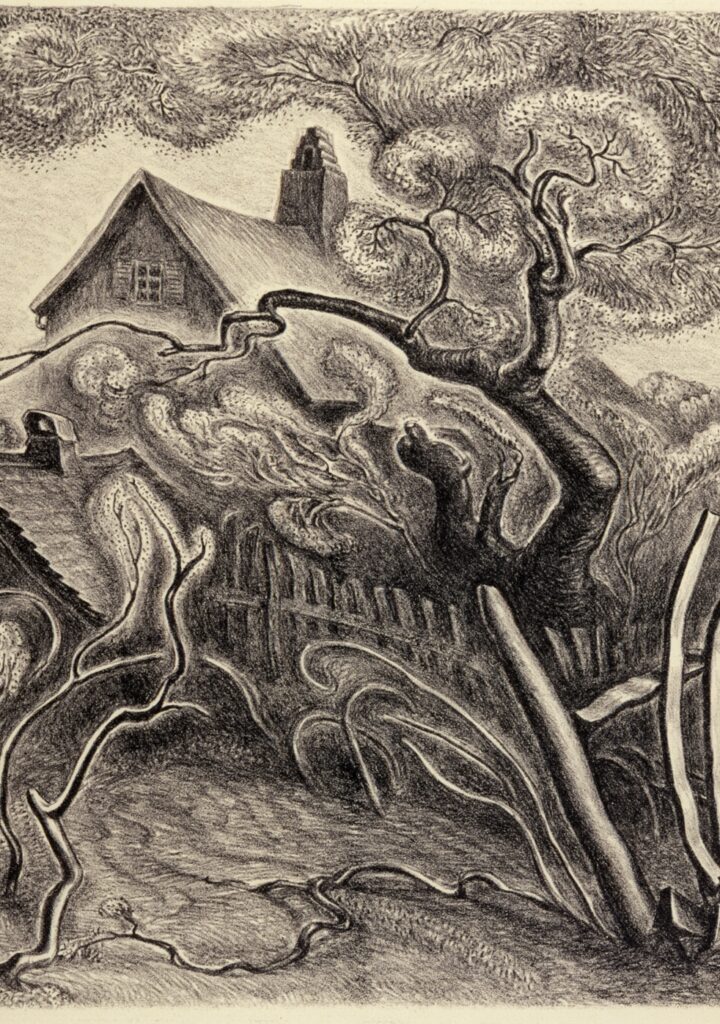
"Hello, Bruce Springsteen" is more than a whimsical nod to rock-and-roll mythology; it is a masterclass in elegiac storytelling. The poem intertwines the stifling, claustrophobic heat of a July subway ride in New York City with the raw, jagged grief of losing her stepbrother, the late singer-songwriter Justin Townes Earle, who tragically died of an accidental fentanyl overdose in 2020. Set against the backdrop of Wanda Gag’s 1927 expressionist painting Spring (Spring in the Garden), Sharpe’s work examines how public iconography and private mourning intersect. This feature explores the anatomy of the poem, the cultural and biographical architecture underpinning its stanzas, and the broader implications of Sharpe’s exploration of grief, family estrangement, and redemption.
Detailed Chronology: From Chattanooga Parking Lots to London Writing Desks
To fully appreciate the emotional architecture of "Hello, Bruce Springsteen," one must trace the biographical milestones that shaped its composition. The poem’s narrative arc spans decades, moving fluidly between childhood fractures, serendipitous reunions, and contemporary metropolitan life.
Read Also
The Foundation of Absence
Sharpe’s relationship with her stepbrother, Justin Townes Earle—son of legendary outlaw country troubadour Steve Earle—was defined by early separation. Following the dissolution of their parents’ marriage, Sharpe and Justin experienced a prolonged period of estrangement. For years, the familial bond was suspended in amber, relegated to the margins of distant memories and the towering shadow of their respective artistic environments.
The Chattanooga Reunion
The narrative turning point occurred long before the poem’s publication, outside the crumbling parking lot of JJ’s Bohemia, a legendary dive bar and music venue in Chattanooga, Tennessee. Justin, volatile yet charismatic, was touring ahead of his ascent into broader critical acclaim. Sharpe approached him unexpectedly. Despite a history defined by distance, Justin’s response was immediate and disarming: a wide grin and a welcoming embrace that collapsed years of silence into a single moment. That evening, Justin performed a searing cover of Bruce Springsteen’s "Racing in the Street," a performance cemented in local lore by a chaotic incident involving a bandmate who shattered a beer bottle against a wall and completed the set with a shard of glass lodged in his eye.
The Tragedy of 2020 and Artistic Genesis
The fault lines of grief shifted permanently in 2020 with Justin Townes Earle’s untimely passing from an accidental fentanyl overdose. The loss cast a long shadow over Sharpe’s creative output, prompting questions familiar to those navigating non-traditional or blended-family mourning: Does the depth of grief require a biological mandate?
"Hello, Bruce Springsteen" emerged as Sharpe’s lyrical resolution to this internal conflict. Written from the perspective of an expatriate living in London while recalling the oppressive, communal heat of her first July in the New York City subway, the poem merges the visceral reality of urban displacement with the eternal, redemptive catalog of the Boss. Published in October 2026, the poem anchors itself in a lineage of American roots music, literary confession, and the ghosts that inhabit everyday American landscapes.
Supporting Context & Metrics: The Cultural and Literary Ecosystem
Sharpe’s recognition by The Missouri Review arrives within a robust ecosystem of contemporary poetry that increasingly values raw, unvarnished autobiography blended with pop-cultural touchstones.
Literary Footprint
Trenna Sharpe’s emergence on the international stage is characterized by a geographic and stylistic duality. Living in London while maintaining deep psychological and artistic roots in Tennessee allows her work to oscillate between the perspective of the American outsider and the intimate domesticity of Southern gothic traditions. Her publication history illustrates a steady ascent through premier literary journals:
- The New England Review: Known for publishing rigorous, formally ambitious work.
- The North American Review: America’s oldest literary magazine, emphasizing cultural commentary and narrative craft.
- Sinister Wisdom and The Tangerine: Platforms focusing on marginalized perspectives, intersectional identity, and regional British-Irish aesthetics.
Thematic Elements in "Hello, Bruce Springsteen"
The poem operates on multiple thematic levels, utilizing specific structural motifs:

- The Metaphor of Heat and Dissolution: The opening lines compare the July subway to a "womb," where urban commuters are reduced to melting edges, "like the air had given up on keeping us apart." This physical suffocation mirrors the emotional porousness of grief, where boundaries between self and other, past and present, dissolve entirely.
- Pop-Cultural Absurdity as Grace: Sharpe invokes iconic, slightly awkward pop-culture moments—specifically Springsteen sliding across a Super Bowl halftime stage and injuring himself on national television—to humanize mythic figures. This vulnerability provides a bridge for the speaker’s own emotional exposure.
- The Complexities of Family Dynamics: Lines such as "My mother was right, and / my mother was wrong, / and I am too" capture the generational ambivalence of Southern familial structures. The poem rejects easy sentimentality, acknowledging both the warmth of connection and the cold friction of estrangement.
Official Statements and Author’s Insights
In her official author’s note accompanying the Missouri Review feature, Sharpe provided rare, candid context regarding the emotional catalyst behind the verse. Reflecting on her initial encounter with the New York City subway system, she noted the overwhelming, democratizing nature of urban heat:
"It was July the very first time I stepped down into the New York City subway. I’d never felt a close heat like it. It felt like me and everyone else down there were dissolving at the edges and blending together, like the air had given up on keeping us apart."
Addressing the complex legacy of her stepbrother, Sharpe opened up about the lingering imposter syndrome often associated with non-biological or fractured-family grief:
"Sometimes I feel like I don’t deserve to grieve for him like I do because I wasn’t his real sister. But whenever I listen to the Boss sing, ‘Tonight my baby and me, we’re gonna ride to the sea / and wash these sins off our hands,’ I think of Justin. And I hope he feels free."
This statement encapsulates the core thesis of Sharpe’s prize-winning poem: that art—whether Springsteen’s blue-collar anthems or Justin Townes Earle’s Appalachian-inflected folk—acts as a secular baptism, absolving the living of their survivor’s guilt and offering a conduit to those who have passed beyond the veil.
Future Outlook: The Continuing Evolution of Sharpe’s Canon
The designation of "Hello, Bruce Springsteen" as Poem of the Week marks a significant milestone in Trenna Sharpe’s career, signaling her growing stature as a major voice in contemporary confessional and narrative poetry. As literary critics and readers alike respond to the poem’s visceral honesty, several developments can be anticipated in Sharpe’s trajectory:
- Upcoming Collections: Following widespread critical acclaim across prominent literary reviews, anticipation is mounting for a debut full-length poetry collection that expands upon the themes of Southern expatriation, familial loss, and musical mythology introduced in her recent magazine publications.
- Transatlantic Dialogues: Sharpe’s position as a Tennessee-born writer residing in London places her within a rich tradition of transatlantic literary observation. Future works are expected to further explore the friction between American myth-making (typified by figures like Bruce Springsteen and Steve/Justin Earle) and European detachment.
- Legacy Preservation: Through her writing, Sharpe ensures that the complex, brilliant, and troubled legacy of artists like Justin Townes Earle continues to resonate within contemporary literature, proving that music and memory outlast mortality.
In awarding Sharpe this weekly honor, The Missouri Review has not only celebrated a brilliant piece of verse but has also invited readers into a sacred space where subway heat, denim-clad rock stars, and the ghost of a stepbrother converge in an unforgettable confetti parade of survival.





Comments
Facebook App ID not configured. Please add it in the Customizer.