
Executive Overview
In the current landscape of American politics, a disconcerting ideological convergence is taking shape, welding a resurgent, post-9/11 style of explicit Islamophobia with aggressive Christian nationalist doctrines. At the center of this movement sits an obscure 75-minute documentary entitled The Great American Conflict. Produced by Iran Alive Ministries—a Texas-based Christian organization primarily devoted to converting Iranians to Christianity—the film purports to "reveal the true Islam to all people, especially in the West." Yet, as its creator Hormoz Shariat explicitly states in the opening minutes, the project serves a domestic political purpose: "This film is also meant to be a warning to America. There is a serious threat of Islam in our nation."
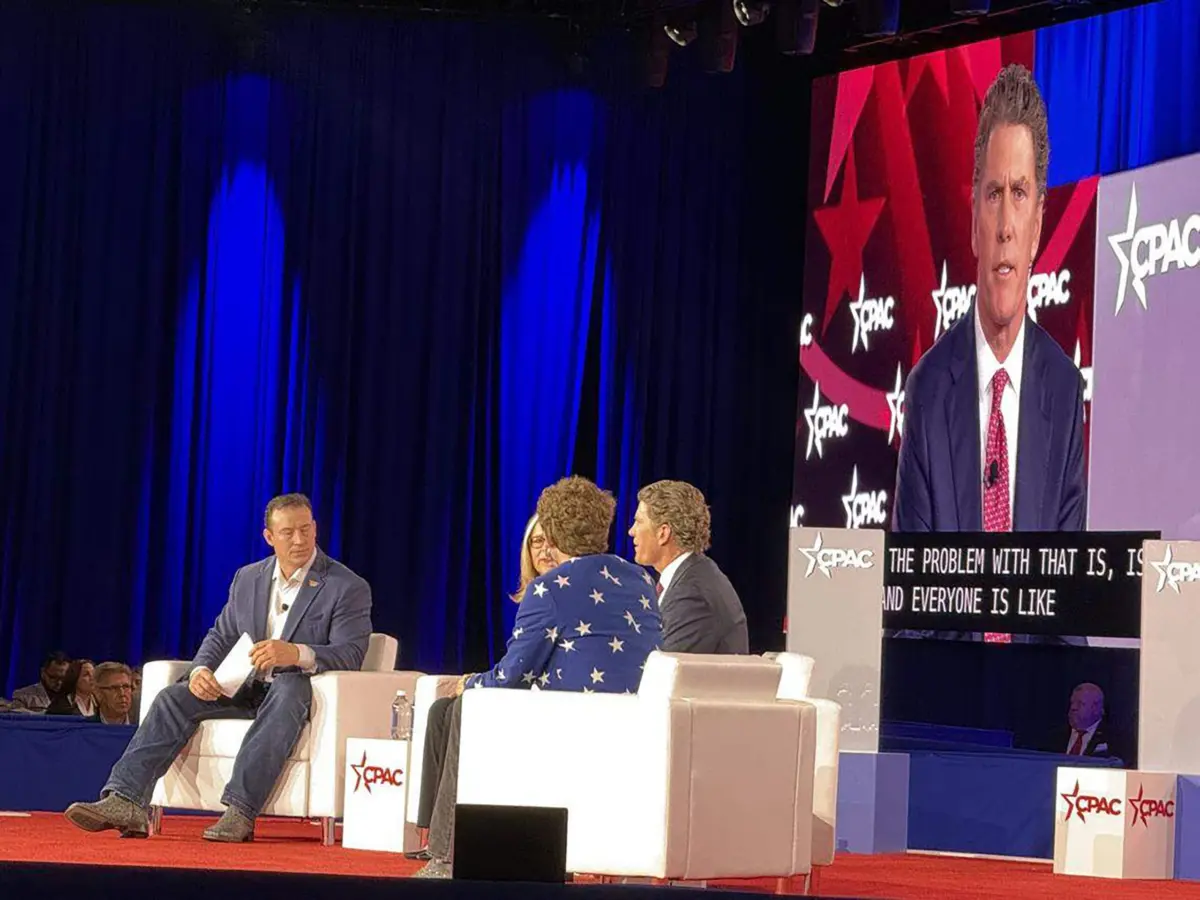
Released at the onset of the summer and premiered at a high-profile gathering of the Dallas County Republican Party, The Great American Conflict has transcended its origins as low-budget agitprop. It has rapidly evolved into a favored touchstone for local Republican organizations, conservative activists, and right-wing political candidates across Texas and the broader American South.
The documentary’s rising prominence mirrors a wider, deeply entrenched trend unfolding throughout the 2026 election cycle. Islamophobic rhetoric, long pushed to the fringes of polite society, has successfully broken through the "dinner table test," permeating mainstream political discourse. Mainstreamed by congressional caucuses, state-level policy proposals, social media virality, and partisan campaigns, this rhetoric targets prominent Muslim political figures—such as New York City Mayor Zohran Mamdani and Michigan Senate candidate Abdul El-Sayed—while weaponizing demographic anxieties. Experts warn that by framing cultural and demographic shifts as an existential, civilizational threat, the architects of this movement are dragging American political discourse down a dangerously dark path.
Read Also
Detailed Chronology: From Evangelical Proselytization to Political Agitprop
The Genesis and Messaging of Iran Alive Ministries
Iran Alive Ministries was not initially formed as an American domestic political advocacy group. For years, its digital footprint on YouTube and various Christian platforms has centered heavily on digital Christian evangelism aimed at transforming Iran into a Christian nation "one soul at a time." However, as scholars of religion and politics note, the ideological leap from global proselytization to domestic anti-Muslim activism is not as wide as it might initially seem.
When a religious organization operates on the dual axioms that a specific spiritual ideology must be globally dominant and that rival belief systems are actively thwarting this divine mandate, political conflict naturally follows. In the eyes of groups like Iran Alive Ministries, Islam represents the ultimate obstacle to Christian global hegemony. Thus, the mission to convert souls abroad has mutated into a domestic political crusade to safeguard American borders from what they characterize as an insidious, creeping threat.
The 2026 Rollout and Political Integration
The timeline of The Great American Conflict’s deployment underscores its calculated integration into the electoral strategies of the American right:
- Early Summer 2026: The documentary makes its official debut at a Dallas County Republican Party event, signaling an immediate alignment with institutional conservative politics.
- Mid-2026 Primary Season: As the 2026 midterm primaries heat up, clips and screenings of the film circulate widely among right-wing precinct chairs, local GOP clubs, and grassroots conservative activist circles in Texas and neighboring states.
- Late Summer 2026: The film’s core themes begin to mirror official party platforms, particularly in Texas, where party leadership actively pushes for legislative bans on Sharia law and targets local Islamic community developments, such as the East Plano Islamic Center (EPIC) housing project.
Supporting Context & Metrics: The Mainstreaming of Prejudice
A Revival of Post-9/11 Tropes with a Modern Twist
The intellectual and rhetorical architecture of The Great American Conflict is built upon foundations laid during the post-9/11 war on terror. Figures featured in the documentary—most notably Brigitte Gabriel, the controversial founder of the early-2000s anti-Islamic extremist group ACT for America—are direct throwbacks to an era when Islamophobia was systematically institutionalized under the guise of fighting "radical Islamic terror."
However, experts point out that today’s iteration possesses a distinct character. While 2000s Islamophobia frequently relied on crude, overt xenophobia tied directly to foreign terrorism and military conflicts in the Middle East, the contemporary movement focuses inward. It targets domestic institutions, democratic processes, and civic participation, framing the mere presence of Muslims in American civic life as an act of subversion.
Nathan Lean, a researcher, assistant professor at North Carolina State University, and author of The Islamophobia Industry, notes the profound erosion of social norms that once kept such bigotry in check.
"Islamophobia has passed the dinner table test. You can say things about Muslims with basic impunity today," Lean observed. "And it’s institutionalized in the way that prejudice that targets other marginalized communities is not."
Lean points to concrete legislative and political milestones that validate this observation: the formation of the Sharia-Free America Caucus in Congress—comprising 68 elected members across 25 states—and the sustained efforts by Texas Republicans to implement official party bans on Sharia law during the 2026 primary cycle.
The Digital Ecosystem and Online Metrics
The dissemination of Islamophobic messaging is no longer restricted to fringe websites or localized town halls; it is turbo-charged by modern social media algorithms and right-wing influencer networks.
This dynamic was powerfully illustrated by a recent study conducted by the research group Magnitude Media, which analyzed online discourse surrounding Dearborn, Michigan. Following recent electoral milestones—including Zohran Mamdani’s historic victory in New York City and Abdul El-Sayed’s competitive Senate campaign in Michigan—anti-Muslim sentiment online reached staggering proportions.
According to the Magnitude Media report:
- In a single month, mentions of Dearborn generated 5.1 million engagements across 690 distinct posts.
- Right-leaning accounts were responsible for an overwhelming 88% of that engagement, compared to just 7% originating from left-leaning accounts.
- Over a broader six-month window, 68% of all social media posts mentioning Islamophobia or utilizing common Islamophobic terminology originated from right-leaning accounts.
These metrics demonstrate that Dearborn and other vibrant Muslim-American communities are not spontaneous generators of controversy, but rather strategic focal points manufactured by conservative media ecosystems to feed a steady diet of demographic anxiety to the online base.
The Core Arguments of The Great American Conflict
As a piece of cinematic art, The Great American Conflict is widely recognized by cultural critics as remarkably crude. It relies on a haphazard collection of testimonials from evangelical Christian pastors and former Muslims who have converted to Christianity. The narrative arc follows a predictable, fear-mongering trajectory:
- Revising History: The film opens with a skewed historical accounting meant to establish Islam not as a legitimate world religion, but as a political ideology bent on imperial conquest.
- Infiltration Narratives: Interviewees argue that Muslim Americans are weaponizing Western democratic processes—voting, running for office, and engaging in civic activism—not to participate in pluralistic society, but to achieve cultural and political domination.
- The "Natality" Panic: Speakers frequently pivot to demographic concerns, warning that falling birth rates among Western Christians, paired with higher birth rates and community cohesion among Muslim populations, amount to a passive demographic conquest.
Prominent Voices and Apocalyptic Warnings
Among the film’s most vocal contributors is Pastor Shahram Hadian, founder of the Tennessee-based Truth in Love Ministry. Hadian paints the current cultural moment in stark, apocalyptic terms, asserting that Western civilization stands on the precipice of total collapse.
"Western societies are right now at a critical decision point. Either they’re going to maintain, preserve, [and] fight for their Judeo-Christian values, or they’re succumbing," Hadian declares in the film.
Hadian explicitly invokes natalist anxieties, connecting the erosion of traditional nuclear family structures to the growth of Muslim families in the United States and Europe:
"We continue to see the demise of Christianity, of our Judeo-Christian values, family values, family ethics, marriage—one man, one woman. They’re just waiting us out. They’ll just wait us out. They’ll aid us in our own demise and destruction."
To substantiate these claims, the documentary juxtaposes interviews with inflammatory, out-of-context social media clips of Muslim prayers, veiled women, radical clerics making fringe statements, and graphic footage of foreign terrorist acts.
Brigitte Gabriel echoes these themes by warning of a coordinated, decades-long conspiracy orchestrated by groups like the Muslim Brotherhood to quietly infiltrate American political parties, public schools, media outlets, and churches. She explicitly targets high-profile Muslim politicians—including Representatives Ilhan Omar of Minnesota and Rashida Tlaib of Michigan, alongside Mayor Mamdani—alleging that their primary allegiance is to a foreign Islamic political identity rather than the United States Constitution.
Official Statements and Institutional Responses
Despite the documentary’s growing traction within political circles, institutional accountability remains elusive. Iran Alive Ministries did not respond to multiple media requests for comment regarding the film’s production, funding sources, or its integration into official Republican campaign events.
Similarly, state-level Republican organizations in Texas, which have integrated the film’s core themes and screening events into their primary preparations, have largely declined to address criticisms regarding the promotion of xenophobic rhetoric. Instead, party strategists have defended their focus on issues such as "Sharia law bans" and local housing developments like the East Plano Islamic Center as legitimate measures aimed at preserving local governance and cultural continuity.
Civil rights organizations, including the Council on American-Islamic Relations (CAIR) and various legal defense groups, have sharply condemned the mainstreaming of these narratives. In public statements throughout the 2026 cycle, civil rights advocates have warned that tying mainstream Muslim political candidates to international extremist conspiracies places a direct target on the backs of Muslim Americans, inviting harassment, discrimination, and potential violence.
Future Outlook: The Dark Horizon of Existential Politics
As the United States barrels toward the height of the 2026 midterm elections, the convergence of Christian nationalist ideology and institutionalized Islamophobia presents a deeply alarming picture for the future of American pluralism.
What makes this current wave uniquely perilous, according to experts like Nathan Lean, is the complete removal of guardrails. When political rhetoric successfully frames a demographic group not merely as political opponents, but as an existential, biological, and cultural threat to national survival, the logical endpoint of that political framework shifts dramatically.
"Where does the logic of all of this take us? What’s the solution?" Lean asked rhetorically. "You can’t help but wonder when they’re issuing statements about fertility rates and these overtures are being kind of taken over, that this could very easily go to a dark place."
When political survival is cast as a zero-sum, do-or-die conflict against an internal fifth column, democratic norms, constitutional protections, and mutual civic respect are the first casualties. Films like The Great American Conflict may remain visually obscure cinematic artifacts, but their seamless absorption into the mainstream machinery of the contemporary American right signals that the politics of fear and exclusion are here to stay—with potentially devastating consequences for the fabric of American democracy.


Comments
Facebook App ID not configured. Please add it in the Customizer.