
Executive Overview
In an era increasingly dominated by moral ambiguity, antiheroes, and hyper-cynical narratives, a critical question emerges regarding the cultural utility of fiction: Do we still have a place for unabashedly heroic stories? While contemporary media trends heavily favor the "morally gray" protagonist, a profound disconnect often occurs between structural plot drivers and archetypal virtue. Protagonists act merely as the engines of a plot, whereas true heroes engage the deeper symbolic machinery of the human psyche, offering maps for resilience, transformation, and hope.
This analysis explores the profound psychological impact of heroic narratives through a dual lens: the global appeal of sweeping historical epics—such as the breakout Chinese historical drama Pursuit of Jade—and the visceral, real-world utility of mythic storytelling during moments of existential crisis, such as severe wildfire threats amid historic droughts. By examining the mechanics of archetypal resonance, narrative psychology, and the creation of compelling fiction, this report outlines why unadulterated heroism remains an indispensable psychological technology for surviving and navigating the complexities of modern life.

Detailed Chronology: From Screen Immersion to Real-World Crisis
The intersection of fictional heroism and psychological preparedness is rarely linear, yet it occasionally manifests in stark, cinematic fashion. The trajectory from narrative consumption to existential testing highlights the subliminal power of well-crafted mythic arcs.
Read Also
The Binge: Discovering the Epic Scale of Pursuit of Jade
The modern cultural phenomenon of Asian historical dramas—typified by expansive productions distributed globally via platforms like Netflix—has captured international audiences through sprawling emotional stakes, slow-burn romances, and high-production-value world-building.

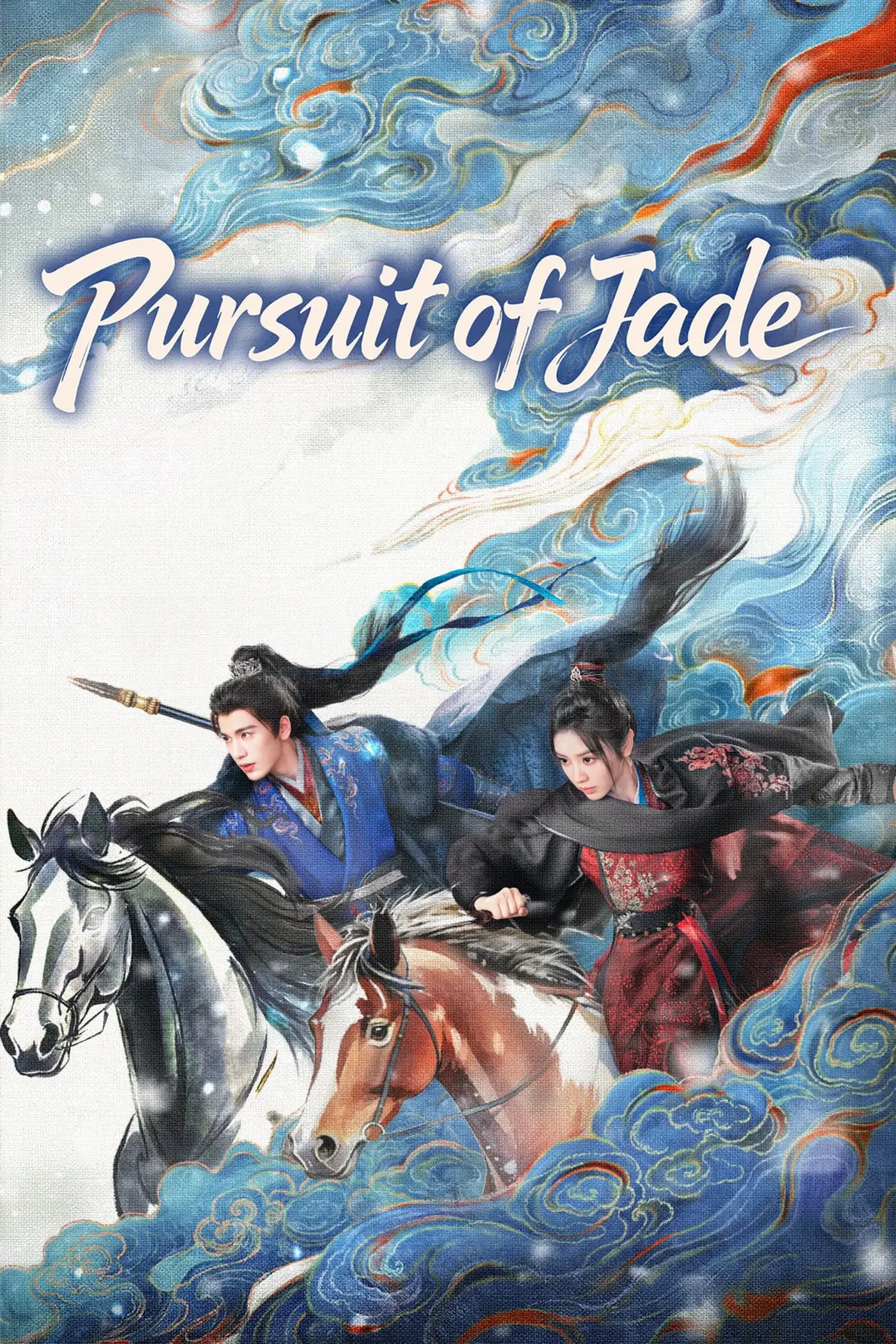
Center stage in this wave is the 40-episode Chinese historical drama Pursuit of Jade. Set against the backdrop of a medieval, slightly fantastical empire, the narrative follows Fan Changyu, a young commoner maintaining her family’s pig-butchering business to protect her younger sister following the brutal murder of their parents. Her life shifts when she discovers Xie Zheng, a severely wounded nobleman and general dying in the snow. Exhibiting radical sincerity and basic human goodness, she nurses him back to health.
Unbeknownst to her, Zheng agrees to a marriage of convenience to protect her ancestral home from a predatory uncle. What follows is a sweeping epic of separation, war, political conspiracy, and mutual transformation. Changyu embarks on an arduous quest to become a hero in her own right, ultimately reuniting with Zheng to dismantle the conspiracy that claimed their families and to save the empire.

For many viewers, including seasoned writers and analysts, the series delivers an emotional high unmatched in decades. Beyond its visual splendor and narrative beats, the show succeeds because it unhesitatingly taps into classic archetypal frameworks: sacrifice, resilience, and the triumph of foundational goodness over systemic corruption.
The Midnight Alarm: The Reality of Drought and Wildfire
The profound impact of this fictional immersion was put to the test immediately following the series’ conclusion. At 12:30 AM, normal domestic routines were shattered by an urgent phone call warning of encroaching wildfires.

The setting: the timbered, high-risk hills of Nebraska, a region grappling with historic drought conditions reminiscent of mid-century environmental collapses. Following a winter of negligible snowfall across the region and the Colorado headwaters, vast stretches of the American Midwest faced extreme fire hazards. Consecutive disasters—including the historic Morrill Fire and the South Fork Fire—had already consumed nearly a million acres, elevating public anxiety to a razor-thin edge.
On this particular night, under Red Flag wind warnings, a fire ignited just two miles away, climbing with flames soaring higher than local structures and driven directly toward a vulnerable canyon neighborhood.

Yet, as the emergency response protocol activated, a striking psychological phenomenon occurred. Rather than succumbing to blind panic—a common reaction to a lifelong fear of fire—the individual relied on an internalized script. The images, musical motifs, and emotional resolve of Pursuit of Jade—its characters standing steadfastly against seemingly insurmountable odds—provided an immediate psychological anchor.
Although the fire’s climax proved mercifully anticlimactic—an unexpected shift in wind direction at dusk granted firefighters and neighbors the precious hour needed to achieve total containment before midnight—the cognitive imprint remained. The transition from passive viewer to someone actively testing their nervous system against genuine peril highlighted how deeply fiction can prep the human mind for unforeseen trials.

Supporting Context & Metrics: The Science of Mythic Resonance
To understand why a fictional drama can effectively steady human adrenaline during an environmental emergency, one must examine the intersection of depth psychology, mythic structure, and cultural trends.
The Mechanics of the Archetypal Subconscious
Psychologist Carl Jung observed that true symbols are never manufactured by conscious design or logical intent; rather, they arise spontaneously from the collective unconscious to point toward realities not yet fully known.

When narratives successfully tap into archetypal patterns—such as the Hero, the Maiden, the King, or the Crone—they bypass the rational, linguistic mind. They act similarly to a tuning fork, vibrating sympathetically within the human psyche.
- Subliminal Technology: Stories function as a covert psychological technology. They do not merely pass the time; they reconfigure our internal thresholds for courage, grief, and endurance.
- The Life-Death-Rebirth Cycle: Structural integrity in storytelling demands a descent into darkness—a symbolic death—before rebirth can occur. The psychological utility of a dark narrative lies entirely in its promise of a dawn. Without the shadow of profound trials, the light of heroism loses its defining contrast.
Societal Shifts and the "Morally Gray" Fatigue
Contemporary media is saturated with the "morally complex" and the antihero. While these narratives successfully explore the shadowy corners of human nature and provide catharsis for collective cynicism, they risk creating a cultural deficit. When sophistication metastasizes into the denigration of the truly heroic, society loses its shared vocabulary for unyielding virtue.

As cultural analysts note, there is a vital distinction between a protagonist (the structural driver of a plot, devoid of moral imperative) and a hero (an embodiment of moral courage and transcendent transformation). While gritty realism has its place, the human nervous system requires more than perpetual disillusionment; it requires models of steadfast hope to confront real-world volatility.
Official Statements & Industry Perspectives on Narrative Craft
As creators grapple with how to resonate more deeply with audiences, masterclasses and literary analyses increasingly emphasize the necessity of intentional, soul-driven storytelling over mere mechanical plotting.

Bridging Technique and Archetype
In discussions surrounding modern fiction writing, industry experts emphasize six core perspectives for generating resonant, heroic narratives:
- Channel Heroism Introspectively: Authors cannot write authentic heroism without first contacting those forces within their own creative meditative states. True resonance requires the writer to act as an open vessel.
- Focus on Archetypes, Not Just Tropes: Executing heroic actions is distinct from embodying a heroic archetype. Sincerity and emotional honesty elevate standard tropes into mythic experiences.
- Diversify Transformational Archetypes: The Hero is only one model among many. The six central transformation arcs—Maiden, Hero, Queen, King, Crone, and Mage—alongside steadfast archetypes like the Child, Lover, and Mentor, all demand unique forms of profound courage.
- Prioritize the Reader’s Emotional Aftermath: The true measure of a story is not its intellectual complexity, but the enduring feeling left in the audience’s consciousness—the cathartic initiation immortalized by Aristotle.
- Embrace the Necessity of the Abyss: Stories must confront genuine peril. The depth of the dark night directly correlates with the scale of the emerging triumph.
- Reclaim Unironic Goodness: Complexity should not eclipse dimensionality. Audiences periodically require the grounding power of genuinely good characters making agonizingly right choices against severe consequences.
Future Outlook: The Ongoing Need for Myth in Modern Media
As the media landscape evolves through rapid technological disruption and environmental volatility, the demand for stories that offer more than fleeting escapism will only intensify.

The convergence of globalized streaming platforms—which now effortlessly cross cultural boundaries to introduce western audiences to Eastern historical epics—proves that the appetite for sweeping, emotionally sincere storytelling is universal. Whether it is a fictional account of an empire’s salvation or a localized battle against an encroaching wildfire, human beings consistently utilize narrative structures to manufacture courage before they are forced to deploy it in reality.
Ultimately, storytelling remains our most sophisticated evolutionary tool for interfacing with the strangeness of existence. By allowing one archetypal imagination to speak directly to another, stories bridge the gap between isolation and collective resilience. As long as humanity faces the dark, unpredictable nights of the twenty-first century, the architecture of the heroic narrative will remain an indispensable shelter—reminding us not only of what we are enduring, but of what we are ultimately capable of becoming.





Comments
Facebook App ID not configured. Please add it in the Customizer.