
Executive Overview
In an era defined by relentless digital connectivity, algorithmic demands, and the unyielding pressures of the modern professional landscape, the urge to retreat—to abandon the desk, silence the notifications, and seek solace in the natural world—has shifted from a casual luxury to a psychological necessity. Addressing this contemporary cultural exhaustion, the latest literary initiative from Writer’s Digest challenges poets, writers, and creatives worldwide to capture the essence of escape through its weekly poetry prompt series.
Centered around the evocative themes of the classic "Gone Fishing" sign, out-of-office autoreplies, and the broader liberation of fleeing the corporate rat race, the prompt invites a wide spectrum of creative interpretations. Participants are encouraged to draft verse that reflects physical withdrawal from labor, meditative tranquility by the water, or, in a subversive twist, the subjective, watery perspective of the fish itself.
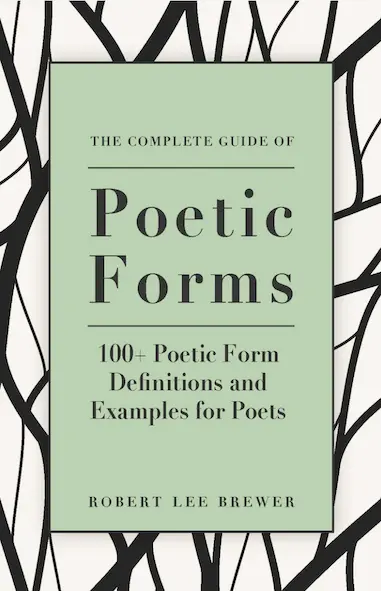
Far from being a mere exercise in whimsical escapism, this prompt arrives at a critical juncture in the literary community. It intersects with ongoing discussions regarding burnout, the utility of traditional poetic forms as structural vessels for mental health, and the enduring role of poetry as a sanctuary for human vulnerability. Spearheaded by Robert Lee Brewer, Writer’s Digest resident poetry expert and former poet laureate of the blogosphere, this week’s exercise is accompanied by the promotion of comprehensive pedagogical tools, including The Complete Guide to Poetic Forms. This authoritative resource catalogs over 100 poetic structures, reinforcing the publication’s mission to marry technical mastery with unbridled imaginative exploration.
Read Also
This report provides an exhaustive examination of the weekly poetry prompt, contextualizing it within the broader framework of modern literary exercises, examining the mechanics of creative prompts as springboards rather than cages, and analyzing the socio-cultural implications of artistic retreats. Furthermore, it details the technical infrastructure of the platform—including commenting protocols via Disqus—and outlines the future outlook for digital poetry communities navigating an increasingly automated and hyper-accelerated world.
Detailed Chronology: The Evolution of the Writer’s Digest Prompt Series
To understand the weight and resonance of the current "Gone Fishing" prompt, one must trace the methodological evolution of Writer’s Digest’s digital poetry initiatives. Over the past decade, the platform has cultivated a robust, interactive ecosystem designed to sustain poetic output among both novice and veteran writers through consistent, structured weekly challenges.
The Genesis of Digital Prompting
Historically, poetic composition was often viewed as an isolated, solitary endeavor—an ivory-tower pursuit driven entirely by sporadic, internal inspiration. However, the democratization of the internet transformed this paradigm. Recognizing that consistency is the primary hurdle for developing writers, Writer’s Digest institutionalized the weekly poetry prompt. These prompts serve as rhythmic anchors for a global community, establishing a dependable cadence of creative production.
The evolution of these prompts has moved from rigid technical constraints—such as strict adherence to obscure meter, syllable counts, or historical forms like the villanelle, pantoum, or ghazal—toward a more thematic, emotionally resonant hybrid model. While technical forms remain a cornerstone of the curriculum, thematic prompts allow writers to bypass initial writer’s block by tapping into universal human experiences: longing, rest, displacement, humor, and connection with nature.
The Anatomy of the "Gone Fishing" Prompt Rollout
The rollout of the "Gone Fishing" prompt followed the established editorial calendar of the platform, appearing alongside the weekly community check-ins and educational spotlights. The editorial framing of the prompt was deliberately multifaceted, offering three distinct pathways for entry:
- The Literal Interpretation: A traditional "gone fishing" poem, capturing the physical stillness of sitting by a riverbank, rod in hand, waiting for a bite amidst reeds and sun-dappled water.
- The Professional Exodus: An out-of-office or relaxation poem designed to address the psychological weight of the rat race, functioning as a lyrical equivalent of flipping a storefront sign from "OPEN" to "CLOSED."
- The Subversive Perspective: An imaginative leap into the aquatic realm, writing from the subjective viewpoint of a fish swimming beneath the surface, detached from and entirely indifferent to human structures of time, commerce, and labor.
Accompanying this prompt was a featured exemplar by Robert Lee Brewer titled "In the Dog Days." The poem captures the universal lethargy of peak summer—characterized by long, winding days and an acute psychological weariness—culminating in the desire to retreat from productivity entirely: "so maybe let’s turn our sign / from OPEN to CLOSED and / get away, for a little while, / and if they ask, we’ll say / we were working hard, or / we were hardly working."
Supporting Context & Metrics: The Mechanics of Creative Catalysts
Prompts function as literary catalysts, lowering the activation energy required to begin the writing process. In cognitive psychology and creative writing pedagogy, prompts act as constraint-based frameworks that paradoxically liberate the imagination by narrowing its focus. When faced with a blank page, the infinite possibilities available to a writer can lead to profound paralysis. By introducing a specific thematic boundary—such as fishing, escape, or corporate withdrawal—the prompt eliminates extraneous choices, allowing the subconscious mind to navigate deeper figurative territory.
Technical Mastery Meets Creative Freedom
A central tenet emphasized by Writer’s Digest is that prompts must serve as springboards rather than boundaries. This pedagogical philosophy guards against formulaic writing, ensuring that participants do not feel boxed into a singular narrative tone or emotional register.
This philosophy is mirrored in Brewer’s pedagogical work, notably The Complete Guide to Poetic Forms: 101 Poetic Form Definitions and Examples for Poets. The guide serves as an encyclopedia and an incubator, cataloging more than 100 distinct poetic structures. Metrics within contemporary literary education indicate that writers who experiment with diverse forms exhibit greater linguistic agility, improved rhythm control, and a heightened capacity for metaphor. By bridging the gap between rigorous structural definitions and expansive thematic prompts, the platform offers a dual-engine approach to poetic development:
- Structural Scaffolding: Provided by historical forms, rhyme schemes, and meter counts.
- Thematic Fuel: Provided by weekly prompts addressing timely emotional and psychological states.
Digital Community Infrastructure and Engagement
An essential component of the Writer’s Digest poetry community is its interactive comment section, powered by the Disqus platform. Digital publishing metrics consistently demonstrate that community engagement drops precipitously when friction is introduced into user authentication workflows.
To maintain a vibrant, low-friction environment, the site utilizes a streamlined integration model:
- Account Creation: Users establish a free universal profile via Disqus.
- One-Time Verification: A site-specific verification step links the Disqus account to the Writer’s Digest ecosystem.
- Moderation Balance: Comments post instantaneously for verified users, fostering a real-time conversational dynamic, while backend editorial oversight ensures the space remains constructive, supportive, and free from disruptive spam.
This infrastructure has transformed the comment section into an active virtual workshop where poets share their drafts in real-time, offer constructive critiques, and build transnational literary friendships.
Official Statements & Editorial Philosophy
While traditional corporate statements are absent from this creative exercise, the editorial voice of Writer’s Digest and its resident expert, Robert Lee Brewer, clearly articulate a definitive philosophy regarding the intersection of poetry, labor, and mental preservation.
In his commentaries accompanying the weekly prompts, Brewer consistently underscores the necessity of creative play in an increasingly mechanized world. The underlying editorial stance posits that poetry should not merely mirror the efficiency-driven metrics of corporate culture, but rather offer a deliberate counter-weight to it.
"Poetic forms are the backbone of a poet’s writing," Brewer notes in his instructional essays, emphasizing that structure is designed to support expression, not stifle it. "They are the building blocks for length, rhyme scheme, subject matter, and so much more."
When contextualized within the "Gone Fishing" prompt, this philosophy takes on a therapeutic dimension. The act of writing an out-of-office poem or a meditation on doing "nothing, or next to it" is framed as an act of micro-rebellion. It reclaims time from the ledger of productivity and restores it to the ledger of human experience. The editorial mandate invites writers to view poetry not as an assignment to be graded or an output to be maximized, but as a vehicle for psychological decompression.
Future Outlook: The Relevance of Poetry in an Automated Age
As society stands on the precipice of a new technological revolution marked by generative artificial intelligence, automated content creation, and hyper-optimized digital workflows, the cultural relevance of human poetry—and platforms that cultivate it—faces both unprecedented challenges and vital renewal.
The Preservation of Authentic Interiority
The future of poetry workshops and weekly prompt series lies in their ability to champion radical interiority and genuine human vulnerability. While large language models can effortlessly mimic the surface features of historical poetic forms—generating rhyming couplets or imitating classic meters within milliseconds—they lack lived somatic experience. An AI can write about fishing, but it cannot know the sunburnt fatigue of a long summer afternoon, the tactile grit of a fishing line, or the existential weight of a burnt-out professional seeking quietude by the water.
Prompts that focus on deeply human states of exhaustion, escape, and reconnection—such as the "Gone Fishing" challenge—reassert the primacy of human consciousness. They remind writers and readers alike that art is fundamentally a record of embodied existence.
Expansion of Digital Writing Communities
Looking ahead, literary platforms like Writer’s Digest are poised to expand their digital footprints, adapting their prompt architectures to meet the needs of an increasingly dispersed, globalized community of writers. Future iterations of these programs will likely see:
- Enhanced Cross-Platform Workshop Integration: Streamlining peer review processes to facilitate deeper mentorship between veteran poets and emerging voices.
- Multimedia Poetic Explorations: Expanding prompts to encourage the integration of verse with visual arts, ambient soundscapes, and digital installations that reflect the theme of escape.
- Accessibility and Inclusivity Initiatives: Broadening the thematic scope of prompts to resonate across diverse cultural definitions of leisure, labor, and relationship with the natural environment.
Ultimately, the enduring success of the weekly poetry prompt lies in its unwavering promise: a blank page, a gentle structural nudge, and an invitation to pause. Whether through the lens of a weary worker hanging a "Closed" sign or a silent fish gliding through undisturbed depths, these creative exercises ensure that the timeless human impulse to step back, reflect, and sing remains vibrant, resilient, and profoundly necessary.




Comments
Facebook App ID not configured. Please add it in the Customizer.