
Executive Overview
William Hazlitt famously declared that King Lear is a work of unapproachable sublimity and unbearable terror. From the precipitous rashness of a monarch stripped of his reason to the sweeping tides of civil war, rebellion, and a body count claiming the innocent and the wicked alike, Shakespeare’s masterpiece offers no easy comforts. Yet, for centuries, audiences and critics sought to soften its blow—none more famously than Nahum Tate, whose 1681 adaptation ensured a happy ending where Lear and Cordelia survive and the faithful Edgar claims the throne. This sanitized version held sway on the English stage for over a century, endorsed by literary titans such as Samuel Johnson, who openly confessed to skipping the devastating final act.
Centuries later, however, the Soviet cinematic landscape embraced the unmitigated horror of King Lear not as an abstract tragedy, but as a mirror reflecting the harrowing realities of totalitarianism. In 1971, Soviet director Grigori Kozintsev released Korol Lir, a cinematic monument featuring a screenplay adapted from Boris Pasternak’s legendary translation and an unforgettable, haunting score by Dmitri Shostakovich.
Far from a mere artistic exercise, Kozintsev’s film was an act of profound political protest. Operating within the rigid confines of Soviet censorship, Soviet artists discovered that Shakespeare offered a veil of diplomatic immunity. By mounting plays about tyrannical monarchs, deposed sovereigns, and corrupted courts, they could subtly critique the machinery of the Soviet state. Through meticulous visual allegory, historical resonances with Stalinist purges, and a raw exploration of human suffering, Kozintsev transformed King Lear into a searing indictment of authoritarianism, redefining how the modern world interprets Shakespeare’s most agonizing tragedy.
Read Also
Detailed Chronology: From the Avant-Garde to the Iron Curtain
The Early Bolshevik Experiment and the Avant-Garde Awakening
The intellectual lineage of Grigori Kozintsev’s King Lear begins in the effervescent, turbulent years immediately following the 1917 Bolshevik Revolution. Born in Kyiv in 1905, Kozintsev relocated to Leningrad, which quickly became his spiritual and professional base. He plunged enthusiastically into the artistic carnival of early Soviet culture, a period characterized by radical experimentation, constructivism, and avant-garde theater.
In the 1920s, Kozintsev co-founded the Factory of the Eccentric Actor (FEKS), a collective that rejected traditional bourgeois aesthetics in favor of circus techniques, music hall energy, and cinematic dynamism, with the satirical spirit of Nikolai Gogol presiding over their endeavors. This artistic freedom, however, proved short-lived.
The Rise of Stalinist Orthodoxy and the Survival of Classical Arts
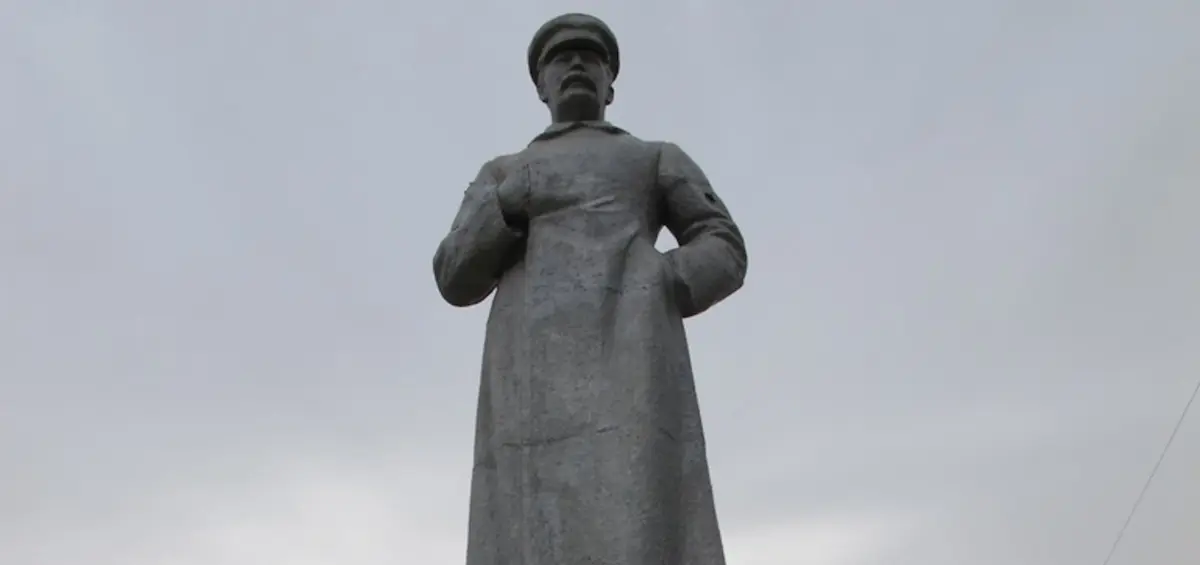
As Joseph Stalin consolidated power throughout the late 1920s and 1930s, the brief window of avant-garde experimentation slammed shut. The regime imposed "socialist realism" as the sole legally approved mode of artistic creation. Defiance carried draconian penalties—exile, imprisonment, or execution.
Remarkably, Kozintsev managed to navigate this ideological minefield by anchoring his career in classical literature and pedagogy. He understood that while original contemporary scripts were heavily scrutinized and routinely suppressed, classical texts enjoyed a degree of institutional protection. Shakespeare, in particular, was viewed by Soviet cultural authorities as a universal genius whose works could be reinterpreted through a Marxist lens of class struggle and historical materialism.
Kozintsev first tested his vision for King Lear on the stage in 1941, just as the Nazi invasion plunged the Soviet Union into the Great Patriotic War. Following the war, he directed a critically acclaimed cinematic adaptation of Hamlet (1953–54). Released just as Stalin died and the more moderate regime of Nikita Khrushchev began to take hesitant steps toward de-Stalinization, Kozintsev’s Hamlet resonated deeply with a society attempting to purge the ghosts of the recent past. An observant later critic noted that Kozintsev’s Hamlet served as a "brother-in-arms" in the collective psychological struggle to dismantle the legacy of Stalinism.
The 1971 Masterpiece: Korol Lir
By the late 1960s, the Khrushchev thaw had frozen into the Brezhnev stagnation, a period of renewed ideological tightening marked by suppressed dissent and artistic control. Yet Kozintsev, now a veteran master of Soviet cinema, marshaled his considerable prestige to mount his definitive cinematic statement on tyranny: Korol Lir.
Teaming up with poet Boris Pasternak—whose celebrated translations of Shakespeare provided a lyrical, earthy Russian idiom—and composer Dmitri Shostakovich, whose dissonant and mournful scores frequently signaled defiance against state-mandated optimism, Kozintsev crafted a film that spoke directly to the spiritual exhaustion of the Soviet populace. Released in 1971, Korol Lir avoided direct confrontation with contemporary Soviet officialdom while capturing the timeless desolation of a world governed by arbitrary power, betrayal, and mass suffering.
Supporting Context & Metrics: The Politics of Performance
The Subversive Shield of Shakespearean Translation
Under the Soviet censorship apparatus, official bodies such as Glavlit scrutinized every line of original drama, poetry, and prose. However, canonized foreign classics—especially the works of William Shakespeare—occupied a privileged category. Because Shakespeare was safely enshrined in the pantheon of world literature, censors rarely proscribed him outright.
This bureaucratic blind spot provided Soviet intellectuals with vital tactical space. Poet-translators like Boris Pasternak and theatrical visionaries like Grigori Kozintsev exploited this maneuvering room. They utilized Elizabethan frameworks to smuggle contemporary political subtexts past the authorities. As Kozintsev articulated in his seminal book King Lear: The Space of Tragedy, living an ethical life in Russia required an active, conscious animus toward specific systems of oppression. Quoting the moral example of his frequent collaborator Dmitri Shostakovich, Kozintsev observed:
"In Russian art goodness does not exist without a fierce hatred of everything which destroys a man."
Visual Allegory: The Millipede Procession and the Ghost of Mikhoels
Kozintsev’s cinematic interpretation of King Lear breaks sharply from traditional theatrical conventions right from its opening frames. Instead of focusing immediately on the courtly pomp of Lear’s division of his realm, the film opens with an epic, grueling tracking shot: a massive, undulating procession of common folk moving across a forbidding, lunar landscape.
Bare feet trudge mercilessly over sharp stones; a legless woman aboard a makeshift cart paddles furiously along the dirt path. A mournful flute or recorder plays a repetitive, eerie motif—a brilliant, simpleton’s melody that the audience later learns belongs to the Fool. This multitude of pilgrims is marching toward King Lear’s towering fortress, a structure whose massive stone walls loom like an indifferent mountainside.
When Lear finally descends from his citadel after casting aside Cordelia, his physical appearance carries an unmistakable, highly charged historical resonance. The Estonian actor Jüri Järvet, who portrays the monarch, bears a startling, uncanny resemblance to Solomon Mikhoels, the legendary Jewish actor and director who starred in a celebrated Yiddish-language staging of King Lear in the 1930s.
Mikhoels was not only a titan of Soviet theater but also a prominent leader of the Jewish Anti-Fascist Committee. During Joseph Stalin’s notorious anti-cosmopolitan and antisemitic purges of the late 1940s, Mikhoels was brutally murdered by the MGB (secret police) in Minsk in 1948, his death staged as a staged vehicular accident. For Soviet viewers attuned to the coded language of political dissent, Järvet’s physical—and moral—resemblance to Mikhoels was a blazing neon sign. As scholar Tiffany Ann Conroy Moore details in Kozintsev’s Shakespeare Films: Russian Political Protest in Hamlet and King Lear, these visual linkages served as a courageous memorial to victims of state terror, delivered under the very noses of the state censors.
Official Statements and Critical Reception
The reception of Kozintsev’s King Lear spanned international acclaim and complex domestic negotiations. While Soviet cultural bureaucrats were wary of the film’s bleak existentialism and potential subversive undertones, its association with classical heritage and international prestige shielded it from outright suppression.
Dmitri Shostakovich, reflecting on his collaboration with Kozintsev and their shared artistic philosophy during the composition of the score, emphasized the necessity of artistic honesty in times of collective trauma:
"Art does not merely reflect the historical epoch in which it is forged; it serves as the conscience of the people when official discourse demands silence. In our work with Shakespeare, we sought to give voice to the dispossessed—those whose suffering is dismissed by the architects of power."
International film critics immediately recognized Korol Lir as a masterwork of cinematic adaptation. Writing in western film journals upon its release, critics lauded the film’s gritty realism, noting that Kozintsev stripped away centuries of theatrical varnish to expose the raw bone of Shakespeare’s tragedy. Unlike Hollywood-inflected or picturesque British productions, Kozintsev’s Russia was muddy, brutal, and wind-swept, where majesty and misery shared the same unforgiving breath.
Future Outlook: The Enduring Legacy of Political Shakespeare
More than half a century after its premiere, Grigori Kozintsev’s Korol Lir continues to serve as a benchmark for how classic texts can be weaponized in defense of human dignity against authoritarian encroachment. As contemporary political landscapes globally grapple with resurgent authoritarianism, surveillance states, and the erosion of democratic norms, the lessons of the Soviet intelligentsia remain fiercely relevant.
The synthesis of Pasternak’s poetic translation, Shostakovich’s dissonant orchestration, and Kozintsev’s uncompromising visual direction demonstrates that art is never truly neutral. When institutional channels of dissent are choked off by censorship, culture becomes the last line of defense.
Scholarly re-evaluations, fueled by archival research into Soviet-era censorship and artistic resistance, ensure that works like Korol Lir are studied not merely as historical artifacts of the Cold War, but as masterclasses in artistic courage. As long as absolute power threatens human freedom, the unaccommodated man wandering the storm-swept heath alongside the Fool will remain our most reliable guide to understanding the terrifying mechanics of tyranny and the enduring resilience of the human spirit.



Comments
Facebook App ID not configured. Please add it in the Customizer.