
EXECUTIVE SUMMARY
As the consumer technology landscape increasingly grapples with digital fatigue, hyper-connected lifestyles, and the psychological trap of endless smartphone scrolling, innovative hardware manufacturers are steering toward intentional minimalism. Leading this charge is XTEINK, which has officially launched its highly anticipated Black Friday 2026 sale. Running from November 19 through November 30, 2026, the promotional event slashes prices by up to 25% across the company’s official storefront, alongside matching markdowns at major online retailers like Amazon.
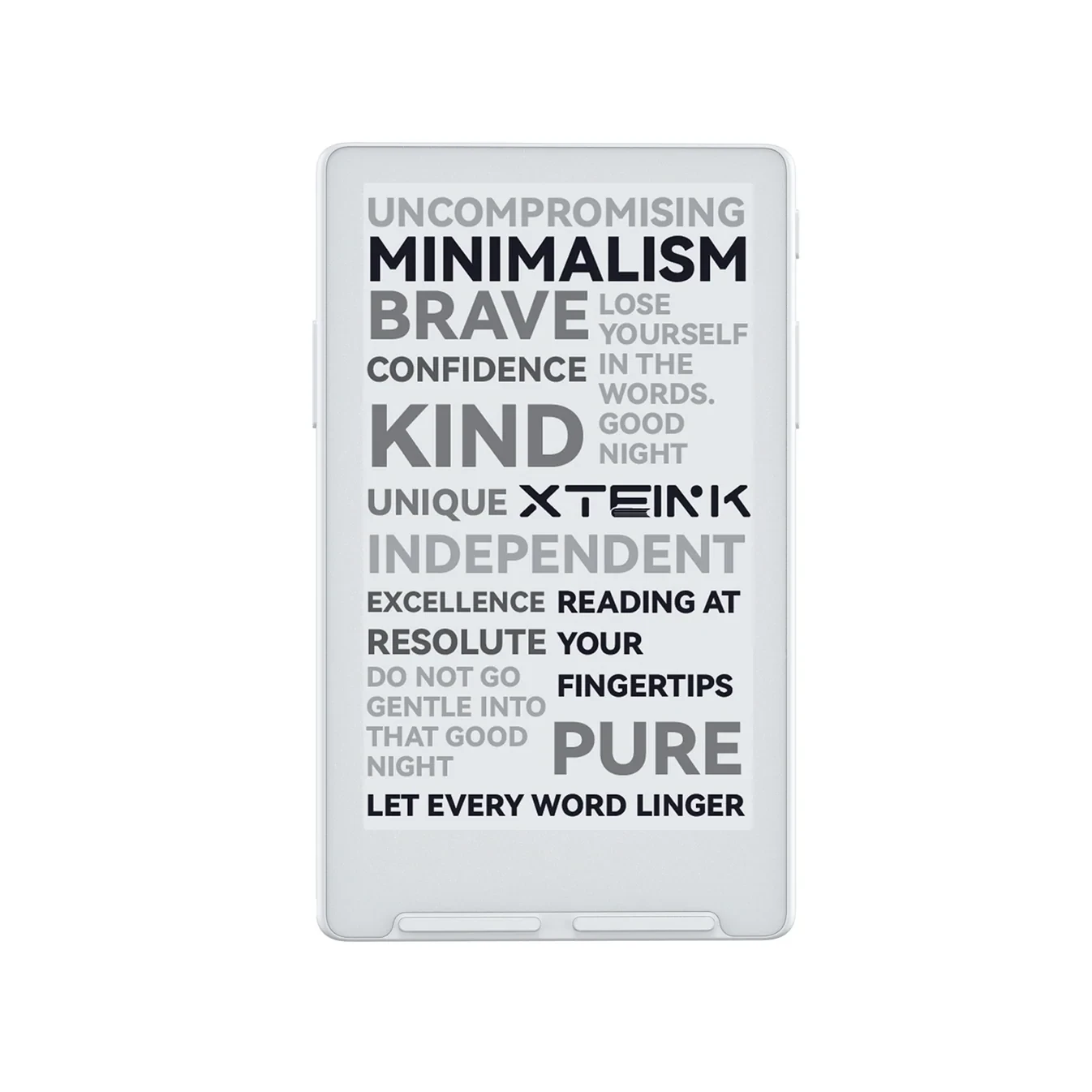
At the center of this seasonal push are two pocket-sized, distraction-free devices: the XTEINK X4 Classic and the XTEINK X3. Both e-readers challenge conventional wisdom about what an electronic reading device should be. Eschewing the heavy, multi-functional operating systems, backlights, and expansive screens characteristic of modern tablets and mainstream e-readers, XTEINK’s hardware focuses heavily on extreme portability, paper-like daytime legibility, and physical hardware interactions. By integrating features such as magnetic MagSafe-style attachments, specialized low-power microcontrollers, and open-source community support, XTEINK has positioned its portfolio as the ultimate anti-doomscrolling companion for modern commuters, purists, and minimalists alike.
1. Executive Overview: The Rise of the Anti-Doomscrolling Hardware Niche
For over a decade, the evolution of mobile computing followed a predictable trajectory: larger color screens, faster processors, and an ever-expanding suite of notifications designed to capture human attention. However, a growing counter-movement among consumers has begun seeking out digital detox tools—devices that purposefully limit connectivity to restore cognitive focus and encourage deep, uninterrupted reading.
Read Also
While dedicated e-readers from companies like Amazon, Kobo, and Boox have historically served this purpose at home or during travel, they are often too bulky to carry as everyday carry (EDC) items without a bag or jacket pocket. XTEINK has capitalized on this exact design gap. By engineering ultra-thin, credit-card-sized, and smartphone-mountable E Ink micro-readers, the company has successfully merged the form factor of a smartphone case accessory with the eye-friendly benefits of electronic paper.
The launch of the Black Friday 2026 promotional window marks a pivotal commercial milestone for XTEINK. Offering a 25% discount across its official e-commerce channels and retail partners lowers the barrier to entry for tech enthusiasts interested in experimenting with minimalist hardware ecosystems.
2. Detailed Breakdown: The XTEINK X4 Classic and X3
To understand why XTEINK’s current sale is drawing significant attention from tech reviewers and reading advocates, it is necessary to examine the hardware specifications, engineering trade-offs, and real-world utility of its two flagship pocket devices.

The XTEINK X4 Classic: The Ultimate Daytime Paper Experience
Engineered specifically for pure, distraction-free daytime reading, the XTEINK X4 Classic is an exercise in extreme minimalist design.
- Physical Dimensions & Weight: Measuring an astonishingly thin 4.9 mm and tipping the scales at a mere 68 grams, the device vanishes effortlessly into shirt pockets, small purses, or jacket liners.
- Mounting Integration: Featuring a built-in MagSafe-style magnetic ring on its chassis, the X4 Classic can snap securely to the back of a compatible smartphone, functioning as a dual-sided mobile companion.
- Display Technology: The device utilizes a crisp 4.3-inch E Ink display boasting a pixel density of 219 PPI. Notably, XTEINK omitted both a capacitive touchscreen and a front-light layer. While this prevents nighttime reading in pitch-black rooms, reviewers note that the absence of these layers brings the electronic ink layer exceptionally close to the surface, resulting in striking contrast, zero glare, and a paper-like reading experience under natural sunlight.
- Internals & Performance: Under the hood, the X4 Classic features upgraded internals, most notably a faster ESP32-S3 chip. This low-power, highly efficient microcontroller drives snappy page-turn responses. Users can navigate text via tactile physical buttons or an integrated tilt-to-turn gyroscope (allowing users to shake or tilt the device to turn pages).
- Battery Longevity: Powered by an upgraded 920 mAh internal cell, the X4 Classic comfortably delivers two to three weeks of continuous use on a single charge under standard reading habits.
The XTEINK X3: The Credit-Card-Sized Anti-Doomscrolling Companion
The XTEINK X3 takes the pocket-reader concept to an even more compact extreme, functioning explicitly as an anti-doomscrolling tool designed to replace mindless social media checks with literature.
- Form Factor: Weighing a feathery 58 grams and measuring 5.1 mm in thickness, the X3 mirrors the footprint of a credit card. It is engineered to attach magnetically to the rear of a smartphone without obstructing protruding camera modules or modern multi-lens arrays.
- Display & Optics: Despite its diminutive size, the X3 packs a remarkably sharp 3.7-inch E Ink display with a pixel density of 259 PPI. This high pixel density ensures that small fonts remain remarkably legible, rendering crisp, high-contrast text that never fades or washes out under direct, glaring sunlight.
- Input & Navigation: Like its larger sibling, the X3 relies on tactile physical buttons and an internal gyroscope for physical interaction, completely bypassing the need for a greasy, fingerprint-prone touchscreen.
- Connectivity & Ecosystem Trade-Offs: Achieving such a microscopic footprint requires distinct engineering compromises. The X3 lacks a built-in front light, drops universal USB-C in favor of a proprietary magnetic pogo-pin charging connector, and does not support locked ecosystem apps like Kindle or Libby. Instead, users must sideload DRM-free open formats (such as EPUB, TXT, and PDF files) via a microSD card or companion file transfer utilities.
- The Open-Source Firmware Phenomenon: While critics note that XTEINK’s stock user interface is sparse and somewhat clunky out of the box, the developer community has enthusiastically adopted the hardware. Reviewers highlight that flashing open-source community firmware—such as CrossPoint—completely transforms the X3. It turns a basic micro-reader into a snappy, highly customizable, and deeply personalized reading machine ideal for quick subway commutes and brief literary pauses throughout the day.
3. Supporting Context, Metrics, and Market Impact
The timing of XTEINK’s Black Friday event highlights a broader economic and psychological shift within the consumer electronics sector. As smartphone addiction and screen fatigue reach saturation points among urban professionals and students, alternative hardware categories are experiencing unprecedented growth.
+-----------------------------------------------------------------------------------+
|                         XTEINK HARDWARE SPECIFICATION COMPARISON                  |
+---------------------------+---------------------------+---------------------------+
| Metric / Feature          | XTEINK X4 Classic         | XTEINK X3                 |
+---------------------------+---------------------------+---------------------------+
| Thickness                 | 4.9 mm                    | 5.1 mm                    |
| Weight                    | 68 grams                  | 58 grams                  |
| Display Size & Resolution | 4.3-inch (219 PPI)        | 3.7-inch (259 PPI)        |
| Front Light               | None                      | None                      |
| Touchscreen               | None (Button/Gyro only)   | None (Button/Gyro only)   |
| Processor                 | ESP32-S3                  | Standard Low-Power MCU    |
| Battery Capacity          | 920 mAh                   | 650 mAh                   |
| Estimated Battery Life    | 2 to 3 weeks              | Multi-week endurance      |
| Charging Interface        | Standard / Magnetic       | Proprietary Magnetic Pogo |
| Ecosystem Support         | DRM-free Sideloading      | DRM-free Sideloading      |
| Community Firmware        | Supported                 | Supported (e.g., CrossPoint)|
+---------------------------+---------------------------+---------------------------+
Market analysts tracking the e-reader space note that while giants like Amazon and Kobo dominate the high-end, waterproof, and large-screen segments (ranging from 6 inches to 10.3 inches), they have largely ignored the ultra-portable micro-reader category. By targeting users who value weightlessness and analog simplicity over sprawling digital libraries, XTEINK has carved out a profitable, highly dedicated niche market.
Furthermore, the integration of magnetic mounting systems (MagSafe compatibility) addresses a historical friction point of portable reading: carrying an extra device. By allowing the e-reader to lock magnetically onto the back of an existing smartphone, XTEINK ensures that the reader is always within arm’s reach, subtly encouraging users to pick up a chapter of a classic novel or short story instead of opening an algorithmic social media feed.
4. Official Statements and Industry Reception
Industry analysts and veteran technology journalists have closely monitored XTEINK’s trajectory. Michael Kozlowski, Editor-in-Chief at Good e-Reader—a leading publication covering the electronic paper and audiobook industries for over a decade—has noted that devices like the X4 Classic and X3 represent a fascinating return to form for digital reading hardware.
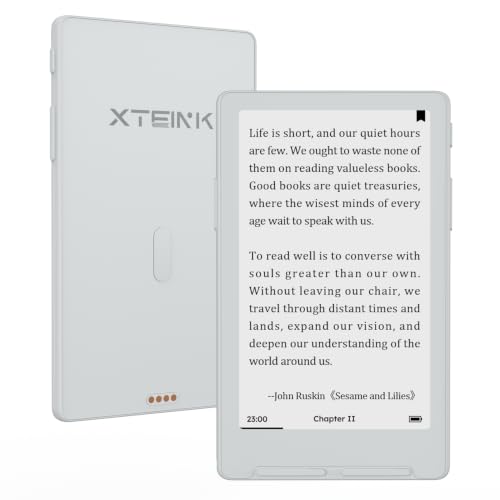
In initial editorial assessments, reviewers have praised XTEINK for its uncompromising focus on optical clarity. By stripping away complex capacitive digitizer layers and LED light guides, the company has achieved a whiter background and blacker text contrast than many mainstream flagship devices costing three times as much.
However, industry experts maintain a balanced perspective regarding user expectations. Reviewers frequently emphasize that these devices are not designed to serve as a user’s primary, all-in-one library hub. They are niche, specialized tools built for specific use cases: daytime commuting, outdoor park reading, and behavioral habit-breaking. The reliance on sideloaded, DRM-free files means that users must be comfortable managing their own digital book files rather than relying on automated cloud ecosystems like Kindle Unlimited or OverDrive/Libby apps. For the technical enthusiast, however, the ability to flash custom firmware like CrossPoint transforms these limitations into an exciting hardware hacking project, enhancing community engagement and grassroots brand loyalty.
5. Future Outlook: Where Pocket E-Readers Go From Here
As the November 19 to November 30 Black Friday promotional window drives a surge in sales across XTEINK’s official storefront and Amazon listings, the broader implications for the e-reader market warrant close observation.
Several key trends are likely to shape the evolution of micro-readers over the coming years:
- Mainstream Adoption of Low-Power Chips: The successful integration of efficient microcontrollers like the ESP32-S3 in the X4 Classic demonstrates that heavy, resource-intensive operating systems are unnecessary for basic text rendering. Future iterations will likely feature even faster boot times, instant file indexing, and enhanced power efficiency.
- Standardization of Magnetic Mounting: As smartphone ecosystems continue to embrace magnetic accessory standards (such as MagSafe and Qi2), expect more hardware manufacturers to design companion peripherals that attach directly to mobile handsets. This blurs the line between standalone gadgets and modular smartphone accessories.
- Open-Source Hardware Collaboration: The enthusiasm surrounding community-developed firmware like CrossPoint proves that hardware longevity is heavily enhanced when manufacturers leave their bootloaders accessible. Empowering the user community to optimize user interfaces and add features extends product lifecycles and builds fervent brand evangelism.
- The Battle Against Screen Fatigue: As public discourse regarding the psychological impacts of constant notifications intensifies, minimalist hardware will likely transition from a niche hobbyist pursuit into a mainstream wellness category. Devices that successfully block distractions while remaining weightless will find eager markets among students, professionals, and digital minimalists.
Conclusion
XTEINK’s Black Friday 2026 sale offers more than just seasonal retail discounts; it serves as a showcase for a maturing category of minimalist technology. Whether consumers opt for the slightly larger, highly readable X4 Classic or the credit-card-sized, anti-doomscrolling X3, these devices prove that innovation does not always require adding features. Sometimes, the most revolutionary technological step forward is knowing precisely what to leave out.


Comments
Facebook App ID not configured. Please add it in the Customizer.