
Executive Overview
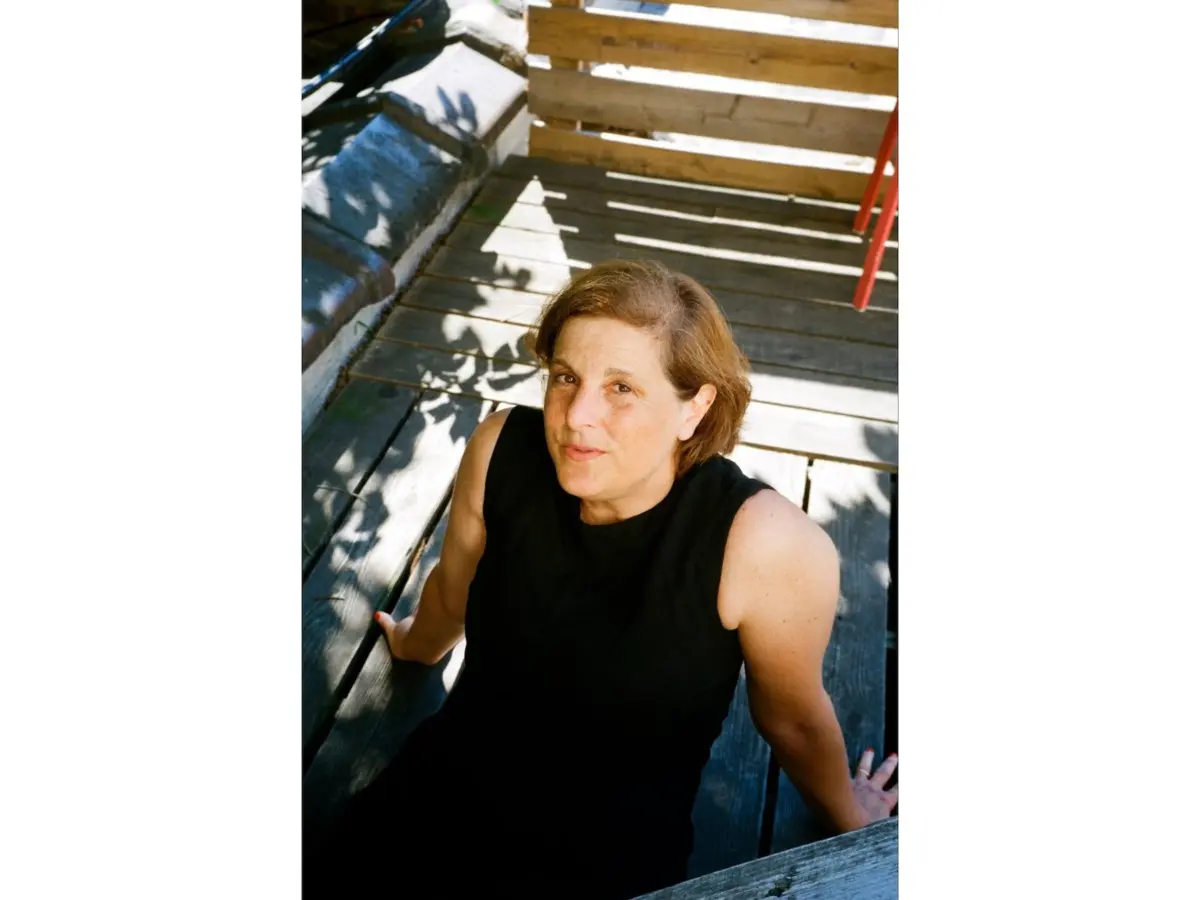
The Center for Curatorial Studies at Bard College (CCS Bard) has announced that Laura Hoptman, the executive
director of New York’s esteemed Drawing Center, is the recipient of the prestigious 2027 Audrey Irmas Award for Curatorial Excellence. Hoptman, a transformative figure in the contemporary art ecosystem whose career spans over three decades across some of the world’s most prominent cultural institutions, will be presented with the award—alongside a $25,000 cash prize—at CCS Bard’s annual spring gala in April 2027.
The Audrey Irmas Award, established in 1998, is widely regarded as one of the highest global honors in the museum profession. It recognizes groundbreaking visionaries who have redefined the boundaries of exhibition-making, institutional leadership, and art-historical scholarship. In selecting Hoptman, the CCS Bard committee has acknowledged an intellectual architect whose fearless championing of experimental mediums, rigorous thematic surveys, and under-recognized artistic practices has fundamentally shaped how contemporary art is conceptualized, displayed, and critiqued.
Read Also
This profile explores the arc of Hoptman’s remarkable career, detailing her foundational contributions to major institutions including the Museum of Modern Art (MoMA), the New Museum, and the Carnegie International. Furthermore, it situates her recognition within the broader landscape of contemporary curatorial practice, examining the enduring legacy of the Audrey Irmas Award and the institutional imperatives driving the field today.
Detailed Chronology: A Career Forged in the Avant-Garde
Laura Hoptman’s trajectory through the upper echelons of the international art world is a masterclass in institutional navigation, intellectual rigor, and curatorial daring. Her career reflects an unwavering commitment to contemporary art forms—particularly drawing, sculpture, and performance—that challenge conventional aesthetic taxonomies.
Early Foundations and the Bronx Museum
Hoptman’s career began in the trenches of New York’s dynamic institutional landscape during the late 1980s and early 1990s. As an assistant curator at the Bronx Museum of the Arts—an institution celebrated for its community-centric ethos and dedication to culturally diverse, underrepresented artists—Hoptman developed a keen sensitivity to the social and political contexts of artistic production. This formative environment instilled in her a commitment to broadening the art-historical canon long before diversity, equity, and inclusion became central discourse points in major museums.
The First MoMA Tenure and "Drawing Now"
In 1996, Hoptman stepped onto the world stage when she joined the Department of Drawings at the Museum of Modern Art (MoMA) as an assistant curator. Working within an institution historically anchored in modernist dogma, Hoptman immediately set out to expand the definition of drawing as a dynamic, contemporary medium rather than merely a preparatory exercise for painting or sculpture.
Her curatorial ambition culminated in the landmark 2003 exhibition Drawing Now: Eight Propositions, mounted at MoMA QNS during the museum’s Manhattan renovation. The exhibition brought together more than 200 representational works by 26 international contemporary artists, serving as a watershed moment for the medium. By organizing the show into distinct conceptual "propositions," Hoptman demonstrated how contemporary artists were utilizing traditional graphic techniques to grapple with contemporary visual culture, politics, and identity.
Directing the 54th Carnegie International
In 2004, Hoptman took on one of the most demanding and prestigious roles in the international curatorial circuit: director of the 54th Carnegie International in Pittsburgh. Founded in 1896 by industrialist Andrew Carnegie, the exhibition is the oldest survey of contemporary art in North America and the second-oldest in the world, following the Venice Biennale.
Stepping into this role required balancing historical legacy with global contemporary urgency. Hoptman’s iteration of the Carnegie International leaned heavily into internationalism, assembling a diverse roster of global artists whose practices engaged with socio-political critique, displacement, and the complexities of the early 21st-century geopolitical landscape. The exhibition solidified her reputation as a curator capable of orchestrating massive, transnational projects with intellectual cohesion and critical edge.
The New Museum Years: "Unmonumental" and "Younger Than Jesus"
Following her tenure in Pittsburgh, Hoptman joined the New Museum in New York as senior curator from 2006 to 2010. This period coincided with the museum’s high-profile move into its visionary SANAA-designed building on the Bowery, transforming the institution into a powerhouse of contemporary art.
Hoptman played a pivotal role in establishing the intellectual identity of the newly expanded museum. In 2007, she co-organized Unmonumental: The Object in the 21st Century, the inaugural exhibition of the new building. The exhibition captured the zeitgeist of a post-monumental era, highlighting sculptures that rejected traditional notions of permanence, scale, and heroic mastery in favor of fragility, assemblage, and everyday detritus.
In 2009, she followed this success by co-organizing The Generational: Younger than Jesus, the inaugural iteration of the New Museum’s triennial series dedicated to a global generation of artists born after 1976. The exhibition underscored Hoptman’s ongoing commitment to scouting and elevating emerging talent from every corner of the globe, further cementing her status as an arbiter of the contemporary avant-garde.
Returning to MoMA: Painting, Scale, and Controversy
In 2010, Hoptman returned to MoMA, this time as a curator in the Department of Painting and Sculpture—a post she held for eight years. During this tenure, she oversaw several high-profile monographic surveys that recontextualized pivotal figures of the late 20th century. Notably, she organized major traveling retrospectives dedicated to the ferocious assemblage artist Isa Genzken in 2013 and the multidisciplinary countercultural icon Bruce Conner in 2016. Both exhibitions were praised for their immersive installation designs and their ability to present complex, non-linear artistic careers with pristine clarity.
However, Hoptman’s tenure at MoMA was also marked by ambitious risk-taking that invited intense critical debate. In the winter of 2014–2015, she curated The Forever Now: Contemporary Painting in an Atemporal World. Bringing together 17 contemporary painters whose works engaged simultaneously with multiple art-historical eras, the exhibition aimed to capture a contemporary moment defined by the internet-driven collapse of linear time.
The exhibition became one of the most hotly debated museum shows of the decade. Critics and scholars fiercely debated its premises, selection of artists, and the state of contemporary painting itself. Yet, in retrospect, The Forever Now exemplified Hoptman’s signature courage: she was never an institutional curator who played it safe. She actively courted controversy if it meant sparking vital, necessary conversations about the present state of art production.
Directing the Drawing Center
In 2018, Hoptman assumed her current role as executive director of The Drawing Center in SoHo. Returning to her roots in graphic arts, she has spent the past several years steering the institution through a period of critical revitalization and institutional stability. Under her leadership, The Drawing Center has continued to champion drawing as both an intimate creative medium and a powerful vehicle for social practice, mounting intellectually rigorous exhibitions that traverse historical eras and geographic boundaries.
Supporting Context & Metrics: The Audrey Irmas Award Legacy
To understand the magnitude of the 2027 Audrey Irmas Award, one must examine the lineage of the prize and the rarefied circle of curators who have received it over the past three decades.
A Pantheon of Visionaries
Established in 1998 by the Center for Curatorial Studies at Bard College, the Audrey Irmas Award for Curatorial Excellence is the first and most widely recognized international award given to individual curators. Past recipients form a veritable pantheon of art-world royalty—intellectuals and institutional leaders who have fundamentally reshaped the global contemporary art canon:
- Okwui Enwezor (2014): The late, visionary Nigerian-born curator, critic, and art historian who served as artistic director of Documenta 11 and the 56th Venice Biennale, profoundly decentralizing the global art discourse.
- Thelma Golden (2016): The director and chief curator of The Studio Museum in Harlem, renowned for her transformative championing of Black artists and the coining of the term "post-blackness."
- Carolyn Christov-Bakargiev (2019): Celebrated for her groundbreaking editions of Documenta 13 and the Sydney Biennale, known for integrating ecological, philosophical, and political frameworks into exhibition-making.
- Connie Butler (2023): Former chief curator at the Hammer Museum (now director of MoMA PS1), celebrated for feminist art historical revisions, including the landmark 2007 exhibition WACK! Art and the Feminist Revolution.
- Adriano Pedrosa (2024): Artistic director of the 2024 Venice Biennale and long-time director of the Museu de Arte de São Paulo (MASP), recognized for his radical re-envisioning of museum display and curatorial geography.
By joining this illustrious roster, Laura Hoptman is formally recognized not merely as a successful museum administrator, but as a historic force whose intellectual contributions have altered the trajectory of contemporary art curation.
The Economics and Mechanics of Modern Curation
The $25,000 cash prize accompanying the Audrey Irmas Award highlights a crucial, often overlooked aspect of the contemporary art world: the financial precariousness of intellectual labor within cultural institutions. While blue-chip galleries and commercial art fairs command billions of dollars in global capital, museum curators—the foundational researchers who write art history—frequently operate under immense institutional constraints with limited personal safety nets.
The award, generously endowed by philanthropist Audrey Irmas, provides both financial autonomy and global prestige, allowing visionary curators to pursue independent research, publication projects, and experimental programming free from immediate fiscal pressures.
Official Statements: Recognizing a Fearless Champion
The announcement of Hoptman’s selection drew widespread praise from academic and institutional leaders, who emphasized her unique blend of scholarly depth and administrative daring.
Tom Eccles, the executive director of CCS Bard, issued a comprehensive statement underscoring Hoptman’s indelible impact on the field:
"Laura’s longstanding curatorial practice has furthered new art historical analysis and international recognition of drawing as a creative medium and social practice," Eccles said. "Her international projects have reexamined the legacies of an array of artists through new and creative frameworks. What is often forgotten is how consistently Laura has demonstrated a boldness and bravery in championing artists across many institutional structures."
Eccles’s emphasis on "boldness and bravery" touches upon a central truth of Hoptman’s career: contemporary curating at the highest level is not an administrative exercise in consensus-building, but an act of intellectual courage. Whether advocating for the erratic genius of Isa Genzken, orchestrating the sprawling geopolitical complexities of the Carnegie International, or navigating the critical crossfire of contemporary painting surveys at MoMA, Hoptman has consistently positioned herself on the front lines of artistic risk.
Future Outlook: The Evolution of Curatorial Leadership
As Hoptman prepares to accept the Audrey Irmas Award at CCS Bard’s spring gala in April 2027, the curatorial field finds itself at a profound crossroads. Museums globally are grappling with shifting funding models, demands for institutional transparency, decolonization initiatives, and the rapid integration of digital technologies into artistic and exhibition practices.
In this climate of rapid transformation, leaders like Laura Hoptman serve as vital anchors of intellectual rigor. Her career demonstrates that institutional success does not require compromising on artistic rigor or pandering to commercial trends. Instead, Hoptman’s body of work proves that audiences respond to deep historical research paired with adventurous, imaginative exhibition-making.
At The Drawing Center, Hoptman continues to model a sustainable, focused approach to institutional leadership—proving that mid-sized, medium-specific institutions can wield global cultural influence when guided by a visionary hand.
As the contemporary art world looks ahead to the 2027 gala at CCS Bard, the celebration of Laura Hoptman is more than a retrospective nod to a distinguished resume; it is a vital affirmation of the power of curatorial vision to challenge, expand, and enrich our understanding of human culture. Through her exhibitions, her writings, and her fearless institutional stewardship, Hoptman has not only curated art history—she has helped write it.

Comments
Facebook App ID not configured. Please add it in the Customizer.