
Executive Overview
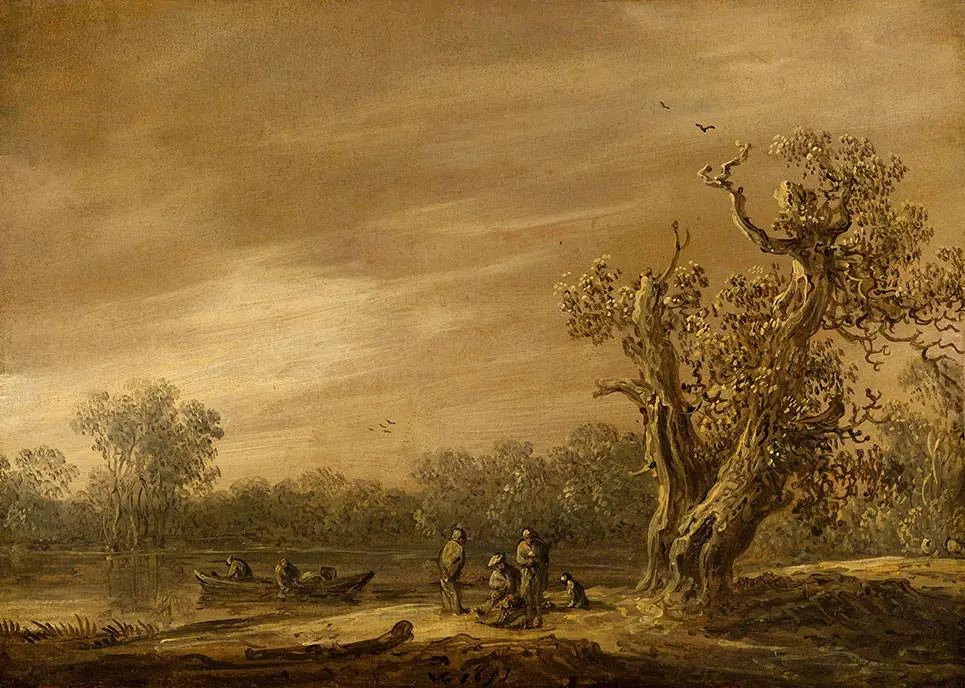
In a landmark decision that underscores the ongoing, meticulous global reckoning with the dark legacy of Nazi cultural plunder, the Mauritshuis museum in The Hague is officially returning Jan van Goyen’s 1651 masterpiece, Fishermen by the Lakeshore, to the heirs of its rightful pre-war owners. Home to some of the world’s most celebrated Dutch Golden Age treasures—including Johannes Vermeer’s mesmerizing Girl with a Pearl Earring and Rembrandt van Rijn’s The Anatomy Lesson of Dr. Nicolaes Tulp—the prestigious institution announced the repatriation following exhaustive, contemporary provenance research.
The painting, a quintessential evocation of seventeenth-century Dutch landscape tradition characterized by luminous skies and serene waterways, was seized during the systematic dispossession of Jewish assets by the Nazi regime during World War II. It originally belonged to Jacques Goudstikker, a preeminent Jewish art dealer operating in the Netherlands whose gallery and vast inventory fell victim to the aggressive Aryanization policies enforced after the German invasion in May 1940.
The restitution of Fishermen by the Lakeshore is directed toward Marei von Saher, the sole surviving heir and widow of Goudstikker’s only son, Eduard. This transfer follows a formal and binding recommendation issued by the Dutch Restitutions Committee to Culture Minister Rianne Letschert, confirming that the wartime transaction was legally and morally void due to coercion, duress, and the absence of voluntary consent.
Read Also
This high-profile case is far from an isolated incident. It mirrors a broader, accelerating worldwide movement among major cultural institutions—from European state museums to North American pillars of art exhibition like the Art Institute of Chicago—to proactively audit their collections, identify tainted items acquired between 1933 and 1945, and effectuate ethical returns to the descendants of persecuted collectors. As provenance research evolves from an obscure archival specialty into a core ethical imperative for the global museum community, the Mauritshuis decision marks another critical chapter in the decades-long pursuit of historical justice.
Detailed Chronology: From the Golden Age to Wartime Seizure
To fully comprehend the significance of the Mauritshuis’s decision, one must trace the dual trajectory of Jan van Goyen’s Fishermen by the Lakeshore: first as a prized product of the Dutch Golden Age, and second as a casualty of the industrialized looting machine deployed by the Third Reich.
Creation and Early Provenance
Painted in 1651 by Jan van Goyen—one of the foundational figures of seventeenth-century Dutch landscape painting—Fishermen by the Lakeshore captures the quiet dignity of everyday Dutch life against the backdrop of expansive, atmospheric skies. Van Goyen was renowned for his monochromatic palette, dominated by silvery grays, subtle greens, and earthy browns, which brilliantly simulated the humid climate and watery expanses of the Netherlands. For centuries, the canvas passed through various private hands, eventually entering the sophisticated inventory of Jacques Goudstikker, who established himself as the most prominent art dealer in the Netherlands during the interwar period. Operating from his headquarters at the Herengracht in Amsterdam and a summer gallery in Nijenrode, Goudstikker amassed an empire of Old Master paintings, decorative arts, and antiquities, catering to elite international clientele and museums alike.
The Cataclysm of 1940 and the Goudstikker Flight
The fragile stability of the Goudstikker enterprise shattered in May 1940 as Nazi German forces invaded and rapidly overran the Netherlands. Recognizing the existential peril facing him and his family as people of Jewish descent, Jacques Goudstikker, along with his wife Dési and their infant son Eduard, made the desperate decision to flee. On May 14, 1940, they boarded the SS Bodegraven, a cargo ship making a perilous escape from IJmuiden to the relative safety of Great Britain.
Tragedy struck during the crossing: Jacques Goudstikker fell through an open hatchway on the ship, sustaining fatal injuries. He died aboard the vessel before it reached English shores, leaving behind a grieving widow, an infant son, and a vast, unprotected artistic empire stranded in the occupied Netherlands.
The Nazi Takeover and Hermann Göring’s Rapacious Appetite
With the dealer dead and his family displaced, the Nazi occupation authorities immediately moved to liquidate and expropriate Goudstikker’s assets. His gallery and remaining inventory—consisting of 1,113 works of art—were subjected to a hostile takeover. The operation was engineered by Nazi financial administrators who installed sympathetic, pro-German directors to oversee the forced liquidation of the business.
The crown jewel beneficiaries of this coordinated plunder were top-tier figures within the Nazi hierarchy, most notably Hermann Göring, the Reichsmarschall and supreme commander of the Luftwaffe. Göring viewed the occupied territories of Europe as a personal shopping mall, dispatching agents to acquire masterpieces for his grandiose estate at Carinhall and his personal collection. Through forced transactions, intimidation, and the veneer of coerced legality, Fishermen by the Lakeshore was acquired for approximately £6,000 at the time—a fraction of its true market value, extracted under the ultimate duress of racial persecution and total annihilation.
Supporting Context & Metrics: The Mechanics of Institutional Looting
The seizure of the Goudstikker collection was not a series of random thefts by rogue soldiers; rather, it was part of a meticulously organized, bureaucratic state enterprise designed to strip Europe’s Jewish population of their wealth, cultural heritage, and identity.
The Scale of Nazi Cultural Plunder
Historians estimate that the Nazi regime and its collaborators looted approximately 650,000 works of art across Europe between 1933 and 1945. This systematic theft targeted public museums, religious institutions, and, most devastatingly, private Jewish collections. Specialized units, such as the Einsatzstab Reichsleiter Rosenberg (ERR), were established explicitly to inventory, pack, and transport confiscated cultural property back to the Reich.
In the case of Jacques Goudstikker, the metrics of loss are staggering:
- Total Works Seized: 1,113 individual paintings, sculptures, and objects of art.
- Financial Exploitation: Assets were systematically undervalued or acquired through "forced sales," where nominal payments were deposited into blocked accounts that the rightful owners could neither access nor control.
- Post-War Recovery Challenges: While Allied forces recovered tens of thousands of items via the Monuments, Men, and Archives program and central collecting points (such as the Munich Central Collecting Point), thousands of pieces remained missing, misattributed, or intermingled in public and private hands for decades after the war.
The Evolution of Provenance Research
For many years following the cessation of hostilities in 1945, European museums operated under a passive model of provenance research, rarely questioning the acquisition histories of works entering their collections during the mid-twentieth century. However, international watershed moments—most notably the 1998 Washington Conference on Holocaust-Era Assets and the subsequent Vilnius International Forum—established non-binding principles that transformed museum ethics worldwide.
Today, provenance research has evolved into an active, transparent discipline. Institutions are expected to meticulously audit gaps in ownership history, particularly concerning the critical window between 1933 and 1945. The Mauritshuis’s proactive engagement with this history reflects a growing recognition that holding looted art compromises the ethical integrity of public cultural institutions.
Official Statements and Legal Rationale
The legal and moral justification for returning Fishermen by the Lakeshore hinges on the concept of involuntary alienation—transactions executed under conditions of extreme duress, coercion, and systemic persecution where true consent was impossible.
The Findings of the Dutch Restitutions Committee
The decision to restitute the Jan van Goyen painting was formally advised by the Dutch Restitutions Committee, an independent body established to evaluate claims regarding Nazi-looted art in Dutch public collections. In its comprehensive statement regarding the Goudstikker estate, the committee dismantled the illusion of legality that the Nazi occupiers attempted to cast over the transaction:
"The work is considered to have been sold involuntarily because Jacques Goudstikker’s widow, who was the major shareholder in the art dealership, did not consent to the transactions, and the sales were only possible through the appointment of a managing director who was sympathetic to the German buyer… various artworks had already been transported to Germany before the formal purchase agreements were signed. This is consistent with the image of the Nazi authorities as people who robbed or forced sales and then subsequently gave such acts an appearance of legality."
This pivotal legal interpretation establishes that even when paper trails suggest a transaction or a formal sale occurred during the occupation years, the presence of coercion, institutional intimidation, and the existential threat of the Holocaust invalidates the contract ab initio (from the beginning).
Marei von Saher’s Decades-Long Battle
For Marei von Saher, the return of Fishermen by the Lakeshore represents another milestone in a relentless, decades-long campaign to reclaim the cultural patrimony stolen from her family. Von Saher has spent years navigating international legal systems, archival databases, and diplomatic channels to track down pieces from the original 1,113-item Goudstikker inventory. While some works were recovered by the Dutch government after the war and subsequently returned to the family in the 2000s after prolonged legal battles, many more remain scattered across global museums and private collections, requiring continuous, painstaking negotiation and advocacy.
Future Outlook: A Ripple Effect Across Global Museums
The repatriation of Jan van Goyen’s Fishermen by the Lakeshore by the Mauritshuis is not an isolated event; it is part of a broader, systemic reassessment currently sweeping the international museum community. Institutions are increasingly recognizing that ethical stewardship requires confronting uncomfortable historical realities and actively rectifying past injustices, regardless of how long an artwork has resided on their gallery walls.
Parallel Cases and Global Momentum
Demonstrating that this reckoning is truly global, parallel restitution efforts are unfolding concurrently in North America. At the Art Institute of Chicago, museum administrators are actively returning Woman With a Fan (1913)—a striking modernist work by French artist Jean Metzinger—to the heirs of Emanuel Lewenstein. Lewenstein was another prominent Jewish art collector whose family was forced to flee the Netherlands under the shadow of Nazi persecution.
These synchronized developments signal a shift in museum culture from defensive legalism to proactive moral accountability. Rather than fighting restitution claims through protracted, costly court battles that drain resources and damage public trust, forward-thinking institutions are embracing cooperative provenance investigations and transparent settlements.
The Path Forward for Cultural Institutions
As museums look toward the future, several key imperatives are shaping institutional policy:
- Unrestricted Transparency: Publishing comprehensive online provenance data for collections acquired between 1933 and 1945 to facilitate independent research by claimants and historians.
- Dynamic Restitution Frameworks: Collaborating with national and international restitution committees to streamline the evaluation of contested claims based on historical equity rather than technical loopholes.
- Educational Engagement: Utilizing restitution cases not as moments of institutional loss, but as powerful educational opportunities to inform the public about the historical realities of the Holocaust, the mechanics of plunder, and the ongoing importance of human rights and justice.
The return of Fishermen by the Lakeshore to the heirs of Jacques Goudstikker ensures that Jan van Goyen’s serene landscape will once again connect with its true lineage. More importantly, it reinforces the enduring truth that while historical atrocities cannot be undone, the pursuit of justice, truth, and moral restoration remains an ongoing obligation for modern society.


Comments
Facebook App ID not configured. Please add it in the Customizer.