
Executive Overview
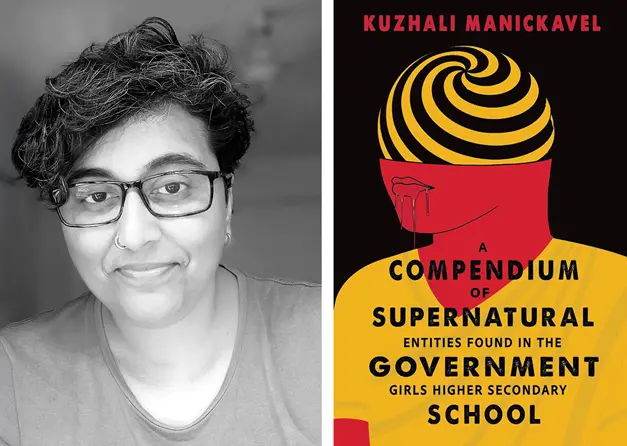
Literary debuts often strive to capture the volatile emotional landscape of adolescence, but few do so with the uncanny, genre-bending precision found in A Compendium of Supernatural Entities Found in the Government Girls Higher Secondary School. This remarkable new novel infuses a subtle coming-of-age narrative with a distinct, deeply localized paranormal framework, instantly setting itself apart in the contemporary speculative fiction market.
At its core, the novel traces the disaffected interiority of its teenage heroine, Thamari, as she navigates the stifling corridors of a traditional educational institution in a small-town setting. Yet, rather than relying on tired tropes of Western ghost stories or adolescent angst, the narrative uses the supernatural as a mirror for systemic isolation, cultural dislocation, and the quiet grief of unexpressed identity.
The author’s journey to bringing this text to print is as compelling as the fiction itself. Drawing heavily from formative, real-world experiences—including the jarring culture shock of relocating from Canada to a traditional South Asian educational environment—the novel resists translation for comfort. By retaining untranslated non-English phrases and rejecting Western paradigms of the paranormal, the author constructs an uncompromised literary space.
Read Also
This review and feature explore the structural anatomy of the novel, the thematic tensions surrounding queer identity in rigid societal structures, the epistemology of its non-Western supernatural elements, and the deliberate linguistic choices that challenge the traditional Anglo-centric expectations of the publishing industry.
Detailed Chronology: From Culture Shock to Critical Debut
The genesis of A Compendium of Supernatural Entities Found in the Government Girls Higher Secondary School spans decades of personal recollection, geographical displacement, and a slow-burning realization that the ordinary horrors of adolescence often blur seamlessly into the uncanny.
Phase One: The Formative Years and Geographic Dislocation
The foundational architecture of the novel began long before pen touched paper. Growing up in Canada, the author experienced a normative North American junior high school upbringing—one defined by familiar social structures, Western educational methodologies, and a particular vernacular of teenage ennui. However, a pivotal relocation to a small-town school in India served as an epochal culture shock.
The transition was not merely geographic; it was ontological. The institutional rhythms, interpersonal dynamics, and unspoken social hierarchies of the new environment operated on entirely different frequencies. In retrospect, the author notes that many daily occurrences felt incomprehensible, resisting neat categorization through a standard North American lens. This foundational disorientation planted the early seeds for Thamari’s world: a place where the mundane and the inexplicable bleed into one another because the observer lacks the cultural lexicon to neatly divide them.
Phase Two: Internalizing the Small-Town Experience
During this period, the emotional baseline of the teenage experience became sharply defined by a sense of profound disconnection. In small-town Indian schools during that era, young girls frequently navigated an invisible, suffocating architecture of expectations. The ambient atmosphere was thick with a specific brand of hopelessness—a persistent internal dialogue asking, "What is the point?"
Rather than channeling this adolescent inertia into high-octane drama, the author recognized that the truest reflection of that time was the sensation of sheer, unadorned existence. Why do we exist? And how does one continue to breathe when the horizon of one’s future feels predetermined and closed off? These questions became the crucible in which protagonist Thamari was forged.
Phase Three: Conceptualizing the Paranormal Framework
As the manuscript developed, the temptation to apply universal, Western-centric horror tropes—such as haunted lockers, demonic possessions modeled after Hollywood cinema, or psychological trauma explained through textbook psychoanalysis—was deliberately discarded. The author realized that importing a Western framework to explain the supernatural would fundamentally betray the setting’s authenticity.
Instead, the paranormal elements were mined directly from the texture of those early, bewildering memories. The ghosts and entities inhabiting the Government Girls Higher Secondary School are not external monsters designed solely to jump-scare the reader; they are manifestations of the institutional weight, repressed longings, and systemic silences that define Thamari’s daily reality.
Phase Four: Linguistic Resistance and Publication
The final hurdle in the book’s chronology involved linguistic integrity. Faced with the choice of domesticating the text for international markets by stripping away local idioms or doubling down on authenticity, the author chose the latter. The integration of untranslated phrases became a deliberate artistic statement, ensuring that the novel reflects the precise linguistic reality of its characters—where certain emotional and cultural nuances simply do not have English equivalents. The resulting publication stands as a testament to uncompromising storytelling, bridging the gap between niche regional realism and universal speculative appeal.
Supporting Context & Metrics: The Landscape of Modern Speculative Fiction
To fully appreciate the impact of A Compendium of Supernatural Entities Found in the Government Girls Higher Secondary School, one must examine the broader literary ecosystem into which it launches. Contemporary publishing has experienced an increased appetite for intersectional speculative fiction, yet systemic biases regarding how "foreign" narratives are packaged and consumed persist.
The Metrics of Cultural Translation
Publishing analysts often point to the "glossary dilemma" in cross-cultural fiction. Historically, publishers have pressured authors of non-Western origin to include exhaustive glossaries or to italicize foreign terms, effectively treating the text as an anthropological artifact rather than pure literature.
- The Glossary Dilemma: The author actively debated including a glossary to assist readers unfamiliar with regional terminology. However, this introduced a creative risk: the text risked transforming from a living piece of fiction into a "tourist guide."
- Reader Baggage Metrics: As the author notes, readers approach literature with their own psychological and cultural baggage. A monolingual Western reader might experience cognitive friction when encountering untranslated phrases, whereas a diasporic reader might find instant emotional resonance. The novel accepts this friction as a necessary cost of authentic world-building.
- Geographic Representation: Works blending regional South Asian settings with speculative elements remain underrepresented compared to urban fantasy or historical fiction originating from Western metropolitan hubs. This debut carves out a crucial space for localized magical realism and quiet horror.
Official Statements & Authorial Insights
In exclusive commentary surrounding the release of her debut novel, the author sheds light on the philosophy driving her creative choices—from the mechanics of queer representation in restrictive societies to the conscious rejection of colonial storytelling frameworks.
On the Emotional Landscape of the Protagonist
"I think I was similar to her when I was in school. A lot of the novel is based on my own experiences at a small-town Indian school. Because of the way things were for young girls then, having that feeling of hopelessness—like, what’s the point?—was very prevalent. For my protagonist, Thamari, I wanted to focus on that feeling of just existing, and not really being able to figure out why you’re existing."
This statement underscores the novel’s commitment to quiet, interior character arcs. Thamari is not an action hero destined to save her school from an ancient curse; she is an avatar of adolescent stasis, trapped in an ecosystem that demands compliance while offering little emotional sustenance.
On Queerness, Language, and Institutional Limitations
One of the most poignant narrative threads involves Thamari’s emerging queer identity, which collides directly with the looming, inescapable expectation of an arranged heterosexual marriage upon graduation. The author addresses the linguistic paradox of navigating same-sex desire in environments where the vocabulary for such experiences is suppressed:
"What’s interesting is, I know the English words for various types of queerness—there’s the word queer, the word gay, the word lesbian—but I don’t know the Tamil words for those things, which I think is a good reflection of how sexuality in general is navigated in this setting. Because things are so restrictive, there’s this feeling of, Okay, this is about as far as I can go with this. I won’t be able to explore this further. I find that very sad, of course, and I wanted to explore it in the novel."
This linguistic void—possessing Western terminologies for an identity while lacking native equivalents within the immediate cultural touchstones of one’s upbringing—highlights a profound isolation. It illustrates how institutional architectures preemptively cap the emotional and relational horizons of young women, framing heteronormativity as an inevitability while rendering non-normative desires structurally unthinkable.
On Decolonizing the Supernatural
Rejecting the cultural imperialism often inherent in global horror genres, the author issues a clear directive in the novel’s introduction regarding how the paranormal should be interpreted:
"Western concepts of the supernatural should not be used as a framework here… The supernatural elements were also inspired by my own experiences. I grew up in Canada, and going from a typical Canadian junior high to a small-town Indian school was a huge culture shock. I was unprepared for how many little things would be so different. Because of that, so much of my experience in school, like Thamari’s, was stuff that I could not understand. In terms of the non-Western element, if you’re coming to this story with a Western mindset—I hope that doesn’t sound offensive—I wanted to make it clear that supernaturalism and queerness exist in different ways in different parts of the world. We miss out on a lot of stories when we expect them to fit a particular perspective."
By framing the paranormal as an extension of cultural incomprehensibility rather than a neatly packaged cinematic monster, the author subverts expectations. The ghosts in the school corridors are tied to the local topography of silence, gendered expectations, and institutional rigidity.
Future Outlook: The Evolution of Regional Speculative Fiction
As A Compendium of Supernatural Entities Found in the Government Girls Higher Secondary School makes its way into the hands of international readers and critics, its broader implications for the publishing industry are already coming into focus.
Expanding the Boundaries of Speculative Fiction
The success of boundary-pushing debuts signals a growing appetite for narratives that refuse to pander to Anglo-centric reading habits. By trusting the reader to sit with linguistic ambiguity and non-Western epistemologies, the novel paves the way for a new wave of international speculative fiction. Writers from diasporic and regional backgrounds are increasingly emboldened to abandon Western plot templates in favor of structures that mirror their own lived realities.
The Critical Reception and Academic Potential
Given its rich thematic layering—touching on feminist theory, queer geography, post-colonial literature, and the psychology of adolescence—the novel is primed for adoption in academic curricula. Scholars of modern literature will likely dissect how the author uses supernatural phenomena as a metaphor for patriarchal entrapment and the suppression of queer desire.
Conclusion
A Compendium of Supernatural Entities Found in the Government Girls Higher Secondary School is far more than a standard genre mashup. It is a deeply felt, structurally audacious exploration of what it means to be young, isolated, and queer in an environment engineered to enforce conformity. Through its refusal to translate emotional and cultural truths into palatable Western clichés, the novel establishes its author as a vital, uncompromising new voice in contemporary fiction. As readers open its pages, they are invited not to decode a puzzle, but to inhabit a hauntingly specific world where ghosts are simply the weight of unlived lives pressing against the walls of the present.





Comments
Facebook App ID not configured. Please add it in the Customizer.