

Executive Overview
In an era defined by an unrelenting barrage of digital content, modern youth spend an average of four to six hours online every day, navigating a shifting landscape where truth, exaggeration, and fabrication blend seamlessly. As noted by the School Library Journal, teens increasingly struggle to distinguish hard news from opinion pieces and disguised advertisements. This critical vulnerability highlights a systemic educational gap: intentional news and media literacy is no longer an optional enrichment activity, but a fundamental pillar of civic engagement and democratic survival.
The consequences of this digital saturation are profound. When young people cannot differentiate between accurate reporting and manipulated falsehoods, their capacity for informed civic participation diminishes, leaving them susceptible to polarization, radicalization, and targeted exploitation. To combat this phenomenon, educators, parents, and policymakers must champion structured critical thinking initiatives. By teaching students to actively question sources rather than passively consume feeds, society can equip the next generation with the analytical tools needed to protect democratic discourse.
Detailed Chronology: The Evolution of False Information and Media Manipulation
While the term "fake news" surged into the global lexicon during the 2016 American presidential election, the roots of media manipulation stretch back centuries. Understanding how misinformation, disinformation, and propaganda have evolved over time reveals that the battle for narrative control is as old as civilization itself.
Read Also
- The Revolutionary Eras (18th Century): Long before the advent of social algorithms, partisan pamphlets and coordinated falsehoods played pivotal roles in shaping public opinion during the French and American Revolutions. Leaders and factions weaponized print media to demonize opponents and rally support.
- The 1914 Logging Camp Invention: The power of corporate advertising to manufacture enduring cultural myths took shape when a lumber company marketing manager invented the colossal logger Paul Bunyan. Designed to generate publicity and romanticize clear-cut old-growth forests, the tall tale successfully masked the environmental devastation and the systemic displacement of Indigenous populations.
- The 1934 Loch Ness Sensation: Demonstrating the financial viability of viral hoaxes, a fabricated photograph of the Scottish Loch Ness Monster was published in London’s Daily Mail. Conceived initially as a publicity stunt to revitalize local tourism for a struggling loch-side hotel, the image sparked a global sensation that persists today, with approximately one in four Scottish citizens maintaining a belief in the creature’s existence.
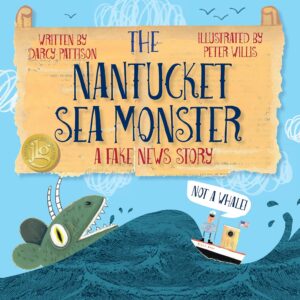
- The 1937 Macy’s Parade Stunt: Proving that visual hoaxes could drive commercial profit, headlines declared the sighting of a massive sea monster off Nantucket on August 7, 1937. Weeks later, it was revealed as a manufactured publicity stunt designed to draw crowds to the Macy’s Thanksgiving Day Parade.
- The Digital Acceleration (21st Century): The rise of Web 2.0 and social media platforms fundamentally altered the speed and scale of information dissemination. Research indicates that false stories travel up to six times faster on networks like X (formerly Twitter) than verified, factual reports, overwhelming traditional gatekeepers and accelerating the global spread of conspiracy theories.
Supporting Context & Metrics: Defining the Information Ecosystem
To effectively dismantle deceptive content, young readers and adults alike must master the taxonomy of modern media. The information ecosystem is crowded with various forms of misleading content, each defined by distinct intents and mechanisms:
- Misinformation: Inaccurate or false information spread inadvertently, without any explicit intent to deceive or manipulate the audience.
- Disinformation: Deliberately fabricated or manipulated falsehoods manufactured and spread with malicious intent to deceive the public (often synonymous with propaganda).
- Mal-information: Content rooted in factual truths, but deliberately exaggerated, stripped of its context, or weaponized to attack an individual, organization, or nation.
- Fake News: A broad umbrella term for information designed to mislead, manipulate, create manufactured doubt, or drive web traffic via sensationalism.
- Clickbait: Exaggerated, misleading headlines engineered explicitly to maximize digital traffic and ad revenue.
- Propaganda: Systematically designed information campaigns meant to warp public perception, manufacture consensus, or serve political agendas.
The Role of Literature in Cultivating Critical Thinking
Children’s and young adult literature serves as an invaluable portal for teaching media literacy early, framing complex geopolitical and sociological concepts into accessible narratives:

- Challenging Historical Narratives: Books such as Christy Mihaly’s America’s Founding Myths … And What Really Happened and Darcy Pattison’s The Nantucket Sea Monster urge readers to question foundational historical myths, encouraging students to ask who benefits when official histories omit the experiences of marginalized or Indigenous communities.
- Exposing Censorship and Media Suppression: In Amy Sarig King’s Attack of the Black Triangles, students confront the alarming reality of book censorship, learning how community leaders attempt to restrict access to uncomfortable truths. Similarly, memoirs like Ying Chang Compestine’s Growing Up Under a Red Flag illuminate how totalitarian regimes strictly gatekeep information to consolidate power.
- Spotting Media Bias and Omissions: Works like Joyce Grant’s Can You Believe It?: How to Spot Fake News and Find the Facts and Ami Polonsky’s World Made of Glass (set during the 1980s AIDS epidemic) explore how the media’s failure to cover marginalized communities contributes to widespread social stigma and dangerous public health misconceptions.
Official Statements and Expert Frameworks
Educational authorities and media watchdogs emphasize that fighting digital deception requires actionable strategies and standardized literacy frameworks.
Organizations like Common Sense Media urge educators and parents to prompt critical inquiry by encouraging children to dissect every piece of media they encounter. Key questions include: Who created this message? What is their underlying motivation? Whose perspectives have been deliberately omitted?
Furthermore, a robust suite of free, accessible digital fact-checking tools has been developed to empower students and educators to verify claims independently:

- FactCheck.org: A nonpartisan project monitoring the factual accuracy of claims made by major U.S. political players.
- Google Fact Check Explorer: A comprehensive search engine designed specifically to aggregate verified fact-checks from authoritative global sources.
- Rumor Guard: A public-facing platform dedicated to debunking viral misinformation in real-time.
- Snopes: The internet’s oldest and most reliable independent fact-checking and urban legend debunking resource.
To make media literacy engaging, educators increasingly utilize interactive gamification tools such as NewsFeed Defenders (iCivics), Factitious (Rand.org), Reality Check (MediaSmarts), and Spot the Troll. These platforms simulate the mechanics of online manipulation, allowing students to safely test their "inner lie detector" against sophisticated phishing scams and bot networks.

Future Outlook: Preparing Students for a Hyper-Digital Tomorrow
As artificial intelligence advances and deepfakes become virtually indistinguishable from authentic media, the threat landscape will only grow more complex. The future of democratic society relies entirely on our collective willingness to institutionalize media literacy education.

Classroom kits—such as Read Your World’s comprehensive teaching guide, Beyond Screens: Teaching Kids to Think Critically in a Digital World—provide vital roadmaps for educators striving to bridge the gap between digital consumption and analytical competence. By embedding critical thinking, historical perspective, and rigorous fact-checking into everyday school curricula, we can transform passive digital scrollers into active, discerning citizens capable of safeguarding the truth for generations to come.





Comments
Facebook App ID not configured. Please add it in the Customizer.