

Executive Overview
The international art world is currently navigating a period of profound transformation, characterized by complex legal battles over provenance, shifting geopolitical landscapes, institutional milestones, and the ongoing reimagining of public-facing cultural spaces. From California to Doha, and from London to Yogyakarta, museum directors, legal scholars, and contemporary artists are confronting the deep-seated legacies of colonial extraction, political upheaval, and urban precarity.
At the center of these developments are high-stakes legal confrontations, such as the renewed battle over a Nazi-looted Lucas Cranach diptych at the Norton Simon Museum, and massive structural shifts within global arts infrastructure, highlighted by the closure of the Biennale Jogja amidst rising political censorship. Concurrently, major institutions are doubling down on ambitious public art commissions—exemplified by the Metropolitan Museum of Art’s selections for its 2027 Façade and Great Hall installations—while the international auction market prepares for high-value sales of modern masterworks. This report provides a comprehensive examination of these intersecting narratives, charting the legal, political, and creative forces shaping the contemporary cultural sphere.
Detailed Chronology
The Cranach Contention: Legal Precedent Meets Restitution Reform
The legal battle over Lucas Cranach the Elder’s c. 1530 diptych, Adam and Eve, has entered a contentious new phase. On Wednesday, the Norton Simon Museum in Pasadena, California, filed a robust countersuit against the Jewish Federation Los Angeles. This legal action is a direct response to a suit filed by the Federation, which claims ownership of the masterwork on behalf of heirs seeking restitution under a newly enacted California law. This legislation explicitly permits state residents to revisit previously failed legal attempts to recover Nazi-looted art.
Read Also
The Norton Simon Museum, however, is pushing back aggressively, arguing that the principle of res judicata—the finality of judgments—protects its collection. The museum’s legal team maintains that a prior federal judgment in the long-running von Saher litigation definitively settled the matter on its merits, establishing the museum as the sole rightful owner. Legal analysts note that this case could serve as a vital stress-test for state-level restitution statutes when they collide with established federal court precedents and final judgments.
Institutional Growth and Public Facades in New York
In contrast to legal defensive postures, the Metropolitan Museum of Art has looked outward, announcing its marquee artist selections for the upcoming 2027 exhibition cycle. Vietnamese-born conceptual artist Danh Vo has been chosen for the prestigious 2027 Genesis Façade Commission, marking the fourth iteration of site-specific presentations mounted on the museum’s iconic Fifth Avenue Beaux-Arts exterior. Vo plans to install four distinct sculptures that engage directly with the liminal space where the museum meets the public thoroughfare. "A façade is the place where the museum meets the street, and it is also an expression of its values over time," Vo reflected in an official statement.
Complementing this monumental exterior project, the museum has commissioned Norwegian-Congolese artist Sandra Mujinga to create a site-specific installation for its soaring Great Hall. Both commissions underscore the Met’s ongoing commitment to contextualizing its historic architecture through the lenses of global contemporary practices.
Yogyakarta’s Cultural Crisis and the Closure of Biennale Jogja
While major Western institutions expand their programming, the arts infrastructure in Southeast Asia has suffered a severe blow. The Biennale Jogja Foundation in Yogyakarta, Indonesia, announced its permanent closure after 16 years of orchestrating the internationally renowned Biennale Jogja.
Leadership attributed the shutdown to an untenable operating environment driven by a shifting political regime, chaotic economic policies, intensifying institutional censorship, and acts of violence directed against civil rights activists and protestors. The dissolution of the foundation marks a somber milestone for Indonesian contemporary art, removing a critical platform for regional dialogue and international exchange.
Repatriation, Memorials, and International Diplomacy
The ongoing global reckoning with provenance and public monuments continues to generate headlines across multiple continents:
- Arlington National Cemetery: Three years after its controversial removal, plans are underway to return a restored 1914 Confederate memorial to Arlington National Cemetery. The monument notably features the sculptural figure of a Black woman holding the child of a white officer, alongside a depiction of an enslaved person following their owner to war, reigniting debates over commemoration and historical memory.
- Australia and Jordan: In a successful act of cultural diplomacy, Australia officially repatriated a rare 14,000-year-old carved stone slab to Jordan. The artifact, originally recovered from Wadi Al Hammah, had been housed in the National Gallery of Australia since 1985.
- Centre Pompidou Paraná: Plans for the establishment of the Centre Pompidou Paraná in southern Brazil have faced another administrative setback. Due to shifting local government priorities, the opening of the satellite institution has been pushed back to 2029.
Supporting Context & Metrics
The intersection of high finance, heritage protection, and contemporary biennales continues to define the health of the broader art ecosystem.
+---------------------------------------------------------------------------------+
|                         KEY CULTURAL METRICS & DATA                             |
+------------------------------+--------------------------------------------------+
| Metric / Event               | Context / Financial Indicator                    |
+------------------------------+--------------------------------------------------+
| Edward Hopper Sale           | Sotheby's New York, Nov 18 ($30M High Estimate)  |
| Rubaiya Qatar Participants   | Over 120 international artists                   |
| Biennale Jogja Operational   | 16 years of continuous operation (Closed 2024)   |
| Cranach "Adam and Eve"       | Crafted c. 1530; disputed provenance             |
+------------------------------+--------------------------------------------------+
The Autumn Auction Market: Hopper at Sotheby’s
The high-end secondary market remains resilient, driven by premier consignments from elite private collections. Baroness Carmen Thyssen-Bornemisza—whose family’s celebrated holdings form the core of Madrid’s Thyssen-Bornemisza Museum—has consigned a major 1944 painting of a sailboat at sea by Edward Hopper. The work is slated for auction on November 18 at Sotheby’s in New York, carrying an ambitious high estimate of $30 million. This sale is expected to test institutional and collector appetite for mid-20th-century American realism amidst broader macroeconomic fluctuations.
Rubaiya Qatar: A New Quadrennial Emerges
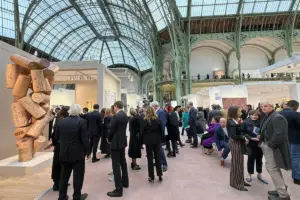
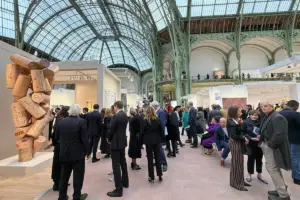
In the Middle East, preparation for the inaugural edition of Rubaiya Qatar is reaching its zenith. Scheduled to run from November 21 to April 30 in Doha, the newly established quadrennial has released its comprehensive participant roster, featuring more than 120 artists from across the globe. The massive exhibition aims to cement Doha’s status as a premier nexus for contemporary artistic production, critical theory, and cross-cultural discourse.
Official Statements and Critical Perspectives
William Kentridge on the Absurdity of Social Disaster
In the realm of contemporary production, South African polymath William Kentridge recently offered profound insights into his artistic methodology upon the premiere of his latest stop-animation film, A Nicely Built City (Never Resists Destruction), at London’s Goodman Gallery. Accompanied by a concurrent exhibition of works on paper and sculptures, the film examines Johannesburg’s industrial evolution, visualizing how the natural wilderness reclaims the urban center as municipal infrastructure decays.
Discussing his signature integration of dark political realities with absurdist humor, Kentridge rejected the notion of a dichotomy between levity and gravity:
"I don’t think there’s a contradiction between the serious and the light, and how the one illuminates the other. I think the category of the absurd is also important. Tragedy isn’t a good way of dealing with social disaster. Comedy may be closer, but the category of the absurd, which can move between the two, is central."
Kentridge further elaborated on his ongoing dialogues with contemporary peers, praising the "fantastic woodcuts" of Anselm Kiefer and the "poetic and politically powerful" installations of Alfredo Jaar, framing artistic practice as an essential survival mechanism in an era marked by systemic crisis.
Future Outlook
As the cultural sector looks toward the remainder of the decade, several critical trajectories are poised to dictate the trajectory of museums, the market, and restitution advocacy:
- The Legal Frontier of Restitution: The outcome of the Norton Simon Museum countersuit will be closely monitored by legal scholars and international institutions alike. If state laws designed to bypass federal statutes are successfully upheld, museums across the United States may face a wave of renewed claims concerning contested WWII-era holdings.
- Geopolitical Pressures on Independent Arts: The closure of the Biennale Jogja serves as a stark warning regarding the vulnerability of independent cultural infrastructure under tightening political regimes. The international community will need to address how funding models and protective networks can support institutions operating in high-risk environments.
- Institutional Re-engagement with Public Space: Projects like the Met’s Façade and Great Hall commissions signal a permanent shift toward outward-facing, socially engaged institutional programming. By inviting artists like Danh Vo and Sandra Mujinga to reinterpret threshold spaces, museums are actively redefining their civic responsibilities for future generations.

Comments
Facebook App ID not configured. Please add it in the Customizer.