
Executive Overview
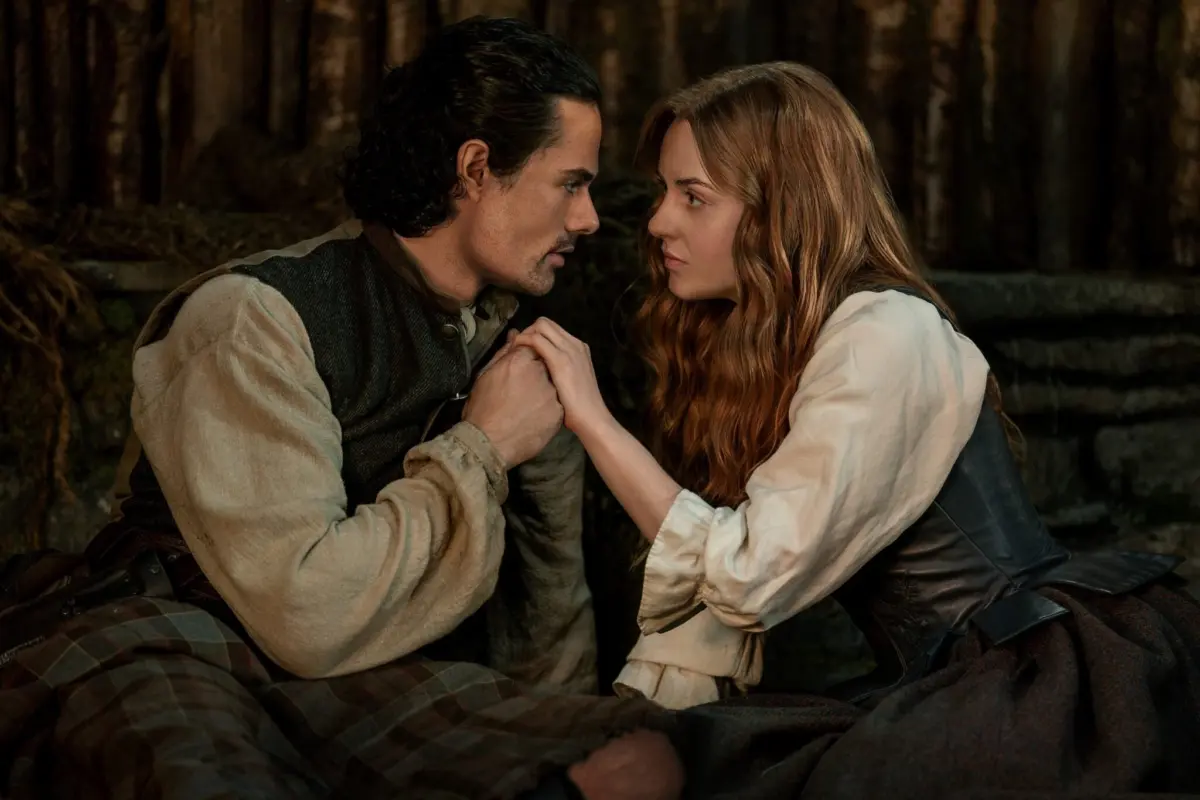
The Starz television universe expanded its historical and romantic horizons once more with the much-anticipated season two premiere of Outlander: Blood of My Blood, titled “Remembrance Day.” Picking up seamlessly from the emotionally bruising events of the season one finale, the prequel series thrusts its dual narratives back into motion. At its core, the show continues to explore the foundational lineages of Jamie Fraser and Claire Beauchamp, charting the impossible choices, desperate sacrifices, and romantic turmoil of the eventual parents who paved the way for the original epic.
In this explosive opening chapter, the metaphorical and literal bridges connecting Brian Fraser and Ellen MacKenzie, as well as Henry and Julia Beauchamp, are systematically smashed. While the premiere leans heavily into the darker, more dramatic repercussions of war and political maneuvering, it refuses to lose sight of the profound personal stakes that define the Outlander ethos. Fact and fiction remain inextricably entangled; both couples are forced to maintain elaborate, perilous cover stories simply to survive, all while guarding the fragile truths known only to them.
From the icy battlegrounds of a fracturing Scotland to the sterile, terrifying corridors of a 1920s psychiatric asylum, “Remembrance Day” sets a punishing narrative pace. It challenges audiences with complex hallucinations, historical intersections, and harrowing tests of loyalty versus love. As the timelines diverge and collide in increasingly dizzying ways, Blood of My Blood solidifies its status not merely as a companion piece to the flagship Outlander series, but as a robust, psychologically complex drama in its own right.
Read Also
Detailed Chronology: The Shattered Parallels of Season Two
Stone-Crossed Lovers and the Agony of Separation
The premiere wastes no time in tearing apart the fragile paradises built by our central couples at the close of season one. For Julia Beauchamp (Hermione Corfield) and Henry Beauchamp (Jeremy Irvine), the quest to return to their rightful era through the mystical stones at Craigh na Dun culminates in utter devastation. In a sequence executed with gut-wrenching precision, Henry attempts to push himself, Julia, and their infant son William through the portal. Yet, agonizingly, nothing happens—at least, not initially.

Before they can process this mystical failure, Arch Bug descends upon them with a blade, injecting visceral danger into an already impossible situation. The heartbreaking visual of Julia looking back to realize Henry has vanished through the stones—while she is left stranded—establishes the emotional weight of the episode within its first five minutes. Corfield’s performance here is nothing short of masterclass-level; she must instantly mask her profound grief, transforming her posture into one of submissive relief as she pretends to have been rescued from "the Grant bladier."
Dragged back to Castle Leathers like an escaped livestock animal, Julia finds herself walking a perilous tightrope. Her only saving grace is the network of cautious allies she has cultivated within the household, who catch her before she spirals into total emotional collapse. Not only must she grapple with the agonizing uncertainty of whether she will ever see Henry again, but she is also forced to actively fend off the predatory advances of Lord Lovat. By resorting to calculated flattery—appealing to Lovat’s gargantuan ego regarding how he should personally lead his men into battle—Julia demonstrates the steely survival instincts that clearly run in the family bloodline.
A silver lining arrives when Julia confides in Davina, letting a trusted local in on the astonishing truth of her identity as a time traveler. Even though Davina’s historical worldview still leaves room for skepticism—leaning toward faeries and ancient witchcraft rather than temporal displacement—having an ally who knows the unfiltered truth provides Julia with a vital strategic foothold for her inevitable next escape attempt.
Supporting Context & Metrics: Henry’s Descent into the Asylum
While Julia navigates the treacherous political landscape of the Scottish highlands, Henry faces a far more insidious and psychological brand of torture. Transported back to Inverness in 1924—having originally vanished in 1923—Henry returns battered, bloodied, and feverish from his stab wound. In a tragic twist of historical reality, his physical trauma and frantic, unverified ramblings about time travel lead him straight into the hands of institutionalized medicine.

Admitted to a psychiatric facility, Henry becomes the subject of an ambitious doctor far too eager to experiment with newly developed electroconvulsive therapy (ECT). Rather than clarifying his muddled memories or offering healing, the treatments violently scramble his neurological pathways, blurring the boundaries between his past life, his memories of Julia, and the terrifying temporal dislocation he has suffered.
[1923: Disappearance]
       │
       ▼
[Stab Wound & Fever]
       │
       ▼
[1924: Inverness Asylum]
       │
       ▼
[Experimental ECT Treatments]
       │
       ▼
[Severe Timeline Blurring & Memory Fragmentation]
The resulting hallucinatory sequences are a high point of the premiere’s cinematic execution. Stunningly shot and disturbingly layered, these visions strip away Henry’s remaining anchors to logic and order. In one particularly poignant, warped memory, Henry voices a heartbreaking sentiment to an apparition of Julia: "I see you, and I hear Claire laughing, and that’s what brings me back home."
The tragedy is compounded by the fact that Henry is currently operating within the exact same historical timeline as a very young Claire, yet his fried memory prevents him from recognizing the significance of her age, her birthday, or even his own surname. Believing himself to be "Henry Grant," he cuts off the very breadcrumbs that might have allowed Uncle Lamb to track him down.
Salvation, however, glimmers on the horizon in a familiar face: Reverend Wakefield. Long before he and Mrs. Graham facilitated Claire’s return through the stones or researched Black Jack Randall and James Fraser for Frank, the good Reverend is seen interacting with the distressed time traveler. Initially taken aback by Henry’s seemingly mad declarations, the Reverend offers standard spiritual comfort through prayer. Yet it is Mrs. Graham—already intimately linked to the mystical sun-feast dances at Craigh na Dun—who extends the ultimate lifeline at the episode’s close, offering Henry the one thing he desperately needs: someone who believes his impossible truth.

Official Statements and Behind-the-Scenes Insights
The creative minds behind Starz’s expanding franchise have frequently emphasized the thematic weight of legacy and inheritance in Blood of My Blood. Showrunner Matthew B. Roberts and executive producer Maril Davis noted in recent production commentary that season two was designed to test the resilience of foundational love stories against the backdrop of inevitable historical catastrophe.
"With season two, we aren’t just telling romance stories; we are examining how survival mechanisms shape generations," shared Roberts during a recent press round table. "Jamie and Claire learned how to split their identities between fact and fiction to endure the brutal realities of the 18th century. In ‘Blood of My Blood,’ we wanted to show that this psychological armor didn’t start with them—it was forged by their parents in the fires of personal loss and political betrayal."
Lead actress Hermione Corfield echoed these sentiments regarding Julia’s harrowing emotional arc in the premiere: "Julia loses everything in the opening moments. The horror isn’t just that she’s separated from Henry; it’s that she has zero time to grieve. She has to put on a mask immediately to protect her baby. That instantaneous shift from utter devastation to calculated political performance was one of the most challenging and rewarding things to explore as an actor."
Love Versus Loyalty: The Fraser and MacKenzie Rift
In stark contrast to the high-stakes sci-fi tragedy of Julia and Henry, the conflict surrounding Brian Fraser (Jamie Roy) and Ellen MacKenzie (Harriet Slater) unfolds primarily through the grinding gears of 18th-century clan politics and familial duty. This storyline feels admittedly more terrestrial, hampered initially by a slower pacing as the Fraser and MacKenzie clans attempt to regroup in the bloody aftermath of the disastrous wedding with the Grants.

Adding fuel to the fire is the unfortunate death of Malcolm Grant—a casualty dealt directly by Brian’s hand, though a secret currently held exclusively by Ellen. Complicating matters further, the impending shadow of the Jacobite uprising looms large, summoned by the fiery crosses that demand every able-bodied Highlander to take up arms.
Both Ellen and Brian attempt to do what is expected of them by returning to their respective folds. They seek reconciliation with siblings and parents, only to be met with cold political calculation: Ellen is physically struck by Colum MacKenzie, while Brian is subjected to open mockery and disdain from Lord Lovat. These compounding insults dismantle any remaining illusions of loyalty either character held toward their respective clans. By the time the premiere reaches its halfway mark, it is abundantly clear that neither Brian nor Ellen cares a whit about preserving the institutional interests of the MacKenzies or the Frasers anymore; their allegiance belongs solely to each other, even as war tears them apart once more.
Future Outlook: What Lies Ahead for Season 2?
As “Remembrance Day” draws to its complex conclusion, Outlander: Blood of My Blood has successfully re-established the volatile chessboard for its sophomore outing. The narrative table is set for high-stakes political intrigue, desperate medical interventions, and covert resistance across dual centuries.
Looking forward, viewers can anticipate several major plot trajectories to dominate the remainder of season two:

- Henry’s Recovery and Recollection: With Mrs. Graham stepping into Henry’s orbit at the asylum, the immediate challenge will be breaking through the neurological fog induced by the ECT treatments. Can Henry regain his true identity, remember his connection to Julia, and find his way back to the stones before his mind is permanently fractured?
- Julia’s Strategic Resistance: Trapped at Castle Leathers under the watchful, predatory eye of Lord Lovat, Julia must leverage Davina’s tentative belief in her time-travel origins to orchestrate a daring escape plan—all while shielding infant William from the dangers of the looming war.
- Brian and Ellen’s Defiance: Now thoroughly alienated from the rigid patriarchal structures of Colum and Lovat, Brian and Ellen’s paths toward the upcoming Jacobite conflicts will likely require dangerous subterfuge. With Brian marching off to war and Ellen guarding the secret of Malcolm Grant’s death, their reunion will be fraught with peril.
- Deeper Historical Intersections: The inclusion of Reverend Wakefield and Mrs. Graham in the 1920s timeline opens up rich narrative possibilities for further expanding the lore of time travel in the Outlander universe, potentially offering deeper explanations into how the stones choose their travelers.
Ultimately, the season two premiere proves that the blood running through Jamie and Claire’s veins is tempered by immense resilience, profound heartbreak, and an unyielding refusal to surrender to fate. As the drums of war beat louder in the Highlands and the psychiatric wards of Inverness hum with cold modernity, Blood of My Blood invites audiences on a breathtaking, emotionally resonant journey through time and tribulation.

Comments
Facebook App ID not configured. Please add it in the Customizer.