
Executive Overview
In the sprawling, high-stakes universe of DC adaptations, few creative choices carry the weight of a fundamental mythos rewrite. For decades, the Green Lantern Corps has operated under a single, unyielding psychological directive: fear is the enemy, and absolute fearlessness is the prerequisite for wielding the most powerful weapon in the universe. However, the thrilling season one finale of HBO’s Lanterns has shattered this foundational dogma.
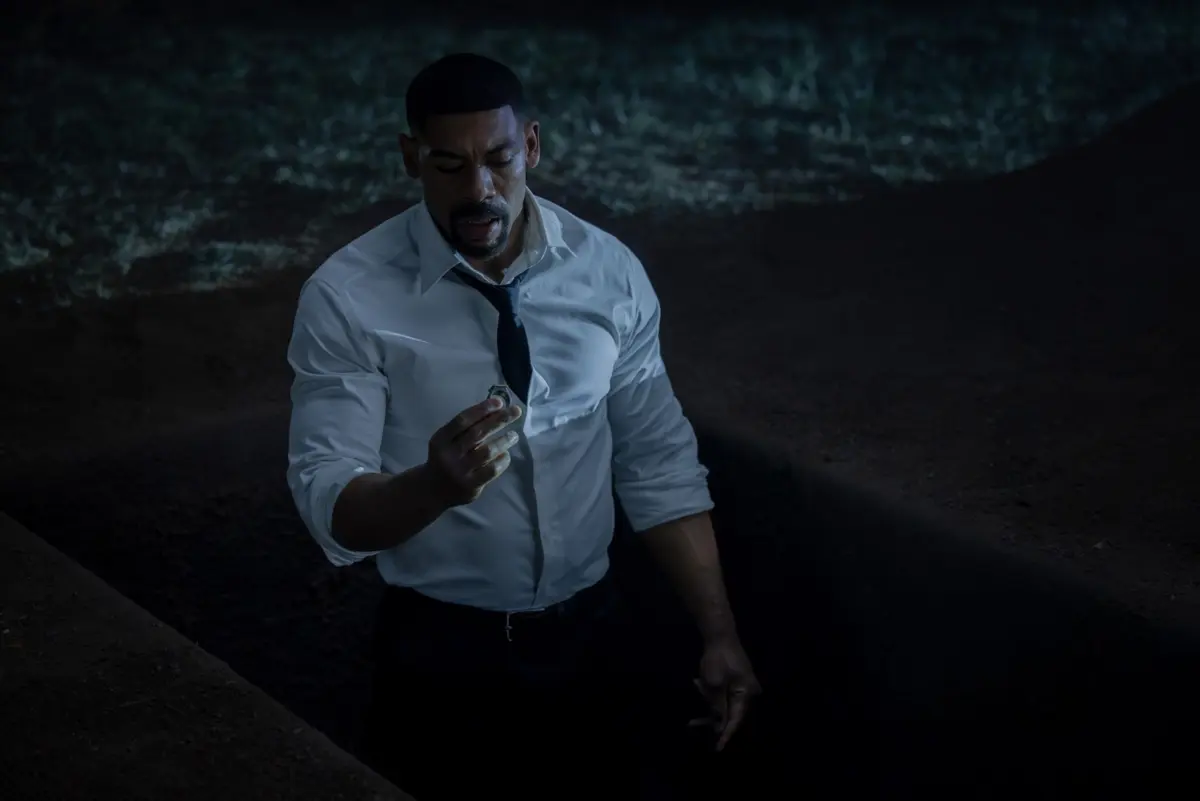
In a climactic sequence that has sent shockwaves through the fan community and comic book purists alike, John Stewart—portrayed with profound gravity by Aaron Pierre—charges his ring not with the traditional declaration of emotional suppression, but with an altered oath that explicitly embraces human vulnerability.
This deep-dive investigation explores the narrative mechanics, philosophical underpinnings, and behind-the-scenes motivations driving this monumental shift. Drawing from exclusive post-finale press conferences, character analysis, and a comprehensive look at the trajectory of Lanterns season one, we examine how Aaron Pierre’s interpretation of John Stewart redefines what it means to be a hero in the modern television landscape. Far from signaling a weakness, Stewart’s embrace of fear establishes a new psychological standard for strength—one rooted in self-awareness, personal accountability, and the arduous journey of mastering one’s inner demons.
Read Also
Detailed Chronology of the Finale: Breaking the Mold
To understand the magnitude of the finale’s final moments, one must trace the meticulous narrative buildup orchestrated by the creative team behind HBO’s Lanterns. Throughout the inaugural eight-episode run, the series deliberately stripped away the shiny, untouchable veneer typically associated with space-faring peacekeepers. Instead, it grounded its narrative in gritty, noir-infused mystery and psychological excavation.
The Buildup to the Charge
As the season one finale reached its zenith, John Stewart found himself facing an existential and physical crisis. The traditional Green Lantern oath—a sacred chant designed to focus willpower by casting out all shadows of doubt—felt increasingly hollow to a man carrying the complex, lived-in trauma of a former United States Marine. The old words demanded the eradication of fear. But for Stewart, erasing fear was not only impossible; it was fundamentally dishonest.
In the pivotal moments leading up to his final confrontation, Stewart makes a conscious choice. Rather than reciting the familiar cadences passed down through generations of cosmic guardians, he alters the text. By verbalizing his acknowledgment of fear right as he channels the emerald energy of the ring, Stewart effectively rewrites the operating system of the Green Lantern Corps.
The Visual and Auditory Impact
The execution of this scene resonated deeply with viewers. As Pierre’s voice delivers the altered lines, the ring’s response is not a rejection—as conservative Corps members might have predicted—but an explosive, resonant harmonization. The green glow shifts in hue and intensity, symbolizing that the ring has accepted a more authentic, integrated host. This moment serves as the narrative payoff for a season-long theme: that true power does not stem from the absence of terror, but from the deliberate, courageous decision to act in spite of it.
Supporting Context & Metrics: Analyzing the Evolution of John Stewart
The decision to alter the Green Lantern oath is not merely a superficial Easter egg for long-time comic readers; it is the culmination of a multi-layered character arc that spans two distinct timelines within the series’ continuity.
The 2016 Rejection vs. The 10-Year Evolution
During post-finale press engagements attended by outlets like Reactor, Aaron Pierre elaborated on the intricate timeline of his character. Viewers witnessed that Stewart’s relationship with the ring began years prior, specifically in a pivotal 2016 narrative turning point where a younger Stewart actively rejected the mantle.
Many superhero narratives frame the refusal of power as a moment of temporary weakness or tragic reluctance. Pierre, however, flips this trope on its head. For Stewart, refusing the ring in 2016 was an act of supreme wisdom and self-preservation. He simply knew he was not ready.
| Metric / Attribute | Traditional Green Lantern Portrayal | HBO’s Lanterns (John Stewart / Aaron Pierre) |
|---|---|---|
| Core Philosophy | Fearlessness (Eradication of fear) | Acknowledgment and mastery of fear |
| View of the Ring | An inheritance to be accepted blindly | A heavy burden requiring rigorous personal readiness |
| Approach to Flaws | Defensiveness and suppression | Active absorption, learning, and self-correction |
| Character Foundation | Cosmic law enforcement / test pilots | Grounded, psychological realism (e.g., Marine background) |
As the timeline advanced ten years later, Stewart found himself prepared to take on the mantle. This decade-long gap represents an internal maturation process. He did not spend those ten years running away from his duties; he spent them preparing his mind, spirit, and emotional fortitude to carry a weapon capable of unimaginable destruction.
Official Statements and Creative Insights
The narrative pivot away from traditional fearlessness was heavily emphasized by Aaron Pierre during discussions following the season one finale. His intellectual engagement with the psychology of John Stewart sheds light on why this version of the character resonates so powerfully with modern audiences.
Aaron Pierre on the Superpower of Self-Awareness
Speaking directly to journalists, Pierre articulated a philosophy of heroism that breaks away from traditional comic book archetypes:
"John’s superpower, in my opinion, subjectively, is not being fearless; it’s the ability to acknowledge fear and overcome it."
This distinction is crucial. In classical storytelling, heroes are often depicted as bulletproof emotional monoliths who stride into danger without a secondary heartbeat of hesitation. Pierre’s Stewart shatters this illusion. He feels the visceral grip of terror—whether stemming from his past military engagements or the cosmic horrors of the universe—yet he steps forward anyway. That friction between feeling fear and choosing duty is where the true essence of his heroism lies.
Leaning Into the Student Mentality
Pierre also addressed how Stewart handles his own shortcomings, contrasting his character’s maturity with the defensive hubris often found in serialized fiction:
"He doesn’t lean away from it with arrogance or with this delusion. He leans into it and actively searches for ways to become everything he knows he can become if he just makes himself the student that absorbs versus deflecting when he doesn’t know something."
This intellectual and emotional humility transforms Stewart from a standard archetype into a deeply relatable protagonist. When faced with gaps in his knowledge or emotional blind spots, Stewart does not posture or deflect. He listens, he learns, and he adapts. By acknowledging his fear of inadequacy, he systematically dismantles it, replacing insecurity with hard-earned competence.
Future Outlook: What the Oath Change Means for the DC Universe
With all eight episodes of Lanterns season one now streaming on HBO, the cultural footprint of the series is already being felt across the broader DC television and film landscape. The implications of John Stewart’s altered oath stretch far beyond the confines of a single season finale.
Ramifications for the Green Lantern Corps
Within the internal lore of the universe, the Green Lantern Corps has historically functioned as an authoritarian, dogmatic peacekeeping force overseen by the Guardians of the Universe. By redefining the oath to embrace fear as a natural component of sentient existence, Stewart has inadvertently challenged the institutional orthodoxy of Oa.
If a Green Lantern can channel the emerald light while admitting their terror, it opens up profound questions for the future of the Corps:
- Will other Lanterns follow Stewart’s lead and question the absolute nature of their traditional dogmas?
- How will the cosmic authorities on Oa react to a human operative rewriting the foundational code of their power rings?
- Will this psychological evolution make Stewart a more effective leader, or will it alienate him from rigid traditionalists within the galactic hierarchy?
Narrative Trajectory for Season Two and Beyond
As HBO evaluates the monumental success and critical reception of Lanterns season one, the creative runway for subsequent seasons looks exceptionally bright. The series has successfully proven that comic book adaptations can marry high-concept space opera with grounded, intimate character studies.
John Stewart has transitioned from John Stewart the Marine to John Stewart the superhero, but his journey is far from complete. Having conquered his initial reluctance and rewritten the rules of engagement for his ring, he stands poised at the center of a shifting cosmic order.
For fans and critics alike, the finale’s shocking oath revision serves as a reminder that the most compelling stories are those that dare to look inward. By embracing his fear, John Stewart hasn’t just powered up his ring—he has illuminated a path forward for modern superhero storytelling, proving that true courage requires the capacity to be afraid and the resolve to press onward regardless.





Comments
Facebook App ID not configured. Please add it in the Customizer.