
Executive Overview
In a development that threatens to recalibrate the future of one of science fiction’s most lucrative and enduring cinematic properties, visionary filmmakers Lana and Lilly Wachowski have formally initiated legal proceedings to reclaim the copyright to The Matrix franchise. According to industry reports from Puck, the sibling creative team has served Warner Bros. with formal notification exercising their statutory copyright termination rights under United States copyright law.
Should this legal maneuver succeed, ownership of the foundational intellectual property (IP) is slated to revert entirely to the Wachowskis by February 2029—marking precisely thirty years since the cultural touchstone first exploded onto the global box office in 1999.
This high-stakes legal challenge arrives at a precarious financial and structural crossroads for Warner Bros., freshly following David Ellison’s Skydance Media acquisition of the legacy studio. It also directly collides with ongoing studio development pipelines. Warner Bros. is currently steering a fifth installment in the universe, helmed by Project Hail Mary and The Martian writer Drew Goddard. While initial reports indicated that the Wachowskis had maintained a supportive, increasingly collaborative stance regarding Goddard’s upcoming project, the looming two-year countdown to potential copyright reversion introduces a volatile layer of uncertainty into Hollywood boardrooms.
Read Also
This article investigates the legal mechanisms behind the Wachowskis’ claim, details the chronology of the franchise’s ownership, analyzes the studio’s broader transmedia strategies, and projects how this battle for the simulated reality could redefine corporate ownership versus artistic legacy in modern cinema.
Detailed Chronology of a Cyberpunk Empire
To understand the weight of the Wachowskis’ current legal challenge, one must trace the timeline of The Matrix from an indie-adjacent cyberpunk spec script to a multi-billion-dollar global juggernaut.
1994–1999: Genesis and the Green-Tinted Revolution
Lana and Lilly Wachowski originally penned the screenplay for The Matrix in the mid-1990s, pitching a radical synthesis of Hong Kong action choreography, Japanese anime aesthetics, cyber-philosophy, and Gnostic theology. After cutting their feature directorial debut with the neo-noir thriller Bound (1996), the sisters secured backing from producer Joel Silver and Warner Bros. Pictures.
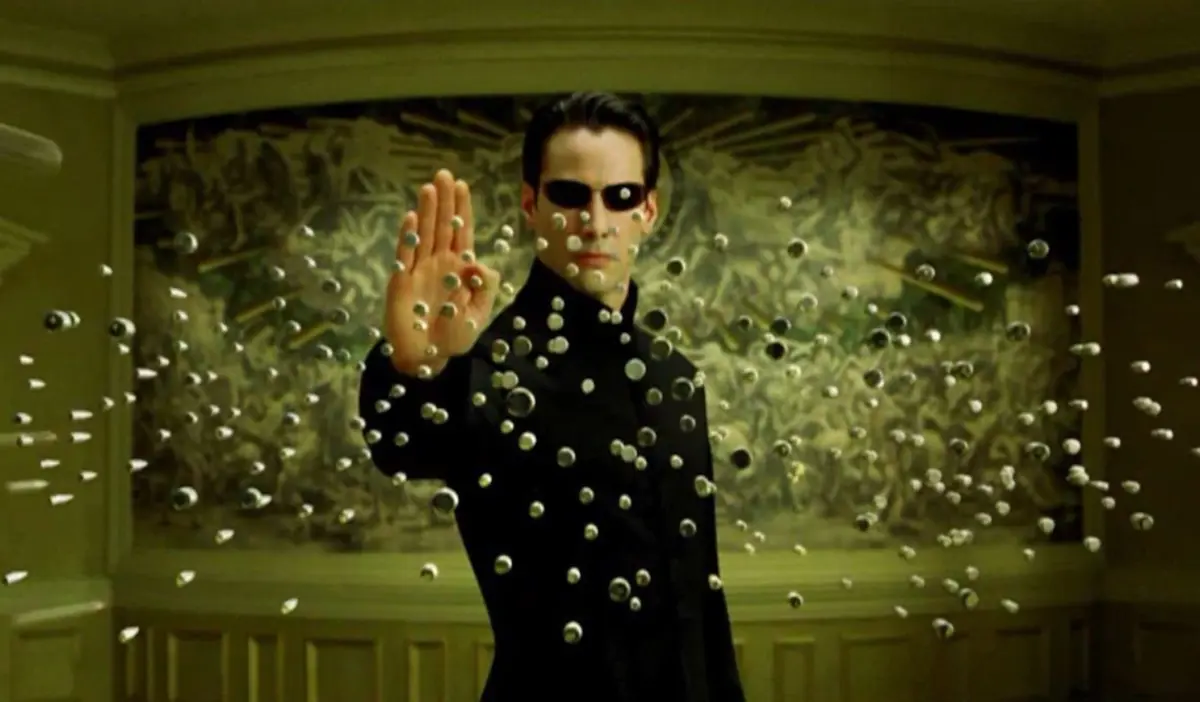
Released on March 31, 1999, the film starring Keanu Reeves as Neo, Laurence Fishburne as Morpheus, and Carrie-Anne Moss as Trinity became an immediate cultural and technological milestone. Grossing over $465 million worldwide against a $63 million budget, it fundamentally altered visual effects standards through the popularization of "bullet time" and cemented Warner Bros. as the home of a potential powerhouse sci-fi franchise.
2003: The Back-to-Back Expansion
Capitalizing on the runaway success of the original film—and its massive home video footprint—Warner Bros. greenlit two simultaneous sequels: The Matrix Reloaded and The Matrix Revolutions. Both shot back-to-back and released in 2003, expanding the lore through groundbreaking action set-pieces (such as the Highway Chase) and exploring the philosophical depths of Zion and the Machine City. Collectively, the trilogy pulled in over $1.6 billion globally, cementing the franchise as a cornerstone of early-2000s pop culture.
2021: The Resurrection
After an 18-year hiatus, Lana Wachowski returned to the director’s chair—operating without Lilly this time—to helm The Matrix Resurrections (2021). Released simultaneously in theaters and on the HBO Max streaming platform during the tail end of the COVID-19 pandemic landscape, the film served as a self-aware, highly meta deconstruction of corporate intellectual property mining.
While its box office performance was heavily blunted by its day-and-date streaming strategy, grossing roughly $159 million worldwide, the film sparked fierce critical debate. As Reactor critic Emmet Asher-Perrin noted in their review:
"Whether or not there is more story to tell from here is irrelevant. Like the first Matrix film, Resurrections is perfectly encapsulated: a leaping off point, or a finished thought depending on the angle you’re viewing it from. What’s incredible is that, regardless of your vantage point, it delves so much deeper than the story that proceeded it. Unlike so many of the reboots audiences have thrust upon them, The Matrix still has so much more to say."
2024–2029: The Countdown to Reversion
In April 2024, Warner Bros. announced plans to push forward with a fifth cinematic installment, tapping Drew Goddard to write and direct. Studio executives framed the project as a way to honor the universe’s origins while offering a fresh directorial lens. However, behind closed doors, legal clocks were ticking. Under U.S. Copyright Act provisions regarding the termination of grants (Section 203), creators who assign their copyrights to third parties maintain a narrow window to reclaim them after 35 years (or 30 years for certain pre-1978 and specific grant structures). By notifying Warner Bros. of their intent to exercise these termination rights ahead of the 30-year milestone in February 2029, the Wachowskis have drawn a line in the digital sand.
Supporting Context & Legal Mechanics: What is Copyright Termination?
The weaponization of copyright termination rights by creators against major Hollywood studios has increasingly become a defining legal trend of the 2020s. Similar high-profile battles—such as the legal disputes surrounding characters like Marvel’s superhero roster or horror properties like Friday the 13th—demonstrate how creators are leveraging statutory loops to reclaim control of their life’s work.
The Law Behind the Move
Under United States copyright law, creators who signed away their original rights during the creation of a work are granted a statutory right to terminate those transfers after a designated number of years. This provision was written into the Copyright Act of 1976 specifically to protect artists who may have signed away valuable properties early in their careers before their true market value—or cultural resonance—could be accurately measured.
For The Matrix, the 30-year window post-1999 release points directly to early 2029. By filing formal notices of termination well in advance, the Wachowskis are ensuring that Warner Bros. cannot plead ignorance as the expiration date approaches.
Financial Stakes and Corporate Realities
The timing of this notice could not be more delicate for Warner Bros. Discovery. The studio recently weathered major shifts in leadership, capped by David Ellison’s Skydance Media acquisition. Skydance’s operational philosophy relies heavily on reliable, tentpole intellectual property to drive multi-platform revenue streams, spanning theatrical windows, streaming catalogs, video games, and consumer products.
If The Matrix reverts to Lana and Lilly Wachowski in 2029, Warner Bros. risks losing the ability to commission new sequels, prequels, or spin-offs without directly licensing the IP back from the sisters. Furthermore, existing distribution rights for the original 1999 film and its sequels could face renegotiation, profoundly impacting long-term ancillary revenue streams.
Official Statements and Industry Perspectives
While neither Lana nor Lilly Wachowski has issued a sprawling public manifesto regarding their legal filings, and Warner Bros. executives have remained publicly measured, industry insiders paint a complex picture of cooperation mixed with defensive positioning.
According to Puck’s reporting, the Wachowski sisters have maintained a surprisingly amicable relationship with the studio’s ongoing creative endeavors. In fact, they have been described as "encouraging" regarding Drew Goddard’s upcoming fifth installment and have reportedly increased their involvement or communication regarding the franchise’s trajectory in recent months.
This cooperative posture creates an intriguing paradox: why support a brand-new corporate-backed sequel while simultaneously executing legal maneuvers to strip the studio of future ownership?
Industry analysts suggest two primary motivations:
- Creative Leverage: By establishing a hard expiration date for Warner Bros.’ exclusive hold on the IP, the Wachowskis position themselves as indispensable partners—or future gatekeepers—for any narrative expansions attempted before 2029.
- Legacy Protection: Directors across Hollywood have increasingly sought control over their cinematic universes to prevent unauthorized, tone-deaf reboots or commercial dilution. Reclaiming the copyright ensures that if The Matrix continues, it does so under terms approved by its original architects.
When Drew Goddard’s film was announced in the spring of 2024, a Warner Bros. Motion Picture Group executive issued a glowing statement emphasizing respect for the source material:
"Drew came to Warner Bros. with a new idea that we all believe would be an incredible way to continue the Matrix world, by both honoring what Lana and Lilly began over 25 years ago and offering a unique perspective based on his own love of the series and characters."
Whether Goddard’s project can make it to screens, establish a new sub-franchise, and wrap its narrative arc before the February 2029 reversion deadline remains one of the industry’s most pressing logistical puzzles.
Future Outlook: Redefining the Red Pill
As the clock ticks down toward 2029, the standoff between the Wachowskis and Warner Bros. will likely serve as a watershed moment for modern Hollywood copyright law. Several trajectories remain possible as the industry watches how this narrative unfolds:
1. The Pre-2029 Content Blitz
Warner Bros. and Skydance may aggressively fast-track Drew Goddard’s film—and potentially other tie-in media—ensuring that productions are completed, marketed, and monetized well before the termination window snaps shut. This could lead to a sudden, highly concentrated resurgence of Matrix media in theaters and on streaming services.
2. A Collaborative Settlement or Buyout
It is entirely possible that rather than surrendering the crown jewel of their sci-fi catalog, Warner Bros. will enter heavy negotiations with the Wachowskis. A multi-million-dollar settlement, a profit-participation restructuring, or a co-ownership model could be brokered to keep the studio securely at the helm while satisfying the creators’ demands for control and financial restitution.
3. Complete Reversion and Independent Stewardship
Should the legal termination go through unhindered, February 2029 will see Lana and Lilly Wachowski emerge as independent owners of The Matrix. In this scenario, the sisters could choose to partner with alternative financiers, produce indie-scale philosophical extensions of the universe, or simply lock the simulation away, leaving the franchise as a pristine, un-exploited tetralogy.
Conclusion
When Neo took the red pill in 1999, he chose to wake up from a comfortable illusion designed to extract value from his existence, stepping into a harsh, unpredictable reality governed by freedom. Decades later, the creators who engineered that cinematic awakening are utilizing their own real-world legal tools to wake up from corporate hegemony. Whether Warner Bros. can retain its grip on the construct, or whether the Wachowskis successfully unplug the machine, the next few years will determine who truly controls the keys to Zion.




Comments
Facebook App ID not configured. Please add it in the Customizer.