
Executive Overview
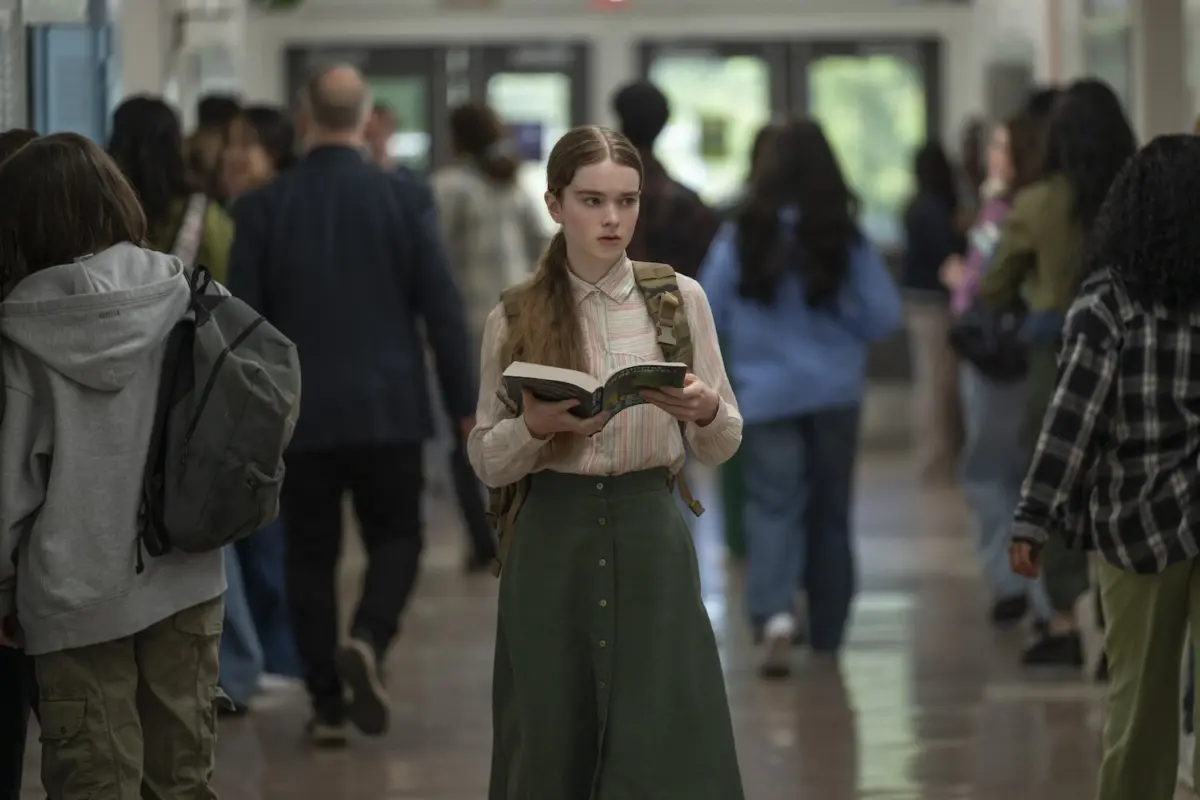
In a development that has sent shockwaves through both the horror community and the broader television landscape, Amazon’s Prime Video has officially greenlit a second season of Mike Flanagan’s audacious reimagining of Stephen King’s Carrie. For many casual viewers and purists of King’s seminal 1974 debut novel, the news arrived not merely as a surprise, but as a genuine puzzle. After all, the first season concluded by fundamentally upending the definitive narrative arc established in both the original book and Brian De Palma’s legendary 1976 feature film.
Rather than perishing in the apocalyptic flames of the infamous prom night massacre, Flanagan’s iteration of Carrie White survived, stepping out into an uncertain world with her powers intact and a vast, multiversal web opening up before her.
This unexpected renewal confirms what visionary showrunner Mike Flanagan has asserted all along: his vision for Carrie was never designed as a limited, self-contained tragedy. Instead, it was meticulously engineered as a multi-season, serialized epic—an ambitious three-part television trilogy aimed at exploring the harrowing legacy of psychic phenomena, institutional suppression, and cosmic horror across Stephen King’s interconnected universe.
Read Also
As production ramps up for the sophomore season, industry analysts and die-hard Constant Readers alike are left to dissect what this renewal signals for the trajectory of Prime Video’s horror slate, how it bridges the gap between classic King lore and modern prestige television, and whether Carrie is quietly serving as a Trojan horse for an eventual adaptation of The Dark Tower.
Detailed Chronology: From Page to Prime Video and Beyond
To understand how a story about a tormented, telekinetic teenager in a small Maine town was transformed into a sweeping, multi-season mythological saga, one must examine the chronological progression of Flanagan’s creative endeavor.
The Conception and Adaptation Strategy
When Mike Flanagan—renowned for critically acclaimed horror achievements such as The Haunting of Hill House, Midnight Mass, and Doctor Sleep—first announced his partnership with Amazon to adapt Carrie, industry watchers anticipated a faithful, if polished, contemporary retelling. However, Flanagan approached the source material with a mandate for expansion.
During early development, Flanagan collaborated closely with Stephen King himself to recalibrate the foundational mythos. While the first season retained the emotional core of Carrie White’s brutal isolation and religious fanaticism, it deliberately decentralized her culpability in the prom night catastrophe. By introducing new characters—most notably the enigmatic Emaline—and restructuring the narrative mechanics of the tragedy, Flanagan laid the groundwork for a protagonist who is neither a straightforward hero nor a remorseless monster, but a deeply traumatized survivor thrust into a wider global conspiracy.
The Cliffhanger Heard Round the World
The culmination of Season 1 delivered a narrative pivot that polarized traditionalists while galvanizing fans of serialized genre television. By allowing Carrie to walk away from the ashes of Chamberlain, Maine, Flanagan subverted fifty years of literary and cinematic expectation.
The introduction of Adelaide (portrayed by Kate Siegel) and her shadowy cohort in the finale retroactively reframed the scope of the narrative. Suddenly, Carrie ceased to be a simple tale of vengeance and retribution. It transformed into an introductory chapter of an institutional manhunt—one that echoes the clandestine government overreach seen in other classic Stephen King properties.
The Renewal Announcement and Production Timeline
Despite fervent speculation regarding whether the bold finale was a one-off creative swing or an intentional setup, Prime Video confirmed the Season 2 renewal following sustained critical acclaim and robust streaming metrics.
Behind the scenes, Flanagan had already mapped out a comprehensive, three-season arc. With the greenlight now secured, pre-production is accelerating toward a shooting schedule that aims to deepen the exploration of psychic legacies, expand upon the mysterious factions hunting gifted youth, and weave deeper threads connecting back to the master of horror’s overarching literary cosmos.
Supporting Context & Metrics: The Economics and Cultural Impact of Flanagan’s King Adaptations
The renewal of Carrie for a second season is not merely a creative victory; it is a calculated triumph within the modern streaming ecosystem, reflecting shifting audience appetites for elevated horror and shared universes.
The Streaming Landscape and Genre Viability
In an era where streaming platforms are increasingly risk-averse, canceling high-concept series after single runs, Prime Video’s swift commitment to Carrie underscores the immense value of the Mike Flanagan brand. Flanagan has cultivated a dedicated, loyal audience base that follows his creative output across networks and studios.
Data analytics from early streaming windows indicate that Carrie drove significant subscriber acquisition and high completion rates—metrics that are critical for multi-season renewals. Crucially, the series generated intense social media engagement, with discourse split evenly between purists debating the narrative departures and newcomers captivated by the expanding conspiracy thriller elements of the plot.
Navigating the Stephen King Multiverse
Adaptations of Stephen King’s work have experienced a renaissance over the past decade, yet translating the interconnected nature of his bibliography—often referred to as the "Expanded King Universe"—remains a formidable challenge. King’s novels frequently reference one another through shared concepts, geographical touchstones, and metaphysical rules (such as "the Shine" and the mystical focal point of the Dark Tower).
| Feature / Element | Original 1974 Novel | 1976 Feature Film | Prime Video Series (Flanagan) |
|---|---|---|---|
| Carrie’s Fate | Dies in the destruction of Chamberlain | Dies crushed under gym debris | Survives and escapes into the wider world |
| Prom Massacre Culpability | Solely driven by Carrie’s telekinetic fury | Solely driven by Carrie’s telekinetic fury | Shared moral complexity; external influences at play |
| Scope of Narrative | Self-contained tragedy of a single outcast | Self-contained tragedy of a single outcast | Multi-season epic exploring global psychic phenomena |
| World-Building | Focused strictly on Chamberlain, Maine | Focused strictly on Chamberlain, Maine | Connects to broader institutional conspiracies and the Multiverse |
Flanagan’s structural approach leverages this interconnectedness as a narrative engine. By framing Carrie White not as an isolated anomaly, but as one of many extraordinary women throughout history who have possessed such gifts, the series transforms a singular gothic tragedy into an expansive sociological and supernatural study. This elevates the intellectual property from a standard horror remake into a sprawling mythological universe capable of sustaining multi-year viewer retention.
Official Statements and Creative Vision
The strategic direction of Carrie Season 2 is best understood through the remarks of its architect, Mike Flanagan, and the insights shared by those closest to the production.
Crafting a Three-Act Epic
Speaking at the Toronto International Film Festival, Flanagan laid bare his overarching ambition for the series, framing it as a deliberate cinematic trilogy translated to the small screen:
"In my dream scenario, I think it’s three seasons," Flanagan explained. "In my dream scenario, I think Carrie has a wonderful three-step arc. It’s a trilogy, really."
While constructing a satisfying conclusion for the inaugural season was paramount—ensuring viewers felt a sense of closure should the series fail to secure a renewal—Flanagan admitted that the temptation to leave the door open was irresistible:
"Our priority was really just to make it as satisfying as possible when we did cut to black, but also let Carrie White go out into the world, whether we’re allowed to follow her or not. We thought she’d earned that… But it was very much on my mind that there was so much potential for it to expand further, and we wanted to leave room for that too."
Navigating Morality: Hero, Villain, or Fugitive?
One of the most delicate tightropes Flanagan must walk in Season 2 is the moral evolution of Carrie White. By softening her direct culpability in the prom massacre, the production team ensured audience empathy remained intact. However, steering the character into uncharted narrative territory invites profound questions about her ultimate legacy.
"It takes us completely out of anything predetermined. Let’s see where this character goes. Are we seeing the origin of a hero or a villain? I don’t know," Flanagan noted in an interview with The Playlist. "Does she know? I have an idea. We’ll find out. But let’s let the character decide. I don’t get many chances like that in my career."
Elaborating on the psychological burden placed upon the protagonist during the first season’s climax, Flanagan added:
"We also struggled with—we’re never gonna be able to love this character as much as we do and then watch her intentionally murder so many people. Carrie’s culpability became a major question. How do we allow the tragedy to unfold in a way that she’s still responsible, but that she isn’t a monster herself?"
Stephen King’s Direct Involvement
Crucially, this radical departure from the text was not executed in a vacuum; it received the blessing and active participation of Stephen King himself. Discussing King’s contributions with The National, Flanagan revealed that the literary legend was deeply invested in shaping the expanded world:
"Most of his direct ideas and suggestions came to bear with the character of Emaline… If you’re a King fan, you know the expanded universe is kind of part of the appeal. So you want to know what level of the Tower this is all happening on. You want to understand that kind of. So yeah, it was always baked in, and it was something that excited Steve early on, too."
Future Outlook: What Lies Ahead for Season 2 and the Extended Universe
As the production team prepares to bring Carrie back to Prime Video, several compelling narrative vectors emerge, promising to redefine what a Stephen King television adaptation can achieve.
1. The Shadow of "The Institute" and Secret Government Agencies
Though Flanagan has stopped short of announcing a direct adaptation of King’s 2019 novel The Institute, he has openly acknowledged drawing inspiration from its thematic framework. The secretive organization monitoring children and young adults with psychic abilities provides a natural antagonist for Carrie’s fugitive journey. In Season 2, viewers can expect Carrie to encounter a network of fellow survivors—individuals who possess similar gifts but have been shaped, broken, or radicalized by institutional capture. This transforms the series into a high-stakes cat-and-mouse thriller as Carrie attempts to outrun powerful forces while determining whom she can trust.
2. Unearthing the History of Gifted Women
A major thematic pillar for upcoming episodes is the historical context of telekinesis and extraordinary abilities. Rather than focusing solely on contemporary events, future seasons are poised to dive deep into the archives of the past, utilizing flashbacks, recovered documents, and oral histories to explore how society—and shadowy institutional forces—have dealt with gifted women across generations. This historical depth will contextualize Carrie’s struggle as part of a centuries-long lineage of resistance and persecution.
3. Deconstructing Emaline and Moral Ambiguity
The complicated dynamic between Carrie and her enigmatic friend Emaline will undoubtedly face intense scrutiny in Season 2. While Emaline served as an empowering catalyst in the first season, lingering questions remain regarding her true identity, her motivations, and whether she views Carrie as a genuine friend or a strategic asset in a larger, hidden war. As Carrie navigates her new reality, her transition between potential heroism and villainy will hinge heavily on the influences surrounding her.
4. The Dark Tower Connection: A Backdoor Pilot?
Perhaps the most tantalizing prospect for hardcore fans is Flanagan’s repeated hints regarding The Dark Tower. Given Flanagan’s ongoing stewardship of multiple Stephen King properties—including an upcoming adaptation of The Mist—the prospect of using Carrie as a narrative bridge to the multiverse takes on immense strategic value.
By deliberately incorporating multiversal terminology, thematic touchstones, and specific vocabulary (such as the deliberate use of the word "shine" in the first season), Flanagan has built a structural foundation that could allow characters from across King’s bibliography to cross over. Whether Carrie ultimately serves as a direct backdoor entry point into a grand Dark Tower adaptation remains one of the most exciting mysteries in modern television.
Conclusion
Mike Flanagan’s Carrie has already transcended the labels of "remake" or "reboot." By taking a beloved literary tragedy and expanding its borders into a vast, morally complex exploration of trauma, institutional control, and cosmic connectedness, Prime Video has secured a genre cornerstone. As Season 2 looms on the horizon, the question is no longer whether Flanagan can successfully rewrite a classic, but rather how far into the Stephen King multiverse he intends to drag us.


Comments
Facebook App ID not configured. Please add it in the Customizer.