
Executive Overview
Deep in the heart of Sunnyvale, California, far removed from the public eye, lies one of the most closely guarded hardware engineering facilities in the consumer technology sphere: Amazon Lab126. Named after a clever alphanumeric code representing the alphabet’s first and last letters (A to Z) combined with the number 1 (signifying the initial step in a massive corporate vision), this Silicon Valley subsidiary has spent over a decade quietly shaping how the world reads, watches, and interacts with digital media.
From this campus emerged the iconic Kindle family, the expansive Fire tablet series, and the living-room-transforming Fire TV products. Yet, the facility’s engineers are rarely content to rest on their laurels. Rumors, leaks, and a recent, highly calculated media blitz point toward a watershed moment in Amazon’s hardware strategy.
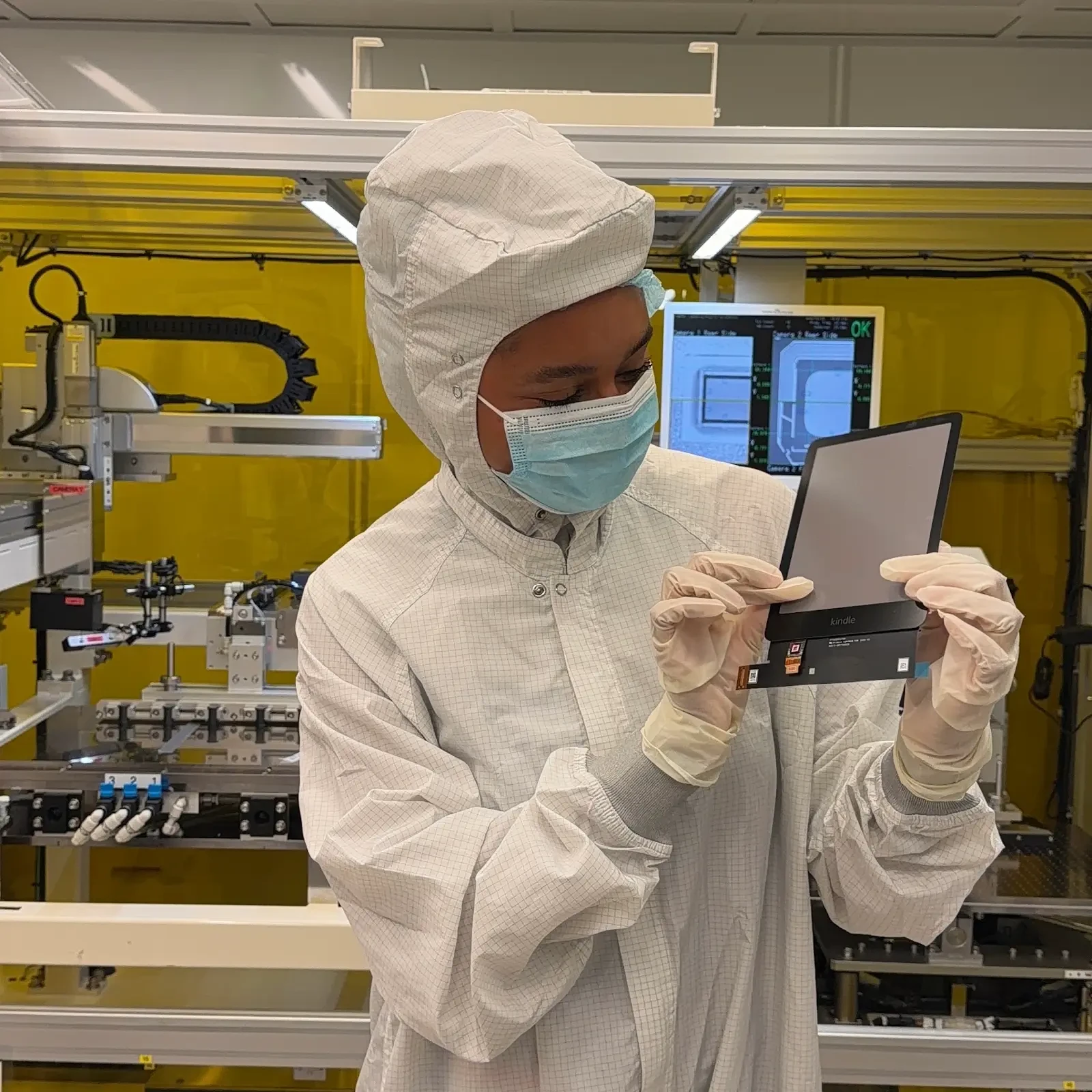
In a rare pivot toward radical transparency, Amazon recently unlocked its doors to a cohort of prominent digital creators and young influencers—including Lottie Smalley, Khalilah D, and Kendall Ferrari—offering them an unprecedented look into the cleanrooms, testing labs, and design studios where tomorrow’s e-readers are conceived.
Read Also
Beneath the veneer of a standard public relations campaign, however, lies a profound narrative of regulatory pressure, hardware reinvention, and technological ambition. As Amazon prepares to launch a new wave of devices slated for late 2026—including the anticipated Kindle Scribe Colorsoft—the company is facing a dual imperative: satisfying a consumer base hungry for advanced, artificial intelligence-driven reading features, and drastically overhauling its manufacturing philosophy to comply with strict international legislation.
Chief among these regulatory hurdles is the impending European Union battery law, set to take effect in early 2027. This single piece of legislation is forcing the world’s leading e-reader manufacturer to completely re-engineer how its devices are assembled, moving away from environmentally unfriendly adhesives and sealed internal compartments in favor of user-serviceable components. Simultaneously, Amazon is upgrading its core internal hardware architectures, integrating faster processors and expanded RAM capacity to support a new generation of generative AI tools that stretch far beyond the basic text summaries currently found on the market.
Detailed Chronology: From Secretive Fortress to Influencer-Led Transparency
The Origins and Evolution of Lab126
Founded in 2004 under the leadership of Gregg Zehr—a veteran of Palm and Apple—Lab126 was established as an independent research and development arm for Amazon. Its mission was ambitious: design and build disruptive consumer electronics that could seamlessly bridge the gap between physical retail consumption and digital content delivery.
The division’s crowning achievement arrived in November 2007 with the launch of the original Kindle. Equipped with an innovative electronic paper display and revolutionary wireless connectivity via the then-novel Whispernet, the device transformed the publishing landscape.
Over the subsequent two decades, Lab126 expanded its footprint exponentially across the San Francisco Bay Area, swelling to house thousands of engineers, industrial designers, software developers, and material scientists. This campus gave birth to the entire Kindle ecosystem—from the budget-friendly base models and backlit Paperwhites to the page-turning Oasis and the note-taking Kindle Scribe—alongside the Fire tablet and Fire TV ecosystems.
The Strategic Shift Toward Public Visibility
Historically, Lab126 operated behind a veil of corporate secrecy. Prototypes were locked away, and visits from independent media were tightly restricted to heavily sanitized trade-show floors or controlled press events. However, the rapidly changing dynamics of consumer electronics marketing have necessitated a shift.
In a strategic move to capture younger demographics and demystify the hardware development pipeline, Amazon extended invitations to several prominent next-generation influencers. Creators such as Lottie Smalley, Khalilah D, and Kendall Ferrari were granted exclusive, behind-the-scenes access to the Sunnyvale facilities.
During the tour, these influencers were given a rare platform to converse directly with Amazon’s core executives, industrial designers, and senior researchers. They explored everything from ergonomic prototyping and drop-test chambers to acoustic engineering suites and cleanroom display assemblies. The primary objective of the excursion was twofold: to demystify the complex, multi-year journey of consumer product development, and to build organic, grassroots anticipation for Amazon’s upcoming 2026 hardware lineup.
The culmination of this visit was captured in exclusive video documentaries, offering the public a peek into the inner workings of an installation that typically remains closed to all outsiders.
Supporting Context & Metrics: Navigating the 2027 EU Battery Mandate
While the allure of cleaner design and influencer access makes for compelling media, the true catalyst behind Amazon’s current hardware overhaul is rooted in strict global legislation.
The EU Regulatory Hammer
In recent years, the European Union has positioned itself as the global vanguard for consumer rights, right-to-repair initiatives, and environmental sustainability. At the forefront of this regulatory push is the landmark EU battery legislation, officially ratified to overhaul how portable batteries are managed throughout their lifecycle.

By early 2027, the mandate will require that portable batteries incorporated into consumer electronics—including tablets, smartphones, and e-readers—be easily removable and replaceable by the end-user using commercially available tools, without requiring specialized technical training or destructive dismantling processes.
For the past fifteen years, the consumer electronics industry has trended in the exact opposite direction. Driven by the pursuit of ultra-thin profiles, waterproof ingress protection (IP ratings), and streamlined manufacturing costs, companies like Amazon, Apple, Kobo, and Boox relied heavily on industrial-grade adhesives to secure lithium-ion batteries directly to internal chassis or display panels. Replacing a degraded battery in a traditional Kindle often required heat guns, specialized pry tools, and a high risk of destroying the fragile E Ink display layer or flex cables.
The Architectural Pivot: Screws Over Glue
Insider reports and technical analyses confirm that Amazon’s upcoming late-2026 Kindle refresh cycle will serve as a direct response to these regulatory changes.
Rather than abandoning the European market—a prohibitive financial penalty for any global technology brand—Amazon Lab126 engineers have been tasked with redesigning the internal architecture of their devices. The next generation of Kindles will abandon glue-submerged battery compartments in favor of standard, user-accessible rear panels secured by common, off-the-shelf screws.
This design philosophy marks a dramatic return to modularity. By integrating standardized mechanical fasteners, Amazon not only ensures full compliance with the 2027 EU directives but also answers decades of consumer and environmental advocacy group criticisms regarding planned obsolescence and unrepairable electronics.
Hardware Upgrades: Powering the AI Revolution
Beyond the physical casing, the necessity to meet higher environmental standards has coincided with a massive leap in processing power. To remain competitive against increasingly sophisticated multi-purpose tablets and specialized e-readers from competitors like Kobo and Onyx Boox, Amazon is fundamentally upgrading the silicon powering its devices.
The upcoming models—spearheaded by anticipated flagship iterations like the Kindle Scribe Colorsoft—will feature significantly faster system-on-chip (SoC) processors paired with expanded RAM capacity. Industry analysts note that these performance bumps are not merely cosmetic; they are mandatory prerequisites for running complex, on-device and cloud-assisted artificial intelligence operations.
While current Kindle software supports rudimentary features like "Kindle Recaps" (which generate brief chapter or book summaries) and "Story So Far" tracking, the next tier of AI integration promises far more sophisticated capabilities. Enhanced RAM and faster processing speeds will enable real-time contextual definitions, advanced conversational querying of non-fiction texts, dynamic font and layout adjustments driven by machine learning, and more fluid, responsive color rendering on advanced E Ink panels.
Official Statements and Industry Insights
The intersection of regulatory compliance, AI integration, and manufacturing design has drawn intense scrutiny from tech journalists, environmental lawyers, and market analysts alike.
Industry veterans point out that while the transition to user-replaceable batteries is a major win for sustainability advocates, it presents significant engineering headaches for hardware designers. Maintaining high-level water resistance (such as an IPX8 rating, which allows devices to survive accidental immersion in water) becomes exponentially more difficult when a device features a removable back panel secured by standard screws, rather than a welded, hermetically sealed shell.
Despite these engineering hurdles, Amazon representatives during the Lab126 tour emphasized the company’s commitment to balancing durability, water resistance, and user serviceability. Senior product managers noted that consumer electronics must evolve to meet both the environmental expectations of a changing global market and the functional demands of modern digital readers.
Furthermore, the integration of generative AI within low-power E Ink environments represents a fascinating paradigm shift. Speaking on background, software architects at Lab126 highlighted the unique challenges of optimizing heavy AI models to run efficiently on bistable display technologies without draining the legendary weeks-long battery life that Kindle users have come to expect. The solution lies in a hybrid approach: leveraging local processing upgrades for immediate UI responsiveness while intelligently offloading heavier computational tasks to AWS (Amazon Web Services) cloud infrastructure.
Future Outlook: What to Expect from the Kindle Ecosystem
As the consumer technology landscape marches toward the close of 2026 and the threshold of 2027, the developments transpiring inside Amazon Lab126 signal a defining chapter for the e-reader market.
- The Launch Wave (Late 2026): Consumers can anticipate an unprecedented wave of new Kindle hardware releases. These devices will introduce the first iterations of user-swappable battery systems, setting a new benchmark for device longevity and right-to-repair standards across the industry.
- The Rise of Color and AI: With the refinement of technologies like the Kindle Scribe Colorsoft, color E Ink is poised to transition from a niche novelty into a mainstream expectation. Backed by faster processors and beefed-up RAM, these color screens will be managed by responsive, AI-augmented operating systems capable of intelligent content summarization, interactive reading companions, and enhanced accessibility options.
- The Global Regulatory Ripple Effect: While the EU battery law is the immediate catalyst for Amazon’s hardware redesigns, market forces suggest that these user-serviceable designs will become the global standard. Manufacturing two separate supply chains—one glued for non-regulated markets and one screwed for Europe—is economically inefficient. Consequently, readers worldwide will reap the benefits of easily replaceable batteries and improved hardware longevity.
Ultimately, the veil of secrecy lifting at Lab126 reveals an organization actively pivoting to meet the demands of a new era. By opening its doors to a new generation of digital creators and embracing the dual challenges of sustainability legislation and artificial intelligence, Amazon is ensuring that the Kindle brand remains not just a pioneer of digital reading, but a resilient and adaptable leader for the decades to come.



Comments
Facebook App ID not configured. Please add it in the Customizer.