
Executive Overview
In a significant shift for its digital reading ecosystem, Amazon has officially announced the rebranding of its flagship subscription service, Kindle Unlimited, to Kindle+. This marks the first time the tech giant has altered the foundational naming convention of its popular e-reading subscription model since its inception. While the rebrand is intended to signal a broader, more integrated suite of reading and listening experiences, the rollout has been plagued by a chaotic digital transition. Across Amazon’s global storefronts—spanning the United States, the United Kingdom, Canada, and beyond—shoppers have encountered widespread UI glitches, conflicting pricing tiers, and broken product page references.
Compounding these technical missteps is a major strategic pivot within the service itself: the aggressive integration of AI-generated audiobooks via Amazon’s proprietary "Virtual Voice" technology. By allowing independent authors utilizing Kindle Direct Publishing (KDP) to convert e-books into audiobooks at no cost, Amazon is rapidly scaling its audiobook catalog. However, this shift has ignited immediate controversy among avid readers and industry critics. The sudden influx of synthetic narration into a premier subscription tier raises serious questions about quality control, consumer value, and the future valuation of human narration in the audiobook industry.
Detailed Chronology & Rollout Chaos
The Rebrand Announcement and Immediate Technical Failures
The transition from Kindle Unlimited to Kindle+ was meant to usher in a modernized, unified era for Amazon’s digital ecosystem. Instead, the go-live phase was marred by severe technical debt and logistical oversights across Amazon’s web infrastructure. Within hours of the announcement, users browsing the platform noted that the site was riddled with conflicting terminology, broken layout code, and erroneous product configurations.
Read Also
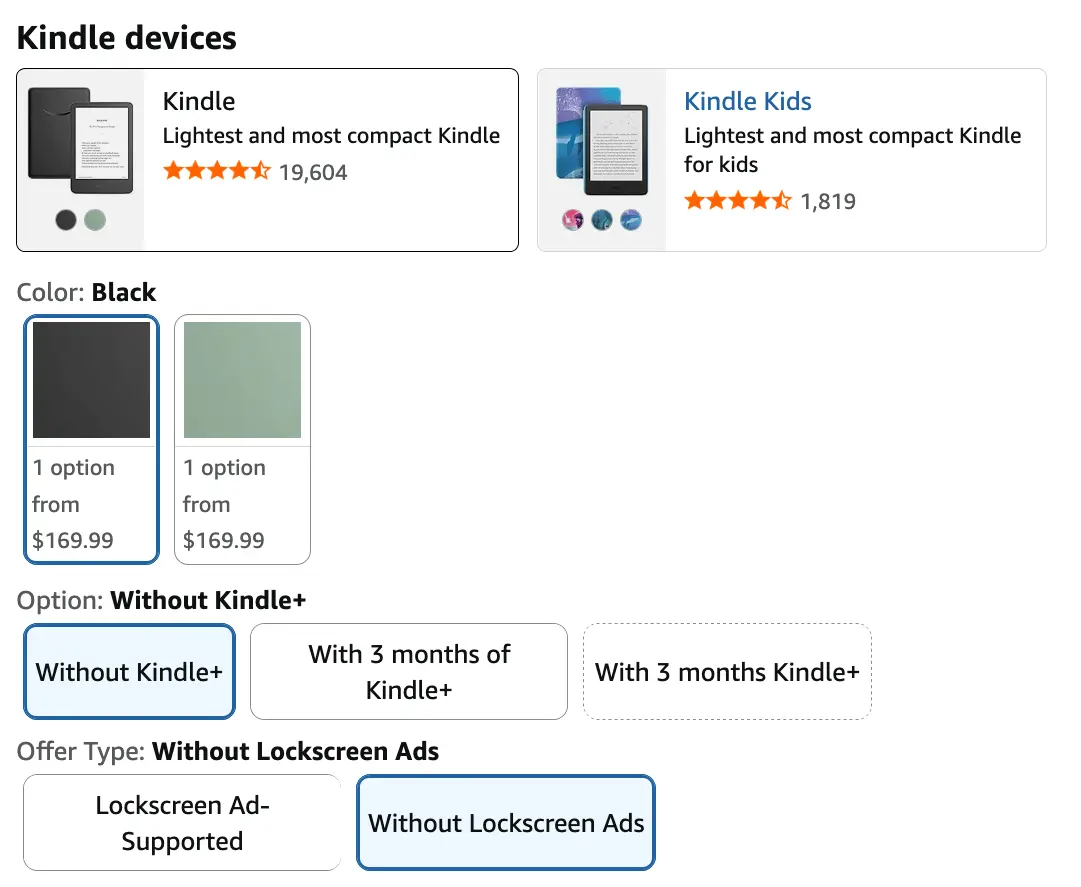
For instance, the forthcoming, highly anticipated Kindle Colorsoft Signature Edition—a device slated to spearhead Amazon’s next-generation hardware lineup—still actively references the legacy "Kindle Unlimited" branding in its promotional copy and backend metadata. Similarly, consumers attempting to purchase older 11th-generation Kindle models in standard black or matcha green have reported a jarring checkout experience. The purchase interface fluctuates wildly: some pages display options "without Kindle+," while adjacent text boxes of varying sizes and fonts display contradictory "With Kindle+" offers.
Global Inconsistencies and Omitted Hardware Options
The confusion is not isolated to a single regional marketplace. International storefronts, including Amazon UK and Amazon Canada, have mirrored these deployment errors, leaving international consumers equally bewildered.
Compounding the software glitches are bizarre hardware omissions. Certain newly released hardware iterations—such as the newly designed Kindle featuring a premium aluminum back plate—lack the option to bundle or enroll in the newly minted Kindle+ service entirely. This disconnect between Amazon’s hardware division and its software/subscription marketing teams suggests a rushed deployment schedule that bypassed standard quality assurance protocols.
Supporting Context & Metrics: The Rise of Virtual Voice
Scaling the Catalog Through KDP Select
The most consequential transformation accompanying the Kindle+ rebrand is not cosmetic, but structural: the massive expansion of the audiobook catalog via artificial intelligence. To compete with established audiobook giants and rapidly inflate its library size, Amazon is heavily leaning into its Virtual Voice technology.

Under the updated KDP Select parameters, independent authors publishing through Kindle Direct Publishing are granted free access to AI-narration tools. These tools convert text-based e-books into fully synthesized audiobooks with minimal friction. Crucially, if an independent author’s e-book is enrolled in KDP Select, the resulting AI-voice audiobook is automatically integrated into the global Kindle+ subscription catalog at no additional charge.
The Phased Regional Rollout
Amazon has adopted a staggered geographical strategy for the rollout of these integrated AI audiobooks. The feature is currently debuting across US markets for both subscribers and independent creators. However, Amazon has confirmed that the capability will expand rapidly into international territories, including the UK and Canada, over the coming quarters—heightening urgency for international consumers to understand how the service will impact their subscription value.
Industry Analysis & Consumer Skepticism
The Value Proposition Debate
The introduction of unvetted, AI-generated narration into a paid subscription model has drawn sharp criticism from literary critics, industry veterans, and long-time consumers alike. Editorial assessments point out a stark qualitative divide between traditional audiobooks—which involve professional voice actors, vocal training, studio recording sessions, and professional post-production sound engineering—and automated text-to-speech software.
For consumers who traditionally rely on platforms like Audible for premium, professionally produced audiobooks, subscribing to Kindle+ currently represents a significant gamble. Sifting through a catalog increasingly saturated with automated "Virtual Voice" titles threatens to degrade the user discovery experience.
Potential Industry Fallout
Industry analysts tracking the space suggest that Amazon’s current trajectory with Kindle+ could trigger one of two major market corrections:
- Mass Subscriber Churn: If consumers feel that the baseline quality of the Kindle+ library has been diluted by low-effort AI content, a wave of cancellations could hit the platform as users reevaluate the monthly subscription fee.
- Catalog Segregation: To preserve consumer trust, Amazon may be forced to bifurcate its library, establishing distinct categories or filters that clearly segregate human-narrated works from AI-generated Virtual Voice titles—similar to historical calls for indie e-book segregation.
Future Outlook
The transformation of Kindle Unlimited into Kindle+ represents a watershed moment for Amazon’s digital publishing division. On paper, a unified brand housing both e-books and audiobooks under a single banner aligns with modern consumption habits. In practice, however, the bumpy transition highlights the operational hazards of merging rapid technological innovation with legacy digital infrastructure.
As Amazon works to patch the myriad UI bugs plaguing its global storefronts, the broader cultural and economic implications of AI-generated audiobooks will continue to take center stage. The success of Kindle+ will ultimately depend on whether Amazon can strike a sustainable balance between creator enablement and consumer satisfaction—or if the rush toward automation alienates the very readers who built the Kindle ecosystem.





Comments
Facebook App ID not configured. Please add it in the Customizer.