
Executive Overview
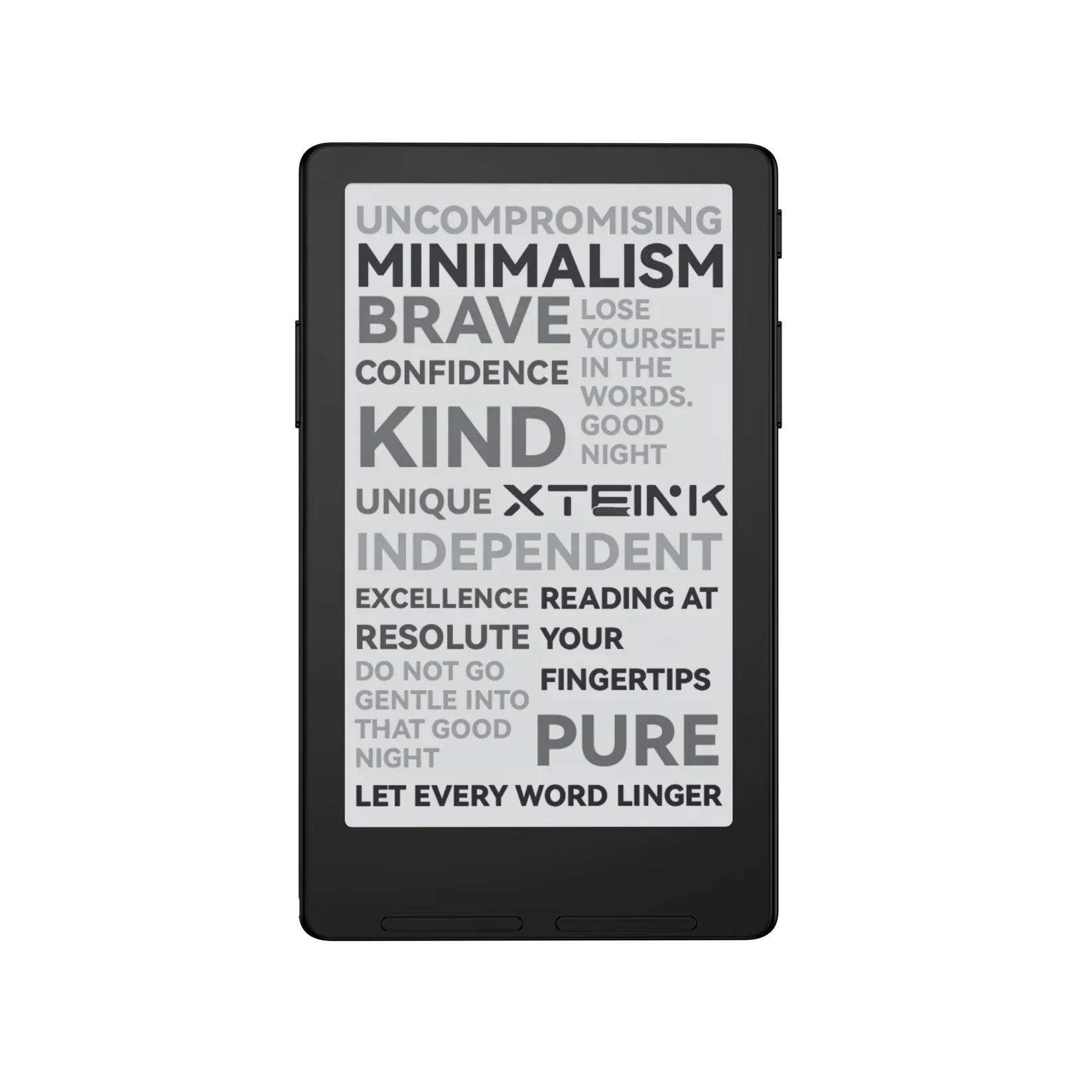
In an era dominated by hyper-connected smartphones, pervasive notifications, and endless digital noise, a quiet counter-revolution is taking place in the consumer electronics market. Modern consumers are increasingly seeking out "dumbed-down" technology—devices intentionally stripped of multi-tasking capabilities to help reclaim their attention spans. Enter the XTEINK X4 Classic (also widely recognized as the X4 V2). This ultra-portable, pocket-sized E Ink e-reader is designed specifically for distraction-free, on-the-go reading.
As a streamlined second-generation iteration of the original X4, the X4 Classic sheds complex smartphone-like features and experimental operating bloat. Instead, it doubles down on a lightweight, highly tactile reading experience that fits easily into the palm of a hand or the coin pocket of a pair of jeans. Featuring a compact 4.3-inch E Ink display, a featherlight chassis weighing a mere 68 grams, and unique physical navigation mechanics—including an optional motion-activated shake-to-turn feature—the XTEINK X4 Classic represents a fascinating shift in how we consume long-form text on the move.
Priced accessibly at $79, this niche gadget targets book lovers, minimalists, and digital minimalists who want a dedicated literary companion without the temptation of social media apps, emails, or web browsers. This report provides a comprehensive examination of the XTEINK X4 Classic, exploring its design philosophy, technical specifications, unique interface mechanics, market positioning, and the broader future outlook of the micro-e-reader landscape.
Read Also
Detailed Chronology: From the Original X4 to the Streamlined Classic V2
The journey toward the XTEINK X4 Classic began with the industry’s growing realization that standard 6-inch and 7-inch e-readers, while comfortable at home or on a bedside table, are often too cumbersome for truly spontaneous, micro-moment reading. Waiting for a bus, standing in line at a grocery store, or taking a quick elevator ride are moments typically squandered staring at glowing smartphone screens.
The Genesis of the Form Factor
When the original XTEINK X4 entered the market, it captured the attention of tech enthusiasts looking for an alternative to mainstream pocket-sized devices. However, like many first-generation products, it experimented with various software configurations, attempting to bridge the gap between a conventional e-reader and a mini Android device.
Feedback from early adopters, community reviewers, and digital minimalists highlighted a clear desire: users did not want a pocket-sized Android tablet with a slow E Ink screen. They wanted a dedicated, hyper-responsive, single-purpose reading tool.
Refining the Vision: The X4 Classic (V2)
Listening closely to user sentiment, XTEINK engineered the X4 Classic as a direct response to these critiques. The second version systematically stripped away the non-essential layers of software complexity. By removing smartphone-adjacent features, the engineering team achieved several critical milestones:
- Drastic Weight Reduction: Streamlining the internal architecture allowed the device to drop down to an astonishing 68 grams.
- Enhanced Energy Efficiency: Removing resource-heavy background processes optimized the battery management of the newly integrated ESP32-S3 processor.
- Simplified Hardware Layout: The design was refined to emphasize tactile physical buttons, magnetic mounting capabilities, and a distraction-free user interface.
This iterative refinement transforms the X4 Classic from an experimental gadget into a polished, reliable consumer product tailor-made for the modern commuter.
Supporting Context & Metrics: Hardware, Ergonomics, and Specifications
To truly understand what makes the XTEINK X4 Classic a unique proposition in the modern e-reader market, one must look closely at its physical and technical specifications.
Display and Ergonomics
At the heart of the device is a 4.3-inch E Ink display. While diminutive compared to the standard 6-inch or 8-inch screens found on Amazon Kindles or Kobo devices, this screen size is mathematically optimized for portability. It renders text with crisp, high-contrast clarity characteristic of electrophoretic displays, presenting words in a soothing grayscale format that mimics physical paper.
Notably, the device omits both a touchscreen and a front light. While this might sound like a limitation to consumers accustomed to backlit tablets, it is a deliberate design choice with multiple benefits:

- Zero Glare & Ultimate Paper-Like Feel: Without a front-light layer sitting over the electronic paper, the optical clarity is significantly enhanced, resembling genuine printed text under ambient light.
- Extended Battery Longevity: Backlights are notorious power drains on e-readers. Eliminating them allows the modest battery to last for weeks on a single charge.
- Purely Tactile Interaction: Relying strictly on physical buttons forces a more deliberate, tactile interaction with the device, reducing accidental inputs.
Weighing just 68 grams and built into an ultra-thin body, the X4 Classic can be held effortlessly for hours using only two fingers, making one-handed reading entirely fatigue-free. Furthermore, the inclusion of a magnetic backplate enables seamless integration into everyday carry (EDC) setups, allowing users to snap the device onto magnetic mounts or compatible folios.
Internal Hardware and Performance
Beneath its minimalist exterior, the XTEINK X4 Classic is powered by an upgraded ESP32-S3 processor. Known for its robust performance-to-power ratio in IoT and embedded devices, the chip handles text rendering, file management, and wireless communication with impressive efficiency.
- Battery Capacity: A 920 mAh battery fuels the system. Given the low-power nature of the E Ink screen and the efficient ESP32-S3 chipset, this capacity translates into exceptionally long intervals between charges.
- Storage Capacity: The device comes equipped with 16 GB of internal storage, a generous allocation for a text-only reader capable of holding tens of thousands of books. For extreme bibliophiles, storage is further expandable via a built-in microSD card slot.
- File Format Support: The X4 Classic accommodates all standard reading formats, including EPUB, TXT, MOBI, and PDF, ensuring users are not locked into a proprietary ecosystem and can freely sideload their personal libraries.
- Connectivity: Built-in Wi-Fi and Bluetooth are included for seamless wireless file transfers and accessory pairing.
- Charging & Data Transfer: Eschewing the conventional USB-C port, the XTEINK X4 Classic utilizes pogo pins and a magnetic pogo-pin connection, reinforcing its sleek, port-minimalist industrial design.
Official Statements and Interface Mechanics: The Art of the Page Turn
One of the standout highlights of detailed expert reviews regarding the XTEINK X4 Classic is its innovative approach to user interaction. Navigating a pocket-sized device with one hand while standing on a crowded subway train or holding a coffee cup presents unique ergonomic challenges. XTEINK has addressed this through a dual-input page-turning philosophy.
The Shake-to-Turn Innovation
For ultimate hands-free or minimal-movement convenience during high-mobility scenarios, the X4 Classic features an accelerometer-driven motion control. Users can simply shake the device to advance to the next page. This allows for fluid, one-handed reading during busy commutes when shifting a thumb to press a button might be inconvenient.
However, recognizing that not all users appreciate motion-activated controls—or perhaps worried about accidental triggers while walking—XTEINK has built software flexibility into the system: the shake-to-turn feature can be completely disabled through the settings menu.
Physical Tactile Navigation
For readers who prefer a traditional, grounding tactile experience, the device incorporates front and side physical buttons. These clicky, responsive keys provide satisfying feedback, making the X4 Classic a cozy companion for deep-reading escapes in quiet environments. Whether curled up in an armchair or unwinding before sleep, the physical buttons restore the ritualistic feel of turning a physical page.
The Anti-Smartphone Philosophy
Industry analysts reviewing the X4 Classic emphasize its role as an intentional antidote to digital saturation. Michael Kozlowski, editor-in-chief at Good e-Reader, frequently highlights how consumers are experiencing screen fatigue from multi-functional devices. By deliberately leaving out web browsers, notification centers, social media apps, and complex operating systems, the X4 Classic eliminates the cognitive friction that comes with modern screens. When you pick up the X4 Classic, you are committing to reading—and nothing else.
Future Outlook: The Viability of Micro-E-Readers in a Multi-Screen World
As the consumer electronics market moves deeper into the latter half of the decade, the trajectory of dedicated e-readers points toward extreme specialization. While large-format e-readers and note-taking tablets (such as the Kindle Scribe, Kobo Elipsa, and various Boox devices) continue to dominate the productivity sector, a parallel sub-market is emerging for ultra-portable, single-purpose companions.
The Rise of Digital Minimalism
The success of devices like the XTEINK X4 Classic at an accessible $79 price point signals a broader cultural appetite for digital minimalism. Consumers are increasingly willing to carry specialized single-task tools if those tools improve their mental well-being, protect their attention spans, or reduce screen addiction.
Potential Future Iterations
Looking ahead, what can consumers expect from the micro-e-reader category?
- Refined Magnetic Ecosystems: With the inclusion of magnetic backplates and pogo-pin charging, future accessories could include specialized minimalist wallets, modular battery packs, or ultra-thin leather sleeves tailored for EDC enthusiasts.
- Open-Source Software Communities: Because devices powered by chips like the ESP32-S3 often attract enthusiastic developer communities, we may see custom firmware variations that unlock new reading tools, font customizations, or integration with open reading platforms (like Calibre wireless sync).
- Mainstream Adoption of Pocket Form Factors: As major manufacturers focus heavily on color E Ink and large screens, independent brands like XTEINK are carving out a profitable, passionate niche by serving the underserved micro-reading demographic.
Conclusion
The XTEINK X4 Classic (X4 V2) is far more than a budget gadget; it is a carefully curated statement on how technology can be scaled down to enhance human focus. By combining a featherlight 68-gram chassis, a crisp 4.3-inch E Ink display, physical tactile buttons, innovative shake-to-turn mechanics, and expandable 16GB storage, XTEINK has delivered an exceptional tool for the modern reader on the move. Available now for $79 directly through the official XTEINK website, the X4 Classic invites users to step off the digital treadmill, slip a library into their pocket, and rediscover the pure, unadulterated joy of reading anywhere life takes them.




Comments
Facebook App ID not configured. Please add it in the Customizer.