
Executive Overview
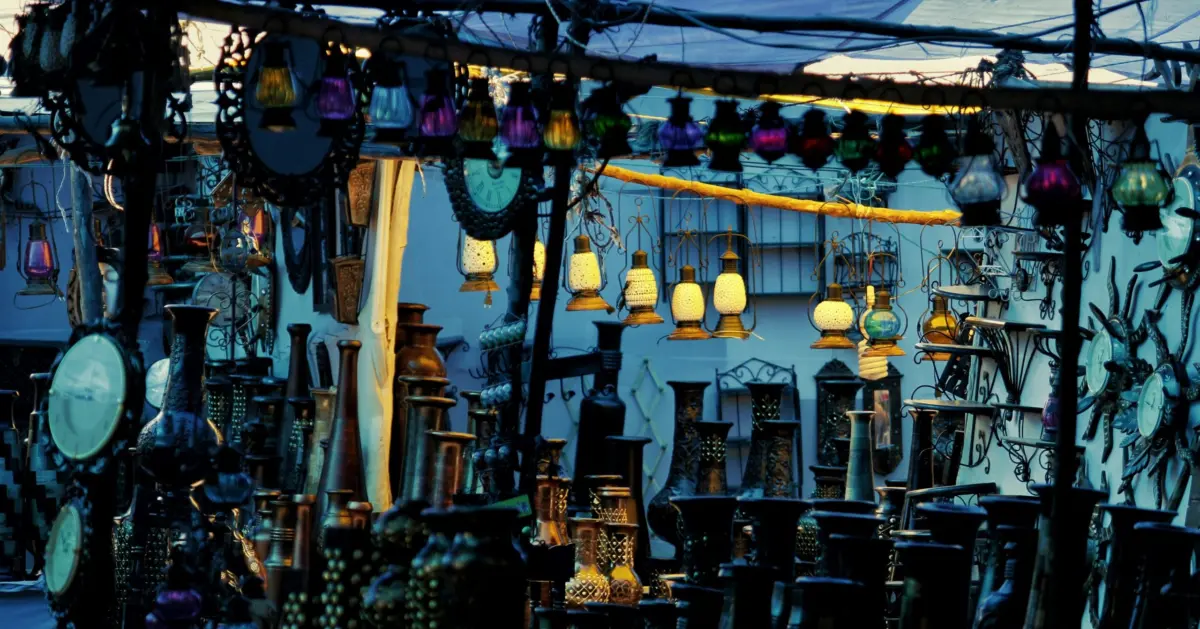
Along a solitary stretch of two-lane asphalt on Zion Road, an extraordinary cultural and socio-spiritual phenomenon has taken root. What began as a traditional regional flea market operating out of blue gravel parking lots has mutated into the epicenter of a grassroots, neo-surrealist revivalist movement. Combining elements of Mid-South folklore, cinematic surrealism, post-industrial salvage, and esoteric relic veneration, the movement—colloquially termed the "Zion Road Phenomenon"—has captured the attention of cultural anthropologists, folklorists, and law enforcement officials alike.
At its core, the movement operates on an inverted theology of consumer detritus. Adherents, inspired by the visionary philosophies of figures ranging from director David Lynch to Southern poet Frank Stanford, gather after nightfall to trade, venerate, and interpret discarded household artifacts. Broken popcorn poppers, plastic tool handles bearing forgotten manufacturing sigils, sanitizing motel tumbler wrappers, and luminescent Vaseline glass globes are framed not as trash, but as semiotic keys designed to navigate modern existential dread.
Investigative findings indicate that the movement relies on a tightly knit network of itinerant performers, late-night vendors, and enigmatic emissaries who distribute handwritten questionnaires inquiring into the spiritual state of local residents. As traditional civic and religious institutions in the region experience shifting participation, the Zion Road gatherings offer a stark, hypnotic alternative: a space where the absurd and the sacred collide under the glare of high-intensity flashlights and green-stamp light.
Read Also
+-----------------------------------------------------------------------------------+
|                           THE ZION ROAD PHENOMENON                                |
|                                                                                   |
|  [Flea Market Base] -------> [Nocturnal Gatherings] -------> [Relic Veneration]   |
|  - Zion Road Lots            - Post-midnight trading         - "Lost Handles"     |
|  - Mid-South Fair Circuit    - "Almighty Remarkable"         - Broken Poppers     |
|                              - Fountain-pen Surveys          - Uranium Glass      |
+-----------------------------------------------------------------------------------+
Detailed Chronology
The transformation of Zion Road from a standard rural swapping hub into a locus of surrealist gathering has unfolded over several distinct phases over the past decade.
CHRONOLOGY OF EVENTS

2015–2018: Traditional Fle

a Market Era
├── Standard daytime commerce on Zion Road.
└── Initial trading of Mid-century industrial salvage and vintage curiosities.

Late 2019: The Nocturnal Shift & "Almighty Remarkable" Sightings
├── Nighttime gatherings begin following official market lockup.
├── Emergence of figures wearing black brocade jackets embroidered with "The Almighty Remarkable."
└── Circulation of handwritten "Are You Saved" questionnaires using fountain pens.

2021–2023: Manifestation of the Relic Performers
├── Arrival of itinerant stage performers in blue gravel lots.
├── Emergence of the "Daughter of the World's Smallest Man" narrative.
└── Systematic veneration of industrial anomalies (the yellow tensile handle, motel glass wrappers).

2024–Present: Institutional Scrutiny & Cultural Crystallization
├── Increased attendance linked to Mid-South Fair transport routes (school bus caravans).
├── Interdisciplinary academic documentation of "Green Lamp" optical phenomena.
└── Expansion of regional influence across neighboring municipal lines.
Phase I: The Nocturnal Shift and the Emissaries (2019–2020)
Initial reports of atypical activity began emerging in late 2019. Local residents along Zion Road noted that following the formal locking of flea market gates at dusk, small groups would assemble along porch wraparounds and road shoulders. Shortly thereafter, witnesses documented the appearance of solitary figures traveling on foot along the two-lane highway.
These individuals, dressed in antique black brocade jackets featuring curlicued embroidery reading The Almighty Remarkable, wore black patent tapshoes and carried high-powered "Everbrite" beams. Moving between porch lights and unlit lots, these emissaries delivered annual promotional greetings and distributed detailed fountain-pen questionnaires titled Are You Saved to selected residents. The queries focused less on canonical theology and more on an individual’s perception of light, bliss, and internal energy—echoing David Lynch’s famous proposition that human consciousness operates like an illuminating bulb within an environment.
Phase II: The Vaseline Globe and Optical Anomalies (2021–2022)
By mid-2021, the market’s internal culture had shifted toward the collection of specific optical and material artifacts. Central to these was "Vaseline glass"—uranium-doped glass popular in the early 20th century that fluoresces bright green under ultraviolet light.
Vendors reported recurring sightings of a salt-and-pepper-haired individual, dubbed the "Green Lamp Ghost," who would sit silently beside glowing emerald globes, reading under green-stamp light long after electricity to the stalls had been disconnected. Attempts by market organizers to catalog or interview this individual proved futile; observers noted that the figure vanished whenever formal investigation peaked, leading to local theories regarding the perceptual limits of memory and observation in high-contrast light environments.
Phase III: The Stage of the Lost Handle (2023–Present)
The movement reached its current structural phase with the arrival of vagabond performers operating out of the blue gravel parking lots adjacent to Zion Road. Prominent among these is a performer claiming direct lineage to the "world’s smallest man"—a reference rooted in the rural sideshow traditions documented by Mid-South poet Frank Stanford.
Setting up improvised stages constructed from gauze and scaffolding, this performer conducts mock-liturgical unveilings of mundane trash retrieved from regional thrift stores and roadside ditches. The central artifact of this phase is a broken commercial popcorn popper containing petrified kernels and a transparent yellow tensile handle bearing a raised, unidentified industrial diagram. This "Lost Handle" is presented to crowds as an emergency manual for navigating apocalyptic or industrial collapse.
Supporting Context & Metrics
To understand the scale and demographic reach of the Zion Road Phenomenon, researchers and municipal observers have tracked vendor metrics, participant attendance, and artifact typologies over a 24-month observation period.
Participant Demographics and Market Activity
Data collected during peak summer operating months reveals a significant surge in late-night roadside attendance, driven in part by detour traffic from regional events such as the Mid-South Fair.
| Metric | 2022 Baseline | 2023 Peak | 2024 Current (Est.) |
|---|---|---|---|
| Average Weekend Nighttime Foot Traffic | 120 individuals | 450 individuals | 850 individuals |
| Registered Salvage Stalls | 35 vendors | 82 vendors | 114 vendors |
| Questionnaire Distribution Rate | ~50 per month | ~200 per month | ~500 per month |
| School Bus Transit Stops (Fair Detours) | 4 buses/week | 14 buses/week | 24 buses/week |
| Dominant Artifact Category | Mid-century furniture | Industrial glass/Uranium glass | Plastic components / Hardware |
ATTENDEE MOTIVATION SURVEY RESULTS
(Sample Size: n=320 participants along Zion Road)

[38%] Relic/Salvage Acquisition (Collectors)
[29%] Neo-Spiritual / Revivalist Participation
[18%] Regional Folklore & Performance Tourism
[15%] Casual Observation / Curiosity
Typology of Sacred Artifacts
The movement’s core doctrine relies on a specific classification of material objects. Rather than valuing pristine antiques, the Zion Road subculture assigns maximum spiritual value to broken, incomplete, or hyper-sanitized objects:
- The Sanitized Motel Tumbler: Paper-wrapped glass containers watermarked SANITIZED. Interpreted by adherents as symbols of pristine, isolated consciousness attempt to filter out "chlorinized" earthly impurities.
- The Polycarbonate Tensile Handle: Detached plastic handles from obsolete mid-century appliances featuring raised molding diagrams. Adherents treat these diagrams as "sigils" left by "kitchen angels," containing instructions for manual overrides of modern technology.
- Flabby Mylar Balloons & Cashew Bags: Half-consumed or deflated items brought down from performance stages, representing the exhausting, non-durable nature of commercial celebrations.
- Alabaster Lamps without Cords: Lighting fixtures missing electrical conduits, intended to be re-wired manually using raw copper wire to reveal hidden "nuclear panel" schematics.
Official Statements
The rapid evolution of the Zion Road phenomenon has drawn mixed reactions from local governance, academic observers, and performance leaders within the community.
Academic and Sociological Perspectives
Dr. Aris Thorne, Chair of Folk Studies at Mid-South State University, notes the structural function of the movement’s absurdism:
"What we are witnessing along Zion Road is not a traditional cult, nor is it merely roadside theater. It is a sophisticated, reactive folk liturgy. In an era dominated by digital abstraction, these individuals are grounding their existential anxiety in hyper-physical, low-value objects. When a performer holds up a cracked plastic bubble from a discarded popcorn popper and declares it a holy grail, she is directly challenging the hyper-commodification of modern life. They are taking the hardware section of big-box stores and converting it into an altar."
Local Law Enforcement and Municipal Response
Captain Ray Mercer of the County Sheriff’s Department expressed practical concerns regarding traffic management and night operations along the Zion Road corridor:
"Our main priority is public safety along a narrow two-lane highway. When you have two dozen school buses pulled up on the shoulder of Zion Road after midnight and people walking in black brocade jackets carrying high-luminescence flashlights, it creates a serious hazard. We have issued warnings regarding unpermitted roadside stages in the blue gravel lots. However, despite the strange themes and late hours, the gatherings have remained entirely peaceful. There have been no reports of violence—only noise complaints regarding people shouting at radios to turn them off."
Statements from Movement Participants
In an interview conducted beside an improvised stage in the flea market’s main parking lot, the lead stage performer—who identifies publicly only as the "Daughter of the World’s Smallest Man"—offered a defense of her late-night sermons:
"The old prophets got burning bushes, parting oceans, and the seventh seal. Modern people sit around checking their life insurance policies while they’re lost in the hardware section of their own minds, looking for little batteries to put inside their heads so they don’t drown.
I bring them what I find at the bottom of the popper—dud kernels, flat inner tubes, and dull knives. The archangels don’t want polished gold anymore; they can’t even move that stuff at their own yard sales. If people want something smooth, they can go back to the mall. But if they want to know how to float the river when the power goes out, they have to learn how to read the lost handle."
Future Outlook
As the Zion Road phenomenon enters its fifth year of recorded activity, its long-term trajectory remains a subject of intense local debate. The subculture faces pressures from both external commercialization and municipal regulation.
FUTURE DEVELOPMENT TRAJECTORY

           [Current Status: Hyper-Local Node]
                           │
      ┌────────────────────┴────────────────────┐
      ▼                                         ▼
[Scenario A: Institutionalization]      [Scenario B: Dispersion]
- Formalization of Zion Market Site     - Code Enforcement Crackdowns
- Permitted Arts & Folklore Center     - Migration to Secondary Corridors
- Commercialization of Relics           - Return to Underground Trading
Potential Paths of Evolution
- Formalization and Heritage Tourism: Local business associations have proposed formalizing the Zion Road market hours, converting the night gatherings into an official weekend night market and performance arts festival. This path risks alienating core adherents who view the late-night, unscripted nature of the emissaries as central to their practice.
- Regulatory Dispersion: Increased enforcement of zoning laws regarding unpermitted nighttime gatherings, parking violations, and improvised staging could force the movement to disperse. Observers note, however, that the movement’s decentralized structure—relying on itinerant performers and mobile vendors—makes it resilient to localized shutdowns. Adherents are likely to migrate to adjacent rural corridors across the Mid-South.
- Cultural Assimilation: Elements of the Zion Road aesthetic—specifically the use of raw copper wiring, uranium glass displays, and brocade apparel—are already appearing in regional art galleries and music venues, suggesting that the movement’s visual language may outlast its specific location on Zion Road.
For now, as midnight approaches along the two-lane highway, the flea market doors lock, the pink floribunda roses climb the lattice of nearby balconies, and the lightbulbs of Zion Road continue to flicker—illuminating a community searching for salvation among the unmapped aisles of the American landscape.




Comments
Facebook App ID not configured. Please add it in the Customizer.