
Executive Overview
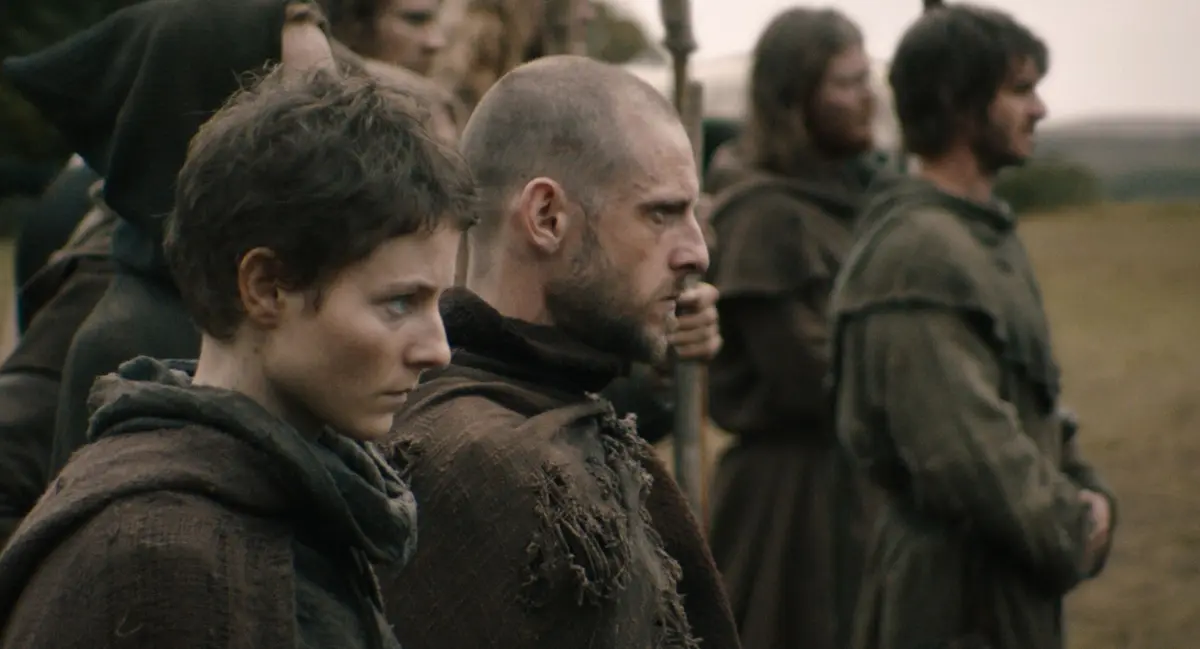
Director Paul Greengrass has long operated as cinema’s foremost chronicler of institutional collision and kinetic chaos. From the Belfast streets of Bloody Sunday to the hijacked skies of United 93, Greengrass’s signature hand-held aesthetic has traditionally thrived on the immediate, terrifying mechanics of real-world crisis. In his latest feature, The Uprising, Greengrass turns his lens backward by six centuries, landing in the mud, blood, and economic ruin of fourteenth-century England. Starring Andrew Garfield as a nameless, grief-stricken agrarian laborer known simply as "Ploughman," the film offers a brutal, docudrama-style re-creation of the Peasants’ Revolt of 1381.
However, The Uprising has emerged as more than a high-concept historical drama; it has become a lightning rod for artistic and promotional controversy. Centered on the violent pushback of an impoverished populace against an oppressive royal tax regime, the film attempts to bridge medieval feudalism with burning twenty-first-century anxieties surrounding wealth disparity and corporate oligarchy.
Yet, as the project neared its global release, a stark divide emerged between its American and British distribution campaigns. Focus Features, handling the U.S. release, marketed the film under the title The Uprising: The Rise of Robin Hood, positioning it as an origin story for England’s most famous folklore hero. Concurrently, the film’s U.K. distributor, Entertainment Film Distributors, flatly denied any connection to the Robin Hood mythos—pointing out the two-century historical discrepancy between King Richard II’s reign and the traditional Richard the Lionheart outlaw legends.
Read Also
This investigative report dissects the artistic composition, historical mechanics, distribution fracturing, and sociopolitical resonance of The Uprising, evaluating how a film anchored in 1381 reflects the fractures of contemporary global economics.
Detailed Chronology
[1346–1353] The Black Death eradicates ~50% of England's population; severe labor shortages ensue.
       │
[1381 Spring] Richard II's council levies third Poll Tax to fund the Hundred Years' War.
       │
[1381 June] Peasants' Revolt explodes; "Ploughman" joins Wat Tyler & John Ball's march to London.
       │
[2022] Paul Greengrass announces historical project originally titled "The Hood".
       │
[2025–2026] Film re-titled "The Uprising"; starring Andrew Garfield, Cosmo Jarvis, Jamie Bell.
       │
[Pre-Release] U.S. distributor (Focus Features) rebrands title; U.K. distributor publicly rejects link.
The 1381 Narrative Arc: From Mud to Mass Revolt
To understand the narrative momentum of The Uprising, one must trace the timeline of the historical insurrection it dramatizes—a period when a decimated working class attempted to break the bonds of feudal serfdom.
- The Prelude of Pestilence and Taxation (1348–1381): Decades prior to the film’s opening, the Black Death swept across the British Isles, wiping out nearly half the population. The resulting labor shortage gave surviving peasants unprecedented bargaining power. In response, the ruling class enacted rigid labor laws to suppress wages. By 1381, the council advising fourteen-year-old King Richard II (played in the film by Woody Norman)—depleted by the protracted Hundred Years’ War with France—introduced a draconian third Poll Tax targeting peasants rather than wealthy merchants or the Church.
- The Spark of Violence: The film opens on Ploughman (Garfield), a farmer broken by grief following the deaths of his wife and children to the plague. When royal tax collectors arrive to seize what little remains of his village, Ploughman violently beats an officer to death. This act of desperation ignites local rage, transforming a personal tragedy into a collective uprising.
- The March on London (June 1381): Joining forces with Wat Tyler (Cosmo Jarvis), a pragmatic military veteran, and John Ball (Jamie Bell), a radicalized, excommunicated priest, Ploughman marches alongside thousands of armed laborers toward the capital. Armed with sharpened scythes and sickles, the rebel army demands the abolition of serfdom, fair wages, and an audience with the young King on the banks of the River Thames.
- Negotiation, Radicalization, and Execution: While Richard II agrees to grant charters ending serfdom—drafted in a notable subplot by a sympathizing royal scribe (Sky Yang)—the radical wing led by Ball and a grieving rebel named Alyce (Thomasin McKenzie) demands bloody retribution. The rebels storm the Tower of London, executing royal treasurer Sir Robert Hales (Tom Hollander) and Archbishop of Canterbury Simon Sudbury (Stephen Dillane).
- The Fractured Epilogue: The narrative closes on a sobering note. The brutal purge by radical elements delegitimizes the rebels’ legal gains, setting up a crushing counter-offensive by the crown. A year-long coda depicts Ploughman, now clad in weathered green rags and leading a hidden archer militia in the forest, cementing his transition into an outlaw archetype.
The Production and Marketing Evolution
The development trajectory of The Uprising reflects a parallel narrative of shifting studio strategies and branding ambiguity:
- 2022 (Project Inception): Greengrass announces a historical drama originally titled The Hood, pitched as a grounded, gritty examination of medieval peasant rebellion with implicit ties to Robin Hood folklore.
- 2024–2025 (Principal Photography & Post-Production): Retitled The Uprising, the project brought on cinematographer Pål Ulvik Rokseth to capture the murky, hand-held realism characteristic of Greengrass’s filmography.
- Late Pre-Release (The Branding Schism): Focus Features released promotional trailers in North America appending the subtitle The Rise of Robin Hood. Almost immediately, European distributors issued clarifying statements distancing the film from traditional Robin Hood intellectual property, causing widespread confusion among film critics and audiences alike.
Supporting Context & Metrics
Historical and Socioeconomic Context
The economic climate depicted in The Uprising mirrors structural economic pressures that continue to dominate contemporary political discourse. The table below illustrates the socio-demographic realities of 1381 England as portrayed in the film’s historical backdrop:
| Metric / Parameter | 14th-Century Historical Baseline | Cinematic Representation in The Uprising |
|---|---|---|
| Demographic Impact | ~30%–50% mortality rate from Black Death | Ploughman’s family graves; abandoned farmland |
| Tax Burdens | Third Poll Tax (1381) levied flatly per head | Royal officials extorting impoverished villages |
| Political Power Structure | 14-year-old monarch guided by aristocratic council | Feckless King Richard II manipulated by advisers |
| Rebel Demands | Abolition of serfdom, wage ceilings, tax relief | Drafted royal charters ending feudal servitude |
| Rebel Escalation | Execution of Lord Chancellor & Treasurer | Beheading of Sudbury (Dillane) and Hales (Hollander) |
Cinematic Metrics and Aesthetic Signature
Greengrass’s visual style has undergone an evolution throughout his career. The Uprising marks his first narrative feature shot on English soil since his 1998 romantic comedy The Theory of Flight, breaking a long stretch of international docudramas (Bloody Sunday, United 93, Captain Phillips) and contemporary American thrillers (The Lost Bus).
  [Greengrass Stylistic Spectrum]

  Documentary Realism  ◄──────────────────────────────►  Stylized Hollywood Action
  (Bloody Sunday, 2002)         (The Uprising, 2026)        (The Bourne Ultimatum, 2007)
  • Unscripted feel            • Rigorous blocking          • High-speed editing
  • Raw handheld kineticism    • Drone/Crane wide shots     • Highly choreographed
  • Historical immediacy       • Period production design  • Franchise framing
Critics note that while Bloody Sunday utilized erratic, handheld cameras to capture genuine historical panic, The Uprising alternates between chaotic action and static, pre-arranged drone compositions—such as overhead views of medieval London—that somewhat dilute the raw, documentary-style immersion.
Official Statements
The release of The Uprising has elicited significant commentary from its lead actor, creative team, and industry observers regarding its thematic political message and erratic marketing strategy.
The Lead Actor’s Perspective
Andrew Garfield, who transitioned from playing tech magnate Sam Altman in Artificial to the destitute Ploughman, addressed the film’s political subtext directly during promotional press appearances.
"I am what I do. Ploughman isn’t a superhero; he’s a man pushed beyond the absolute limit of human endurance by a system designed to bleed him dry. We are living through a period of staggering economic inequality today, and I hope any billionaire who sits down to watch this movie comes away scared shitless by what happens when working people are pushed too far."
— Andrew Garfield, Lead Actor ("Ploughman")
The Branding and Distribution Clash
The conflict between international distributors regarding the film’s identity highlights an unusual marketing disconnect:
- Focus Features (U.S. Release Statement):
"With ‘The Uprising: The Rise of Robin Hood,’ we are offering audiences a visceral look at the historical conditions that gave birth to legendary resistance. It is an origin narrative for the modern folk hero." - Entertainment Film Distributors (U.K. Press Clarification):
"This film is a historical dramatization of the 1381 Peasants’ Revolt under King Richard II. It is not an adaptation of the Robin Hood mythos, which historically and culturally belongs to the era of Richard the Lionheart two centuries earlier."
Critical Receptions
Film critics have zeroed in on the tension between Greengrass’s gritty action direction and the film’s structural ambiguity:
"The film doesn’t mourn the deaths of Richard II’s corrupt councillors, but it forcefully demonstrates how righteous fury can decay into self-destructive bloodlust. Yet, by trying to secretly double as a Robin Hood origin story, ‘The Uprising’ loses the sharp historical authority that made Greengrass’s early work so singular."
— Film Industry Analysis
Future Outlook
Cultural and Political Resonance
The Uprising arrives at a moment of heightened public debate surrounding wealth accumulation, labor rights, and tax policy. By framing medieval feudalism through the lens of modern populist revolt, the film aims to resonate with contemporary audiences who feel alienated by economic systems favoring the ultra-wealthy.
       [1381 Feudal Agitation]                  [21st-Century Populism]
  ─────────────────────────────────        ─────────────────────────────────
  • Flat Poll Taxes on Peasantry           • Regressive Consumption Taxes
  • Royal Wealth Concentration             • Expanding Corporate Oligarchies
  • Land-Bound Serfdom                     • Stagnant Real Wages & Debt
  • Violent Scythe & Sickle Protests       • Mass Political Movements & Strikes
Commercial and Genre Legacy
The commercial performance of The Uprising will likely influence how major studios package historical epics moving forward. The attempt to rebrand a complex historical drama into a recognizable "IP origin story" (Robin Hood) points to a broader trend in Hollywood distribution, where original historical narratives are often tied to established legends to minimize box-office risk.
Whether The Uprising is remembered as a uncompromising chronicle of medieval labor resistance or a flawed studio hybrid, Paul Greengrass’s entry into period cinema demonstrates that while centuries may pass, the battle between the governed and those who govern remains unchanged.


Comments
Facebook App ID not configured. Please add it in the Customizer.