For well over two millennia, Homer’s The Odyssey has stood as a monumental pillar of Western literature. Yet, the release of Christopher Nolan’s cinematic blockbuster adaptation has once again ignited a timeless, circular debate: Is there an authentic, original version of the epic poem, and how closely must modern adaptations adhere to the elusive intentions of a poet who may never have even written them down?
Spanning centuries of textual scholarship, oral performance traditions, and cultural reinvention, the journey of Odysseus—the cunning king of Ithaca navigating a ten-year voyage home—defies the notion of a single, immutable text. From the early papyrus fragments of Hellenistic Egypt to modern English translations by scholars like Emily Wilson, The Odyssey has always been a fluid, living tradition. This investigation explores the true origins of the epic, the mechanisms of oral storytelling, the historical stabilization of the text, and how contemporary culture continues to wrestle with the ghosts of Homeric antiquity.
Detailed Chronology: The Evolution of The Odyssey
To understand the text we recognize today, classicists must piece together a historical timeline that stretches back well before the invention of the Greek alphabet.
2nd Millennium B.C.E. (The Bronze Age Roots): The material culture described within the epics—such as the boar’s-tusk helmet worn by Odysseus—reflects artifacts from the Late Bronze Age, suggesting that the foundational tales and heroic archetypes began circulating centuries before they were ever committed to writing.
8th to 7th Century B.C.E. (The Era of Composition): Scholars remain deeply divided over authorship. While researchers like Martin West and Richard Janko argue for individual master poets composing The Iliad and The Odyssey during this window, oral-formulaic theorists emphasize that these works crystallized from a rich, pre-existing matrix of sung verse.
6th Century B.C.E. (The Panathenaic Festival): Athenian state-sponsored festivals establish strict rules for the recitation of Homeric poetry. Performers are required to recite the epics in a relay format (in relay, one man following on another), inadvertently standardizing the narrative arc and pushing the disparate oral traditions toward a unified text.
3rd Century B.C.E. (The Library of Alexandria): Scholars at the Library of Alexandria begin collecting and comparing papyrus scrolls, striving to establish an authoritative, standardized Greek text while encountering numerous "wild" or "eccentric" multiform variants.
Early 17th Century C.E. (Entering the English Lexicon): George Chapman publishes the first full English translation of The Odyssey in 1615, sparking generations of poetic inspiration, most famously transfixing John Keats during a sleepless night of reading.
1930s (The Yugoslavian Fieldwork): Harvard classicists Milman Parry and Albert Lord travel to Yugoslavia to record living oral bards, such as Avdo Međedović, conclusively proving that pre-literate epic poetry is constructed through formulas, themes, and metrical constraints rather than rote memorization.
Present Day (The Cinematic and Digital Era): Christopher Nolan releases his blockbuster film adaptation, driving millions of viewers back to bookstore shelves, translation comparisons, and digital archival projects like the Homer Multitext.
Supporting Context & Metrics: The Mechanics of Oral Tradition
The persistence of The Odyssey through oral transmission before the advent of literacy is one of the most remarkable phenomena in human cultural history. For decades, modern readers assumed that epic poems of this length—roughly 12,000 lines—must have been meticulously memorized word-for-word. However, fieldwork conducted by Milman Parry and Albert Lord dismantled this assumption.
The Formulaic Engine of the Bard
In societies without widespread writing, poets rely on structural building blocks to improvise complex narratives at astonishing speeds. Bards in Yugoslavia were observed singing 10 to 20 ten-syllable lines per minute. This feat was accomplished through three primary mechanisms:
Formulas at the Sentence Level: Epithets such as "wise-hearted Odysseus" or "the great tactician" were not chosen purely for poetic flare, but because their metrical properties fit seamlessly into the rhythmic constraints of dactylic hexameter.
Thematic Modules: Storytellers utilized modular themes—such as the assembly of warriors, a hero’s withdrawal from battle, or a ritual feast—adapting and expanding them on the fly based on audience engagement.
Audience Feedback Loops: Performances were deeply interactive. As classicist Casey Dué notes, bards gauged their success by the emotional resonance of the crowd. If listeners wept, the performance was deemed authentic to the tradition.
Translating Polytropos
The fluidity of the epic is mirrored in its modern translations. The very first adjective Homer uses to describe Odysseus is polytropos—a compound of poly ("many") and tropos ("turn"). Over the centuries, translators have wrestled with how to render this ambiguity into English:
George Chapman (1615): Focused on wisdom and wandering ("The man, O Muse, inform, that many a way / Wound with his wisdom…").
Robert Fitzgerald (1961): Highlighted tactical skill ("…that man skilled in all ways of contending").
Robert Fagles (1996): Emphasized physical and psychological journeys ("…the man of twists and turns").
Emily Wilson (2017): Opted for stark psychological complexity ("Tell me about a complicated man").
Wilson’s choice sparked intense debate among amateur classicists, demonstrating that contemporary audiences still project their own cultural anxieties onto Homer’s indeterminate text.
Official Statements and Scholarly Insights
To navigate the labyrinth of Homeric scholarship, leading classicists emphasize that the pursuit of a singular, pristine "original" is fundamentally misguided.
"The search for the original and authoritative version is something that permeates old traditions," says Joel Christensen, a classicist at the CUNY Graduate Center. "The Odyssey we have has been accepted as The Odyssey, and as authoritative in its own right, for almost 2,500 years—and so I think it’s far more compelling to ask: Why is this The Odyssey we have rather than something else?"
This perspective is echoed by Mary Ebbott of the College of the Holy Cross, who stresses the limitations of historical evidence:
"There’s obviously a notional first time that someone ever told a story about a warrior named Odysseus trying to get home from the Trojan War. But we could never recover that… You really have to work from the evidence you do have to try and come up with the best model that you can."
Regarding the stability of the text, Harvard classicist Gregory Nagy points to the institutional pressures of ancient festivals like the Panathenaea, where state-sponsored competitions gradually phased out radical improvisational recomposition in favor of a fixed, pan-Hellenic standard.
Meanwhile, filmmakers entering the mythic space approach the material not as historians, but as cultural inheritors. Christopher Nolan, speaking on his cinematic adaptation, noted that his vision was shaped by theatrical memories from childhood:
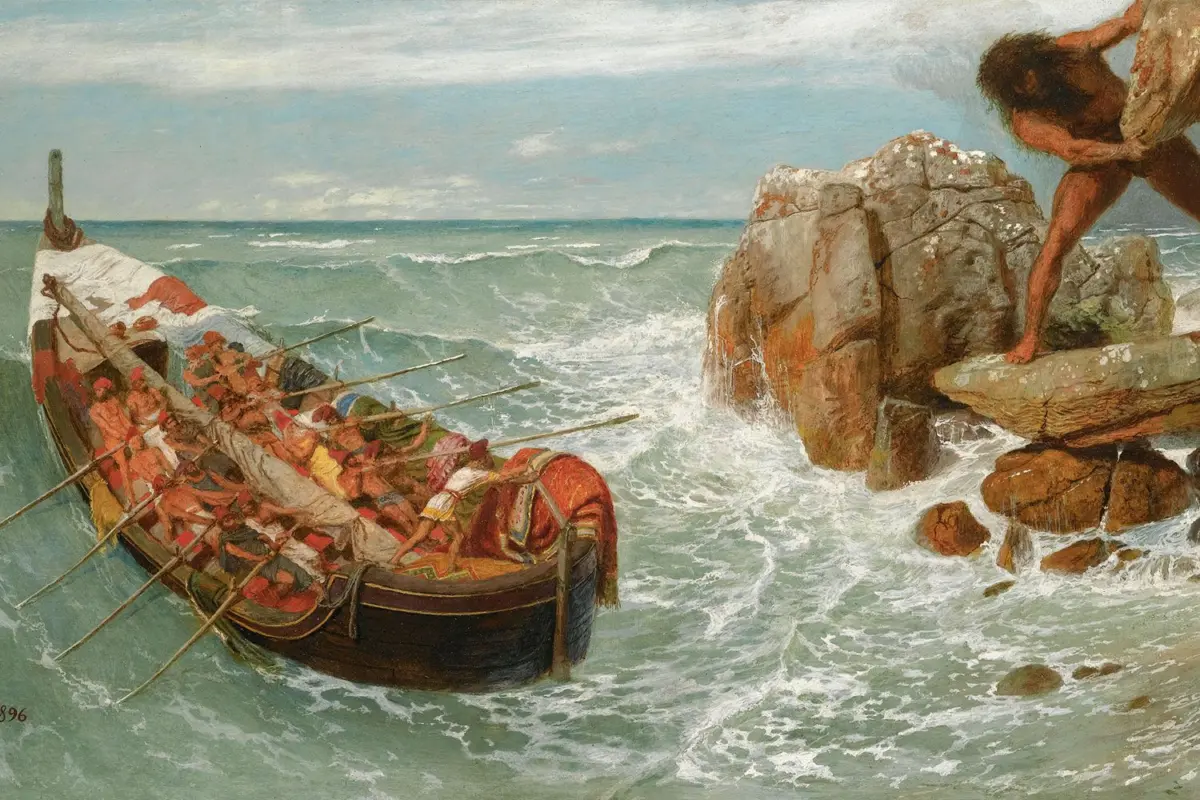
"I remember the horse. I remember them tying Odysseus to the mast. It’s in our bones. I didn’t want to do a revisionist version. I wanted to be true to my expectations of it."
Future Outlook: Digital Humanities and the Enduring Myth
As new adaptations like Nolan’s blockbuster bring classical narratives back into the global spotlight, the academic study of these epics is undergoing a technological renaissance.
Projects like the Homer Multitext, spearheaded by Casey Dué and Mary Ebbott, are revolutionizing how we access antiquity. By digitizing medieval manuscripts—such as the 10th-century Venetus A—and presenting them alongside their rich partextual annotations, these digital archives reject the traditional editorial hierarchy that places a single, supposedly "pure" text at the top of the page. Instead, they invite twenty-first-century scholars and students to explore the full spectrum of multiformity and manuscript variance.
Yet, the fundamental question remains: Do we need to worry about what Homer would think?
The consensus among contemporary classicists is a resounding no. Homer—whether conceived as a single blind bard, a committee of scribes, or an abstraction for centuries of anonymous oral performers—belonged to a tradition defined by reinvention. Every recitation, every translation, every theatrical production, and every Hollywood blockbuster is simply a continuation of the song. As long as audiences continue to weep at the trials of the cunning king of Ithaca, the journey of The Odyssey remains unfinished.

/https://tf-cmsv2-smithsonianmag-media.s3.amazonaws.com/filer_public/38/b1/38b1449a-6437-4ff8-bb93-d552fa88436d/odyssey.jpg)
/https://tf-cmsv2-smithsonianmag-media.s3.amazonaws.com/accounts/headshot/Ellen_Wexler.png)
:focal(750x500:751x501)/https://tf-cmsv2-smithsonianmag-media.s3.amazonaws.com/filer_public/38/b1/38b1449a-6437-4ff8-bb93-d552fa88436d/odyssey.jpg)
/https://tf-cmsv2-smithsonianmag-media.s3.amazonaws.com/filer_public/3c/ad/3cad558e-d4ae-48eb-ad59-0b98a11268cf/gettyimages-530844208.jpg)

/https://tf-cmsv2-smithsonianmag-media.s3.amazonaws.com/filer_public/87/c6/87c68ee5-05fb-438a-b562-a4e04a196a22/funerary_proto-attic_amphora_with_a_depiction_of_the_blinding_-6051448e768428fa5f962702cc267bc7.jpg)
/https://tf-cmsv2-smithsonianmag-media.s3.amazonaws.com/filer_public/44/fa/44fa9e9e-4eb4-407f-9d63-4ec4af904c47/gettyimages-585870020.jpg)
/https://tf-cmsv2-smithsonianmag-media.s3.amazonaws.com/filer_public/f7/89/f7892a5a-f441-4c13-a8c6-025bdd94face/2fk59k8.jpg)


Comments
Facebook App ID not configured. Please add it in the Customizer.