By Greg Daugherty Special to Smithsonian Magazine August 13, 2026
Executive Overview
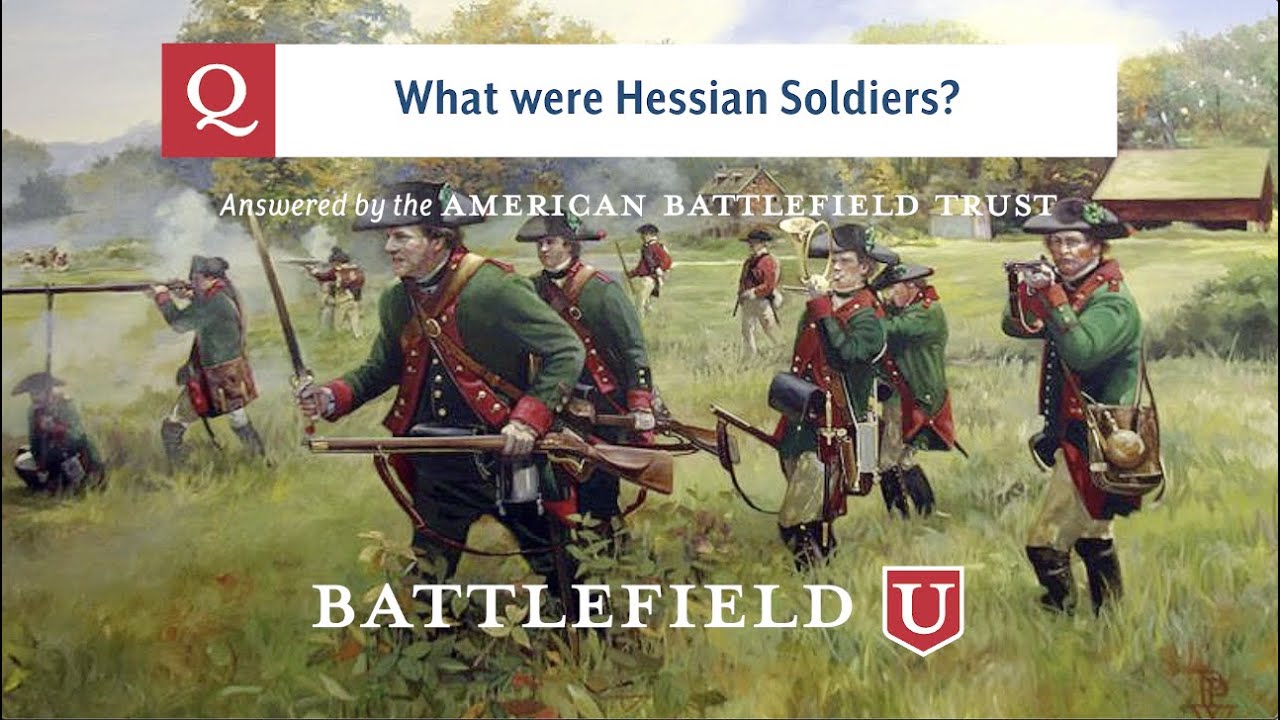
On August 15, 1776, a formidable flotilla of British transport vessels dropped anchor off the coast of Staten Island, New York. Disembarking from the ships were more than 8,600 foreign combatants—the vanguard of a massive contingent of German troops dispatched to suppress the American colonial rebellion. Instantly recognizable by their distinct blue and green uniforms and towering, pointed brass miter caps, these soldiers etched themselves permanently into the folklore of the American Revolution.
For generations, popular history has labeled these fighters as "Hessian mercenaries"—cold-blooded, profit-driven guns-for-hire who fought exclusively for financial gain. Yet, modern historical research paints a profoundly different, more nuanced portrait. Strictly speaking, these troops were not mercenaries at all, but rather state-sanctioned auxiliaries loaned out by sovereign European princes under lucrative subsidy treaties with Great Britain. Furthermore, they were not exclusively from Hesse; the 30,000 German troops who ultimately served in North America hailed from a mosaic of independent principalities.
Far from being invincible shock troops capable of swiftly crushing the Continental Army, these European auxiliaries found themselves thrust into a grueling, protracted conflict that defied all early expectations. Plagued by horrific transatlantic voyages, demonized by brilliant patriot propaganda, and forced to fight a war on unfamiliar terrain thousands of miles from home, the German troops became central actors in the drama of America’s birth. Ultimately, their deployment backfired on the British Crown, hardening colonial resolve, cementing a place in the grievances of the Declaration of Independence, and leaving behind a legacy that permanently altered the demographic fabric of the nascent United States.
Detailed Chronology: From the North Sea to the Delaware
The deployment of German auxiliary forces to the American Colonies was the culmination of mounting frustration within the British government. By October 1775, after more than a year of armed conflict with rebellious colonists, King George III addressed Parliament with a demand for decisive action. Resolved to put a speedy end to the insurrection, the Crown sought outside military assistance. While envoys approached Russia and the Netherlands—only to face rejections from Empress Catherine the Great and Dutch authorities—Britain successfully negotiated subsidy treaties with six autonomous German territories, most notably Hesse-Cassel and Hesse-Hanau.
The mobilization and deployment of these troops followed a meticulous, if harrowing, timeline:
Late December 1775: News of the Anglo-German subsidy treaties begins circulating in colonial American newspapers, sparking immediate outrage and galvanizing patriot resistance.
Mid-April 1776: The first contingent of German troops departs the German port city of Bremerlehe, stopping in Portsmouth, England, before setting sail for North America on May 6.
May–August 1776: Conscripts endure a nightmarish Atlantic crossing. Soldiers are packed so tightly into bunks that they must coordinate collective "turns" to lie on their sides. Rations consist of rotted, worm-infested bread and stagnant water.
August 14, 1776: Just one day before the German disembarkation, the Continental Congress passes a strategic resolution offering land grants and the rights of native citizens to any foreign soldier who deserts the British cause.
August 15, 1776: The first major contingent of 8,600 German soldiers arrives on Staten Island, New York, joining forces already established in Quebec.
August 27, 1776: British and German forces (numbering roughly 20,000 combined) launch a decisive flank attack at the Battle of Long Island, inflicting severe casualties on the Continental Army and forcing George Washington’s clandestine retreat across the East River.
September–November 1776: German troops participate in the British capture of New York City, fighting through the amphibious landings at Kip’s Bay and subsequent engagements at Harlem Heights and White Plains.
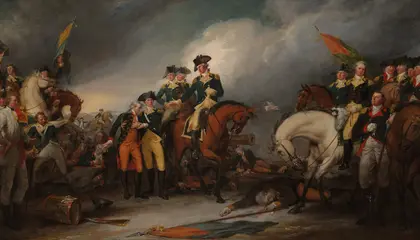
December 25–26, 1776: In a stunning reversal, George Washington leads his army across an icy Delaware River to execute a surprise assault on the Hessian garrison at the Battle of Trenton, capturing nearly 900 prisoners and permanently altering the psychological momentum of the war.
1777–1783: German auxiliaries participate in virtually every major military campaign of the Revolutionary War, enduring immense attrition through combat, disease, and desertion until hostilities formally conclude with the Treaty of Paris.
Supporting Context & Metrics: The Reality Behind the Myth
To understand the impact of the German soldiers, historians must dissect the mechanics of 18th-century European statecraft. The troops were mobilized through formal bilateral treaties. Unlike true mercenaries who individually contracted their swords to the highest bidder, these men were subjects whose services were leased by their reigning princes in exchange for steady British cash subsidies. If a German ruler’s regiment suffered casualties, the prince was contractually obligated to provide replacements to maintain mandated troop strengths. This system drew fierce contemporary criticism, with detractors denouncing the payments as "blood money."
+-----------------------------------------------------------------+
|              THE 30,000 GERMAN TROOPS: THE FINAL TOLL           |
+-----------------------------------------------------------------+
|  Total Deployed (1776–1783) ......................  ~30,000     |
|  Returned Safely to Europe .......................  ~17,300     |
|  Killed in Combat ................................   ~1,200     |
|  Died of Disease / Accidents .....................   ~6,400     |
|  Deserters / Settlers Remaining in America .......  ~5,000–6,000 |
+-----------------------------------------------------------------+
As historian Friederike Baer notes in her authoritative study, Hessians: German Soldiers in the American Revolutionary War, neither the British nor the German leadership anticipated a prolonged conflict. Most soldiers expected a brief campaign lasting no more than a year or two. Instead, they faced an eight-year quagmire.
The human cost was staggering. Out of approximately 30,000 German soldiers who served in North America:
Roughly 1,700 to 1,200 were killed directly in combat.
Nearly 6,400 perished from disease, exposure, and maritime accidents.
An estimated 5,000 chose to desert the ranks.
Between 5,000 and 6,000 ultimately chose to remain in North America after the war, with up to 3,500 settling permanently within the United States.
Official Statements and Contemporary Perspectives
The introduction of foreign troops into an internal British dispute fundamentally altered the ideological trajectory of the American Revolution. Colonial leaders seized upon the deployment as absolute proof of royal tyranny.
Writing in a widely circulated public address, Founding Father John Jay captured the profound sense of betrayal felt by colonists:
"Why are the mercenaries of Germany transported near 4,000 miles to plunder your houses, ravish your wives and daughters?"
This sentiment was immortalized in the foundational text of the United States. When the Continental Congress adopted the Declaration of Independence on July 4, 1776, the presence of the German troops was prominently featured among the formal grievances directed against King George III:
"He is at this time transporting large armies of foreign mercenaries to complete the works of death, desolation and tyranny, already begun with circumstances of cruelty and perfidy scarcely paralleled in the most barbarous ages, and totally unworthy the head of a civilized nation."
Patriot propaganda effectively weaponized the presence of the foreigners, fueling wild rumors—such as claims that the German soldiers were bloodthirsty cannibals who ate babies—designed to terrify and rally colonial militias.
Yet, as the war dragged on, direct contact between colonists and German soldiers eroded these crude stereotypes. Many Americans came to view the German auxiliaries not as demonic monsters, but as tragic pawns—ordinary farmers and tradesmen coerced by absolute monarchs into fighting a war of no personal concern to them. Even General George Washington acknowledged this shifting reality, writing in a February 1777 letter:
"One thing I must remark in favor of the Hessians, and that is, that our people who have been prisoners generally agree that they received much kinder treatment from them than from the British officers and soldiers."
Future Outlook: Legacy in the American Tapestry
As the United States approaches the commemoration of its 250th anniversary, historical reassessment allows contemporary scholars and descendants to look past wartime caricature and examine a more complex human reality.
The deployment of German auxiliaries failed to achieve its primary objective: it did not crush the American rebellion. Instead, it served as a powerful catalyst for colonial unification, permanently staining the reputation of the British Crown in the eyes of the revolutionaries and transforming reluctant moderates into hardened republicans.
Furthermore, the diaspora left behind by the departing armies transformed the demographic landscape of the young republic. With thousands of German soldiers melting into the civilian population—establishing homesteads, marrying local women, and integrating into American society—their genetic and cultural footprint expanded exponentially. Historians estimate that millions of Americans today carry a "Hessian" ancestor within their family trees. Ultimately, the German soldiers who crossed the Atlantic in 1776 left a monumental legacy—shaping the very nation they were sent to destroy, in a manner King George III could never have possibly imagined.

/https://tf-cmsv2-smithsonianmag-media.s3.amazonaws.com/filer_public/15/6a/156a4923-bf80-47e0-8353-584546bf7130/hessians.png)
/https://tf-cmsv2-smithsonianmag-media.s3.amazonaws.com/accounts/headshot/greg2.png)
/https://tf-cmsv2-smithsonianmag-media.s3.amazonaws.com/filer_public/15/6a/156a4923-bf80-47e0-8353-584546bf7130/hessians.png)
/https://tf-cmsv2-smithsonianmag-media.s3.amazonaws.com/filer_public/0e/80/0e80db64-b989-4e83-80ed-6e306678c4d4/gettyimages-1397980674.jpg)
/https://tf-cmsv2-smithsonianmag-media.s3.amazonaws.com/filer_public/38/a7/38a79759-383b-4869-bf46-c6f855ad30df/compleat.jpg)
/https://tf-cmsv2-smithsonianmag-media.s3.amazonaws.com/filer_public/cf/14/cf14d00d-fa37-4406-8eb7-00a46f9e314d/johanngottfriedseume_frommeyersgroschenbibliothek.png)
/https://tf-cmsv2-smithsonianmag-media.s3.amazonaws.com/filer_public/34/d2/34d2d403-ec4f-4001-a857-090886ae1d34/johann_koch.png)
/https://tf-cmsv2-smithsonianmag-media.s3.amazonaws.com/filer_public/b2/78/b278a463-3906-404b-831c-0ed376cce92a/battle_of_trenton_by_charles_mcbarron.jpg)




Comments
Facebook App ID not configured. Please add it in the Customizer.