
Executive Overview
As the horizon of American politics shifts away from the immediate turbulence of the midterms and toward the looming presidential contest of 2028, the Democratic Party faces critical choices about its policy platform. Chief among the anticipated flashpoints is early childhood education and universal childcare—issues that directly touch the economic well-being of millions of working families.
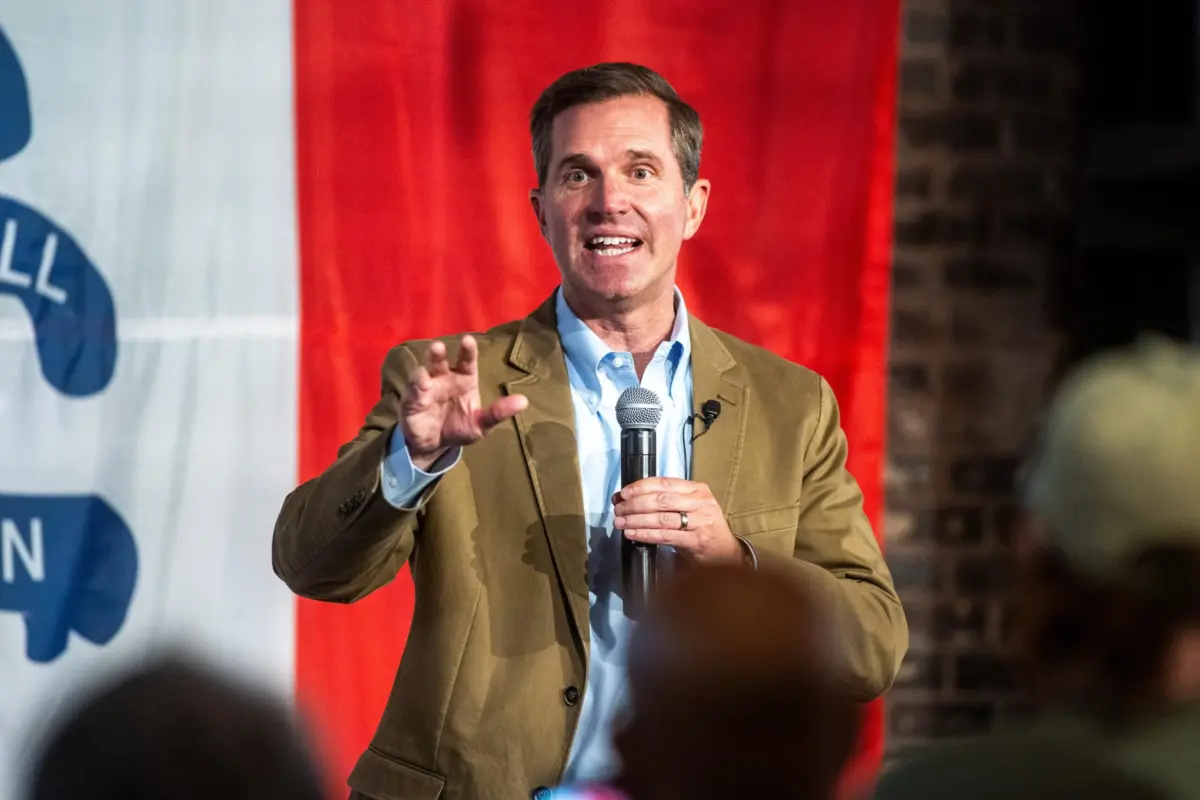
Amidst a crowded field of potential national contenders, Kentucky Governor Andy Beshear stands out not just for his electoral success in a deeply red state, but for his hands-on, pragmatic approach to governing. Facing stubborn Republican opposition in his state legislature, Beshear has taken unconventional executive actions to circumvent legislative stalemates, redirecting federal workforce training funds to establish pre-K pilot programs that have successfully added thousands of new classroom seats across the Commonwealth.
In a wide-ranging, exclusive interview, Beshear articulated a philosophy centered on executive execution, incremental progress, fiscal responsibility, and broad-based economic growth. Eschewing the all-or-nothing legislative fights that frequently paralyze Washington, the Kentucky governor makes the case that universal pre-K for four-year-olds is not only an essential foundation for educational equity and workforce expansion, but also a vital vehicle for bridging partisan divides. As national Democrats debate whether to pursue sweeping, comprehensive reforms or focused, step-by-step victories, Beshear’s blueprint offers a compelling alternative: a pragmatic roadmap that blends aggressive immediate relief with long-term fiscal discipline.
Read Also
Detailed Chronology: The Battle for Pre-K in Kentucky
Kentucky’s modern struggles with early childhood education are a study in contrasts between historic legislative intent and contemporary partisan polarization. Understanding Governor Beshear’s current strategy requires tracing how early learning initiatives evolved within the Commonwealth over the past three decades.
1. The Foundation and the Shortfall (1991–Present)
- 1991: Kentucky establishes a voluntary preschool program intended to give at-risk children a head start. Despite bipartisan support for its initial creation, funding and structural constraints historically limited its reach.
- The Kindergarten Readiness Gap: Decades later, despite the existence of state-supported preschool, approximately half of all Kentucky children still enter kindergarten lacking basic readiness. Over 75 percent of four-year-olds remain unable to access the state-funded program.
- The Political Shift: During the administration of former Republican Governor Matt Bevin, state lawmakers actually voted to expand preschool funding—only for Bevin to utilize his veto pen to slash parts of the budget dealing with education. However, when Beshear assumed the governorship and made universal pre-K a core budget priority, the same Republican legislative leadership repeatedly blocked funding. According to Beshear, the resistance is no longer about policy substance, but political obstructionism: "The only thing that’s changed here is the party of the person in charge."
2. Executive Action and Pilot Program Deployment (2024–2026)
Unwilling to accept legislative inaction, Governor Beshear turned to alternative funding streams to bypass the state assembly’s roadblocks.
- Leveraging WIOA Funds: Beshear utilized flexible workforce training dollars under the federal Workforce Innovation and Opportunity Act (WIOA)—a mechanism employed by various states to support educational and labor initiatives.
- Launching the Pilots: Since May, the Beshear administration has established five distinct pre-K pilot programs across the Commonwealth, successfully standing up 3,000 new seats.
- Targeting "Childcare Deserts": Among the pilot locations is Robertson County, Kentucky’s smallest county, which previously had zero childcare options, forcing parents to commute 40 to 60 minutes one way for basic care. By bringing pre-K directly to these isolated areas, the administration has demonstrated immediate, tangible economic relief to families regardless of political affiliation.
Supporting Context & Metrics: The Economic and Structural Landscape
The policy debate surrounding early childhood education in Kentucky mirrors broader national questions regarding federal spending, inflation, workforce participation, and economic pragmatism.
The Workforce Multiplier
Proponents of universal pre-K frequently frame the issue through an educational lens, but Beshear emphasizes its profound economic footprint.
- Labor Force Re-entry: Universal pre-K for four-year-olds in Kentucky alone has the potential to inject an estimated 70,000 workers back into the state workforce.
- Fiscal Self-Sufficiency: Beshear argues that the investment pays for itself. The surge in tax revenue generated by parents returning to the workforce significantly outweighs the initial public outlay, aligning early childhood spending with principles of fiscal responsibility.
The Fiscal Paradigm: Surpluses and Inflation
Reflecting on macroeconomic trends, Beshear draws a direct line between fiscal health and political trust. Having produced budget surpluses every year of his tenure, he advocates for maintaining similar discipline at the federal level.
- Reflecting on the COVID Recovery: While acknowledging that the Biden administration’s post-COVID economic policies successfully rescued the nation from a deep recession at record speed, Beshear notes that the stimulus ultimately overshot its target, contributing to the inflationary pressures that heavily burdened working-class Americans.
- Deficit Reduction: A future Democratic executive, in Beshear’s view, must balance necessary social investments with a genuine commitment to reducing the national debt over time, utilizing economic growth to fund vital programs without spiraling deficits.
Official Statements & Insights: Direct Perspectives from Governor Andy Beshear
The following key excerpts capture Governor Beshear’s philosophy on governance, partisanship, and national strategy:
-
On Partisanship and the Politics of Childhood:
"Well, at least in my tenure, somehow pre-K has become political. You know, 4-year-olds aren’t registered to vote. They’re not Democrats or Republicans. But I’ve pushed every year to get this in the budget… yet our Republican leadership simply will not let it happen… they’re willing to hand a loss to all of these 4-year-olds."
-
On the Urgency of Incremental Progress vs. Legislative Paralysis:
"The federal government has to act with more urgency. We get in a lot of these debates about whether a plan is perfect or if a plan’s only 80 percent perfect. Listen, take the 80 percent and start working it. Provide the American people with some help which they need."
-
On a Practical Federal Roadmap for Pre-K:
"If it were me, I would push for universal pre-K for 4-year-olds immediately. That is the immediate relief that takes 25 percent of that burden off of working parents and then I’d work on a bill that addresses childcare, that makes sure that we have all the stakeholders at the table."
-
On Avoiding Impractical Grand Designs:
"I’m not against the big idea, but what I’m against is throwing something out there that in the practical real world can’t work… Will it deliver on day one? Or will it crash a system that is imperfect but is delivering to a degree and could deliver more?"
-
On Engaging Employers Across the Spectrum:
"What we’ve seen in Kentucky is our large employers, we can work with them on it and we can get it done, but it’s midsized employers that we have to rise to that challenge. You know, places that only have a couple hundred employees, or maybe even 12 or 15, how we can band together for those businesses to be able to provide it."
Future Outlook: Implications for the 2028 Presidential Cycle
As the Democratic Party looks toward 2027, 2028, and beyond, the strategic blueprint outlined by Governor Beshear offers a potent framework for national campaigns. Rather than framing progressive social investments and fiscal prudence as mutually exclusive, Beshear models a synthesis of the two: use targeted federal levers to secure high-impact, nonpartisan victories (such as universal pre-K for four-year-olds), revitalize the workforce, and simultaneously respect the parameters of a balanced budget.
Furthermore, Beshear’s localized success in deploying WIOA funds to shatter legislative gridlock provides a tactical manual for executive leadership in an era of intense legislative polarization. By focusing relentlessly on tangible outcomes—such as establishing classrooms in childcare deserts like Robertson County—he demonstrates that popular, common-sense policies can transcend traditional party lines.
Whether or not Beshear ultimately launches a national presidential campaign, his emphasis on operational competence, immediate relief, and surgical execution has firmly established him as a central voice in the ongoing debate over how the Democratic Party can effectively govern, build broad coalitions, and deliver meaningful results for American families.




Comments
Facebook App ID not configured. Please add it in the Customizer.