
: The Week in Review
Executive Overview
The global cultural landscape is currently navigating a period of profound structural tension, balancing commercial market shifts against institutional triumphs and the preservation of idiosyncratic artistic legacies. Recent findings from Arts Economics and the British Art Market Federation (BAMF) indicate that while the United Kingdom retains its position as the world’s second-largest art market by sales volume, its long-term growth trajectory is slowing considerably when compared to international competitors like the United States. Analysts point to a dense thicket of regulatory burdens as a primary culprit for this relative stagnation, squeezing the micro-enterprises and small galleries that form the bedrock of the UK’s creative ecosystem.
Simultaneously, the international art world mourns the loss of visionary figures like outsider artist Josef Hofer, whose complex life and vital creative output underscore the profound resilience of the human spirit. Yet, even as institutions pause to reflect on historic losses, major infrastructure and exhibition developments forge ahead. In Brussels, the imminent public debut of the Kanal-Centre Pompidou faced a tense procedural interruption following a nearby gas leak, while across the Atlantic, new architectural commissions, estate preservation projects, and art-historical debates—ranging from the architectural reimagining of Pittsburgh’s Heinz Architectural Center to speculative diagnoses of the Mona Lisa—continue to captivate public and scholarly attention. This report provides a comprehensive, multi-faceted analysis of the regulatory, institutional, and biographical developments shaping the contemporary art world.
Read Also
Detailed Chronology
Early to Mid-Week: Market Diagnostics and Regulatory Warnings
The week’s major economic news broke with the release of an exhaustive study commissioned by Arts Economics for BAMF. The report tracks the historical trajectory of the British art market, noting its expansion from £2.6 billion in 1996 to £8 billion by 2025. This impressive gross figure cements the UK’s standing as the preeminent art market in Europe.
However, a granular examination of post-2009 financial crisis data reveals a stark divergence in velocity. Since the benchmark established in the wake of the global financial collapse, the UK art market has crawled forward at a sluggish 17 percent growth rate through 2025. By contrast, the United States market skyrocketed by 114 percent over the same period, while global market growth hovered at 51 percent. Industry leaders were quick to point fingers at regulatory overreach, arguing that compliance costs disproportionately punish smaller operators who lack the legal and administrative infrastructure of mega-galleries.
Mid-Week: Infrastructure Emergencies and Institutional Developments
As market analysts digested trade data, logistical realities intervened on the European continent. On Monday, approximately 250 construction workers engaged in the final preparation phases of Brussels’s highly anticipated Kanal-Centre Pompidou were forced to evacuate the premises. The emergency protocol was triggered by a major gas leak in the immediate vicinity of the burgeoning modern and contemporary art complex. With the museum’s grand public opening slated for November 28, the incident served as a stark reminder of the fragile logistical tightrope major cultural institutions walk in their final pre-launch phases.
Meanwhile, institutional modernization continued elsewhere. In the United States, New York City-based design studio AD-WO emerged victorious in a competitive commission to redesign the Heinz Architectural Center at the Carnegie Museum of Art in Pittsburgh. This appointment signals a generational shift in how museum spaces showcase architectural drawing, models, and spatial theory.
In parallel corporate and creative spheres, the art-and-media collective MSCHF experienced a structural shake-up. Lukas Bentel, one of the organization’s foundational co-founders, officially announced his departure to pursue an independent path in art and design. Bentel intends to forge new collaborative ventures alongside his brother, Nik Bentel, marking the end of an era for the provocateur-driven collective known for subverting consumer culture.
Late Week: Passing of an Outsider Art Icon
The art world also paused to process the death of Josef Hofer at the age of 80. Hofer’s life story is inextricably bound to the darkest chapters of 20th-century European history; shielded by his parents from Nazi forces due to severe speech and developmental disabilities, he spent much of his early life hidden from the public eye.
Hofer’s trajectory shifted dramatically in 1997 when art historian Elisabeth Telsnig discovered his work during a drawing class in Austria. Recognizing an entirely sui generis visual vocabulary, Telsnig championed his output, guiding him into institutional prominence. Hofer’s subsequent inclusion in the Collection de l’art brut in Lausanne in 2003 launched a two-decade career defined by raw, rhythmic, and haunting ink-and-paper portraits. His works are now held in the permanent collections of the Centre Pompidou and esteemed private holdings.
Supporting Context & Metrics
The UK Art Market Growth Discrepancy
To fully comprehend the gravity of the Arts Economics study, one must analyze the macroeconomic environment governing the British trade. While London remains an indispensable global crossroads for blue-chip auctions, high-net-worth collectors, and premier galleries, the middle and lower tiers of the market are experiencing systemic attrition.
| Metric / Benchmark | United Kingdom | United States | Global Average / Total |
|---|---|---|---|
| Market Value (1996) | £2.6 Billion | — | — |
| Market Value (2025) | £8.0 Billion | — | — |
| Post-2009 Growth Rate | 17% | 114% | 51% (Global) |
| European Standing | 1st in Europe | N/A | 2nd Globally |
The data illustrates that while the absolute financial scale of the UK market has grown over three decades, its relative velocity has slowed to a crawl compared to American counterparts. Analysts attribute this to a combination of post-Brexit customs friction, stringent Anti-Money Laundering (AML) regulations, and complex artist’s resale right implementations that hit smaller merchants hardest.
Cultural Preservation and Public Space Debates
Beyond the commercial sector, the intersection of public infrastructure, heritage preservation, and art history generated significant discourse:
- Arlington National Cemetery Controversy: Urban planners and preservationists raised concerns over plans to illuminate a 250-foot-tall triumphal arch dedicated to President Donald Trump using high-intensity floodlights. Positioned on six 30-foot-tall poles, the proposed lighting scheme threatens to shatter the profound, intentional nocturnal darkness of the adjacent Arlington National Cemetery, prompting fierce debates over commemorative scale and spatial dignity.
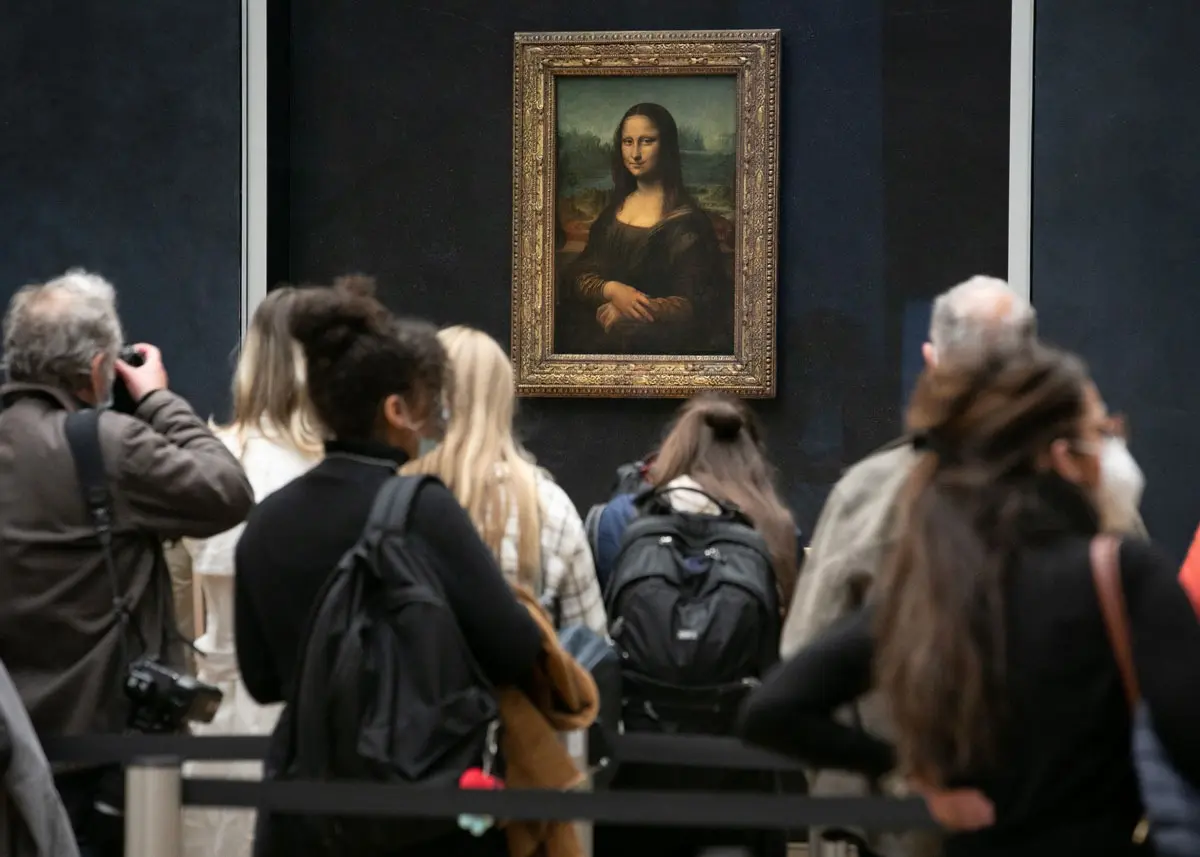
- Art-Historical Speculation: In the realm of canonical scholarship, an Italian dermatologist published a peer-reviewed paper positing that Leonardo da Vinci’s Mona Lisa may have suffered from chronic hair thinning or alopecia areata. While such art-historical micro-diagnoses often generate polarizing reactions among traditional historians, they continually highlight the intersection of medical science and Renaissance portraiture.
- The Grateful Dead Cultural Legacy: In the realm of popular music heritage, the family of Jerry Garcia—founder of the Grateful Dead—announced plans for a dedicated cultural center in the San Francisco Bay Area. Developed through Jerry Garcia Music Arts in collaboration with the platform Starchive, the proposed institution aims to archive Garcia’s musical instruments, visual art, and ecological writings while fostering community education and artist-in-residence programs.
Official Statements
The implications of the Arts Economics findings drew immediate commentary from institutional leadership within the British trade:
"Overcomplicated and excessive regulation continues to disproportionately impact the many small and micro businesses that form the backbone of the UK art market."
— Thomas Christopherson, Chairman of the British Art Market Federation (BAMF)
The emotional and art-historical resonance of Josef Hofer’s passing was articulated by his primary Parisian representative:
"He was one of those artists for whom creating was not a choice but a vital necessity. Drawing, for him, was a way of inhabiting the world, of making a mark in it and, perhaps, of inventing a place for himself there. His work, of rare intensity and humanity, will long continue to move us deeply."
— Christian Berst Gallery, Paris
Reflecting on his discovery of Hofer’s singular aesthetic language, art historian Elisabeth Telsnig noted in a recent exhibition catalog:
"His drawings represented a total break from anything I had been given to see until then."
— Elisabeth Telsnig, Art Historian
Future Outlook
As the global art ecosystem approaches the close of the year, several critical trajectories demand close observation:
- Regulatory Reform in the UK: Pressure is mounting on policymakers from trade bodies like BAMF to streamline compliance frameworks. Without targeted relief for small and medium-sized galleries, the UK risks ceding further market share to the United States and emerging Asian art hubs.
- Institutional Resilience and Urban Integration: The successful November 28 opening of the Kanal-Centre Pompidou in Brussels will serve as a bellwether for major European museum launches in an era of infrastructural vulnerability and rising operational costs.
- The Evolution of Outsider Art Markets: Following the loss of major pillars like Josef Hofer, the institutional and commercial infrastructure surrounding art brut faces a generational transition. The ability of galleries and museums to responsibly curate, contextualize, and preserve these vital corpuses will determine their longevity in the global canon.
- Decentralization of Creative Collectives: The departure of figures like Lukas Bentel from MSCHF suggests a broader decentralization within contemporary experimental art practices, as pioneering creators pivot toward solo studio models and interdisciplinary collaborations.



Comments
Facebook App ID not configured. Please add it in the Customizer.