
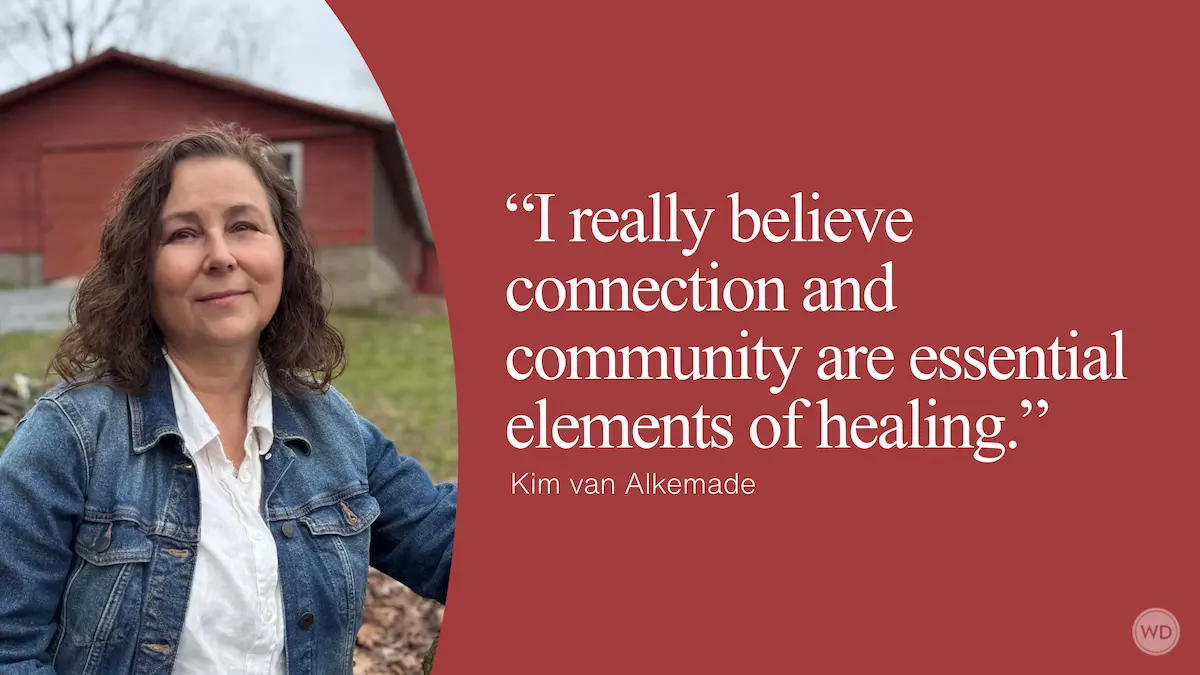
In the ever-evolving landscape of contemporary literary fiction, few transitions are as fascinating as the one executed by New York Times bestselling author Kim van Alkemade. Best known for meticulously researched historical novels such as Orphan #8, Bachelor Girl, and Counting Lost Stars, van Alkemade has once again captured the attention of the publishing world. Her latest novel, Upstate, scheduled for publication by William Morrow on October 27, 2026, marks a bold stylistic departure. It weaves a dual-timeline narrative that bridges a contemporary story of grief and community with a mid-20th-century exploration of lesbian love in rural America.
Van Alkemade’s journey to Upstate is as compelling as the narrative itself. Having transitioned from a distinguished career teaching writing at Shippensburg University to working part-time in an independent bookstore in Saratoga Springs, New York, the author has lived a life uniquely intertwined with books. When an impulsive real estate listing for a rustic red barn and an 1800s farmhouse in upstate New York failed to materialize into a purchase, the unfulfilled dream sparked a creative fire.
This deep dive examines van Alkemade’s pivot from a nearly completed manuscript about Maine artists to the creation of Upstate. It explores the intricate writing process, the strategic marketing initiatives informed by her boots-on-the-ground bookselling experience, and the broader implications of her literary mission: bringing hidden queer histories into the cultural mainstream with nuance, dignity, and hope.
Read Also
Detailed Chronology: From Real-Estate Dream to William Morrow Release
The trajectory of Upstate reads like a masterclass in creative intuition and publishing agility. Understanding how the book moved from a fleeting real-life encounter to a major publishing house release requires tracing a timeline marked by sudden pivots, editorial collaboration, and disciplined execution.
The Spark: Summer 2021
The conceptual genesis of Upstate occurred in the summer of 2021. Van Alkemade’s partner brought to her attention an article published in Book Riot bearing the enticing headline, “If You Dream of Owning a Bookstore, Here’s Your Chance.” Accompanied by a fairy-tale photograph of a red barn in a vibrant green field with the word "BOOKS" spelled out in jigsawed letters above the doorway, the listing captivated the couple. Located a scenic hour’s drive away, the property featured not only the book-filled barn but also an adjoining 1800s farmhouse.
Upon visiting, van Alkemade fell in love at first sight. More importantly, she uncovered the history of the property’s original founders: two women who launched the bookstore in the 1960s—Barbara Probst and her longtime companion, Jean Slocum. Though purchasing the property ultimately proved unfeasible, the emotional resonance of their legacy lingered, planting the seeds for what would become Upstate.
The Pivot: January 2024
Years later, after completing her third novel, Counting Lost Stars (2023), van Alkemade was deeply entrenched in writing a fourth novel centered on artists on Monhegan Island off the coast of Maine. By January 2024, she had amassed 70,000 words on the Maine project.
During a routine proposal submission, her literary agent, Mitchell Waters of Brandt & Hochman, pitched the Maine manuscript to Tessa Woodward, executive editor at William Morrow (a division of HarperCollins). Wisely, van Alkemade asked Waters to include a brief synopsis of the bookshop idea—featuring the braided voices of Evelyn, Hazel, and Audrey—as a teaser for her fifth novel.
Woodward reviewed the Maine manuscript, then turned her attention to the Upstate synopsis. Recognizing a raw, magnetic pull in the concept, Woodward delivered a definitive editorial verdict: "I think you should write that one next instead. Can you show me a sample chapter?"
Though initially frustrated at the prospect of shelving 70,000 words, van Alkemade experienced a surge of fresh creative energy. She closed the document containing her Maine project, started from scratch, and drafted a sample chapter for Upstate. In February 2024, Waters submitted the new proposal. Woodward made a formal offer, and van Alkemade signed the contract in July 2024.
Drafting and Production: 2024–2026
Free from the exhaustive historical research demands of her previous three novels, van Alkemade drafted at a rapid pace.
- January 2025: Completed the first draft of Upstate.
- Summer 2025: Submitted the revised, workshop-tested manuscript to Tessa Woodward.
- January 2026: Delivered the final, polished manuscript following secondary editorial passes.
- February 2026: The book officially entered production, with advanced reader copies (galleys) slated for distribution by July 2026, leading up to its wide release on October 27, 2026.
Supporting Context & Metrics: Industry Insights and Marketing Innovation
Van Alkemade’s unique positioning—operating simultaneously as a bestselling author and an employee at an independent bookstore—provided her with invaluable insights into the mechanics of contemporary publishing, book promotion, and hand-selling culture.
Leveraging the Bookseller’s Perspective
Retiring early from her university teaching position and relocating to upstate New York gave van Alkemade a ground-level view of the book retail ecosystem. Working part-time in an indie bookstore exposed her to industry tools and marketing strategies that many authors never encounter from the creative side alone.
For instance, before working retail, van Alkemade had never heard of Edelweiss, the digital catalog and cross-channel marketing platform used by publishers and booksellers. For Upstate, she actively requested that William Morrow create a targeted banner ad featuring the nomination deadline for the Indie Next List—a strategic move designed to catch the eyes of discerning booksellers nationwide.
The Personal Touch: Galleys on the Road
As soon as galleys of Upstate were printed, van Alkemade adopted a grassroots promotional strategy. She personally visited independent bookstores spanning from Schenectady to Lake Placid, as well as locations throughout Vermont, delivering physical copies directly to booksellers.
While door-to-door galley drops are not universally practical for every title, van Alkemade recognized the thematic alignment between her novel—which centers on a writer reviving a rural bookshop—and the physical realities of the independent bookselling community. This boots-on-the-ground outreach yielded tangible results, culminating in Upstate being selected by booksellers for the highly coveted November 2026 Indie Next List.
Official Statements & Creative Process: Crafting the World of Upstate
In interviews and editorial reflections, van Alkemade has opened up about the creative hurdles and thematic motivations that shaped Upstate. From mastering contemporary dialogue to addressing the nuances of grief, her creative evolution offers profound lessons for aspiring writers.
Bridging Historical and Contemporary Fiction
While Upstate retains van Alkemade’s signature gift for historical texture—tracing the lesbian relationship between Evelyn Cabot and Hazel McIntyre starting in 1954—it introduces a contemporary point of view through the character of Audrey. Writing contemporary fiction presented an unexpected mechanical hurdle: managing ubiquitous modern communication.
"One challenge with contemporary fiction is managing the constant communication we experience in our lives now, from calls to texts to emails," van Alkemade notes. "There is a scene in the book where Audrey becomes isolated in an old farmhouse during a storm. It took quite a bit of plotting to prevent her from simply texting for help."
Navigating Structural Redirection
Writing the contemporary timeline also required a major structural reckoning. Initially, Audrey’s storyline leaned into a romantic-comedy structure—an approach that early readers found jarring within a narrative fundamentally anchored in grief and trauma recovery.
Responding to critical feedback, van Alkemade executed a substantial revision. She leaned deeper into Audrey’s emotional landscape, drawing heavily on her own personal experiences with grief. The adjustment transformed the novel’s emotional core: rather than appearing rushed or unearned, the evolving relationship between Audrey and a fellow community member became a beacon of slow-burn hope.
Thematic Objectives: Community as a Cure for Isolation
Set against the backdrop of a pandemic-era world defined by loss, fracture, and national division, Upstate serves as an exploration of collective healing. When protagonist Audrey experiences the sudden death of her husband, she impulsively purchases the rural bookshop in search of solitary isolation. Instead, she is drawn into a vibrant, eclectic community of small-town residents:
- Wren: An unemployed Broadway set designer reluctantly returning to the village he fled as a gay teenager.
- Lucinda: A former farmer whose Black ancestors settled in the Adirondacks prior to the Civil War.
- Sandra: A massage therapist whose treatments help Audrey confront past trauma.
- Sam: An agricultural advisor whose grandparents met during the Vietnam War.
- Joe: A conservative neighbor whose condescending advice is initially rejected until a winter storm forces an uneasy alliance.
- Evelyn and Hazel: The mid-century pioneers whose secret sapphic history is uncovered through hidden letters found in the farmhouse.
Van Alkemade emphasizes that connection is non-negotiable for human recovery: "After COVID-19 left families fractured and our country divided, I wanted to imagine what it looked like for people to begin coming together again."
Future Outlook: A Mission-Driven Literary Career
As the publishing date for Upstate approaches, Kim van Alkemade’s career offers a compelling blueprint for longevity and authenticity in the arts. For writers navigating the unpredictable waters of the traditional publishing industry, her primary piece of advice is foundational: establish a personal mission statement.
"If we’re talking about writing for publication, then my advice would be to have a personal mission statement to help you stay true to your purpose," she advises. "Why are you telling this story? What does it mean to you? How do you want to share it with the world?"
For van Alkemade, that mission is clear: to center the lives of lesbian and gay characters in historical and contemporary settings, illuminating hidden histories and ensuring her queer protagonists experience complex, fully realized lives that transcend tragic tropes.
Whether working with Big Five publishers like William Morrow or exploring independent avenues, van Alkemade remains anchored to her core purpose. With Upstate, she has not only delivered a poignant, beautifully crafted novel about books, loss, and community, but she has also reinforced the power of storytelling to bridge generational divides and celebrate the quiet, enduring triumphs of love.




Comments
Facebook App ID not configured. Please add it in the Customizer.