
Executive Overview
History often remembers the mechanized brutality of global conflict—the tanks, the artillery, the amphibious assaults, and the deafening roar of aerial dogfights. Yet, hidden beneath the grand strategic narratives of World War II lies an equally vital, if quieter, campaign: the battle to preserve the hearts and minds of millions of American service members through the written word.
Enter A Librarian’s War: The Man Who Fought World War II with Books and Brought the Joy of Reading to Millions (Oxford University Press, September 29, 2026), the forthcoming biography by bestselling author, historian, and law professor Molly Guptill Manning. Through meticulous research and unprecedented access to private family archives, Manning brings to light the extraordinary life of Ray Trautman, the Army Chief Librarian who revolutionized the American military experience.
Trautman understood a fundamental psychological truth that escaped many traditional military planners: a soldier battling fear, extreme boredom, grueling homesickness, and creeping doubt was just as vulnerable as one facing enemy fire. His solution was breathtaking in its scale and ambition. Under his guidance, the United States military distributed a staggering half-billion books, magazines, and comic books to troops stationed across the globe.
Read Also
In this exclusive interview and literary profile, we explore Manning’s five-year journey to bring Trautman’s story to the page. From uncovering long-lost records to discovering unpublished anecdotes involving historical titans like Franklin D. Roosevelt, General Douglas MacArthur, and Ernest Hemingway, Manning reveals how a boy from a tiny, book-starved town grew up to permanently alter American reading habits and literary culture for decades to come.
Detailed Chronology: From Family Archives to Publication
The genesis of A Librarian’s War reads like a researcher’s fairy tale. It began in the wake of Manning’s acclaimed 2014 bestseller, When Books Went to War, which introduced the public to the broader mechanics of America’s wartime book programs. Because Trautman’s name surfaced briefly in those pages, his surviving family members took notice.
The Spark (2021)
Contacted by Trautman’s relatives, Manning learned that boxes of preserved records, personal notes, photographs, rare books, and intimate ephemera were sitting unexamined in private hands. What began as a routine courtesy visit quickly transformed into a multi-year historical excavation. Manning secured exclusive access to never-before-seen materials, embarking on countless interviews, archival digs, and geographic pilgrimages to retrace Trautman’s life and career.
"It was so inspiring to uncover the details of how one person, who grew up in a tiny town with practically no books, discovered a love of reading and made it his life’s mission to improve library service, book access, and literacy," Manning reflects.
The Research and Evolution Phase (2021–2025)
Transitioning from idea to manuscript required approximately five years of intense labor. True to her methodology across past titles—including The War of Words and The Myth of Ephraim Tutt—Manning refused to bind her narrative to a rigid, predetermined outline. Instead, she let the archival discoveries dictate the trajectory of the biography.
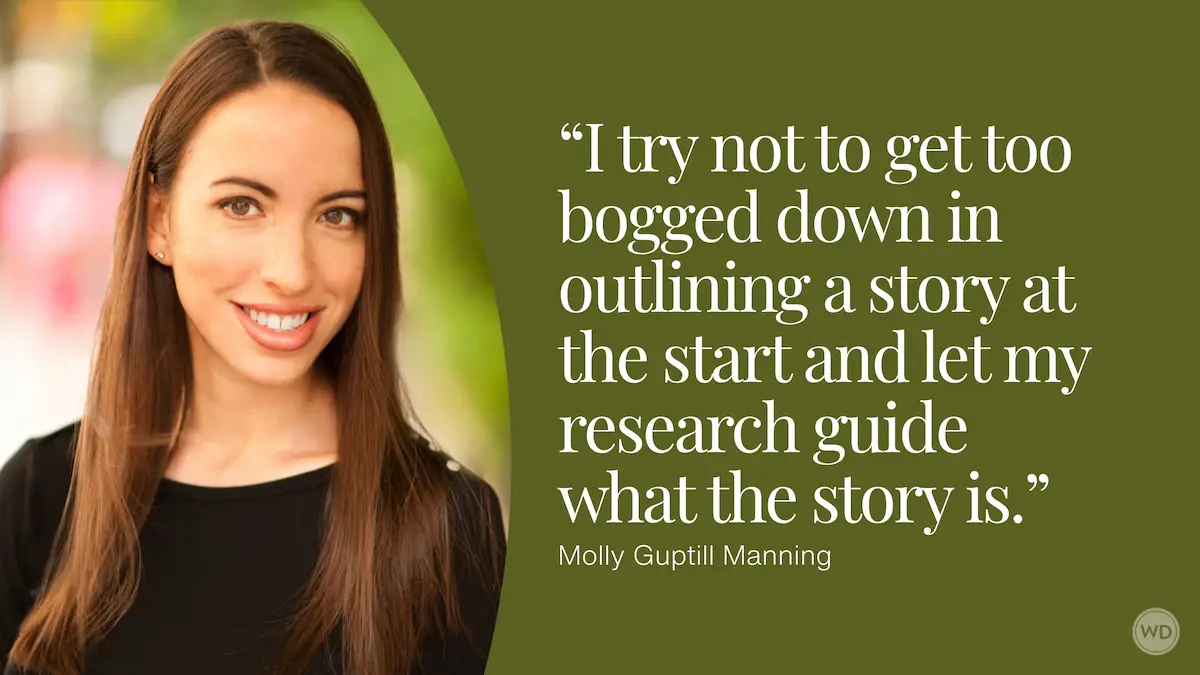
"For every book I’ve written, the contours of a story always change from my initial idea to the final version," Manning explains. "I try not to get too bogged down in outlining a story at the start and let my research guide what the story is."
This flexible approach yielded unexpected detours. Sometimes, a single archival clue led to rich historical goldmines; other times, it resulted in frustrating dead ends. Once she accumulated her primary research, Manning organized the materials chronologically to draft a preliminary story arc. Naturally, this initial drafting exposed critical research gaps, prompting secondary rounds of investigation.
"Once I began writing, it became clear to me where there were gaps in my research, or where extra context was needed," she notes. "Things that may not have seemed important early in the process were suddenly essential, minor figures became more central, and the story expanded in some parts and was edited in others."
Final Production and the Photo Insert Dilemma (2026)
As the manuscript neared completion, Manning confronted an unexpected artistic hurdle: curating the book’s photographic insert. As a biographer, she felt a profound sense of stewardship toward Trautman’s memory, wanting to display artifacts and images that held personal significance for him while balancing the visual expectations of a modern readership.
After experimenting with numerous visual combinations, Manning ultimately settled on a tightly curated array of 16 images. This final selection successfully honored Trautman’s monumental achievements while providing readers with visual anchors for his extraordinary life journey.
Supporting Context & Metrics: The Scale of the Wartime Reading Revolution
To truly grasp the significance of A Librarian’s War, one must look at the quantitative scale of the literacy mobilization effort led by Ray Trautman.
- The Figure: A staggering half-billion books, magazines, and comic books were funneled to American troops overseas and in domestic training camps.
- The Format: Recognizing that soldiers on the front lines could not carry heavy hardcover volumes, the Council on Books in Wartime—working in tandem with military leadership—pioneered the iconic "Armed Services Editions" (ASEs). These lightweight, oblong paperbacks were specifically engineered to fit into standard military uniform pockets.
- The Impact: These mobile libraries reached soldiers in the sweltering jungles of the Pacific, the freezing mud of the European theater, aboard warships tossed on the Atlantic, and inside quiet military hospitals.
Unfiltered History: Encounters with Titans
One of the most thrilling revelations of Manning’s research was the discovery that Trautman’s life intersected with some of the most towering figures of the 20th century. Because Trautman operated at the administrative intersection of military morale and public information, his personal records contained interactions and observations that had never before been made public.
Readers of A Librarian’s War will encounter fresh, untold anecdotes regarding:
- Franklin D. Roosevelt: Insights into how the Commander-in-Chief viewed the ideological and morale-boosting power of literature during total war.
- General Douglas MacArthur: Documentation of how reading materials were prioritized and distributed across vast, complex Pacific theater supply chains.
- Ernest Hemingway: Glimpses into the literary world’s intersection with military information programs.
- Eleanor Roosevelt: Her tireless advocacy for universal access to education, literacy, and equity in wartime publishing programs.
Manning expresses constant wonder at how decades of heavy scholarship on these famous individuals could still yield entirely new, previously unrecorded historical chapters.
Official Insights & Authorial Perspective
In discussing her creative philosophy and publishing journey, Molly Guptill Manning offers profound guidance for aspiring nonfiction writers and historians. Writing history is not simply an exercise in organizing facts; it is an act of active listening to the dead.
On Letting the Source Material Lead
"Stay open-minded and enjoy the journey!" Manning advises new writers. "Nonfiction can’t be forced into being something you’d like it to be—let the research guide you. Stay curious and always be on the lookout for missing pieces."
This philosophy prevents authors from projecting modern assumptions onto historical actors. By surrendering to the archive, Manning allowed Trautman’s true voice—complete with his professional frustrations, bureaucratic battles, and quiet triumphs—to drive the narrative.
On the Universal Resonance of Trautman’s Journey
Manning hopes that A Librarian’s War will do more than merely inform; she wants it to uplift and inspire. In an era marked by digital fatigue and deep cultural anxiety over the future of literacy, Trautman’s life stands as a testament to the transformative power of the printed page.
"For anyone who has big dreams, I think Trautman shows how chasing after a goal involves a lot of struggle, heartache, disappointments, and setbacks," Manning observes. "And yet he exemplifies how important it is to pivot and keep moving forward. Trautman also shows what a huge difference one person can make in others’ lives."
Future Outlook & Literary Legacy
As A Librarian’s War: The Man Who Fought World War II with Books and Brought the Joy of Reading to Millions prepares for publication by Oxford University Press on September 29, 2026, it arrives at a crucial cultural moment. In contemporary society, public libraries face unprecedented debates over book access, censorship, and institutional funding.
Manning’s work serves as a timely reminder of a moment in American history when books were viewed not as dangerous items to be restricted, but as vital democratic tools necessary for national survival and individual psychological healing. Ray Trautman proved that stories possess structural integrity strong enough to cross battle lines, ease the trauma of combat, and forge a lifelong habit of reading within an entire generation.
Through her rigorous academic background—holding degrees from the University at Albany, the Benjamin N. Cardozo School of Law, and NYU—combined with her engaging narrative style, Manning continues to bridge the gap between heavy archival scholarship and mainstream literary appeal.
A Librarian’s War promises to be a masterclass in biographical history, illuminating the quiet heroes who worked behind the scenes to keep the democratic soul of a nation alive while its armies fought for its physical survival. When the book hits shelves this fall, it will undoubtedly cement Ray Trautman’s rightful place in the pantheon of American cultural icons.



Comments
Facebook App ID not configured. Please add it in the Customizer.